Why Put Pressure on a Bleeding Wound? Causes & First Aid Tips
When a sudden injury leads to heavy bleeding, your first instinct is usually to grab something and press down. While this feels like a natural reaction, there is actually a fascinating biological process happening beneath your fingers that makes this the single most effective way to save a life. Bleeding is the leading cause of preventable death after an accident, and in many cases, a bystander with no medical background is the one who determines the outcome. Understanding the why behind the pressure allows you to act with more confidence and precision. Whether you are dealing with a kitchen mishap or a serious road accident, knowing how to work with your body’s own defense systems ensures that you aren't just reacting to a crisis, but actively managing it to keep a victim stable until professional help arrives.
The Science of Saving a Life
The primary goal of putting pressure on a wound is to achieve hemostasis, which is the medical term for stopping the flow of blood. Your body is naturally equipped to fix leaks, but when a wound is deep, the blood flows too fast for the body to start its repairs. By applying firm, steady pressure, you are manually slowing down that flow. This allows the blood to sit still long enough for special cells called platelets to begin sticking together. Think of your hands as a temporary dam that holds back the water so that the construction crew of your blood can build a permanent wall. Without your help, the blood would simply wash away the clotting factors before they ever have a chance to work.
What Happens When You Apply Pressure?
Applying pressure works through a combination of physics and biology. Physically, you are compressing the broken blood vessel against a hard surface, like a bone or an underlying muscle, which narrows the opening and reduces the volume of blood that can escape. Biologically, this compression triggers a chemical chain reaction. When blood stops moving rapidly, it starts to thicken. Platelets activate and release signals that call for fibrin, a protein that acts like a sticky net to trap blood cells and form a solid clot. By holding pressure, you are protecting this fragile net from being torn apart by the person’s blood pressure, giving the wound the stability it needs to seal itself off.
Types of Bleeding & Their Risks
Understanding the source of a bleed is the first step in deciding how to treat it. Not all blood loss is the same; the speed and volume depend entirely on which type of vessel has been damaged. In a medical emergency, being able to quickly identify the difference between a minor scrape and a life-threatening hemorrhage allows you to prioritize your actions and use your first aid tools effectively.
-
Arterial Bleeding (The Highest Priority): This is the most dangerous type of bleeding because arteries carry blood directly from the heart under high pressure. You can recognize it by its bright red color (due to high oxygen levels) and the way it spurts or pulses in time with the victim's heartbeat. Because the blood is under such force, it will not clot easily on its own, and a person can lose a lethal amount of blood in just a few minutes. This requires immediate, heavy direct pressure or a tourniquet.
-
Venous Bleeding: Veins carry blood back to the heart, so the pressure is much lower than in arteries. Venous blood is usually dark red or maroon because it has less oxygen. It is characterized by a steady, consistent flow. While it doesn't spurt, a deep venous wound can still lead to significant blood loss if ignored. Steady pressure is usually enough to control this, though it may take several minutes of constant force.
-
Capillary Bleeding: This is the most common type of bleeding seen in everyday life, such as from a scraped knee or a shallow paper cut. Capillaries are the tiny vessels near the surface of the skin. The blood typically oozes slowly and is usually easy to control with light pressure or even just a simple adhesive bandage. While the risk of blood loss is very low, the main concern with capillary wounds is keeping them clean to prevent infection.
-
Internal vs. External Bleeding: External bleeding is obvious because you can see the wound and the blood. Internal bleeding is much more deceptive because the blood stays inside the body, often caused by blunt force trauma or organ damage. You should suspect internal bleeding if a person has bruising, a rigid or tender abdomen, or signs of shock (like confusion and cold skin) after an accident, even if there is no visible cut. Internal bleeding is a surgical emergency that cannot be fixed with a bandage; it requires an immediate 911 call.
The Soda Can Rule: How Much Blood is Too Much?
One of the hardest things for a bystander to judge is when bleeding becomes truly life-threatening. A helpful rule used by the American Red Cross is the Soda Can rule. If you see a pool of blood on the ground that is roughly equal to half the volume of a standard soda can (about 6 ounces), it is considered life-threatening. In children, even smaller amounts are a major emergency. If the blood is spurting, flowing continuously, or if the person begins to look pale and confused, you should assume they have lost too much blood and are entering hemorrhagic shock. In these cases, your pressure must be heavy and constant until paramedics take over.
Assisting Hemostasis: The Clotting Process
Hemostasis happens in three main stages: vascular spasm, the platelet plug, and coagulation. Immediately after an injury, the blood vessel actually shrinks (vasoconstriction) to try and limit the leak. Next, platelets rush to the site to create a temporary plug. Finally, the coagulation cascade creates a strong fibrin mesh to turn that plug into a permanent scab. When you apply pressure, you are effectively assisting all three stages. You help the vessel stay constricted and ensure the platelet plug isn't washed away. Using professional tools like the hemostatic gauze found at FlareSyn can speed this up even further, as these gauzes are treated with minerals that trigger the clotting cascade much faster than plain cloth.
Protecting the Vital Organs
When a person loses too much blood, their blood pressure drops so low that their heart can no longer pump oxygen to the brain and other vital organs. This state of shock is a downward spiral that leads to organ failure and death. By putting pressure on a wound early, you are preserving the person’s total blood volume. This keeps the pump of the cardiovascular system working. Maintaining even a small amount of extra pressure can be the difference between a person staying conscious and slipping into a coma. Your hands are essentially acting as a backup system for the person’s circulatory health, keeping their internal pressure high enough to stay alive. Choose the right level of protection for your environment by IFAK standard vs. pro comparison.
Step-by-Step Guide: How to Properly Apply Direct Pressure
Applying pressure is a physical task that requires more than just a light touch; it often requires the full weight of your body to be effective. First, ensure the scene is safe and put on gloves if they are available to protect yourself from bloodborne pathogens. Locate the exact source of the bleeding by quickly moving any clothing out of the way. Place a clean, absorbent dressing, like sterile gauze or a thick cloth, directly over the hole. Use the heels of your hands to push straight down as hard as you can. If you are helping an adult with a limb injury, you should lock your elbows and lean your body weight into your hands. This creates a constant, heavy force that collapses the broken vessels and holds the blood in place so the clotting process can finish.
The No-Peeking Rule: Protecting the Clot
One of the most common mistakes people make is lifting the bandage every minute or two to see if the bleeding has stopped. You must resist this urge at all costs. Every time you lift the dressing, you are pulling away the tiny, fragile clots that have started to form on the surface of the wound. It is like picking a scab before it is ready; it simply restarts the bleeding from the beginning. If blood soaks through your first layer of gauze, do not remove it. Instead, place a second, thicker layer directly on top of the first one and keep pushing. The goal is to build a stack of absorbent material that works with your hands to maintain a seal over the injury until the person reaches a hospital.
Beyond Manual Pressure: Advanced Tools for Severe Bleeding
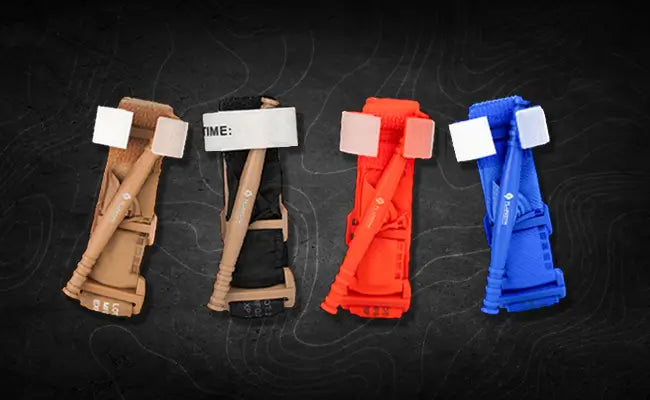
Sometimes, even the strongest manual pressure isn't enough to stop a massive bleed, or you may need to free up your hands to call for help or move the victim. This is where professional medical gear becomes essential. Pressure bandages are designed with an elastic wrap and a built-in plastic bar that maintains the force for you once you tie it in place. For even more difficult wounds, hemostatic agents like QuikClot are used. These are specialized gauzes found in FlareSyn trauma kits that are coated in materials like kaolin or chitosan, which chemically speed up the body's clotting response. These tools allow a bystander to provide the same level of care that a combat medic would use in the field. Using chitosan hemostatic gauze chemically triggers the clotting cascade, stopping bleeds significantly faster than plain cotton.
When Pressure Isn't Enough: Moving to Plan B
There are certain situations, such as a complete limb amputation or a severed major artery, where direct pressure alone will not work. If the blood is still spurting after several minutes of your best effort, you must move to a tourniquet. A tourniquet is a wide, tight band placed high on the arm or leg that shuts off all blood flow to that limb. While many people worry about the risk of losing a limb from a tourniquet, modern medical research shows that they are extremely safe when used for a few hours. In a life-or-death situation, stopping the bleed is the only priority. For wounds in junctional areas like the armpit or the groin where a tourniquet cannot fit, you must use a wound packing technique, where you stuff gauze deep into the wound and then apply pressure on top of it.
Common Causes of Emergency Bleeding
Emergency bleeding can happen anywhere, from a quiet suburban kitchen to a busy construction site. In the United States, household accidents involving kitchen knives, broken glass, or mirrors are the most frequent causes of deep lacerations. In industrial or rural settings, power tool mishaps, chainsaw accidents, or injuries from heavy machinery often lead to more complex trauma that involves crushed tissue and multiple bleeding sites. Outdoor enthusiasts may also encounter severe bleeding from falls on sharp rocks or animal encounters. Regardless of the cause, the first aid response remains the same. Recognizing the danger and having a trauma kit from FlareSyn nearby ensures that you are ready for these unpredictable moments.
First Aid Checklist: Do’s and Don’ts of Bleeding Control
|
DO |
DON'T |
|
Use sterile gauze or a very clean cloth if possible. |
Don't use napkins or tissues, as they fall apart when wet. |
|
Use your body weight to push down with locked elbows. |
Don't just dab at the blood with light finger pressure. |
|
Keep the original dressing in place if it gets soaked. |
Don't lift the dressing to check the wound's progress. |
|
Call 911 immediately for any heavy or spurting flow. |
Don't wait to see if the bleeding stops on its own. |
|
Use a tourniquet for life-threatening limb bleeding. |
Don't apply a tourniquet to the neck, chest, or abdomen. |
Post-Pressure Care: What Happens After the Bleeding Stops?
Once the bleeding appears to be under control, the job is not yet finished. You must continue to monitor the victim closely because a clot can break loose if the person moves or if their blood pressure changes. This is also the time to watch for signs of hypovolemic shock, which happens when the body has lost too much fluid to keep the heart pumping correctly. If the person begins to feel cold, looks very pale, or starts acting confused and thirsty, you must keep them lying flat and cover them with a blanket to preserve body heat. Do not give them anything to drink, as this can cause complications if they need surgery later. Your role is to provide a calm, stable environment until the ambulance arrives to take over. For more on long-term preparedness, check out our Essential Tactical Medical Gear collection to ensure your vehicle or home is fully stocked
Cleaning the Wound: When and How
You should only worry about cleaning a wound after you are certain that the life-threatening bleeding has stopped. If the wound was severe enough to require heavy pressure, the cleaning should likely be done by a doctor in a sterile environment. However, for smaller cuts that have been stabilized, you can gently wash the area with clean, running water to remove dirt and debris. Avoid using harsh chemicals like hydrogen peroxide or rubbing alcohol directly inside a deep wound, as these can actually damage the healthy tissue and slow down the healing process. Once the area is clean, apply a fresh sterile dressing and secure it with medical tape or a conforming bandage from your FlareSyn kit.
Seeking Professional Help: Why Inspection Matters
Even if you successfully stopped the bleeding at home, any wound that was deep enough to cause concern should be inspected by a medical professional. Deep lacerations often require stitches to close the skin properly and prevent a large scar. Furthermore, wounds caused by rusty metal, soil, or animal bites carry a high risk of infection and tetanus. A doctor can provide a booster shot and prescribe antibiotics if necessary. It is also important to remember that some injuries can cause internal damage to nerves or tendons that isn't visible on the surface. If the person feels numbness or has trouble moving their fingers or toes after an injury, they need an immediate evaluation.
Frequently Asked Questions
How long should I hold pressure on a bleeding wound?
For most moderate wounds, you should hold continuous, firm pressure for at least 10 minutes without lifting the bandage. The body needs this time to form a stable plug. If the bleeding is severe or arterial, you may need to maintain pressure until paramedics arrive.
What if there is an object, like glass, stuck in the wound?
Do not pull the object out, as it may be acting like a plug for a blood vessel. Instead, apply firm pressure around the object. Use bulky padding to build up the area around the item so that your bandage doesn't push the object deeper into the tissue.
Can I use a belt as a tourniquet if I don't have a medical one?
Improvised tourniquets like belts or ropes are rarely effective because they are too thin and cannot be tightened enough to stop arterial blood flow. While they can be used as a last resort, it is much safer to use a dedicated windlass tourniquet, such as those sold by FlareSyn, which are designed specifically for this purpose.
Why does my wound keep re-bleeding?
Re-bleeding usually happens because the clot was disturbed or because the person’s blood pressure increased. It can also happen if the person is taking blood thinners (anticoagulants). If a wound re-bleeds, go back to the basic step of applying heavy, direct pressure and do not stop until help arrives.
Conclusion: Confidence Under Pressure
Knowing why and how to put pressure on a bleeding wound is a fundamental life skill that everyone should have. By understanding that your hands serve as a physical bridge for the body’s natural clotting process, you can act with the speed and force required to make a difference. While the sight of blood can be overwhelming, focusing on the simple task of stopping the leak helps you stay centered and effective. Preparing yourself with the right knowledge and the right gear from FlareSyn ensures that you aren't just a witness to an emergency, but a vital part of the survival chain. Your willingness to step in and apply pressure is often the single most important factor in whether a person makes it home safely.