Recognizing the Signs of Severe Bleeding & Emergency Response
In a life-threatening situation, the ability to quickly spot the signs of severe bleeding can be the factor that saves a person's life. Most people think of a medical emergency as something obvious, but blood loss can be deceptive, especially when it is hidden by dark clothing or occurring inside the body. If an artery is nicked or a deep wound is left unchecked, a person can lose a dangerous amount of blood in less time than it takes for an ambulance to drive a few blocks. This guide is built to help you look past the initial shock of an accident and identify the specific red flags that mean a person is in immediate danger. By knowing what to look for, you can move from being a worried observer to a capable responder, using your eyes and your tools to stop a tragedy before it happens.
Why Every Second Counts
When the body starts to lose blood rapidly, it enters a race against time to maintain pressure to the brain and heart. Medical professionals often talk about the Golden Hour, but with a major hemorrhage, you might only have a Golden Five Minutes. Severe bleeding leads to a drop in blood pressure that prevents oxygen from reaching vital organs, a state known as hemorrhagic shock. Because the human body only holds about five to six liters of blood, losing even one or two liters can be fatal. This is why recognizing the signs of severe bleeding early is the most important skill for any bystander. You are the first line of defense, and your quick identification allows for life-saving tools, like those found at FlareSyn, to be put to use before the damage becomes permanent.
Visual Indicators: Identifying Life-Threatening External Bleeding
The most obvious sign of an emergency is seeing blood leave the body, but the way it flows tells you how much danger the person is in. Arterial bleeding is the highest priority; it is bright red and pulses or spurts with every heartbeat. This indicates that a major high-pressure pipe has been broken. Venous bleeding is a darker red and flows in a steady, heavy stream. While it doesn't pulse, it can still drain a person's blood volume very quickly. You should also look for a pool of blood on the ground. If the puddle is larger than a standard dinner plate or if the victim's clothing is completely soaked through to the skin, you must treat the situation as a life-threatening emergency immediately.
The Wound Location: Junctional Hazards
Not all wounds are in easy-to-wrap places like the arms or legs. You must pay special attention to junctional areas, which are the spots where the limbs join the torso, such as the neck, armpits, and groin. These areas contain large, high-pressure arteries that are close to the surface but cannot be treated with a standard tourniquet. If you see deep bubbling or heavy flow from these spots, it is a sign of severe bleeding that requires deep wound packing. Bright red and pulsing. This requires an immediate windlass tourniquet. Because these areas are so difficult to manage, spotting the bleeding here early is vital so you can start applying heavy, focused pressure while calling for professional backup.
Physical Symptoms: How the Body Reacts to Blood Loss (Shock)
Sometimes the most dangerous signs of severe bleeding aren't the ones you see on the skin, but the ones you see in the person’s behavior. As blood volume drops, the body enters a state of shock. One of the first things you will notice is a change in mental status; the person might become suddenly confused, agitated, or unusually sleepy. This happens because the brain isn't getting enough oxygen. You might also notice the Shock Trio: the skin becomes cool to the touch, looks very pale or gray, and feels clammy or sweaty. These physical symptoms are the body’s way of saying it is losing the battle to stay stable, and they require immediate action to keep the victim warm and stop further loss.
Vital Sign Red Flags: Pulse and Breathing
As the heart tries to make up for the lower volume of blood, it will start to beat much faster. If you check a person's pulse and find it is thready, meaning it feels very weak and fast, like a vibration, this is a classic sign of severe blood loss. Their breathing will also become shallow and rapid as the lungs try to get more oxygen into the remaining blood. The victim may also complain of being incredibly thirsty or feeling nauseated. These aren't just small discomforts; they are physiological cries for help. In a roadside emergency or a home accident, seeing these signs means you must stop checking and start acting, using your trauma supplies to stabilize the person right away.
Hidden Danger: Signs of Severe Internal Bleeding
Internal bleeding is one of the most dangerous situations a responder can face because the damage is tucked away where you cannot see it. You must rely on the mechanism of injury to decide if someone is in trouble. If a person has been in a high-speed car crash, fallen from a significant height, or suffered a heavy blow to the torso, you should assume they are bleeding internally until a doctor proves otherwise. Unlike a cut on the arm, internal hemorrhage traps blood inside body cavities, which can lead to a sudden and total collapse. Because you cannot put a bandage on an internal organ, recognizing these signs early is the only way to get the person to a surgical suite in time to save their life.
Visual Bruising and Physical Indicators
While you can't see the blood itself, the skin often provides clues about what is happening underneath. Look for ecchymosis, which is large, deep blue or purple bruising that spreads quickly. A rigid or distended abdomen is another major red flag; if the stomach area feels hard to the touch or looks bloated like a drum, it often means the abdominal cavity is filling with blood. You should also watch for bleeding from bodily orifices, such as coughing up bright red blood or seeing blood in vomit. These symptoms, combined with deep, localized pain that the person describes as unbearable, are clear signals that a major internal vessel or organ has been compromised.
The Stop the Bleed Checklist
In the heat of a crisis, your brain can easily become overwhelmed by the amount of information coming at you. To stay focused, you can use the same simplified checklist that professional medics and the national Stop the Bleed campaign use to categorize injuries. This framework helps you move quickly from the Check phase to the Act phase without second-guessing yourself. If any of the following signs are present, the situation has moved past basic first aid and into a life-saving emergency.
|
Sign/Symptom |
Visual Description |
Required Immediate Action |
|
Spurting Blood |
Bright red pulses that may spray several feet. |
Apply Tourniquet (Limbs) or Direct Pressure |
|
Blood Pooling |
A puddle on the ground larger than 6-10 inches. |
Call 911 & Apply Heavy Body-Weight Pressure |
|
Altered Mental State |
Confusion, agitation, or passing out. |
Treat for Shock & Stop Bleeding Immediately |
|
Soaked Clothing |
Blood is dripping from or has saturated garments. |
Expose the Wound & Pack with Gauze |
|
Cold/Clammy Skin |
Skin feels icy and looks gray or ashy. |
Keep the Victim Warm with Blankets |
Emergency Response: What to Do Once Signs are Identified
Once you recognize the signs of severe bleeding, your first action must be to call 911 or direct a specific person to do it. While help is on the way, you must work to stop the flow. For most wounds, this means using your body weight to push down on the injury with sterile gauze or a clean cloth. If you have a FlareSyn trauma kit, this is the time to use hemostatic gauze, which contains special minerals to help blood clot even if the person is on blood thinners. If you are dealing with a deep gap in the tissue where surface pressure isn't reaching the broken vessel, you must pack the wound by stuffing gauze tightly into the cavity until it is full, then pushing down on top of it.
The Role of the Tourniquet: When Pressure Fails
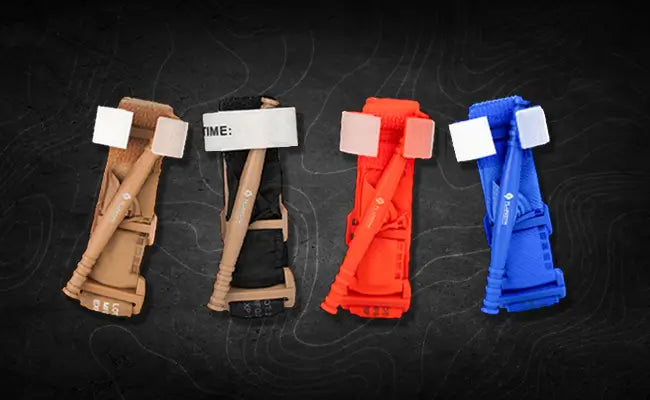
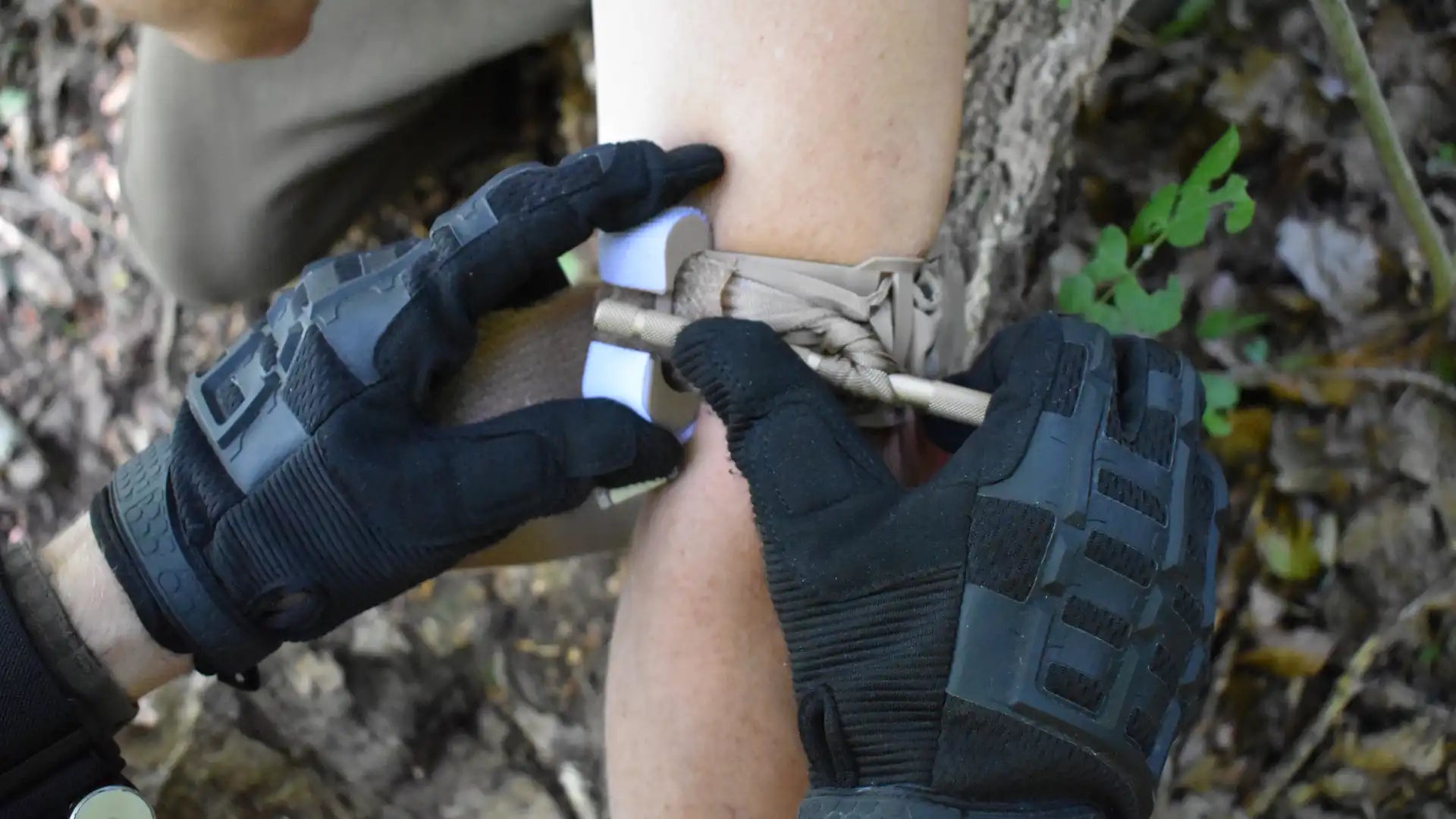
If you are dealing with a severe arm or leg injury and your direct pressure is not stopping the spurt, you must move to a tourniquet. A professional windlass tourniquet is a life-saving tool that completely shuts off the blood supply to a limb. Place it high and tight, usually 2 to 3 inches above the wound, but never on a joint. You must twist the windlass until the bleeding stops completely. It will be very painful for the victim, but it is necessary to keep them from bleeding to death. Once the tourniquet is set, do not loosen it; only a doctor in a hospital should remove it. Record the time you applied it so the medical team knows how long the blood flow has been restricted.
Factors That Complicate Severe Bleeding
Identifying the signs of severe bleeding is harder when certain factors interfere with the body's natural ability to clot. In the United States, a large portion of the population takes blood thinners (anticoagulants) like Aspirin or Warfarin for heart health. For these individuals, even a medium-sized cut can lead to life-threatening loss because their clotting clock is much slower. Another major complication is hypothermia. When a victim loses blood, they lose the ability to regulate their temperature. If their body temperature drops, the chemical reactions needed for clotting stop working, a dangerous cycle known as the lethal triad of trauma. This is why keeping a victim warm with blankets is just as important as stopping the physical leak.
Age Factors: Identifying Bleeding in Infants and the Elderly
The signs of severe bleeding can look different depending on who you are helping. Infants have very little blood volume to begin with, so a small amount of blood on the floor is a massive emergency for them. An infant in shock may become limp (like a rag doll) or have a very weak cry. On the other end of the spectrum, elderly individuals may not show a rapid heart rate even if they are bleeding internally because of blood pressure medications like beta-blockers. For older adults, you should rely more on physical signs like sudden paleness or a change in their level of alertness rather than waiting for their pulse to speed up.
Frequently Asked Question
How much blood loss causes a person to pass out?
Most adults will begin to lose consciousness or feel extremely lightheaded after losing about 20% to 30% of their total blood volume (roughly 1.5 liters). Once a person passes out from blood loss, it is a sign that the brain is no longer receiving enough oxygen, and immediate life-saving action is required.
Can you bleed to death from a small cut?
Yes, if the person has a bleeding disorder like hemophilia or is taking high doses of blood-thinning medication. In these cases, the blood does not have the glue needed to seal the vessel, and even a small wound can lead to a slow but steady drain of the body's total blood supply over several hours.
What does arterial spray look like?
Arterial spray is a bright red, rhythmic jet of blood that syncs with the heart's pumping action. Unlike a slow drip, it often has enough pressure to travel several feet away from the body. It is the most urgent sign that an artery has been severed and requires a tourniquet or heavy pressure immediately.
How do I know if internal bleeding is an emergency?
If the person has suffered a high-impact injury and shows signs of shock, such as cold skin, a fast pulse, and confusion, it is an emergency. You cannot wait for a bruise to appear, as the bleeding is happening deep inside. Call 911 immediately and keep the person still and warm.
Essential Gear: Preparing for the Signs
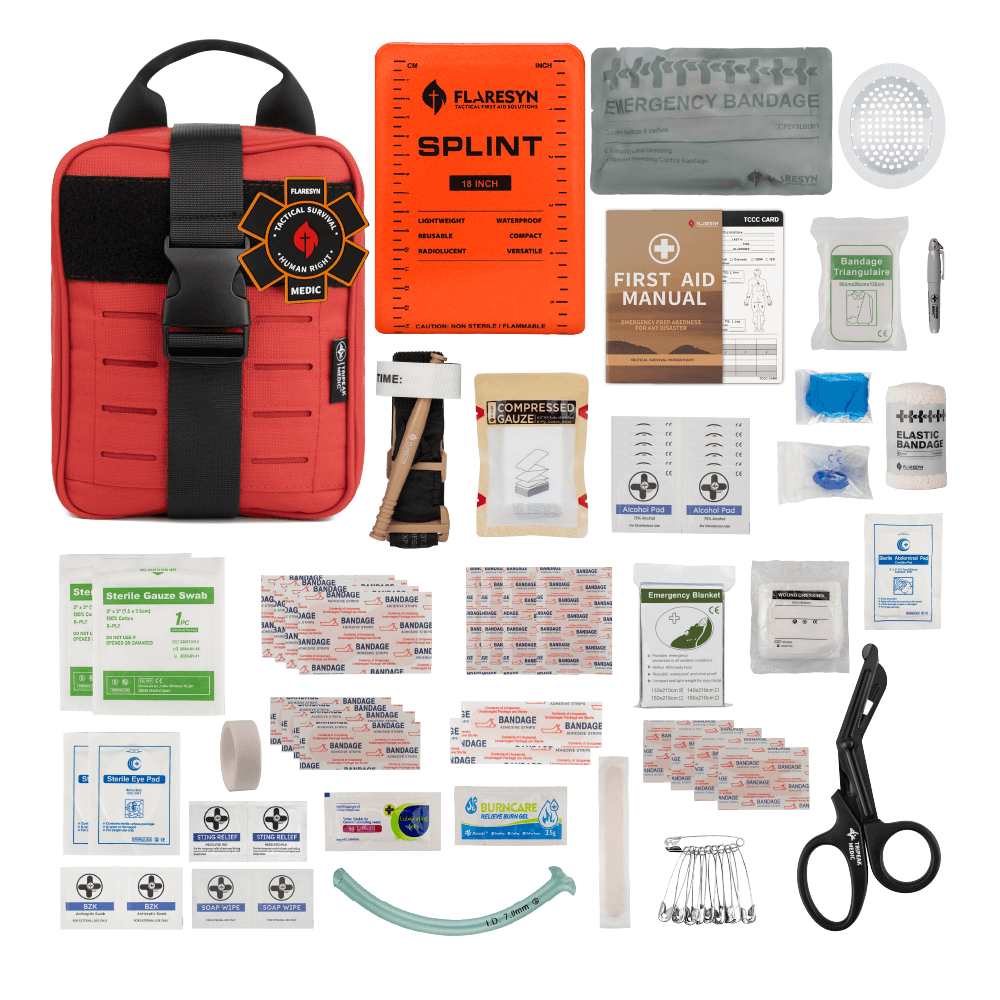
Having the knowledge to recognize the signs of severe bleeding is only half the battle; you also need the right tools to stop it. An Individual First Aid Kit (IFAK) from FlareSyn is a professional-grade solution that puts life-saving gear in your hands. These kits are not just standard bandages; they include items like windlass tourniquets, which are the only reliable way to stop arterial spray, and trauma shears to quickly cut through heavy denim or leather to find the source of the blood. Keeping a kit in your car and your home ensures that once you identify a Red Flag, you can move straight into action without wasting time looking for supplies.
Final Thought: Trusting Your Instincts
When it comes to severe bleeding, it is always better to be over-prepared than to wait and see. If you look at a wound and your gut feeling tells you it is too much blood, treat it as a life-threatening emergency. The physical and visual signs we have discussed, the spurting, the pooling, the cold skin, and the confusion, are your cues to take control of the situation. By staying calm and using the tools available in your FlareSyn kit, you provide the critical bridge between the moment of injury and the arrival of professional medical help. Remember, your eyes identify the problem, but your hands and your gear are what provide the solution.