Équipement médical tactique essentiel pour chaque premier intervenant : ce qu’il faut dans votre kit
En cas d'urgence, les premiers intervenants sont les premiers sur les lieux, gérant des situations à très forte pression où chaque seconde compte. Que vous soyez ambulancier, technicien ambulancier, pompier ou agent des forces de l'ordre, votre capacité à agir rapidement et efficacement peut sauver des vies. Cependant, disposer des bons outils est tout aussi important que les compétences que vous apportez à votre travail.
L’un des éléments les plus essentiels de l’équipement de tout intervenant de première urgence est une trousse médicale tactique. Ces trousses sont spécialement conçues pour fournir des soins traumatologiques vitaux dans des environnements à forte pression. Contrairement aux trousses de premiers secours standard, le matériel médical tactique est conçu pour un déploiement rapide, la durabilité et la polyvalence. Mais que devrait contenir exactement votre trousse ? Qu’est-ce qui différencie une trousse médicale tactique, et comment vous assurer que la vôtre est parfaitement équipée pour toute urgence ?
Comprendre le matériel médical tactique : qu’est-ce qui le distingue ?
Le matériel médical tactique désigne des équipements de haute qualité, conçus pour un usage spécifique par les premiers intervenants, en particulier dans les situations de prise en charge des traumatismes. Contrairement aux trousses de premiers secours de base, qui peuvent contenir des fournitures génériques pour les blessures mineures, les kits tactiques sont conçus pour traiter des traumatismes graves, notamment les blessures par balle, les hémorragies sévères, les plaies thoraciques et d’autres blessures critiques. Ces kits sont fabriqués pour résister à des environnements difficiles tels que les zones de combat, les accidents de véhicules à moteur ou les lieux isolés, où les structures médicales standard peuvent ne pas être accessibles.
Caractéristiques clés du matériel médical tactique
Les kits médicaux tactiques présentent quelques caractéristiques distinctives qui les démarquent des trousses de premiers secours de base :
-
durability: L’équipement tactique est conçu pour résister aux rigueurs du terrain, notamment à l’exposition aux intempéries et à une manipulation brutale. Des matériaux comme les tissus résistants à l’eau et les fermetures éclair renforcées garantissent que l’équipement résiste même aux conditions les plus difficiles.
-
Portabilité: Le matériel médical tactique est compact et facile à transporter. Il est conçu pour être léger et facile à ranger dans les véhicules, sur vous ou sur des systèmes MOLLE spécialisés.
-
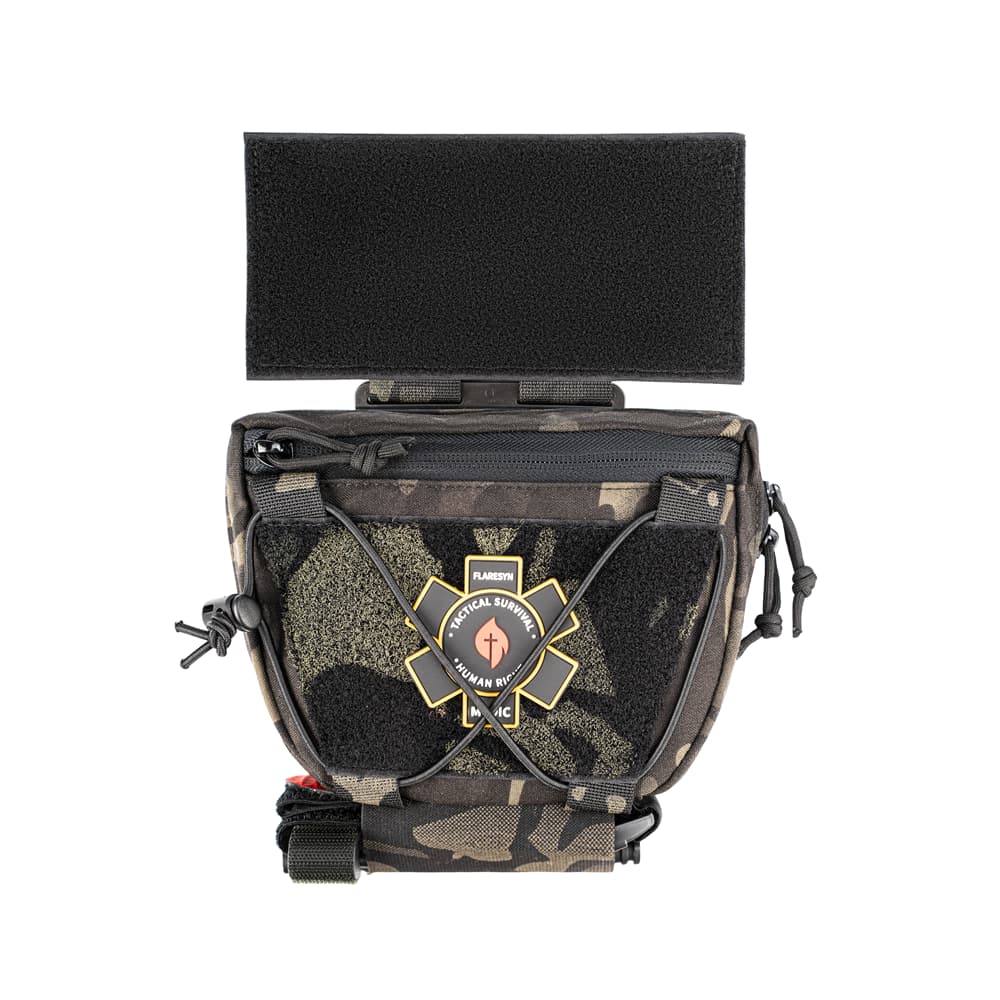
Accessibilité: Le temps est crucial lors des situations traumatiques. Les kits médicaux tactiques sont conçus pour un accès rapide afin que les premiers intervenants puissent saisir ce dont ils ont besoin sans hésitation. Les kits comportent souvent des compartiments avec des pochettes faciles à ouvrir ou des boucles élastiques pour garder les éléments essentiels à portée de main.
Pourquoi les kits tactiques sont essentiels pour les premiers intervenants
Chaque intervenant de première ligne doit comprendre l’importance des kits tactiques, car ils sont conçus pour stabiliser les traumatismes avant qu’une prise en charge médicale plus avancée soit disponible. Que vous soyez confronté à un accident de voiture avec des blessures graves ou que vous interveniez lors d’une fusillade ou d’une explosion, votre capacité à agir rapidement avec les bons outils est cruciale.
Dans des situations mettant la vie en danger, il ne suffit pas simplement d’arrêter l’hémorragie ou de pratiquer une réanimation cardio-pulmonaire. Le matériel médical tactique est conçu pour prendre en charge un large éventail de blessures, et son efficacité peut faire la différence entre la vie et la mort jusqu’à l’arrivée d’une aide médicale plus complète.
Une trousse médicale tactique bien garnie est essentielle pour chaque premier intervenant. Que vous soyez confronté à un traumatisme, des brûlures ou des urgences médicales, FlareSyn propose une gamme complète de trousses et d’équipements de haute qualité conçus pour une intervention rapide aux États-Unis. Découvrez notre Kits médicaux tactiques pour trouver tout ce dont vous avez besoin pour rester préparé
Composants essentiels d’un kit médical tactique : que doit-il contenir ?
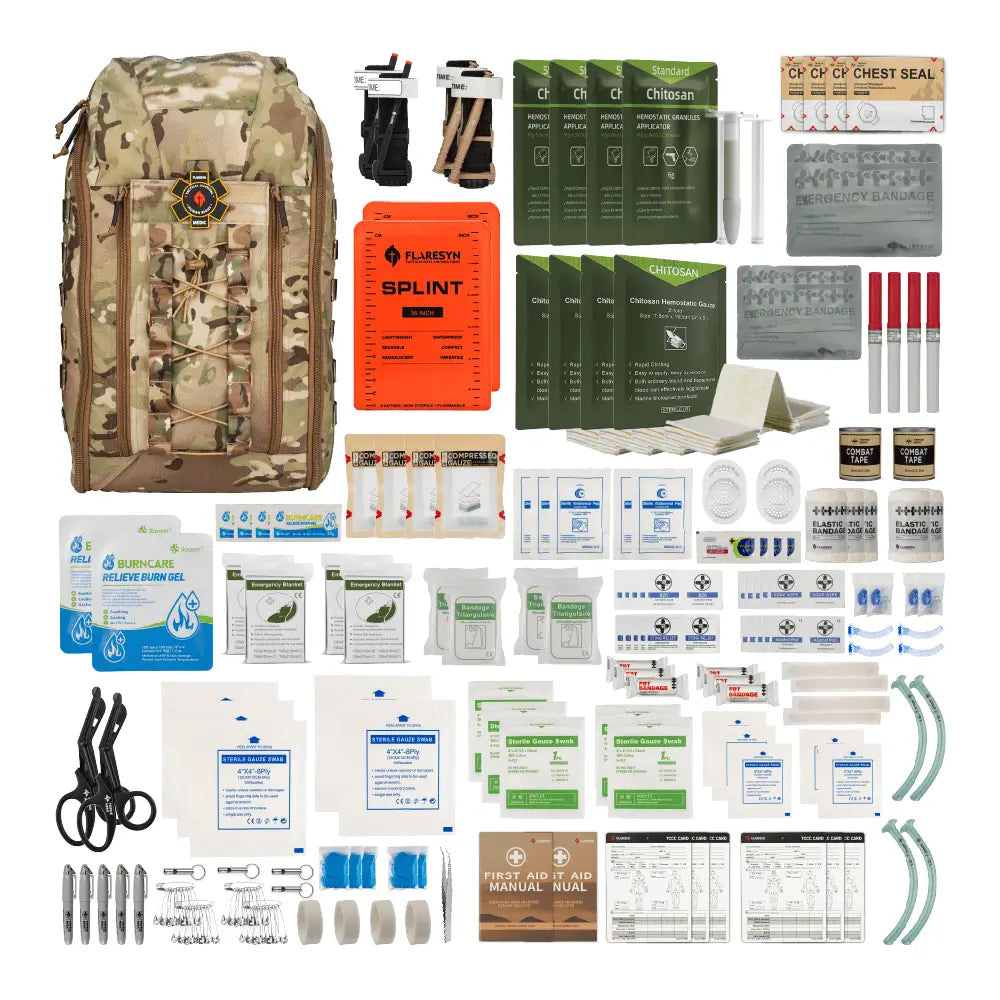
Une trousse médicale tactique bien équipée doit inclure une gamme d’articles permettant de traiter en priorité les blessures graves les plus courantes auxquelles les premiers intervenants sont confrontés. Vous trouverez ci-dessous une présentation des composants essentiels :
1. Garrots
Les garrots sont l’un des outils les plus essentiels pour stopper une hémorragie grave. Les trousses médicales tactiques comprennent généralement un CAT (Combat Application Tourniquet) ou un SOF-T (Special Operations Forces Tactical Tourniquet), tous deux largement reconnus pour leur efficacité et leur facilité d’utilisation. Ils sont conçus pour arrêter les saignements dus à des blessures aux membres jusqu’à ce que la victime puisse être transportée vers des soins avancés.
2. Gaze hémostatique
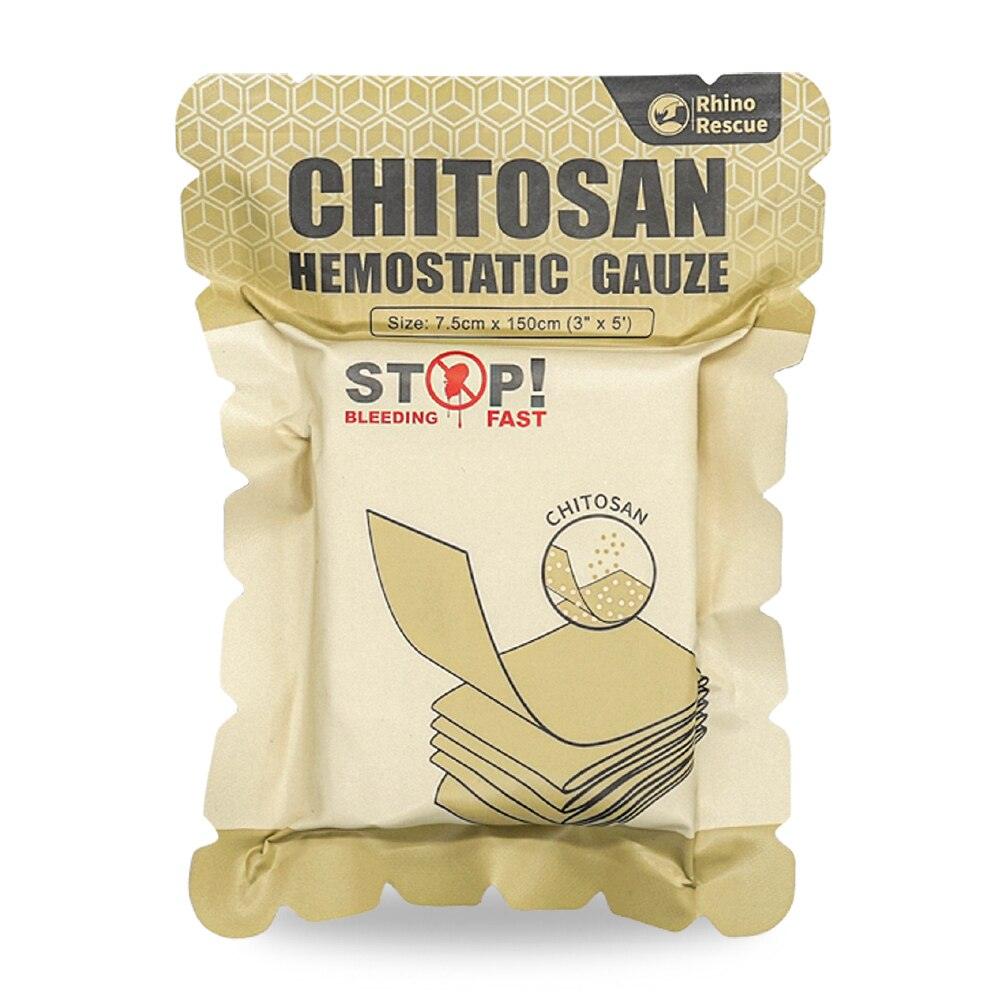
Cette gaze est enduite d’une substance qui aide à accélérer la coagulation du sang, ce qui la rend inestimable pour traiter les hémorragies importantes causées par des coupures profondes ou des plaies. La gaze au chitosane ou QuikClot est couramment incluse dans les kits tactiques.
3. Pansements occlusifs thoraciques
Les pansements occlusifs thoraciques sont essentiels pour traiter les plaies thoraciques ouvertes causées par des blessures par balle, des coups de couteau ou des accidents de voiture. Ils forment un joint hermétique pour empêcher l’air d’entrer dans la cavité thoracique, réduisant ainsi le risque de pneumothorax (affaissement du poumon). Un bon kit de pansement occlusif thoracique comprend généralement un matériau hydrocolloïde qui adhère à la peau et crée une fermeture efficace.
4. Pansements de combat et bandages compressifs
Ces pansements exercent une pression pour contrôler les saignements et peuvent être utilisés sur une variété de blessures, y compris les traumatismes abdominaux et les plaies aux extrémités. Un pansement compressif peut appliquer une compression directe sur une plaie, ce qui est essentiel pour contrôler les saignements et stabiliser le patient.
5. Outils de gestion des voies respiratoires
Lorsqu’une obstruction des voies respiratoires survient chez un patient, il est essentiel de rétablir rapidement la respiration. Les sondes nasopharyngées (NPA) sont incluses dans les kits tactiques pour cette raison. Elles sont moins invasives que les sondes endotrachéales et peuvent être insérées rapidement pour dégager les voies respiratoires, en particulier chez un patient traumatisé ou inconscient.
6. Attelles
Les blessures comme les membres fracturés ou les luxations nécessitent une immobilisation pour éviter d’aggraver les dommages. Les kits tactiques contiennent souvent des rouleaux d’attelles, des attelles SAM ou des attelles à dépression pour aider à stabiliser les fractures dans des environnements sous haute pression.
7. Couvertures thermiques
Les couvertures thermiques (ou en Mylar) sont utilisées pour prévenir l’hypothermie en retenant la chaleur du corps. Elles sont légères, compactes et peuvent être déployées en quelques secondes pour protéger le patient du froid, en particulier en extérieur ou en situation d’urgence.
Le rôle des médicaments et des agents topiques
Une trousse médicale tactique complète peut également inclure des médicaments et des agents topiques pour aider à gérer la douleur et prévenir l’infection. De l’aspirine, des lingettes antiseptiques et des antibiotiques peuvent être inclus pour traiter les blessures et gérer la fièvre, tandis que des antidouleurs peuvent apporter un soulagement jusqu’à ce que le patient puisse recevoir des soins supplémentaires. Des agents topiques comme des pommades antibiotiques peuvent être appliqués sur des coupures mineures ou des abrasions pour prévenir l’infection.
Outils avancés : kits de décompression à l’aiguille, seringues de rinçage au sérum physiologique et équipement IV
Pour les intervenants formés aux soins avancés de réanimation, certains kits médicaux tactiques contiennent également des outils avancés de gestion des voies respiratoires, notamment des kits de décompression à l’aiguille pour traiter le pneumothorax sous tension et du matériel de perfusion IV pour l’hydratation ou l’administration de médicaments. Ces articles se trouvent souvent dans des kits destinés aux ambulanciers paramédicaux ou à d’autres professionnels de santé ayant une formation avancée.
Choisir le bon kit médical tactique : taille, conception et accessibilité
Petit ou grand sac ? Déterminer la bonne taille
La taille de votre trousse médicale tactique dépend de votre rôle et de votre environnement. En tant que premier intervenant, vous devrez déterminer si vous transporterez une trousse individuelle, une trousse fixée à un véhicule ou une trousse de traumatologie d’équipe.
Small Bag (IFAK - Trousse de premiers secours individuelle)
Une IFAK est une petite trousse portable qui comprend les éléments les plus essentiels pour des soins immédiats à soi-même ou pour traiter un seul patient. Elle peut être portée sur vous (par ex., à votre ceinture ou sur votre gilet) et est conçue pour un accès rapide en situation d’urgence. IFAKs sont parfaits pour les ambulanciers, les policiers ou les pompiers qui ont besoin d’un accès rapide à l’équipement de base pour les traumatismes.
Grand sac (kit de traumatologie complet)
Une trousse de traumatologie complète est plus grande et généralement stockée dans un véhicule ou sur une unité d’intervention d’urgence. Ces trousses peuvent contenir une gamme plus large de fournitures pour plusieurs patients ou des traumatismes graves. Elles peuvent contenir tout, des outils de gestion des voies respiratoires aux médicaments, en passant par de l’équipement de traumatologie avancé.
Concevoir un kit de traumatologie pour plus d’efficacité
Lors de la conception de votre trousse médicale tactique, vous devez penser à son organisation et à sa facilité d’accès. Les meilleures trousses de traumatologie offrent :
-
Compatibilité MOLLE: De nombreux kits tactiques sont compatibles avec le système MOLLE, ce qui permet de les fixer solidement à des équipements tels que des gilets, des sacs à dos ou des véhicules.
-
French Organisation claire: Les articles doivent être rangés dans des compartiments ou des pochettes pour pouvoir être rapidement repérés. Des compartiments codés par couleur ou des pochettes transparentes peuvent vous aider à trouver ce dont vous avez besoin sous pression.
-
Accessibilité: Le placement de l’équipement est essentiel pour un déploiement rapide. Les articles utilisés le plus fréquemment doivent être rangés en haut ou dans des pochettes faciles d’accès.
Rendre votre kit accessible : emplacement et fonctionnalités d'accès rapide
Une fois que vous avez déterminé la taille et la conception adaptées à votre kit tactique, concentrez-vous sur son emplacement. Votre kit doit être placé dans un endroit où vous pouvez y accéder rapidement en cas d’urgence, par exemple dans la boîte à gants de votre véhicule, sur votre gilet ou dans une poche latérale de votre sac d’équipement. Envisagez un système d’ouverture rapide pour ouvrir votre kit sans tâtonner en situation de crise.
4. Personnaliser votre trousse médicale tactique : adaptez-la à vos besoins
Tous les premiers intervenants ne font pas face aux mêmes situations, et chaque rôle nécessite des outils différents dans son kit médical tactique. Bien que certains articles soient indispensables pour tous (comme les garrots et les pansements thoraciques occlusifs), adapter votre kit aux exigences spécifiques de votre métier est essentiel pour intervenir efficacement. Voici comment différents premiers intervenants peuvent personnaliser leur kit :
Techniciens ambulanciers et paramédics
Pour Techniciens ambulanciers et paramédicaux, l’objectif principal est de stabiliser les patients et de les préparer au transport. Ces professionnels sont souvent confrontés à une grande variété d’urgences médicales, allant des traumatismes à des affections médicales telles que les crises cardiaques ou les convulsions. Les EMT ont généralement besoin d’un équipement permettant une intervention rapide et une prise en charge jusqu’à ce qu’un patient puisse être transféré à l’hôpital. Cela comprend des fluides IV, des outils avancés pour les voies respiratoires comme le matériel d’intubation, ainsi que des médicaments pour gérer la douleur et prévenir les complications. Les paramedics, grâce à leur formation avancée, peuvent disposer d’outils supplémentaires tels que des défibrillateurs, des dispositifs avancés de gestion des voies respiratoires et du matériel de surveillance pour les patients en état critique.
Policiers
Les policiers travaillent souvent dans des environnements à haut risque, comme des situations de tireur actif ou des confrontations violentes. Leurs trousses médicales doivent privilégier les soins traumatologiques, en particulier pour les blessures par balle, les hémorragies sévères et les traumatismes contondants. Leurs trousses doivent contenir du matériel de traumatologie balistique, notamment des pansements thoraciques occlusifs, de la gaze hémostatique et des garrots, spécialement conçus pour les blessures potentiellement mortelles souvent rencontrées dans l’exercice de leurs fonctions. Les agents des forces de l’ordre peuvent également transporter des trousses plus petites, comme un IFAK (trousse de premiers secours individuelle), fixées à leur équipement pour un accès rapide en cas d’urgence.
Pompiers
Pour les pompiers, les risques auxquels ils font face sont uniques, principalement liés aux brûlures, aux lésions respiratoires dues à l’inhalation de fumée, et aux traumatismes causés par des effondrements de bâtiments ou des accidents de véhicule. Leurs kits médicaux tactiques doivent être équipés pour faire face à ces dangers ; ils ont donc besoin d’outils spécialisés comme des pansements pour brûlures et des gels rafraîchissants, de protections respiratoires telles que des masques à oxygène, ainsi que d’équipements pour traiter les fractures ou les blessures par écrasement. Les pompiers peuvent également emporter des poches d’hydratation et des solutions électrolytiques pour prévenir les coups de chaleur lors de longues gardes ou après un effort dans des environnements à haute température.
Ajout d’équipement spécialisé pour les traumatismes
En tant que secouriste, vous devez réfléchir aux types précis de blessures que vous êtes susceptible de rencontrer et à la façon d’adapter votre kit pour traiter efficacement ces situations. Envisagez d’inclure :
-
Kits de traumatologie pédiatrique: Si vous travaillez dans des zones comptant une importante population d’enfants, envisagez d’inclure des kits de traumatologie pédiatrique. Ces kits sont adaptés aux besoins médicaux des enfants et contiennent du matériel de taille appropriée, comme des outils de gestion des voies respiratoires plus petits, des attelles et des bandages. Les soins pédiatriques nécessitent une attention particulière, et disposer d’outils de la bonne taille dans votre kit vous permet de traiter efficacement les jeunes patients.
-
Kits de soins pour brûlures: Un autre ajout important est un kit de soins pour brûlures. Ces kits sont essentiels pour traiter les brûlures, fréquentes dans des environnements comme les incendies ou les accidents industriels. Les kits de soins pour brûlures doivent contenir des gels refroidissants, des pansements pour brûlures et du matériel de gestion de la douleur, tous conçus pour apporter un soulagement immédiat et réduire les complications liées aux brûlures.
-
Fournitures pour temps froid ou chaud: Si vous travaillez dans des conditions météorologiques extrêmes, que ce soit dans des environnements très froids ou très chauds, assurez-vous que votre kit contient des outils de régulation thermique comme des chauffe-mains ou des packs rafraîchissants. Ces ajouts aident à prévenir l’hypothermie ou le coup de chaleur, deux affections qui peuvent rapidement mettre la vie en danger si elles ne sont pas prises en charge.
French En vous concentrant sur votre rôle et votre environnement spécifiques, vous vous assurez que votre kit est équipé des outils dont vous aurez besoin sur le terrain, quelle que soit la situation.
Configuration d’un kit médical tactique : comment organiser votre équipement pour une efficacité maximale
IFAK (trousse de premiers secours individuelle) vs. trousse de traumatologie complète
Pour choisir entre un IFAK (trousse de premiers secours individuelle) et une trousse de traumatologie complète, il est essentiel de réfléchir à votre environnement et à l’étendue des soins que vous allez fournir. Les deux types de trousses sont indispensables, mais ils répondent à des usages différents.
IFAK (trousse de premiers secours individuelle)
Un IFAK est un kit plus petit et autonome, destiné à être utilisé par un seul intervenant. Il est conçu pour être porté sur soi (généralement à la ceinture ou sur un gilet), ce qui le rend très portable et facilement accessible. Les IFAK sont idéaux dans les situations où vous pourriez avoir besoin de vous soigner vous-même ou de prendre en charge une seule victime jusqu'à l'arrivée des renforts. Ils contiennent généralement :
-
Tourniquets (CAT ou SOF-T).
-
Pansements thoraciques.
-
Gaze hémostatique.
-
Bandages compressifs.
-
Gants et cisailles pour couper les vêtements.
Les IFAK sont parfaits pour les intervenants d’urgence qui doivent garder sur eux l’équipement essentiel pour une intervention immédiate, comme les policiers, les pompiers et les ambulanciers en patrouille.
Trousse de traumatologie complète
Une trousse de traumatologie complète est plus grande et plus complète, conçue pour une utilisation en équipe ou pour le stockage dans un véhicule. Ces trousses contiennent souvent plusieurs jeux d’outils et de fournitures, notamment des dispositifs de gestion des voies respiratoires, des liquides IV, des défibrillateurs et du matériel de soin des brûlures. Les trousses de traumatologie complètes conviennent le mieux aux ambulanciers paramédicaux, aux pompiers ou aux unités d’intervention d’urgence en équipe.
Le principal avantage d’un kit de traumatologie complet est sa capacité. Il peut aider une équipe à prendre en charge plusieurs victimes à la fois, ce qui le rend idéal pour les incidents de grande ampleur tels que les accidents de la route, les événements à victimes multiples ou les situations de tireur actif.
Caractéristiques essentielles d’un IFAK bien approvisionné
Que vous optiez pour un IFAK ou un kit de traumatologie complet, il est essentiel de veiller à ce que votre kit soit bien approvisionné avec l’essentiel. Un bon IFAK doit inclure :
-
Garrot: Essentiel pour contrôler les hémorragies des membres mettant la vie en danger.
-
Pansement thoracique occlusif: Pour traiter les plaies thoraciques aspirantes.
-
Gaze hémostatique: Pour aider le sang à coaguler et à contrôler les saignements.
-
Bandage compressif: Pour stabiliser les blessures graves.
-
Ciseaux d'urgence: Pour couper rapidement des vêtements ou des ceintures de sécurité en cas d'urgence.
-
French Gants en nitrile: Pour prévenir les infections et vous protéger pendant le traitement.
Lorsque vous garnissez votre IFAK, il est essentiel de privilégier les articles vitaux, rapides à utiliser et faciles d’accès en situation de stress.
S’organiser pour aller vite : meilleures pratiques pour l’équipement
Une bonne organisation de votre trousse médicale tactique peut faire la différence entre la vie et la mort en situation d'urgence. Voici quelques conseils pour une configuration optimale de votre trousse :
-
Accessibilité: Rangez les articles que vous utiliserez le plus souvent (p. ex., les garrots, la gaze hémostatique) dans les compartiments supérieurs ou les pochettes les plus extérieures.
-
Code couleur: Utilisez des compartiments ou des étiquettes codés par couleur pour distinguer les différents types de matériel (par ex., rouge pour le contrôle des saignements, bleu pour la gestion des voies respiratoires).
-
Sacs Ziploc et étiquettes: Utilisez des sacs Ziploc transparents pour ranger les petits objets et étiquetez-les pour les identifier facilement. Cela peut vous faire gagner de précieuses secondes lorsque vous êtes en pleine urgence.
-
Compacité: Gardez votre kit compact sans sacrifier les outils essentiels. Plus le kit est épuré et organisé, plus vous pouvez accéder rapidement à votre équipement et le déployer.
Kits spécialisés pour les urgences particulières : au-delà des bases
Kits de traumatologie pour véhicules : équipement pour la route
Dans les situations d’urgence impliquant des accidents de la route, vous aurez souvent besoin d’outils spécialisés pour désincarcérer les victimes et leur prodiguer des soins. Un Kit de traumatologie pour véhicule doit être compact, facilement accessible et rempli d’équipement spécialement conçu pour les blessures liées à la voiture. Les éléments clés à inclure sont :
-
Coupe-ceintures et brise-vitres pour secourir rapidement les victimes piégées dans des véhicules.
-
Cisailles de secours pour couper les ceintures de sécurité ou les vêtements.
-
Garrots et bandages compressifs pour contrôler les saignements sévères.
-
Colliers cervicaux pour stabiliser le cou pendant le transport.
-
Systèmes d’administration d’oxygène pour les patients en détresse respiratoire.
Avoir ces outils facilement à portée de main peut considérablement améliorer votre temps de réaction lors d’une urgence liée à un véhicule.
Entretien et mise à jour de votre trousse médicale tactique : la garder prête à l’action
Avoir une trousse médicale tactique bien garnie n’est que la moitié du combat. Pour qu’elle soit toujours prête à l’emploi, un entretien régulier et des mises à jour sont essentiels. Avec le temps, certains articles peuvent expirer, être endommagés ou s’user, et les besoins de votre environnement peuvent évoluer. Maintenir votre trousse en parfait état est indispensable pour garantir que, le moment venu, vous disposiez de tout ce dont vous avez besoin pour sauver des vies.
Vérifiez régulièrement et remplacez les articles périmés
Avant tout, il est important de vérifier régulièrement les dates de péremption et l’état des articles de votre kit. De nombreuses fournitures, comme les médicaments, les bandages et les agents hémostatiques, ont une durée de conservation, et l’utilisation de matériel périmé peut compromettre leur efficacité. Les étapes suivantes vous aideront à garder votre kit en parfait état :
-
Définir un calendrier: Prenez l’habitude d’inspecter votre trousse tous les trois à six mois. Lors de cette inspection, vérifiez les dates d’expiration, les scellés et l’intégrité de l’emballage. Des articles comme les compresses de gaze et les garrots peuvent avoir des dates d’expiration, tandis que d’autres, comme les pansements pour brûlures, peuvent perdre de leur efficacité avec le temps.
-
Remplacez immédiatement les articles expirés: Si un article est périmé ou endommagé, il est essentiel de le remplacer immédiatement. Même de petits articles comme les gants en nitrile ou les compresses alcoolisées peuvent se détériorer avec le temps et doivent être réapprovisionnés régulièrement.
-
Vérifiez l'absence de tout dommage physique: Avec le temps, les sacs, pochettes ou composants comme les fermetures éclair et le Velcro peuvent s’user. Assurez-vous que tous les compartiments sont intacts et faciles à ouvrir en cas d’urgence.
De plus, les articles tels que les médicaments (p. ex., l’aspirine, les antibiotiques ou l’épinéphrine) doivent être remplacés avant leur date d’expiration, car leur efficacité diminue avec le temps. Les fluides IV et les solutions salines stériles ont également une durée de conservation limitée ; vérifiez donc l’absence de fuites, de déchirures ou de tout signe de contamination avant utilisation.
Quand mettre à jour votre kit
Votre kit médical tactique n’est pas figé. À mesure que vous gagnez en expérience ou que votre rôle évolue, les éléments de votre kit peuvent nécessiter une mise à niveau ou des modifications. Certaines situations peuvent exiger l’ajout d’outils ou le remplacement de l’équipement existant afin de répondre à des besoins en constante évolution.
Envisagez de mettre à jour votre kit lorsque :
-
De nouvelles directives médicales sont introduites: Les avancées en matière de prise en charge des traumatismes ou les protocoles des premiers intervenants peuvent recommander de nouveaux équipements ou de nouvelles techniques. Par exemple, il peut y avoir des mises à jour concernant les recommandations sur les garrots ou de nouvelles méthodes de contrôle des saignements. Maintenir votre kit à jour selon les dernières pratiques fondées sur les preuves vous garantit d’être prêt pour les situations d’urgence modernes.
-
Changements environnementaux ou situationnels: Si vous passez à un environnement de travail différent ou faites face à de nouveaux risques (comme un déménagement dans une zone sujette aux feux de forêt, l’acceptation de davantage de missions à distance ou l’intervention lors d’incidents à victimes multiples), votre kit devra peut-être être adapté pour répondre à ces dangers spécifiques.
-
Modifications de l'entraînement personnel: À mesure que vous progressez dans votre formation, vous constaterez peut-être que vous êtes qualifié pour utiliser un équipement plus avancé, comme des outils d’intubation, des défibrillateurs ou du matériel de perfusion IV. Si votre niveau de certification augmente, mettre à jour votre kit pour qu’il corresponde à vos nouvelles compétences vous permettra d’être prêt pour des interventions de niveau supérieur.
Comment utiliser votre équipement médical tactique : entraînement et pratique
Avoir une trousse bien garnie et bien organisée n’est qu’une partie de l’équation. Savoir comment savoir utiliser l’équipement qu’il contient est tout aussi important. Les premiers intervenants doivent maîtriser l’utilisation de l’équipement de leurs kits médicaux tactiques, ce qui nécessite une formation continue formation et pratique. Plus vous serez familiarisé avec votre kit et son contenu, plus vous pourrez réagir rapidement et efficacement quand cela comptera le plus.
Pourquoi la formation est cruciale pour les premiers intervenants
La formation est essentielle car elle garantit que les premiers intervenants peuvent gérer prise en charge des traumatismes dans des situations de stress intense. Le matériel d’un kit médical tactique n’est pas toujours intuitif, et sans entraînement, il peut falloir de précieuses secondes pour comprendre comment utiliser un garrot ou un pansement thoracique lors d’une véritable urgence.
De nombreux kits contiennent également des outils avancés de prise en charge des traumatismes qui nécessitent des techniques spécifiques, comme la décompression à l’aiguille ou l’intubation. Sans formation adéquate, une mauvaise utilisation de ces outils pourrait nuire au patient ou retarder le traitement.
En plus des compétences cliniques, la formation aide également les premiers intervenants à se familiariser avec l’organisation de leur kit, afin de pouvoir accéder rapidement à chaque élément lorsque nécessaire. La simulation de scénarios réels pendant la formation, comme des situations traumatiques impliquant des blessures par balle, des brûlures ou des désincarcérations de véhicules, vous aidera aussi à développer une mémoire musculaire, vous permettant d’agir instinctivement dans des situations de forte pression.
Meilleurs programmes de formation à l'utilisation du matériel médical tactique
Plusieurs programmes de formation sont conçus pour améliorer l’efficacité des premiers intervenants avec l’équipement de leurs kits. Par exemple, Tactical Combat Casualty Care (TCCC) est un cours largement reconnu qui forme les secouristes militaires et civils à dispenser des soins vitaux en situation de combat ou de catastrophe. Les cours TCCC mettent l’accent sur le contrôle des hémorragies, la gestion des voies aériennes et la réanimation de contrôle des dommages, qui sont des aspects clés des soins traumatologiques auxquels les premiers intervenants sont souvent confrontés.
Support vital de base (BLS) et Soins avancés en réanimation cardiovasculaire (ACLS) fr ces cours sont également très bénéfiques pour les premiers intervenants, car ils couvrent la RCR, la défibrillation et les soins avancés pour les urgences cardiaques. Ces programmes garantissent que les intervenants maîtrisent bien les techniques de base pour sauver des vies avant de passer à des interventions plus complexes.
De nombreux services locaux d’incendie et de secours, organismes des forces de l’ordre et hôpitaux proposent des formations pratiques à l’utilisation de matériel médical tactique, souvent dans des environnements de simulation. Ces programmes offrent une expérience inestimable dans l’application de traitements vitaux en situation de stress, ce qui est essentiel lorsque vous êtes appelé sur les lieux d’une urgence.
Simulation de scénarios réels
Créer des scénarios d’entraînement réalistes vous aidera à vous habituer à votre kit et à réagir plus efficacement quand cela comptera. Par exemple, entraînez-vous à poser un garrot ou à sceller une plaie thoracique sous la pression du temps ou dans des conditions loin d’être idéales. Plus vous vous entraînerez fréquemment, plus l’utilisation de votre matériel médical deviendra intuitive, ce qui vous rendra plus confiant et plus efficace lors de véritables urgences.
La formation doit être continue. Même les intervenants expérimentés devraient revoir régulièrement les compétences clés, d’autant plus que les techniques, les protocoles et les bonnes pratiques peuvent évoluer au fil du temps.
FAQ sur le matériel médical tactique pour les premiers intervenants
Quelle est la différence entre un kit de traumatologie tactique et une trousse de premiers secours classique ?
Une trousse de traumatologie tactique est spécialement conçue pour prendre en charge des blessures graves mettant la vie en danger, telles que les blessures par balle, les coups de couteau et les hémorragies importantes. Elle comprend des outils comme des garrots, des pansements occlusifs thoraciques et de la gaze hémostatique, qui ne se trouvent généralement pas dans les trousses de premiers secours classiques. Ces trousses sont conçues pour des environnements à haut stress où une intervention rapide est essentielle.
Puis-je emporter du matériel médical tactique au travail sans certification ?
Cela dépend de votre rôle et de la réglementation en vigueur dans votre juridiction locale. Bien que de nombreux EMT et ambulanciers paramédicaux soient formés à utiliser du matériel médical tactique, d'autres premiers intervenants, comme les policiers ou les pompiers, peuvent ne pas avoir le même niveau de certification médicale.
À quelle fréquence dois-je remplacer les articles de mon kit de traumatologie ?
Vous devez vérifier régulièrement votre kit pour repérer les articles périmés et les remplacer immédiatement. La plupart des articles, comme les bandages, les médicaments et les garrots, ont des dates d’expiration. Les ciseaux de traumatologie et les autres équipements réutilisables doivent être contrôlés pour détecter toute usure. Des vérifications régulières tous les trois à six mois sont recommandées.
Que dois-je faire si mon équipement tactique est endommagé ?
Si votre kit tactique est endommagé, il est crucial de remplacer les éléments abîmés dès que possible. Des sacs détériorés ou des fermetures éclair cassées peuvent rendre difficile l’accès rapide au kit en cas d’urgence ; vérifiez donc toujours l’absence de dommages structurels lors des contrôles de routine. Remplacez tout élément non fonctionnel afin de préserver l’intégrité de votre kit.
Puis-je personnaliser mon IFAK pour des besoins spécifiques ?
Oui, vous pouvez personnaliser votre IFAK pour l’adapter à votre rôle ou à votre environnement spécifiques. De nombreux intervenants de première ligne ajoutent des outils personnalisés ou ajustent leur kit en fonction des types de blessures qu’ils sont le plus susceptibles de traiter, comme des outils pédiatriques ou du matériel de soins pour brûlures. La personnalisation vous garantit d’être toujours équipé pour relever les défis propres à votre métier.
Conclusion : soyez prêt, soyez bien équipé
Une trousse médicale tactique bien approvisionnée, organisée et régulièrement entretenue est essentielle pour chaque intervenant de première ligne. Que vous soyez confronté à un traumatisme, à des brûlures ou à des urgences médicales, avoir les bons outils à portée de main peut faire toute la différence. En comprenant votre rôle, en personnalisant votre trousse et en l’entretenant selon les normes les plus strictes, vous pouvez être sûr d’être prêt à faire face à toute situation.
Pour des équipements et kits médicaux tactiques de qualité supérieure, FlareSyn offers tout ce dont vous avez besoin, de IFAKs to kits de traumatologie pour véhicule, avec des conseils d’experts et une assistance 24 h/24 et 7 j/7 aux États-Unis. Prenez le temps de vous équiper correctement et de vous entraîner avec votre kit, votre préparation pourrait sauver des vies.