
The Global Responder: Adapting Your TSA Compliant Medical Kit
The World Traveler’s Guide to Non-Permissive Environments
Travel presents a unique, often overlooked paradox: you are statistically most vulnerable to medical emergencies when you are furthest from your primary support systems. Whether navigating the dense urban centers of Tokyo, the transit hubs of London, or a remote manufacturing site in Southeast Asia, you are operating outside your "home court" advantage. In these moments, the local emergency response times, language barriers, and unfamiliar geography create a massive deficit in your safety margin. Yet, this is exactly when most prepared citizens choose to leave their life-saving gear behind. The reason? The fear of the "Security Bin"—that moment at an airport or government checkpoint where a misunderstanding of your equipment leads to confiscation, delays, or legal scrutiny.
In the world of professional security, we define these challenges as Non-Permissive Environments (NPEs). These are zones—ranging from international airports and federal courthouses to foreign nations with draconian "tactical gear" laws—where the mere appearance of readiness can be misinterpreted as a threat. In an NPE, your standard "blacked-out" tactical IFAK with its external shears and oversized tourniquet windlass acts as a beacon for security personnel. If you cannot get your gear through the gate, its high-end performance is irrelevant. In 2026, global readiness is no longer about who has the most aggressive-looking kit; it is about who has the most intelligent one.
The thesis of this guide is a strategic pivot: Global readiness requires a total shift from "Tactical Aesthetics" to "Medical Necessity." To remain a "Global Responder," you must de-escalate the visual profile of your trauma kit without compromising its life-saving utility. We aren't asking you to carry less; we are asking you to carry smarter. By reconfiguring your FlareSyn system to emphasize clinical professionalism over paramilitary styling, you ensure that your gear stays on your person, through the checkpoint, and ready for the moment it is truly needed.


TSA & Airport Security: Engineering a TSA Compliant Medical Kit
In the comfort of a domestic environment, the legality of carrying a trauma kit is rarely questioned. However, the moment you cross an international border, your "Life-Saving Kit" is subject to the local interpretation of law, and in many jurisdictions, the line between a medical tool and a "tactical implement" is razor-thin. Navigating the global legal landscape requires more than just knowing first aid; it requires an understanding of how foreign security services perceive your equipment.
Tactical vs. Medical: The Perception Gap
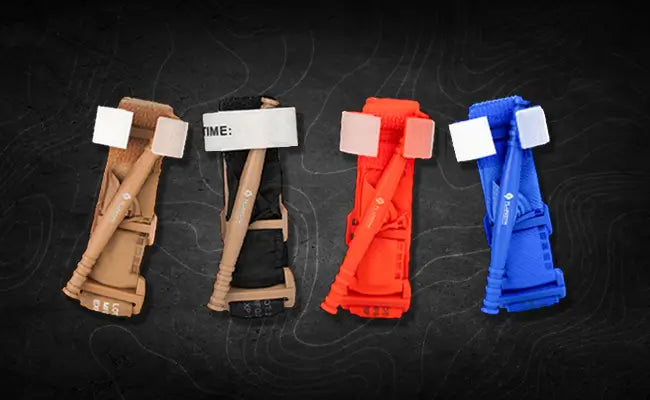
In countries with strict offensive weapon acts, such as the United Kingdom, Australia, or Japan, the "intent" of an item is often more important than its design. A pair of heavy-duty, blackened trauma shears might be viewed as a medical necessity in the U.S., but in a high-security transit hub in London or Tokyo, they can be classified as a "bladed article" if the security officer deems them capable of causing harm. Similarly, windlass tourniquets, while ubiquitous in modern medicine, are often associated with military-grade hardware. In Japan, for instance, carrying items that appear "excessive" for a civilian can lead to a lengthy "voluntary questioning" session at a Kōban (police box). To mitigate this, global responders are shifting toward "Medical-First" aesthetics—choosing trauma shears with blunt, rounded tips and tourniquets in high-visibility orange or blue to clearly signal their clinical purpose.
The "Paramilitary" Trap: Aesthetics as a Liability
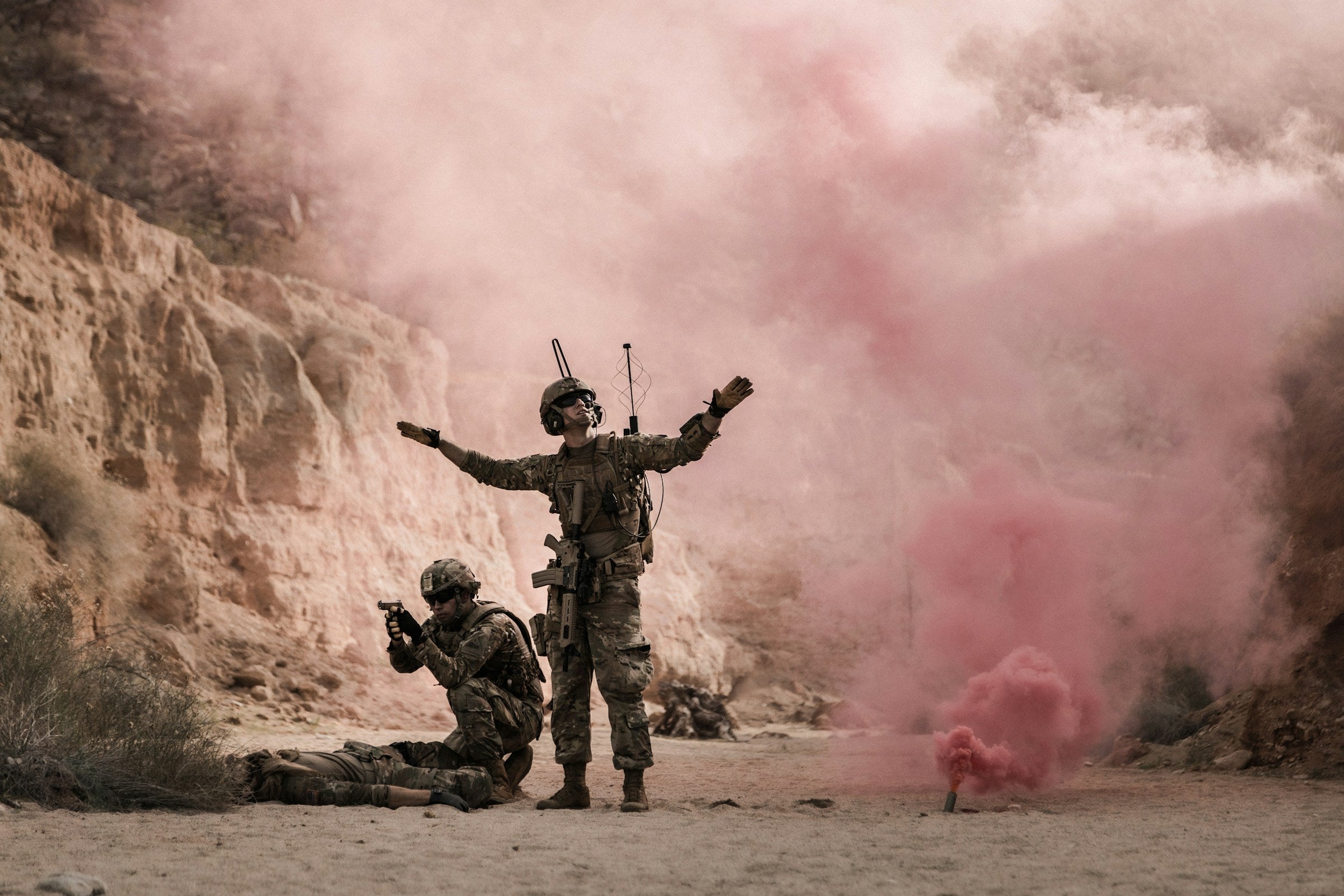
Perhaps the most significant risk for the international traveler is the "Paramilitary Trap." In regions with histories of civil unrest or active insurgency, such as parts of Central America, South America, and Southeast Asia, wearing or carrying MultiCam, Coyote Tan, or Olive Drab gear is not a fashion statement—it is a political one. In these sensitive zones, "tactical" branding and camouflage patterns are often restricted to state military or police forces. For a civilian to carry a camouflage FlareSyn pouch could be interpreted as impersonating an official or, worse, being affiliated with a non-state militia. This can lead to immediate detention, confiscation of all gear, and intense interrogation. In the world of the Global Responder, the "Grey Man" concept isn't just a style; it is a legal survival strategy.
Documentation as a Shield: The "Statement of Intent"
When your gear is inevitably questioned, your greatest defense is documentation. Professionalism is the antidote to suspicion. Carrying a "Statement of Intent"—a simple, laminated card in the local language explaining that the contents are for "Emergency First Aid and Life-Saving Medical Use Only"—can de-escalate a confrontation with a non-English speaking customs official. Furthermore, carrying a copy of your Stop The Bleed® certification or a basic EMT card provides the "Social Proof" that you are a trained responder rather than a hobbyist with "tactical" aspirations. When security sees a certification alongside a neatly organized, professionally labeled FlareSyn kit, the conversation shifts from "Why do you have this?" to "Thank you for being prepared."
5 Countries with Strict "Tactical Appearance" Regulations
If you are traveling to or through these nations, ensure your FlareSyn kit is devoid of camouflage patterns and looks strictly "medical":
Mexico: Very strict laws regarding "military-style" equipment; camouflage clothing or gear can lead to significant legal trouble.
The United Kingdom: Strict "Offensive Weapon" laws; large or serrated trauma shears are often scrutinized at public events and transit hubs.
Barbados / Jamaica / St. Lucia: In many Caribbean nations, it is actually illegal for civilians to wear or carry any form of camouflage-patterned material.
Japan: Extremely low tolerance for anything resembling a weapon; high-profile "tactical" bags will almost certainly trigger a police interaction.
Germany: While medical gear is respected, "tacticool" branding in public spaces can be viewed as "disturbing the peace" or inciting concern in urban centers.
TSA & Airport Security: Engineering a "Flight-Ready" IFAK
Navigating an airport security checkpoint is the ultimate stress test for the Global Responder’s gear. In the high-throughput environment of a 2026 international hub, TSA agents and their global counterparts (like the EU’s EASA or China’s CAAC) have roughly six seconds to decide if the contents of your bag are a threat. If your life-saving kit is packed haphazardly, it will be flagged for manual inspection, increasing the risk of an uneducated agent confiscating critical components. Engineering a "Flight-Ready" IFAK requires understanding the X-ray technician's perspective and the specific regulations governing medical tools.
The Shears Dilemma: Folding vs. Fixed
The most contentious item in any trauma kit is the shears. TSA guidelines generally allow medical shears with blades shorter than 4 inches from the pivot point and blunt tips. However, "legal" does not always mean "hassle-free." Traditional 7.25-inch trauma shears, especially those with serrated edges or blackened "tactical" coatings, look aggressive on an X-ray monitor. This is why folding shears have become the gold standard for the international traveler. When folded, they present a compact, non-threatening silhouette that mimics a small tech accessory rather than a weapon. Furthermore, high-end folding shears often include integrated oxygen tank wrenches and ring cutters, providing additional "utility justification" if a supervisor questions their presence.
X-Ray Interpretation: The Art of Packing
To an X-ray operator, a densely packed medical kit can look like a "mass of wires and organic material"—the classic signature of an improvised explosive device (IED). Metal windlasses on certain tourniquets, combined with the dense chemical signatures of hemostatic agents and the foil packaging of chest seals, create a "busy" image. To avoid the "secondary search" trap, use a modular FlareSyn layout. Lay your components flat and avoid overlapping metal objects. If your kit contains a metal-windlass tourniquet, place it alongside your laptop or other electronics where dense materials are expected. By creating a "clean" scan, you demonstrate that you have nothing to hide, allowing the agent to identify the medical nature of the items instantly.
The Power of Labeling: Clinical vs. Tactical
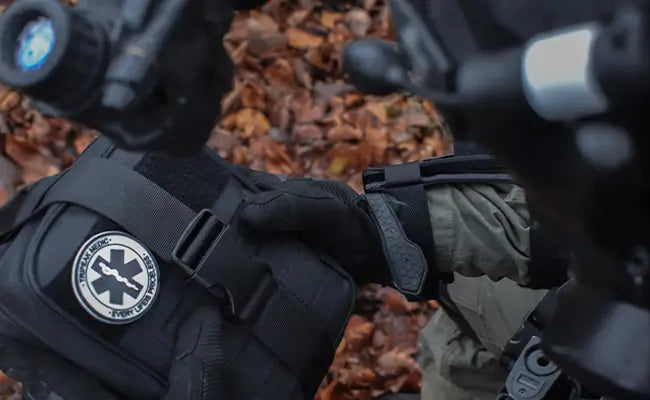
In a high-security zone, "Black and Tan" are the colors of suspicion; "Red and White" are the colors of safety. In 2026, the psychological impact of a Red Cross or "MED" patch cannot be overstated. A FlareSyn Micro pouch in Wolf Grey or Navy Blue, adorned with a clear medical identifier, signals to security that the contents are benign. If your kit looks like it belongs in an ambulance rather than on a battlefield, it is far less likely to be scrutinized. Avoid "Morale Patches" with aggressive slogans or skulls; they provide zero medical utility and 100% more scrutiny from customs officials.
Component Fly-Check: TSA & International Standards
Use this table to audit your kit before heading to the terminal. Note that "Compliant" refers to general 2026 TSA/IATA standards, but local discretion always applies.
| Component | TSA / IATA Compliant | High Risk of Confiscation | Global Pro-Tip |
| Tourniquets | Plastic Windlass (Standard) | Metal Windlass (Over-sized) | Choose Orange or Blue "Trainer" colors for travel. |
| Trauma Shears | Folding, Blunt-tip (<4") | Fixed, Serrated, "Tactical" Black | Always pack shears inside the kit, never externally. |
| Hemostatics | QuikClot / Celox Gauze | Powders / Granules | Stick to impregnated gauze; loose powders trigger "chemical" alarms. |
| Chest Seals | All major brands (Foil-packed) | N/A | Flat-pack them to avoid creating air-pocket shadows on X-ray. |
| Decompression | NCD Needles (Medical Use) | Unlabeled / Loose Needles | Keep in original sterile packaging with medical ID. |
| Pouch Style | Grey, Blue, Red (Minimalist) | Camouflage / Heavy MOLLE | "Low-Profile" aesthetics reduce "Tactical Profiling." |
The "Non-Permissive" Loadout: Modular Gear Substitution
In a "Non-Permissive Environment" (NPE), the goal of the Global Responder is to maintain life-saving capability while removing anything that could be interpreted as "tactical" or "aggressive." If you are entering a high-security corporate headquarters or a country with strict customs enforcement, your standard loadout may need a strategic overhaul. This is where modularity becomes your greatest asset. By swapping high-profile mechanical components for low-profile medical alternatives, you can pass through security with a kit that looks like a standard first-aid pouch but performs like a trauma system.
Swapping the Tourniquet: Windlass vs. Elastic
The traditional windlass tourniquet—while the gold standard for occlusion—is often the first item to be flagged by security due to its rigid plastic or metal rod and "military" appearance. For NPE travel, consider the SWAT-T (Stretch, Wrap, and Tuck) as a primary or secondary option. The SWAT-T is essentially a wide, medical-grade rubber band. To an X-ray or a manual inspector, it looks like a simple elastic wrap or a specialized bandage. It lacks the "aggressive" mechanical profile of a windlass but remains highly effective for hemorrhage control, especially in pediatric or small-limb applications where traditional tourniquets might fail. If you prefer a windlass design, the SOFT-T Wide is a strong contender because it can be folded flatter and more discretely than the CAT, though its metal hardware may still require "medical justification" during a search.
Prioritizing "Soft Goods": The Stealth Lifesavers
The most "travel-safe" components in your FlareSyn kit are what we call "Soft Goods." Compressed gauze, hemostatic agents (like QuikClot or Celox), and chest seals are almost never flagged by security. They contain no metal, no sharp edges, and their foil packaging is universally recognized as medical. In a high-security zone, these should be the core of your loadout. A wound-packing gauze and a solid pressure dressing can solve a vast majority of life-threatening bleeds. If you are forced to strip your kit to the absolute minimum to ensure entry, keep the hemostatics and the gauze; they are your "invisible" force multipliers that provide maximum capability with zero "tactical" footprint.
FlareSyn Modular Design: The "Invisible" Reconfiguration
The FlareSyn Micro Pouch was designed with this modularity in mind. For high-security venues, you can "de-bulk" your system by removing external shears and TQ holders. Move your tourniquet to an internal elastic loop and ensure all "tactical" patches are replaced with a simple, subdued medical cross. If you are entering a venue with extreme scrutiny (such as certain government buildings in 2026), you can even remove the internal tray from the Micro Pouch and flat-pack the components directly into a jacket pocket or a hidden compartment in your laptop bag. This "disaggregated" carry ensures that no single "lump" on an X-ray triggers an alarm, while keeping the life-saving chemistry within arm's reach.
The "Universal Safe" Component List
These items are considered "Gold Standard" for travel in 2026 because they are functionally powerful but visually and legally benign. They almost never get flagged at international checkpoints:
Compressed / Z-Fold Gauze: Pure cotton, no metal, universally recognized as a bandage.
Hemostatic Gauze (QuikClot/Celox): Essential for arterial bleeds; carries zero "weapon" signature.
Vented Chest Seals: Flat-profile foil packs that look like oversized bandages on X-ray.
-
Elastic Wraps (ACE Style): Common medical items that double as pressure dressings or splint ties.
Nitrile Gloves: Purely protective; signals a "clean" and professional medical intent.
Mylar Emergency Blanket: Essential for treating shock; recognized as standard safety gear for travelers and hikers.
Duct Tape (Flat-packed): High utility for securing dressings; non-threatening and versatile.
Hybrid Medical Needs: Expanding Beyond Trauma for Travel
A global responder understands that while massive hemorrhage is the most immediate threat, it is not the most frequent one. When you are traveling, the "emergency" is often a slow-burn crisis: a systemic infection, severe dehydration in a high-heat urban center, or a debilitating blister that ruins your mobility in a high-security zone. To be truly prepared for the 2026 travel landscape, your FlareSyn kit must evolve into a hybrid system—one that balances the "MARCH" algorithm of trauma with the "Daily Survival" needs of an international traveler.
The "Traveler’s Trio": Systemic Resilience
The most common "trip-killers" are not kinetic injuries, but physiological ones. We recommend integrating what we call the Traveler’s Trio: medical-grade hydration salts, broad-spectrum antibiotics (prescribed by your physician for travel), and advanced hydrocolloid blister care. In many developing regions or high-altitude cities, "traveler's diarrhea" or simple heat exhaustion can escalate into a medical evacuation scenario if not managed within the first hour. By carrying high-concentration oral rehydration salts (ORS), you can stabilize your electrolyte balance before it affects your decision-making. Similarly, having a pre-vetted course of antibiotics—accompanied by a copy of the original prescription to satisfy customs—ensures you aren't reliant on potentially counterfeit local pharmacies for a sudden infection. Finally, advanced blister pads are essential; in a high-security environment where you must stay mobile, a single hot-spot on your heel can be as disabling as a sprain.
Burn Care in Urban Environments: The Overlooked Threat
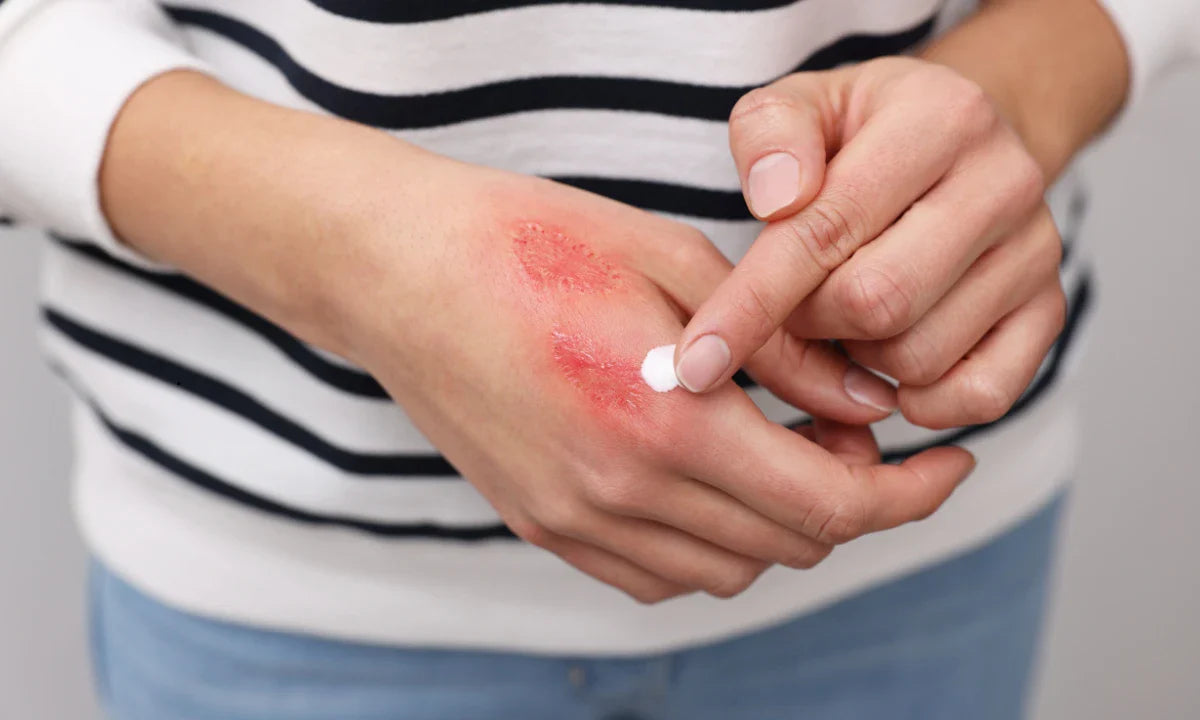
In 2026, the risk of high-rise hotel fires or transit-related thermal accidents is a persistent reality for the urban traveler. While your kit is focused on "Stop the Bleed," a severe burn requires a completely different mechanical response. Traditional trauma dressings can adhere to burnt tissue, causing excruciating pain and further damage during removal. This is why a hydrogel-infused burn dressing is a mandatory addition for the Global Responder. These dressings provide immediate cooling—stopping the "progression" of the burn—and create a sterile, non-adherent barrier. In an urban mass-casualty event or a vehicular fire, having the ability to treat a second-degree burn can prevent permanent scarring and systemic shock while you wait for local EMS to navigate gridlocked city streets.
The "Grab-and-Go" Vehicle Integration: Rental Car Ready
One of the greatest challenges for the traveler is maintaining gear accessibility in a rental vehicle. You cannot bolt a permanent medical rack into a rented SUV in Dubai or London. The solution is Non-Destructive Mounting. Use a FlareSyn headrest adapter or a high-tension elastic "visor wrap" that allows you to mount your Micro Pouch in the "Golden Triangle" (the area reachable by both the driver and the passenger). When you return the car, the kit unclips in seconds, leaving zero trace. This ensures that whether you are in your personal vehicle or a ride-share in a foreign capital, your trauma solutions are never buried in a suitcase in the trunk—the most common "point of failure" for travelers.
3 Travel-Specific Additions for Your 2026 FlareSyn Kit
If you are crossing borders this year, these three "low-profile" additions provide the highest utility-to-weight ratio:
10" x 12" Hydrogel Burn Sheet: Large enough to cover a forearm or face; essential for transit accidents and hotel fire safety.
Travel-Pack Oral Rehydration Salts (ORS): Choose WHO-standard formulas that can be mixed into a standard 500ml water bottle to combat heat stroke or illness.
"Sterile-Pack" Labeled Medications: Keep all pills in their original blister packs with a printed copy of your physician's note to ensure they pass through "No-Drug" zones like Japan or the UAE without issue.
The ultimate hallmark of the Global Responder is the realization that your equipment is only as effective as your ability to keep it on your person. In the high-stakes environment of 2026, where security protocols are increasingly sophisticated and international laws remain a patchwork of complexity, your trauma kit must be as adaptable as you are. True security isn't found in the most aggressive-looking gear or the heaviest loadout; it is found in the intelligent intersection of medical necessity and legal compliance.
Transitioning from a "tactical" mindset to a "clinical" one is not a compromise—it is an evolution. By stripping away the paramilitary aesthetics and focusing on the modular, low-profile utility of the FlareSyn system, you ensure that your life-saving tools remain invisible to the scrutiny of a checkpoint but instantly accessible in a crisis. Whether you are navigating a corporate boardroom in Zurich or a transit hub in Singapore, remember that professionalism is your greatest tactical advantage. Mastery of the global landscape means ensuring your gear is always ready, always legal, and always within reach.
Q: Are tourniquets legally considered weapons in any country?
A: Generally, no. A tourniquet is a life-saving medical device. However, in countries with strict "paramilitary gear" bans, a tourniquet with a metal windlass and heavy camouflage branding can be seized if security believes it is "combat equipment" rather than a first-aid tool. To avoid issues, always carry your tourniquet inside your medical pouch and opt for high-visibility or neutral colors like Orange or Blue.
Q: Can I carry a decompression needle (NCD) on a commercial flight?
A: This is a high-risk item. Under 2026 IATA guidelines, medical needles are permitted for those with a documented medical need or professional certification. However, unless you are a licensed medical professional, we recommend removing the NCD for international travel. In a non-permissive environment, the potential for a misunderstanding at security often outweighs the statistical likelihood of needing it during a flight.
Q: Will "QuikClot" or other hemostatic agents set off chemical explosives detectors?
A: No. Modern hemostatic agents like Kaolin-based QuikClot or Chitosan-based Celox do not contain the nitrates or compounds that trigger ETD (Explosive Trace Detection) machines. However, the foil packaging can be dense on an X-ray. To ensure a smooth transition, keep them in their original, clearly labeled factory packaging so agents can immediately identify them as medical supplies.
Q: What should I say if a security officer asks why I need "tactical" medical gear?
A: Avoid using the word "tactical." Instead, use the phrase: "This is a personalized emergency medical kit for severe hemorrhage control and travel-specific first aid." This shifts the conversation to "Medical Necessity" and "Safety," which are much harder for a reasonable official to argue against than "tactical preparedness."


Elias.H.Hwang
Elias H. Hwang is a tactical medicine expert and lead contributor at FlareSyn. He specializes in emergency trauma protocols and preparedness education, helping civilians and professionals alike master the tools and skills needed to save lives in critical moments.

Leave a comment
This site is protected by hCaptcha and the hCaptcha Privacy Policy and Terms of Service apply.