
Hemostatic Gauze Guide: Chitosan vs Kaolin vs Plain Gauze
Quick Navigation
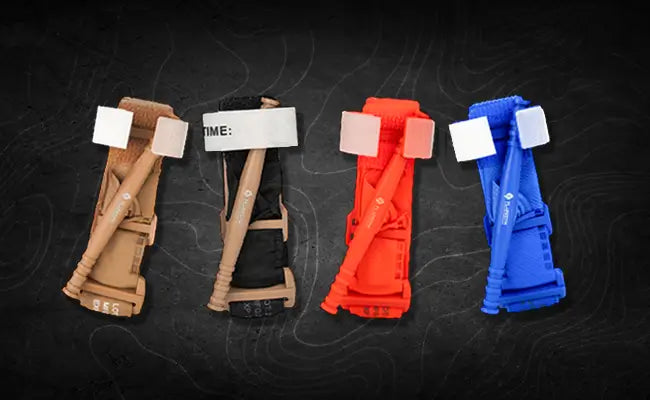
A tourniquet gets most of the attention in bleeding-control training, but a huge share of real-world trauma never involves a limb injury that a windlass can reach. Deep lacerations on the thigh, junctional wounds near the groin or armpit, and penetrating injuries to soft tissue all require a different tool: packable gauze that can be pressed directly into the wound cavity. This is where a hemostatic agent earns its place next to a tourniquet in any serious trauma kit, and understanding how it differs from ordinary dressing material is the first step toward building a kit that actually performs under stress.
This guide compares the two most common hemostatic gauze chemistries on the market, chitosan and kaolin, against plain sterile compressed gauze, so you can understand what each product actually does, when each one is the right call, and how to stock your kit without wasting money on redundant supplies. We will also walk through correct wound-packing technique, because the right product used the wrong way will still fail a casualty.
Educational disclaimer: this article is for educational reference only. It does not replace professional medical training, certification, or hands-on instruction, and it is not a substitute for guidance from a licensed clinician. In any real emergency, call your local emergency number immediately and follow the direction of trained responders.


What Is Hemostatic Gauze and Why It Matters in a Trauma Kit
Hemostatic gauze is a wound dressing impregnated with an agent that accelerates the body's own clotting process. Instead of relying only on direct pressure to slow bleeding, the active agent in the gauze interacts with blood at the wound site to form a stable clot faster than plain gauze alone. That speed matters because severe bleeding from a deep wound can exhaust a casualty's blood volume in minutes, and every extra second of uncontrolled hemorrhage reduces the margin for survival before professional care arrives.
Military and civilian stop-the-bleed programs adopted this type of dressing because a tourniquet cannot be applied to a wound in the neck, groin, armpit, or torso. For those junctional and truncal injuries, wound packing with a hemostatic agent is often the only field-viable option short of a trauma center. This is exactly why most modern IFAKs, including vehicle and range kits, now budget space for at least one roll of hemostatic gauze alongside a tactical tourniquet.
It is worth being precise about what this dressing is not. It is not a cure-all for every cut, it is not a replacement for direct pressure technique, and it does not eliminate the need to escalate to professional care. It is one specific tool for one specific class of bleeding problem: a wound that is too deep or too located for a tourniquet, where direct packing is the correct intervention.


How Hemostatic Gauze Works: Chitosan vs Kaolin Formulas
Not all hemostatic gauze is built the same way. The two dominant chemistries used in civilian and tactical wound-packing dressings today are chitosan-based and kaolin-based formulas, and they achieve rapid clotting through genuinely different mechanisms worth understanding before you buy.
Chitosan-Based Hemostatic Gauze
Chitosan is derived from the shells of crustaceans and carries a positive surface charge. When chitosan-based gauze contacts blood, the positively charged polymer binds to the negatively charged surface of red blood cells, causing them to aggregate and seal the wound almost independently of the body's normal clotting cascade. This matters for casualties who are already hypothermic, acidotic, or coagulopathic, conditions that can slow the clotting factors a kaolin-based product depends on. A chitosan hemostatic gauze dressing is often favored for cold-weather or prolonged field care scenarios for this reason.
Kaolin and Mineral-Based Hemostatic Gauze
Kaolin is a naturally occurring clay mineral that works differently: it activates Factor XII in the blood's intrinsic clotting pathway, accelerating the casualty's own coagulation cascade rather than bypassing it. Kaolin-impregnated gauze is widely issued across military trauma protocols because it is effective, shelf-stable, and does not require refrigeration. A soluble hemostatic gauze built on a mineral-activated base is a practical choice for general-purpose kits where the end user wants proven performance without worrying about product-specific storage rules.
A third category worth knowing about is hemostatic granules, a loose powder or granular agent poured directly into a wound rather than packed as a woven dressing. Hemostatic granules can reach irregular wound surfaces that gauze struggles to conform to, though they require different application technique and are typically used alongside, not instead of, the packed dressing itself.
Hemostatic Gauze vs Plain Compressed Gauze: Key Differences
Plain sterile compressed gauze still has a place in a well-built kit, but it is not interchangeable with hemostatic gauze. The table below breaks down where each product earns its spot.
| Factor | Hemostatic Gauze (Chitosan/Kaolin) | Plain Compressed Gauze |
|---|---|---|
| Primary mechanism | Actively accelerates or bypasses the clotting cascade | Relies entirely on direct pressure and manual packing |
| Best use case | Severe, life-threatening bleeding in junctional or deep wounds | Minor to moderate wounds, dressing changes, general wound care |
| Cost per unit | Higher, typically several times the price of plain gauze | Low cost, suitable for bulk stocking |
| Shelf life handling | Usually rated 2-3 years; some formulas are moisture-sensitive | Long shelf life with minimal special handling |
| Training requirement | Benefits from hands-on wound-packing practice | Simple to apply with basic first aid knowledge |
| Typical kit role | Reserved for massive hemorrhage, carried in limited quantity | General-purpose dressing, carried in larger quantity |
The practical takeaway is that hemostatic gauze is a specialized, higher-cost tool meant for a narrower, more severe class of injury, while plain compressed gauze remains the workhorse for everyday wound care and secondary dressing needs. A balanced kit carries both, not one instead of the other, and knowing which one to reach for under stress is a skill worth practicing before it matters.
When to Use Hemostatic Gauze: Wound Types and Scenarios
Deep and Junctional Wounds
Hemostatic gauze earns its place when bleeding is severe, the wound is deep enough that direct packing is required, and the injury is in a location where a tourniquet cannot be applied. Classic examples include junctional wounds at the groin or axilla, deep soft-tissue lacerations from a fall onto sharp terrain, penetrating trauma from glass or metal, and gunshot or blast wounds to the torso or proximal limb. In every one of these cases, the goal is the same: pack the wound cavity with gauze, maintain firm direct pressure for the full manufacturer-recommended hold time, and apply a pressure dressing over the top to maintain that pressure during transport.
When Plain Gauze Is Still the Right Call
Not every wound needs an active clotting agent. Superficial cuts, abrasions, post-procedure dressing changes, and minor bleeding that responds to a few minutes of direct pressure do not justify the cost or the clotting-agent exposure of this specialized dressing. Reserve the hemostatic product for bleeding that would otherwise be classified as severe or life-threatening, and use plain gauze for the much larger volume of everyday wound care that any kit will encounter. This discipline also keeps your limited supply of this dressing available when a true emergency happens.
How to Pack a Wound with Hemostatic Gauze
Technique matters as much as the product itself. Hemostatic gauze that is laid across a wound instead of packed into it will not perform the way it is designed to. The general field sequence looks like this:
- Expose the wound fully and locate the specific source of bleeding; clothing and poor visibility are common reasons packing fails in the field.
- Apply firm, direct finger pressure into the wound to temporarily slow bleeding while you prepare the gauze.
- Pack the dressing directly into the wound cavity, pressing it deep against the bleeding source rather than simply covering the surface.
- Continue packing additional gauze into the same cavity, using enough material to fill the wound space completely; under-packing is one of the most common field errors.
- Hold firm, continuous direct pressure on the packed wound for the full time specified by the product's instructions, commonly around three minutes, without lifting to check progress.
- Secure a pressure dressing or compression bandage over the packed site to maintain pressure during movement or transport.
- Reassess frequently; if bleeding continues through the dressing, add more gauze and reapply pressure rather than removing the original pack.
Two mistakes come up constantly in after-action reviews of civilian wound-packing use: packing the dressing only at the wound surface instead of deep into the cavity, and releasing pressure too early to "check" the wound. Both mistakes undo the clotting process before it can stabilize. If your training has not included live wound-packing practice on a trauma trainer, prioritize that before you rely on this skill under real stress.
Choosing and Maintaining Hemostatic Gauze in Your Kit
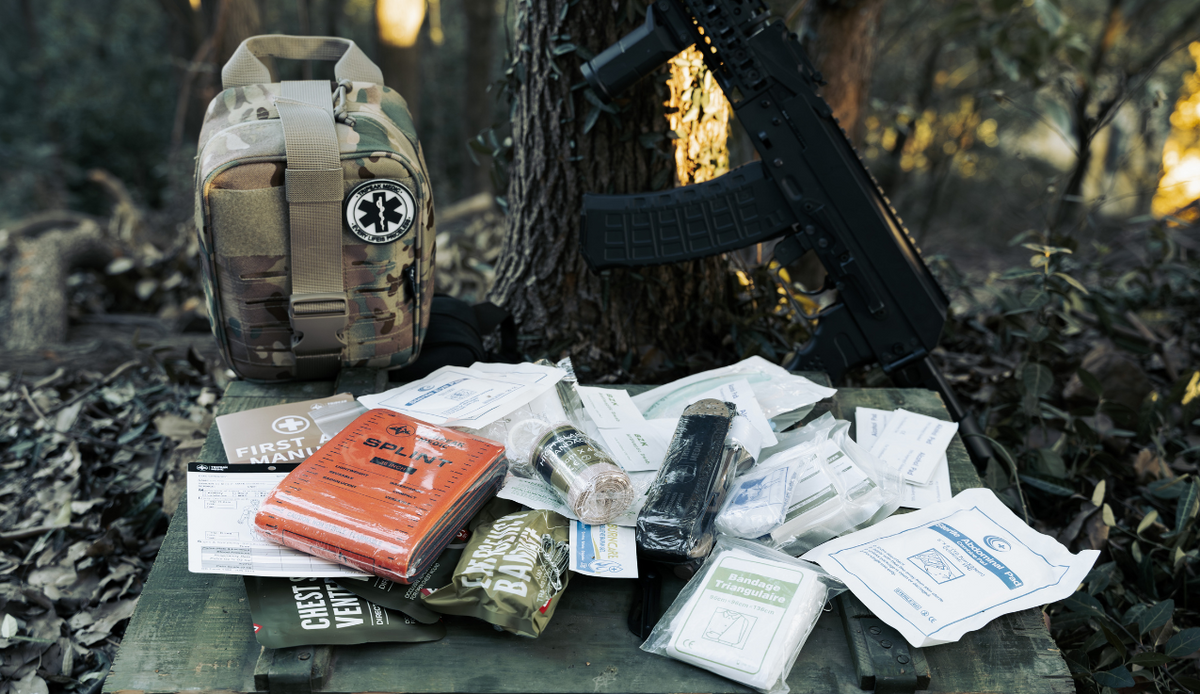
Most personal and vehicle kits only need one roll of hemostatic gauze, paired with a windlass tourniquet and a compression bandage, to cover the core severe-bleeding workflow. Larger team or IFAK setups built for multiple casualties may justify carrying two or more rolls, especially if the kit is meant to support more than one person. When you are deciding which chemistry to buy, consider your likely environment: chitosan performs well in cold or wet conditions where clotting factors are already compromised, while kaolin is a dependable, widely trusted default for general-purpose and vehicle kits.
Shelf life is the other half of the equation. Hemostatic gauze is typically rated for two to three years, but humidity, temperature cycling, and a compromised outer wrapper can shorten that window significantly. Check the expiration date on every roll during a quarterly kit inspection, and replace any packaging that shows punctures, moisture staining, or a broken seal, regardless of the printed date. Pair this dressing with a supply of plain compressed gauze for secondary dressing and general wound care, so the hemostatic product is never used for a job that does not require it.
Finally, buy from a source that documents lot numbers and expiration dates clearly. This is not a product category where you want to gamble on an unmarked, unverifiable supply chain, since the entire value of the product depends on the active agent still being viable when you need it most, often during the worst few minutes of someone's day.
Conclusion
Hemostatic gauze fills a gap that a tourniquet and plain dressings cannot cover: severe bleeding from deep or junctional wounds where direct packing is the only field-viable intervention. Chitosan and kaolin formulas both work, through different mechanisms, and the right choice depends more on your expected environment than on brand preference. What matters most is carrying the right product for the right wound, training on proper packing technique before an emergency happens, and maintaining your kit so the dressing is ready the one time it truly counts. Build your kit around a tourniquet, a roll of hemostatic gauze, a compression bandage, and plain gauze for everything else, and you will be equipped for the overwhelming majority of severe bleeding scenarios a civilian is likely to encounter.
Q: Is hemostatic gauze the same thing as a tourniquet?
A: No. A tourniquet stops blood flow to an entire limb using circumferential pressure, while hemostatic gauze is packed directly into a wound to accelerate clotting at the bleeding source. They solve different problems and are often carried together in the same kit.
Q: Can I use hemostatic gauze on a minor cut?
A: It is not necessary for minor bleeding that responds to simple direct pressure. Reserve this type of dressing for severe, life-threatening bleeding and use plain gauze for everyday wound care to avoid depleting a limited and costly supply.
Q: How long does hemostatic gauze last in a kit?
A: Most products are rated for roughly two to three years when stored properly. Heat, humidity, and a damaged outer wrapper can shorten that window, so check expiration dates and packaging integrity during routine kit inspections.
Q: Is chitosan or kaolin gauze better for a general-purpose kit?
A: Neither is universally superior. Chitosan can still support clotting in cold, wet, or coagulopathy-affected casualties, while kaolin is a proven, shelf-stable default trusted across many trauma protocols. Either is a sound choice for a general-purpose trauma kit.


Elias.H.Hwang
Elias H. Hwang is a tactical medicine expert and lead contributor at FlareSyn. He specializes in emergency trauma protocols and preparedness education, helping civilians and professionals alike master the tools and skills needed to save lives in critical moments.


Leave a comment
This site is protected by hCaptcha and the hCaptcha Privacy Policy and Terms of Service apply.