
Article: Truck Driver Trauma Kit: Medical Gear for the Open Road
Truck Driver Trauma Kit: Medical Gear for the Open Road
At 2:40 a.m. on a rural stretch of interstate, a truck driver is the first vehicle to reach a rolled-over passenger car. The driver of the car is awake but bleeding heavily from a forearm laceration, and the nearest ambulance is twenty minutes out. The trucker has a working CB radio, a flashlight, and a basic first aid box that was last opened three years ago. Inside that box there are band-aids. This is the scenario every professional driver should plan for, because on the highway you are not just another road user — you are often the first responder on scene.
Truck drivers log tens of thousands of miles every year, much of it far from trauma centers, and crash scenes, debris strikes, and medical events behind the wheel happen far more often than most people realize. A dedicated truck driver trauma kit changes what you can actually do in those first minutes: control life-threatening bleeding, support an airway, protect a casualty from cold, and hand clean, organized gear to arriving EMS. It is not about playing doctor. It is about buying time until professionals take over.
Important: This article is for educational purposes only and does not replace professional medical advice, training, or emergency care. In any emergency, call 911 or your local emergency number first. Learn hands-on skills through a certified course such as Stop the Bleed or a standard first aid class before relying on any of the equipment described here.


Why a Truck Driver Trauma Kit Belongs in Every Cab
A truck driver trauma kit is a focused set of hemorrhage control, airway support, and thermal protection supplies kept within arm's reach of the driver's seat. It is deliberately different from the basic first aid box many fleets still issue, because the injuries that kill on the highway are not paper cuts. Major bleeding, chest injuries, and hypothermia are the threats that decide whether a casualty survives the gap between the crash and the ambulance.
-
The Long-Haul Reality: Miles From Help
Rural interstates, mountain passes, and overnight legs can put a driver thirty to sixty minutes from advanced care, and a major bleed can become fatal in a fraction of that time. Bleeding is consistently named one of the leading causes of preventable trauma death, and the single biggest variable in those deaths is time to intervention. When response time is measured in miles instead of minutes, the supplies in your cab become part of the emergency response system itself. Community preparedness guidance such as Ready.gov's Build a Kit says the same thing about emergency gear: it only works if it is packed and maintained before it is needed. A tourniquet applied correctly in the first minutes can mean the difference between a limb saved and a life lost.
-
Crash, Medical, and Good-Samaritan Scenarios
Your kit has to cover three different jobs. First, it treats you or a passenger after a collision, when you may be pinned, disoriented, or bleeding before help arrives. Second, it supports you during a medical event behind the wheel, such as a diabetic emergency or a cardiac event, while you wait for EMS. Third, it lets you assist another road user at a crash scene, where you are legally protected as a good Samaritan in most jurisdictions as long as you act within your training and scope. All three scenarios need the same core loadout: something to stop bleeding, something to support breathing, and something to keep a casualty warm.


Truck Driver Trauma Kit Essentials: What to Pack
Build your truck driver trauma kit around the leading causes of preventable roadside death: severe bleeding, airway problems, and cold exposure. The loadout below is organized by function so you can find any item without thinking, even in the dark. Every item earns its place by being fast to deploy, easy to understand, and useful in the cramped space of a cab.
Bleeding Control Supplies
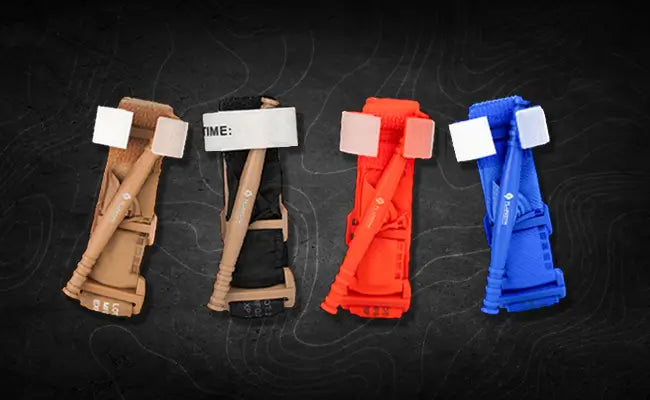
- Two windlass tourniquets — one for yourself and one for a casualty; keep at least one in the driver's door pocket. The FlareSyn tactical windlass tourniquet is a compact, military-grade choice that stores flat and deploys fast.
- Hemostatic gauze or tightly packed compressed gauze for deep wounds that a tourniquet cannot reach.
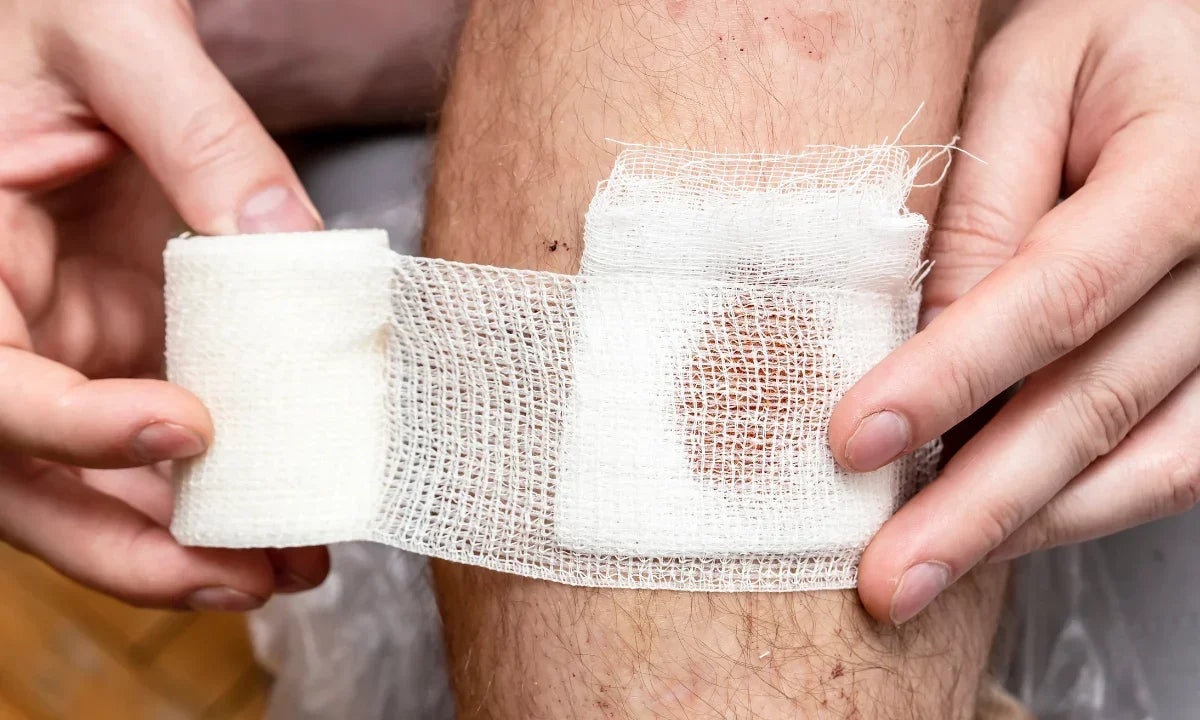
- Two or more pressure dressings or trauma bandages for large surface wounds.
- Nitrile gloves, at least two pairs, stored in a visible outer pouch so you never fumble for them.
- A permanent marker to record tourniquet application time.
Airway, Breathing, and Thermal Gear
- Nasopharyngeal airways with lubricant — only if you are trained to insert them.
- A pocket CPR mask with a one-way valve for rescue breathing.
- Chest seals for penetrating injuries to the chest — again, only with training.
- An emergency blanket and chemical heat packs for shock and cold exposure.
- Trauma shears to cut through clothing, seatbelts, and boots quickly.
Tools, Documentation, and Personal Items
- A flashlight or headlamp with spare batteries — night scenes are dark scenes.
- A seatbelt cutter and window breaker mounted where you can reach them from the driver's seat.
- Your medications, allergy list, and emergency contact card in one labeled pouch.
- Reflective vest, warning triangles, and flares — scene safety comes before patient care.
- A printed quick-reference first aid card for the moments when memory fails.
| Category | Minimum | Recommended | Full Professional |
|---|---|---|---|
| Bleeding control | 1 tourniquet, 1 pressure dressing | 2 tourniquets, hemostatic gauze, 2 dressings | Full hemorrhage kit, marker, casualty card |
| Airway and breathing | CPR mask | CPR mask, 2 chest seals, trauma shears | Adds nasopharyngeal airways, lubricant |
| Thermal protection | 1 emergency blanket | Blanket plus heat packs | Hypothermia wrap, poncho, spare gloves |
| Tools and safety | Gloves, flashlight | Adds seatbelt cutter, marker, triangles | Adds window breaker, headlamp, spare batteries |
A pre-filled pouch covers most of this loadout in one organized unit. Many professional drivers mount the FlareSyn compact tactical trauma IFAK on a seat-back organizer and add a headrest-mounted kit for the second tourniquet, so the bleeding control layer is duplicated in two places. Whatever brand you choose, open the kit when it arrives and verify every item against your own checklist — a sealed pouch is only as good as its contents.
Where to Store Your Truck Driver Trauma Kit
The best trauma kit is the one you can reach with your seatbelt on, in the dark, after a jarring event. Storage location matters more than brand, color, or pouch size. Think about where your hands naturally go when you are belted in, and put the kit there — not in a place that looks organized in a photograph but is useless under stress.
Cab Placement vs. Sleeper Storage
The driver's-side door pocket, the gap beside the seat, or a seat-back organizer is the right home for your primary kit. The FlareSyn vehicle headrest trauma IFAK kit is designed to sit at shoulder height, where both the driver and a passenger can grab it one-handed. The sleeper is the right place for backup and bulk: a second tourniquet, extra dressings, thermal gear, and the items you only need when you are out of the seat. Never store your only tourniquet in the trailer, a locked tool box, or under the bunk where a pinned driver cannot reach it.
Mounting, Visibility, and Quick Access
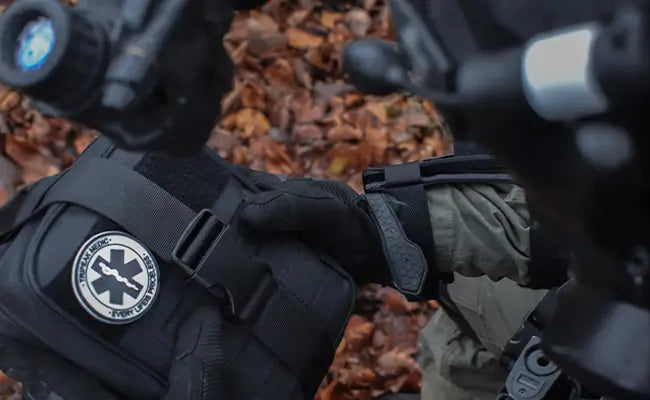
MOLLE webbing, quick-release buckles, and bright identification patches help you find the kit fast and keep it from sliding under the seat during hard braking. Tell your trainer, your dispatcher, and any passenger where the kit lives, and practice grabbing it one-handed while seated with the belt on. A ten-second drill every few weeks keeps the motion automatic. Keep the kit closed against dust and moisture, but never strap it down so securely that it becomes a project to release in an emergency.
Truck Driver Trauma Kit Maintenance on the Road
A cab is a harsh environment for medical supplies: summer dashboards can push past 140 degrees, winter nights freeze gear solid, and constant vibration loosens packaging and zippers. A truck driver trauma kit is a maintenance habit, not a one-time purchase. The drivers who stay ready are the ones who treat their kit like their logbook — checked on a schedule, restocked after use, and never left incomplete.
Seasonal and Climate Checks
Inspect the kit when the season changes. Before summer, check adhesives, chest seal packaging, and gauze seals for heat damage, since melted packaging fails exactly when you need it. Before winter, confirm that blankets and heat packs are present, dry, and unexpired. Once a month, glance through the pouches: zippers should run smoothly, straps should hold, and the tourniquet windlass should turn freely without resistance. Replace anything cracked, melted, water-stained, or expired on the spot, and never wait for a scheduled inspection to retire a damaged item.
Restock, Documentation, and Training
After any use, open the kit, count what was deployed, and restock before your next dispatch — an empty pouch in a crash scene is a silent failure. Write the restock date and any tourniquet time on the included card, and keep a simple log of what you used so the loadout never shrinks silently. Pair the gear with skills: book a Stop the Bleed class or a CPR refresher once a year, because training is the part of the system that cannot be bought. A driver who has practiced with the equipment will deploy it in seconds; a driver who has only carried it will hesitate.
Using Your Truck Driver Trauma Kit in the First Minutes
When you are first on scene, your job is not to diagnose. Your job is to make the scene safe, treat the condition that is killing the casualty fastest, and hand over clean information to EMS. The first minutes shape everything that follows, so run them in a fixed order: protect yourself, then protect the casualty, then call for help.
Scene Safety Around Moving Traffic
Pull your rig well past the incident, set the brakes, turn on the hazards, and deploy warning triangles or flares upwind and before the scene. Put on your reflective vest before you exit the cab, and call 911 before you step out so the call is already in motion. A second crash at the original scene is a real and common hazard on highways — never walk into live traffic to render aid without some form of warning protection for yourself.
The First Sixty Seconds of Care
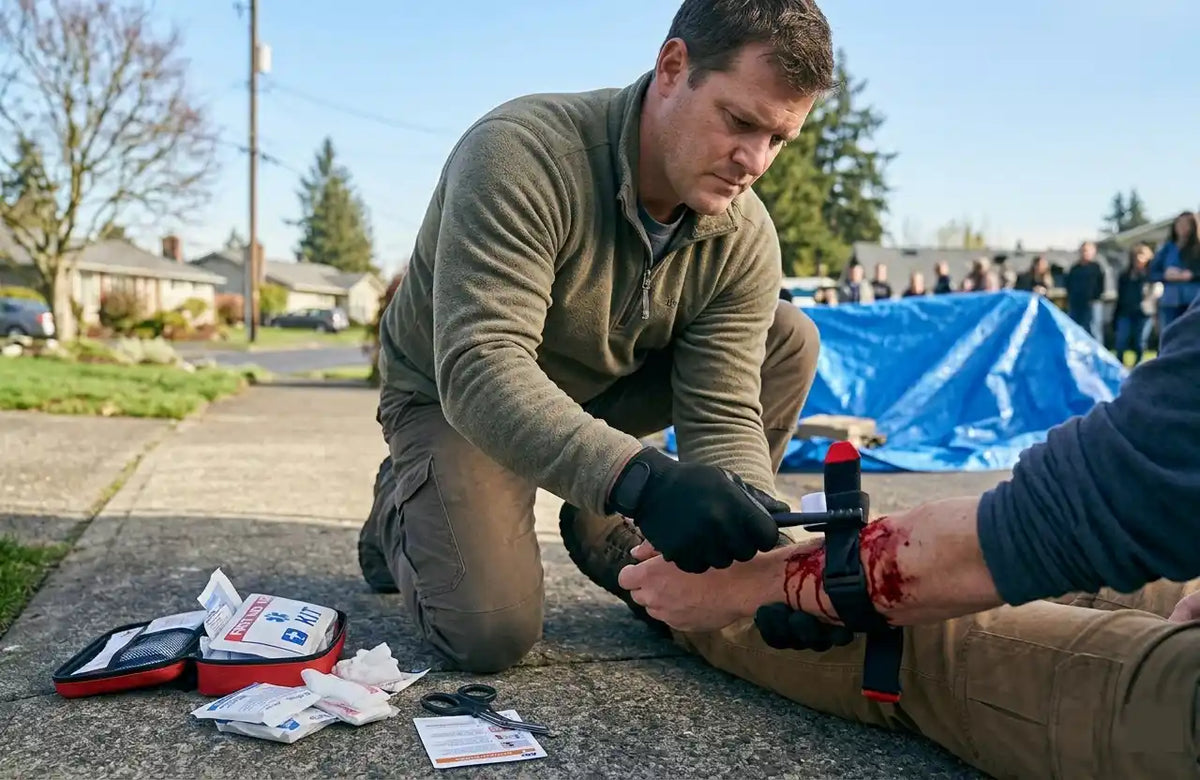
Approach the casualty, introduce yourself loudly and calmly, and check for a response. If there is heavy bleeding, apply firm, direct pressure with a dressing or your gloved hands immediately. Use a tourniquet only if you are trained and the bleeding is on a limb and cannot be controlled by pressure — and never remove a tourniquet once it is on. Keep the casualty still and warm, and keep talking to them; your voice is a simple, powerful tool that steady people who are scared.
Handing Off to EMS
When responders arrive, tell them what happened, what you did, and what you used. If you applied a tourniquet, tell them the exact time and write it on the tourniquet or the casualty's forehead with your marker. Hand over the opened kit and any items you deployed, then step back and let the professionals take over. Clean, accurate handoff is part of patient care, and it is the last thing your kit does for the casualty.
Conclusion
A truck driver trauma kit is a small investment in a very long road. Choose the right gear, mount it where you can actually reach it, check it with the seasons, and pair it with real training. When the worst happens on a lonely stretch of highway, you will already be ready — and that is what professional drivers do. Start your loadout with the field-tested FlareSyn best-selling trauma kits, or build it one pouch at a time from the checklist above. Either way, the goal is the same: seconds saved, lives changed, miles covered.
Q: Do truck drivers really need a trauma kit if the company already provides a first aid kit?
A: Company first aid kits are built for minor injuries. A truck driver trauma kit adds hemorrhage control, airway support, and thermal gear — the supplies that matter in the minutes before EMS arrives, especially on rural routes where response can take half an hour or more.
Q: Where should I keep my truck driver trauma kit in the cab?
A: Keep the primary kit within arm's reach of the driver's seat — a door pocket, seat-back organizer, or headrest mount works best. Keep backup supplies in the sleeper, and never store your only tourniquet in the trailer or a locked tool box.
Q: Do I need training to use the kit?
A: Yes. Take a Stop the Bleed class and a basic first aid or CPR course. Training teaches you when to apply a tourniquet, how to pack a wound, and how to use airway devices safely, so the gear works the way it was designed to.
Q: How often should I check the kit?
A: Do a quick monthly glance and a full seasonal inspection, and restock immediately after any use. Heat, cold, and vibration degrade supplies faster in a cab than in a closet at home, so schedule beats memory.


Elias.H.Hwang
Elias H. Hwang is a tactical medicine expert and lead contributor at FlareSyn. He specializes in emergency trauma protocols and preparedness education, helping civilians and professionals alike master the tools and skills needed to save lives in critical moments.

Leave a comment
This site is protected by hCaptcha and the hCaptcha Privacy Policy and Terms of Service apply.