
Article: Signs of Hemorrhagic Shock: Recognizing Blood Loss Before It's Too Late
Signs of Hemorrhagic Shock: Recognizing Blood Loss Before It's Too Late
Quick Navigation
A car crash, a fall from a ladder, a deep laceration from a kitchen knife, or a gunshot wound on the range can all lead to the same dangerous outcome: the body losing blood faster than it can compensate. Long before a person collapses, the signs of hemorrhagic shock are already visible to anyone who knows what to look for. The problem is that most bystanders, and even some first responders early in their training, miss those early clues because the person in front of them is still talking, still standing, and still insisting they are fine.
This article is written for everyday carriers, range officers, outdoor guides, and family preparedness planners who want to understand how blood loss actually presents in the human body, stage by stage, so they can act before a patient crashes. We walk through the physiology in plain language, list the exact signs of hemorrhagic shock at each stage, and explain what tools and actions actually change the outcome in the minutes before EMS arrives.
This content is for educational purposes only and is not a substitute for professional medical advice, diagnosis, or hands-on emergency response training. If you or someone near you is showing signs of severe blood loss or shock, call your local emergency number immediately.


What Is Hemorrhagic Shock and Why It Matters
- Hemorrhagic shock is what happens when the body loses enough blood volume that the circulatory system can no longer deliver adequate oxygen to organs and tissue. It is not defined by how much blood you can see on the ground; it is defined by how much total blood volume has left the vascular system, including blood pooling internally in the chest, abdomen, pelvis, or thigh where a bystander cannot see it at all. That distinction is exactly why the signs of hemorrhagic shockmatter more than a visual estimate of a wound.
An adult carries roughly 5 liters of blood. Losing just 15 to 20 percent of that volume, less than a full liter, is enough to start the body's compensation mechanisms. Losing 30 to 40 percent without intervention is frequently fatal. Because so much blood can hide inside the body after blunt trauma, a patient who looks calm and coherent immediately after a car accident may already be in the earliest phase of shock, and the window to intervene is measured in minutes, not hours.
This is the core reason trauma education keeps returning to one message: do not wait for a patient to look sick before you treat them as if they might be. Learning to read the early signs of hemorrhagic shock is one of the highest-value skills a non-medical responder can develop, because it changes the timeline of every decision that follows, from calling 911 to applying direct pressure to positioning the patient for transport.


The Stages of Blood Loss: How the Body Responds
Clinicians commonly describe blood loss in four stages based on percentage of total blood volume lost. Understanding these stages helps explain why the visible signs of hemorrhagic shock change so much between a patient who is still talking normally and a patient who suddenly stops responding.
Compensated Shock: The Body's Hidden Struggle
In Stage 1 and much of Stage 2, roughly up to 30 percent blood volume loss, the body is fighting hard to protect the brain and heart. The nervous system triggers vasoconstriction, squeezing blood vessels in the skin, gut, and limbs to preserve flow to vital organs. Heart rate climbs. Blood pressure can remain deceptively close to normal because the body is compensating so effectively. This is why compensated shock is the most dangerous phase to miss: the patient can appear anxious or mildly pale but still hold a normal conversation, while internally the reserve is being spent quickly.
Decompensated Shock: When the System Starts to Fail
Once blood loss passes roughly 30 to 40 percent, compensation mechanisms begin to fail. Blood pressure drops in a way that is now easy to measure and hard to miss. Mental status changes become obvious: confusion, agitation, or a sudden and unusual calm. Skin becomes cold, pale, and clammy as blood is shunted away from the periphery entirely. Without rapid bleeding control and fluid or blood replacement, this stage progresses quickly toward cardiac arrest.
The table below summarizes how vital signs and behavior typically differ between these two phases, which is useful for anyone trying to quickly triage a patient in the field.
Indicator |
Compensated Shock (Early) |
Decompensated Shock (Late) |
Blood volume lost |
Roughly 15-30% |
Greater than 30-40% |
Heart rate |
Elevated, often 100-120 bpm |
Very high, then dangerously irregular |
Blood pressure |
Near normal or mildly low |
Significantly low, hard to detect |
Skin |
Slightly pale, cool |
Cold, clammy, mottled or gray |
Mental status |
Anxious but coherent |
Confused, agitated, or unresponsive |
Capillary refill |
Slightly delayed |
Markedly delayed, over 2-3 seconds |
Early Signs of Hemorrhagic Shock You Should Never Ignore
Because compensated shock hides behind a patient who still seems functional, responders need a checklist rather than a gut feeling. The following early signs of hemorrhagic shock deserve immediate attention even if the patient insists they feel okay:
- · Skin that looks pale, feels cool to the touch, or begins to appear slightly gray, especially around the lips and nail beds.
- · A resting heart rate that climbs noticeably above baseline, often described by the patient as their heart racing.
- · Rapid, shallow breathing that seems disproportionate to the activity level.
- · Mild anxiety, restlessness, or an unusual sense of urgency the patient cannot fully explain.
- · Thirst that appears suddenly and intensely, which reflects the body's fluid shifts.
- · Delayed capillary refill, tested by pressing a fingernail and timing how long color takes to return.
- · Weak or thready pulse felt at the wrist compared to a normal, easily located pulse.
Any one of these signs alone can have a benign explanation, such as fear or pain from the injury itself. But when two or more of these signs of hemorrhagic shock appear together after a trauma mechanism capable of causing serious bleeding, treat the patient as unstable and begin bleeding control and monitoring immediately rather than waiting for confirmation.
Late-Stage Signs of Hemorrhagic Shock and Why They Are Dangerous
By the time decompensated shock sets in, the signs of hemorrhagic shock are harder to miss but far more urgent, and the physiological reserve that bought time earlier is now gone. Watch for:
- 1. Confusion, slurred speech, or a sudden inability to follow simple instructions.
- 2. Skin that is cold, clammy, and visibly mottled or ashen, particularly on the extremities.
- 3. A pulse that becomes difficult to feel at the wrist, which suggests systolic blood pressure has dropped significantly.
- 4. Loss of consciousness or a rapid decline from alert to minimally responsive.
- 5. Extreme drowsiness or an unusual, sudden calm after a period of agitation, which can be misread as improvement.
- 6. Little or no urine output, which is difficult to assess in the field but relevant in prolonged transport scenarios.
This stage represents a medical emergency that requires advanced care, and field responders should treat it as a signal to escalate every action: call for help again if it has not arrived, control any visible bleeding aggressively, and prepare to reposition and monitor the patient continuously until professional responders take over care.
What to Do When You Recognize Hemorrhagic Shock
Recognizing the signs of hemorrhagic shock only matters if it changes what you do next. The response priorities below reflect widely taught civilian trauma frameworks and are meant to complement, not replace, formal training such as Stop the Bleed or TCCC-based courses.
Immediate Priorities in the First Minutes
- · Call your local emergency number as soon as danger allows, and say clearly that you suspect severe blood loss or shock.
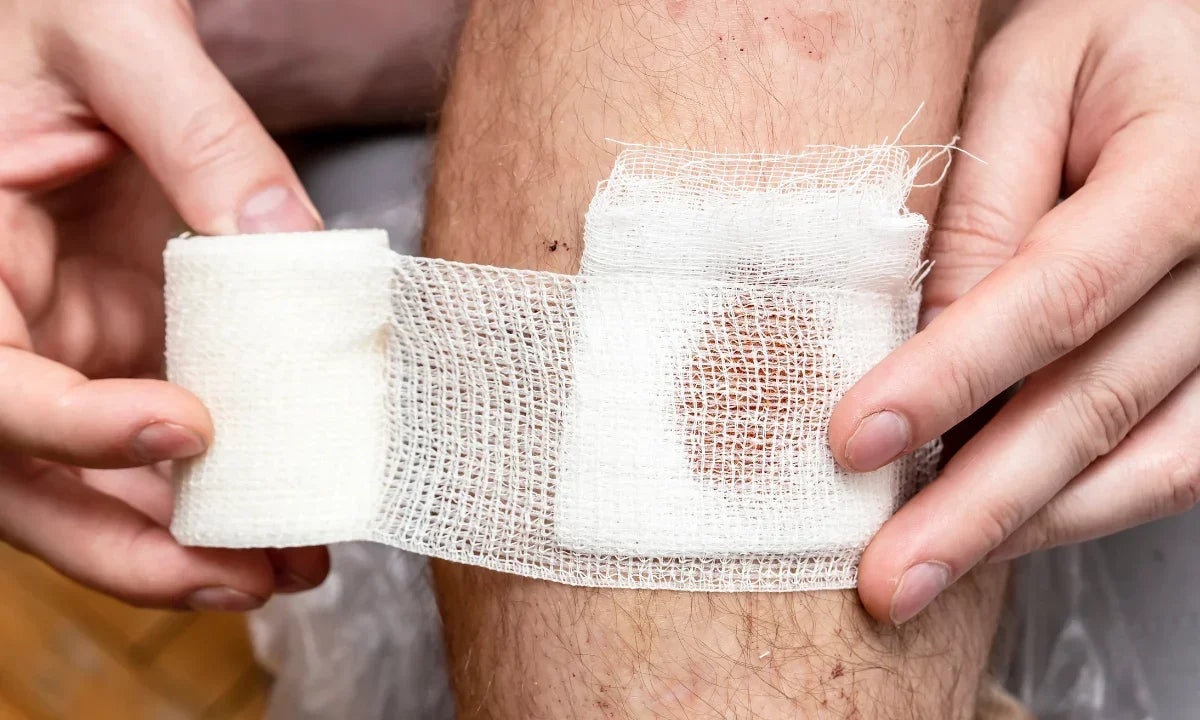
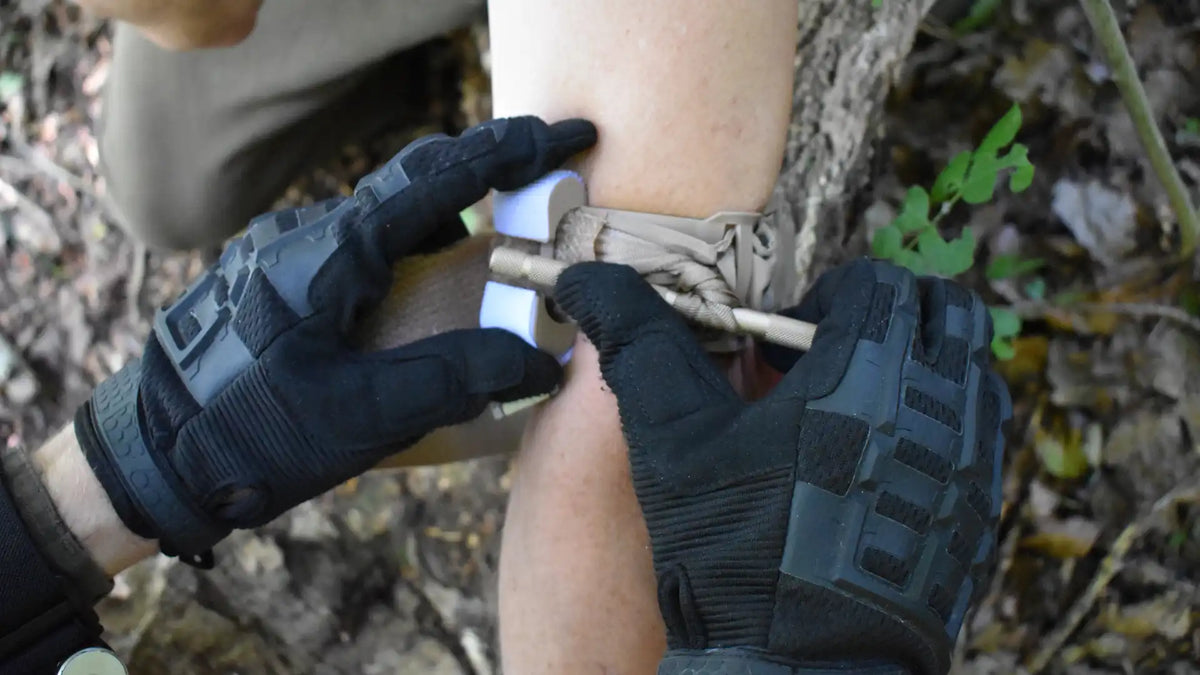
- · Identify and control any visible external bleeding using direct pressure, wound packing with hemostatic gauze, or a tourniquet placed high and tight on a limb if bleeding is severe or pressure alone is not working.
- · Keep the patient warm with a blanket or jacket, since hypothermia worsens the body's ability to clot and compensate.
- · Position the patient lying down if possible, and avoid unnecessary movement of a suspected spinal injury.
- · Continue talking to the patient and reassessing their mental status, pulse, and skin every few minutes until help arrives.
What Not to Do
Do not give the patient food or water, even if they ask, since surgery may be required and an empty stomach reduces complications. Do not remove an already-placed tourniquet to check the wound, since re-bleeding can restart rapidly and is very difficult to control the second time. Do not leave a patient showing signs of hemorrhagic shock alone, and do not assume that calm behavior late in the process means the situation is improving; it may mean the opposite.
Building a Trauma Kit That Supports Fast Bleeding Control
Recognizing shock early buys time, but that time is only useful if the right tools are within reach. Whether the kit lives in a vehicle, a range bag, or a hiking pack, the goal is the same: stop major bleeding fast enough that shock never progresses past the early, reversible stage.
Core Bleeding-Control Tools Worth Carrying
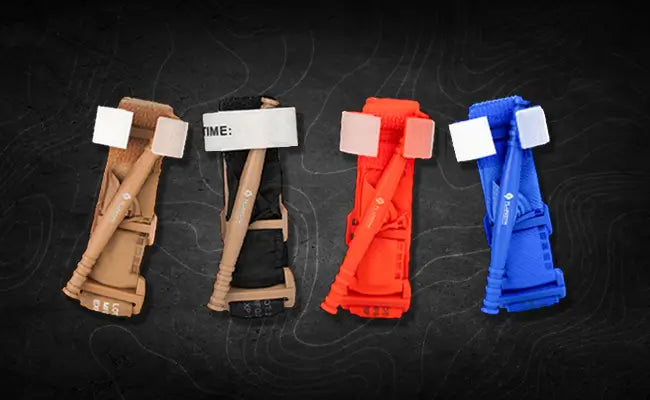
- · A commercial windlass tourniquet rated for one-handed application under stress.
- · Hemostatic gauze for packing deep wounds in junctional areas a tourniquet cannot reach.
- · Compressed or roller gauze and an elastic wrap for pressure dressings.
- · Nitrile gloves and a trauma shears for fast clothing removal and wound exposure.
- · A space blanket to manage temperature and slow the progression toward decompensated shock.
A pre-assembled IFAK and bleeding-control collection takes the guesswork out of assembling these components individually, which matters when the person reaching for the kit is under stress and has seconds, not minutes, to find what they need.
Kit Placement and Access Speed
A trauma kit that is buried in a trunk or a bottom pocket does not help during the first critical minutes after an injury. Kits should be mounted or stored where they can be reached in under thirty seconds, clearly labeled, and checked periodically for expired hemostatic agents. For teams, vehicles, or households that may need to treat more than one casualty, a massive hemorrhage response kit provides enough supply volume that responders are not forced to ration bleeding-control tools between patients. For an individual carrying a single, well-organized setup, the FlareSyn Compact Tactical Trauma IFAK is built around exactly this access-speed priority.
Common Mistakes That Delay Recognition
Even trained responders make predictable errors when assessing a patient for shock. Reviewing these mistakes helps sharpen judgment before the next real incident.
- · Trusting a normal-looking blood pressure too long. Because the body compensates so well early on, waiting for a clearly abnormal blood pressure reading means waiting until the patient is already deep into decompensation.
- · Focusing only on visible external bleeding. Internal bleeding in the chest, abdomen, or pelvis can cause profound shock with almost no external blood at all, so mechanism of injury matters as much as what you can see.
- · Assuming a calm patient is a stable patient. Sudden calm after agitation can be one of the more alarming signs of hemorrhagic shock, not a reassuring one.
- · Delaying bleeding control while searching for the "textbook" symptom. Waiting for every sign to appear before acting costs time that cannot be recovered later.
- · Not reassessing. A patient's condition in shock can change dramatically in five minutes; a single check at the start of care is not enough.
Browsing FlareSyn's best-selling trauma kits is a useful way to compare how different setups balance size, tool selection, and access speed for the specific environment you carry in most often, whether that is a vehicle, a range bag, or an everyday pack.
Conclusion
Hemorrhagic shock is a progressive process, not a single moment, and that is exactly why learning to recognize the signs of hemorrhagic shock early is so valuable. A patient who still looks alert can already be losing the physiological reserve that keeps them stable, and every minute spent waiting for obvious symptoms is a minute in which a reversible situation can become a critical one. Pair that awareness with a well-organized, fast-access trauma kit and a clear sense of what to do and what not to do, and a bystander can meaningfully change the outcome before professional help arrives. None of this replaces hands-on training or professional medical care, but a prepared, informed response in the first minutes consistently matters more than anything that happens afterward.
Q: How fast can hemorrhagic shock become life-threatening?
A: It depends on the rate and source of bleeding, but severe internal or arterial bleeding can move a patient from mild symptoms to unconsciousness in as little as ten to twenty minutes, which is why early recognition and immediate bleeding control matter so much.
Q: Can someone be in shock without any visible bleeding?
A: Yes. Internal bleeding from blunt trauma to the chest, abdomen, or pelvis can cause significant blood loss with little or no external blood visible, so mechanism of injury should always factor into your assessment.
Q: What is the single most reliable early sign to check for?
A: No single sign is fully reliable on its own, but a combination of a rising heart rate, pale or cool skin, and delayed capillary refill together are strong early indicators worth acting on immediately.
Q: Should I try to treat shock directly, or focus on the bleeding?
A: Focus on controlling the source of bleeding first, since that is the underlying cause. Keeping the patient warm, calm, and positioned safely supports the body while you wait for professional care, but it cannot substitute for stopping the blood loss itself.


Elias.H.Hwang
Elias H. Hwang is a tactical medicine expert and lead contributor at FlareSyn. He specializes in emergency trauma protocols and preparedness education, helping civilians and professionals alike master the tools and skills needed to save lives in critical moments.

Leave a comment
This site is protected by hCaptcha and the hCaptcha Privacy Policy and Terms of Service apply.