
Low-Profile Preparedness: Why Your Tactical Kit Might Be "Too Tactical" for City Life
Mastering the Art of Invisible Readiness
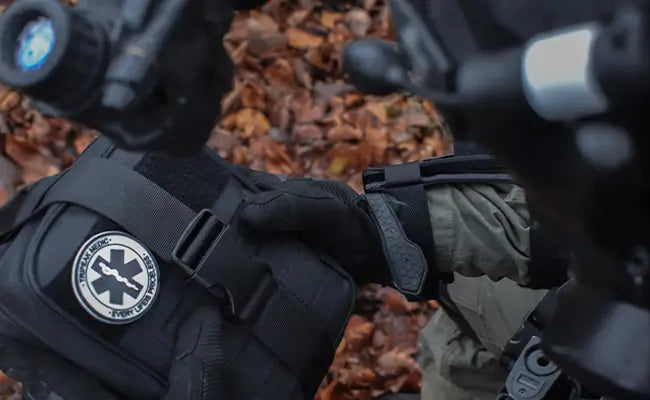
In the world of emergency preparedness, there is a phenomenon known as the "Tactical Trap." It is the tendency to equate the effectiveness of one’s gear with its outward visual aggression. For years, the industry standard for trauma readiness has been defined by heavy-duty 1000D Cordura, rows of exposed PALS webbing, and "Medic" patches that can be seen from across a parking lot. While this aesthetic serves a vital purpose on the battlefield or in active SAR (Search and Rescue) operations, bringing that same visual signature into a 2026 urban environment can ironically become your greatest liability. In a crowded subway, a corporate high-rise, or a local coffee shop, looking like a first responder when you are not on duty doesn't just draw stares—it creates social friction, alerts potential bad actors to your capabilities, and can even lead to unnecessary complications with private security or law enforcement.
As we move through 2026, the definition of readiness has shifted toward the "Gray Man" philosophy. This isn't about being invisible; it is about being unremarkable. It is the art of blending into the urban landscape so effectively that no one suspects you are carrying the tools necessary to manage a catastrophic bleed or a multi-system trauma event. The modern urbanite faces a unique set of risks, from vehicular accidents to "black swan" security incidents, but the solution isn't to look like you’re heading into a combat zone.
The thesis of this guide is simple: True readiness in the modern age is found at the intersection of high-tier medical capability and a zero visual footprint. We believe that your ability to save a life should never be compromised by your need to navigate society smoothly. By evolving our carry methods and embracing low-profile equipment, we ensure that we are prepared for the worst-case scenario without becoming a distraction in the best-case scenario. Readiness is a mindset, not a fashion statement, and in the concrete jungle, stealth is often your most effective piece of kit.


The Psychology of Perception: Why Visual Signature Matters in Urban Environments
In the preparedness community, the visual appearance of your gear is often an afterthought compared to its functional utility. However, in an urban setting, the "look" of your equipment is a functional component in itself. How others perceive you directly dictates how they react to you, and in a crisis, those reactions can either facilitate your lifesaving actions or hinder them entirely. Understanding the psychology of perception is the first step toward mastering low-profile readiness.
The "Sheepdog" vs. The "Gray Man" Debate
For over a decade, the "Sheepdog" mentality has dominated the tactical landscape—the idea that a select few carry the burden of protection and should be recognized as such. This often manifests in "loud" gear: morale patches, camouflage patterns, and visible medical shears. While well-intentioned, this approach creates an immediate social barrier. In contrast, the "Gray Man" philosophy of 2026 posits that the most effective responder is the one no one sees coming. By blending into the baseline of the environment—be it a corporate office or a crowded transit hub—you maintain the element of surprise and avoid the "pre-selection" that comes with looking like a combatant. True "Sheepdogs" in the modern city don’t wear a uniform; they wear a disguise of normalcy.
Social Friction and Public Anxiety
Overt tactical gear in civilian spaces creates what psychologists call "Social Friction." When you walk into a high-rise office building with a multicam IFAK hanging off your belt, you aren't just carrying medical supplies; you are broadcasting a signal of "potential violence" or "imminent danger" to untrained civilians. This leads to increased scrutiny from building security, awkward questions from colleagues, and heightened anxiety in public spaces. In 2026, where security protocols in urban centers are more stringent than ever, "looking tactical" is an invitation for a secondary screening at the TSA or a "random" stop by private security. These delays are more than just an inconvenience—they are a friction point that could separate you from your gear when you need it most.
Target Fixation: The Liability of Looking Prepared
In a high-threat scenario, such as an active shooter event or a violent civil disturbance, looking like a "hard target" can backfire. Predatory actors often use "Target Fixation"—they look for the person who appears most capable of resisting or intervening. If your gear screams "I have medical training and tactical equipment," you may be prioritized as a threat to be neutralized before you can even deploy your kit. Low-profile gear allows you to remain a "soft target" visually while maintaining the internal capability of a "hard target." This cognitive dissonance is a tactical advantage: it gives you the precious seconds needed to assess the scene and intervene on your own terms rather than being forced into a defensive posture by an aggressor who spotted your gear first.
5 Situations Where "Tactical" Gear Causes More Problems Than It Solves
- Corporate Environments: Wearing a MOLLE-covered pouch to a business-casual meeting often results in HR "conversations" or being asked to leave the premises.
Public Transit/Subways: Overt gear often leads to "Good Samaritan" confusion, where people expect you to be an undercover officer, placing a burden of duty on you that you may not be legally or physically prepared for.
International Travel: In many countries, "tactical-looking" civilian gear is seen as a sign of paramilitary affiliation, leading to gear confiscation or even detention at customs.
Family Gatherings/Social Events: High-visibility gear can alienate friends and family, making you the "paranoid" outlier rather than the prepared protector.
High-Security Checkpoints: Pockets full of tactical "gadgets" and visible medical shears will trigger deeper searches, potentially causing you to miss flights or appointments.
Functional Evolution: Designing for Concealment without Sacrificing Access
In the early days of tactical medicine, the solution for carrying more gear was simply to build a larger box. However, as preparedness moves into the professional and civilian spheres, the engineering challenge has shifted. We are no longer just asking "How much can this hold?" but rather "How can this disappear?" This shift represents a functional evolution in gear design where concealment is treated as a primary performance metric, right alongside durability and deployment speed.
The Physics of "Printing"
In the world of concealed carry, "printing" refers to the visible outline of gear through clothing. Minimizing this bulge is a matter of geometry and placement. To keep a trauma kit invisible under a tailored suit or a light casual jacket, the kit must be designed with a flat profile rather than a blocky one. Traditional IFAKs are often "cubic"—they protrude significantly from the body, creating a sharp silhouette that catches the eye. A low-profile kit, however, utilizes a "planar" design, spreading the medical components across a wider, thinner surface area. By hugging the natural contours of the waist or small of the back, the gear follows the body’s movement, allowing fabric to drape naturally over it without creating suspicious peaks or valleys in the garment.
Materials Science: Beyond 1000D Cordura
For decades, 1000D Cordura was the gold standard for its near-indestructibility. But in an urban EDC (Everyday Carry) context, it is often overkill—it’s heavy, abrasive to high-end clothing, and inherently "thick," adding unnecessary millimeters to the kit's footprint. The evolution of low-profile gear, and the core of FlareSyn’s design logic, lies in modern, high-tensile laminates and laser-cut fabrics. These materials offer the same tear strength as traditional nylon but at a fraction of the thickness. By utilizing laser-cutting instead of sewn-on webbing, we eliminate layers of material, resulting in a "slick" exterior that doesn't snag on suit linings or casual sweaters. This materials science approach allows a FlareSyn pouch to remain incredibly rugged while maintaining a silhouette that is essentially "painted on" to the carrier.
Deployment Speed vs. Stealth: The M.A.R.C.H. Factor
The most common criticism of low-profile gear is the fear that concealment will impede access. In a Massive Hemorrhage (the 'M' in the M.A.R.C.H. protocol) scenario, you have seconds, not minutes. If your kit is so well-hidden that you struggle to reach it, the gear has failed. Modern design solves this through "Rapid-Deploy" architecture. Features like a dedicated, pull-tab sleeve for a tourniquet or an internal "sled" system allow the user to rip the medical contents out of the concealed pouch in a single motion. Stealth should never be an obstacle to speed; rather, a well-designed low-profile kit acts like a holster—keeping the tool invisible until the exact moment the hand reaches for it, at which point it should deploy with mechanical precision.
Comparison: Overt Tactical vs. Low-Profile EDC
The following table illustrates why the transition to low-profile gear is a strategic necessity for the urban responder.
| Attribute | Overt Tactical Pouch (Standard IFAK) | Low-Profile EDC Pouch (FlareSyn Style) |
| Physical Volume | High / "Blocky" Profile | Low / "Flat" Profile |
| MOLLE Visibility | Exposed webbing (High Signature) | Laser-cut or Internal (Zero Signature) |
| Deployment Speed | Variable (often requires clearing buckles) | Optimized (Pull-tab / Rapid-deploy) |
| Clothing Compatibility | External belts/Vests only | Under suits, jackets, or in pockets |
| Material Thickness | Heavy 1000D Nylon | High-tensile, slim-line laminates |
| Social Perception | "Combatant" / High-threat | "Commuter" / Invisible |
The 2026 Urban Trauma Tier List: What to Carry and Where to Hide It
In 2026, the philosophy of "carrying everything" has been replaced by the "Tiered Carry System." This strategy acknowledges that your medical loadout should adapt to your environment and clothing, rather than forcing your life to adapt to your gear. Urban preparedness is no longer a binary choice between "carrying a full kit" or "carrying nothing." Instead, it is a modular approach that allows for consistent readiness without compromising your professional or social presence.
The Tiered Carry System: Ankle, Pocket, and Slim-Line
To achieve true low-profile readiness, we categorize gear into three primary urban tiers. Tier 1 (Ankle Kits) remains the gold standard for those wearing slacks or jeans; it utilizes the "dead space" around the lower leg to house a full IED-grade medical kit that vanishes the moment you stand up. Tier 2 (Pocket Organizers) are designed for the modern commuter, turning a standard cargo or jacket pocket into a structured medical bay that prevents gear from shifting or "clinking." Finally, Tier 3 (Slim-Line MOLLE) involves ultra-thin pouches, like the FlareSyn Micro Trauma series, which can be mounted horizontally on a belt. By positioning these at the 4 o’clock or 6 o’clock position on the waist, they sit in the natural hollow of the lower back, remaining invisible even under a relatively slim-fitting t-shirt or blazer.
Re-thinking the Tourniquet: Internal Sleeves vs. External Bands
The Tourniquet (TQ) is the most critical life-saving tool, but it is also the most difficult to hide. The "old school" method of rubber-banding a TQ to the outside of a pouch is a high-signature move—it screams "Tactical" to everyone in the room. In a low-profile 2026 setup, we shift toward internal rapid-deploy sleeves. These sleeves protect the TQ from UV degradation and friction while maintaining a smooth exterior. For the urban responder, a TQ tucked into a dedicated, low-friction sleeve inside a pouch or an ankle wrap ensures that the device is protected from the "office environment" (dust, coffee spills, and seatbelt abrasion) while remaining accessible for a sub-five-second self-application.
Essential Urban Components: Prioritizing the "Bleed"
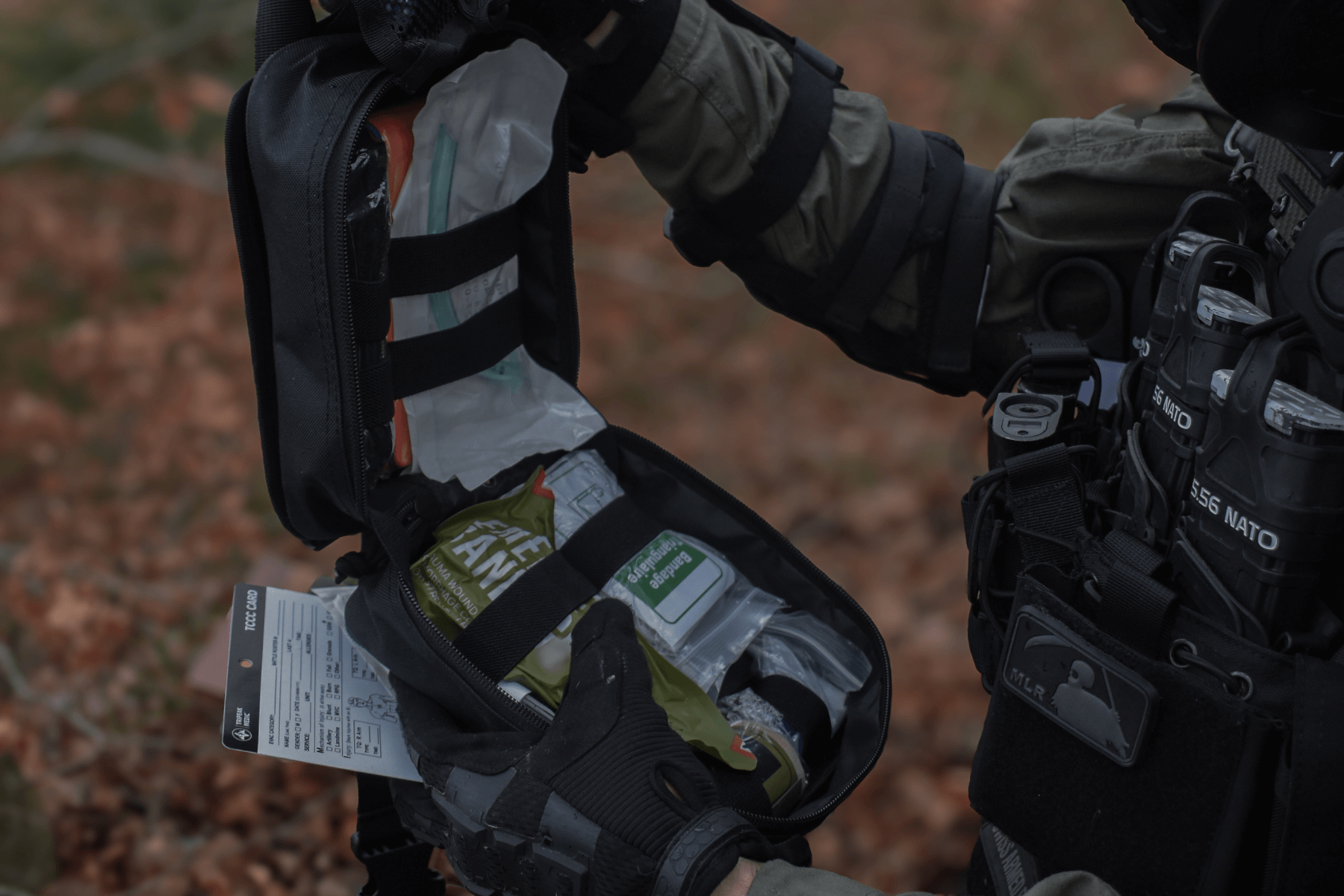
In a battlefield environment, a medic might carry multiple chest seals for blast-related lung injuries. However, in the urban "Gray Man" kit, space is at a premium. Data from 2025-2026 urban trauma trends suggest that massive hemorrhage from glass, machinery, or intentional violence is the primary threat. Therefore, many professionals are trading bulky, rigid chest seal packaging for additional compressed gauze and advanced hemostatic agents (like Chitosan or Kaolin-filled dressings). These "soft" components are vacuum-sealed and flexible, allowing them to mold to the shape of the wearer's body. A slimmed-down kit that prioritizes "packing the wound" and "stopping the leak" provides more utility in a car accident or industrial mishap than a bulky kit designed for a trench.
The "Invisible Responder" Checklist (Essentials for an Urban IFAK)
To maintain a 2026-standard low-profile kit, your essentials should be selected for their "flat-pack" capability:
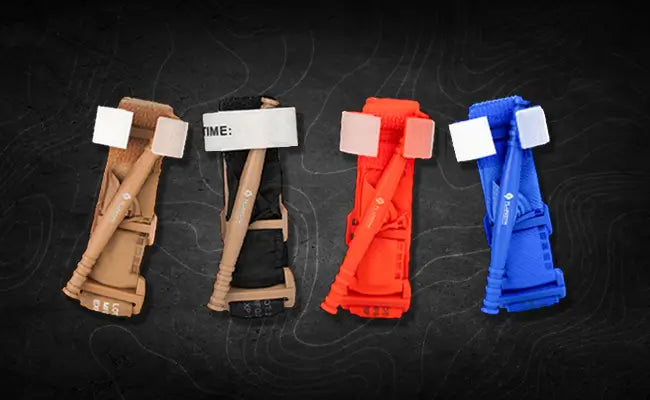
Windlass Tourniquet (Generation 7 or later): Folded in a "flat-lay" configuration rather than a bulky "duty-ready" loop.
Hemostatic Gauze (QuikClot or ChitoGauze): A 3-inch by 4-yard Z-folded strip for active arterial bleeding.
Compressed Crinkle Gauze: For secondary wound packing and volume.
Miniature Pressure Dressing: A 4-inch elastic wrap with a flat-profile pressure bar.
Nitril Gloves (High-Visibility Blue or Black): Vacuum-sealed to remove air and minimize bulge.
Hypothermia Mylar Blanket: Extremely flat and vital for shock management in air-conditioned buildings or winter streets.
Medical Shears (Compact/Folding): 5.5-inch or folding versions that don't protrude from the pouch.
Low-Profile Preparedness: Bridging the Gap Between "Combat Ready" and "Office Friendly"
The challenge for the modern urban responder is finding gear that balances the uncompromising durability of a battlefield kit with the aesthetic requirements of a professional lifestyle. Many manufacturers fail this test, producing gear that is either too fragile for real-world trauma or so "overbuilt" that it becomes socially impossible to carry. At FlareSyn, our 2026 design philosophy is centered on "Invisible Utility"—creating equipment that provides life-saving capability without the visual baggage of a tactical uniform.
Product Spotlight: The FlareSyn Micro Trauma EDC Pouch
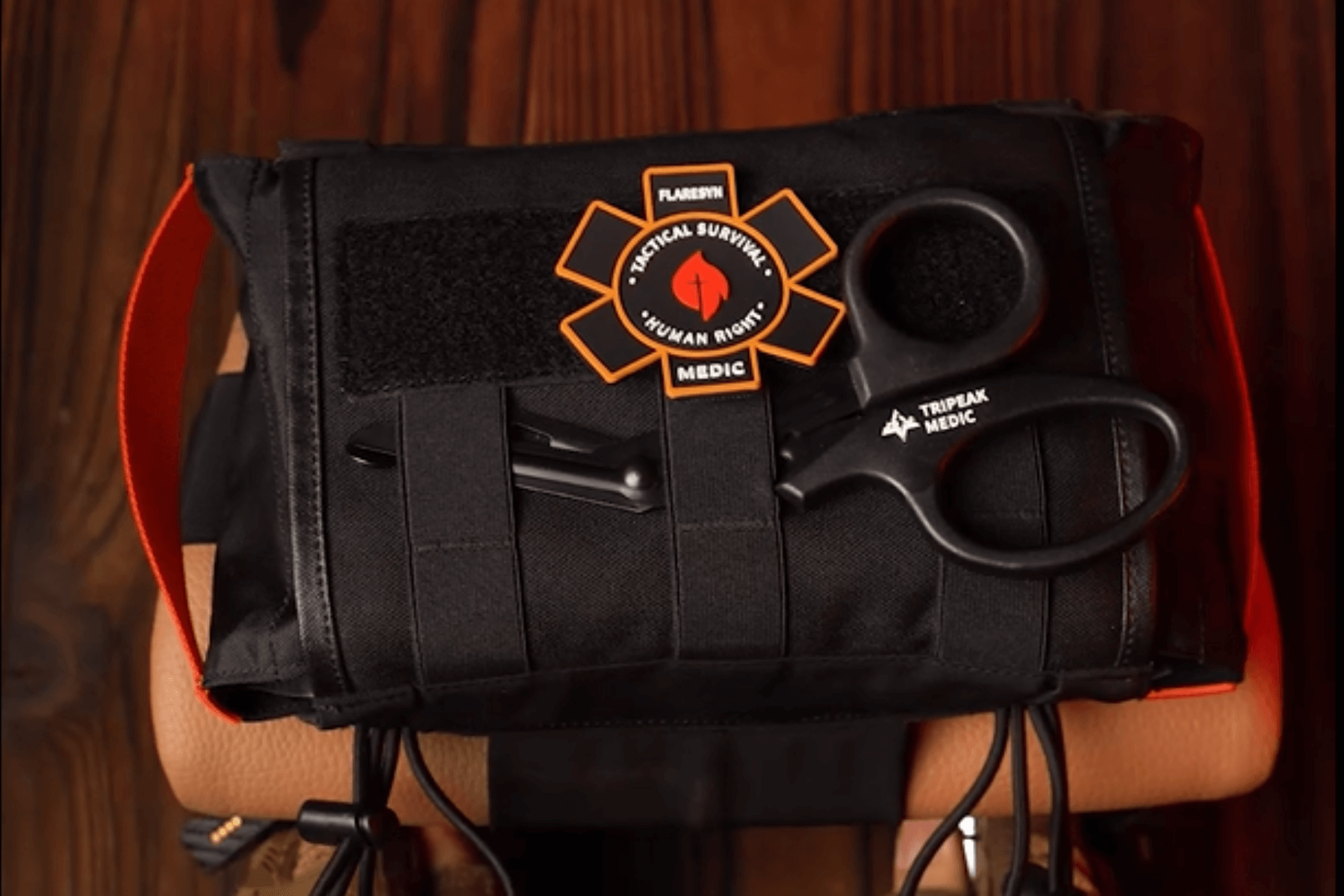
The crown jewel of our Low-Profile Preparedness lineup is the FlareSyn Micro Trauma EDC Pouch. Engineered specifically for the "Gray Man" operative, this pouch utilizes a laser-cut, ultra-slim laminate that significantly reduces the thickness compared to traditional double-layered nylon. What sets the Micro Trauma apart is its Horizontal Orientation and Rapid-Deploy Sleeve. By mounting horizontally on the belt at the small of the back, the pouch follows the natural curve of the iliac crest, virtually eliminating the "printing" effect even under slim-fit clothing. The internal organization is laser-optimized to hold a full MARCH-compliant loadout while maintaining a profile thinner than most modern smartphones. It represents a paradigm shift: a kit that is "combat ready" in its internal components but "office friendly" in its external footprint.
Color Psychology: Why "Wolf Grey" and "Midnight Black" are the new "Coyote Brown"
In the urban landscape, color is a silent communicator. While "Coyote Brown" and "OD Green" are excellent for breaking up silhouettes in rural or woodland environments, they are "high-signature" colors in a city. They scream "military surplus" or "tactical enthusiast." In 2026, FlareSyn has prioritized Wolf Grey and Midnight Black as the primary palettes for urban readiness. Wolf Grey, in particular, is a "chameleon" color; it blends seamlessly with concrete, shadows, and the neutral tones of modern business-casual attire. It is a color that the human eye tends to skip over in an urban crowd. By choosing these "urban neutral" tones, you ensure that even if a corner of your pouch becomes visible, it is perceived as a tech accessory or a standard utility pouch rather than a piece of specialized tactical equipment.
Low-Profile Preparedness: Stealth Mounting and System Synergy
Low-profile preparedness extends beyond what you wear on your body. FlareSyn kits are designed for "System Integration," allowing you to maintain a consistent medical capability across different environments. For the corporate professional, our pouches feature hook-and-loop backing that allows them to be securely mounted inside the laptop compartment of a standard leather briefcase or a commuter backpack. This "Off-Body" carry ensures your kit is always within arm's reach without ever being seen by clients or coworkers. Furthermore, our under-seat vehicle mounts allow you to transition your FlareSyn kit from your belt to your car in seconds, keeping your trauma gear accessible but hidden from "smash-and-grab" thieves who target visible tactical bags.
3 FlareSyn Configurations for the Low-Profile Professional
The "Executive Commuter" Setup: A FlareSyn Micro Pouch in Wolf Grey mounted horizontally at the 6 o'clock belt position. Optimized with flat-packed hemostatic gauze and a compact windlass TQ for high-rise or office safety.
The "Urban Explorer" Setup: A Midnight Black kit integrated into the internal MOLLE panel of a standard civilian daypack. Ideal for hikers, photographers, or travelers who need pro-grade trauma gear without looking like a "prepper."
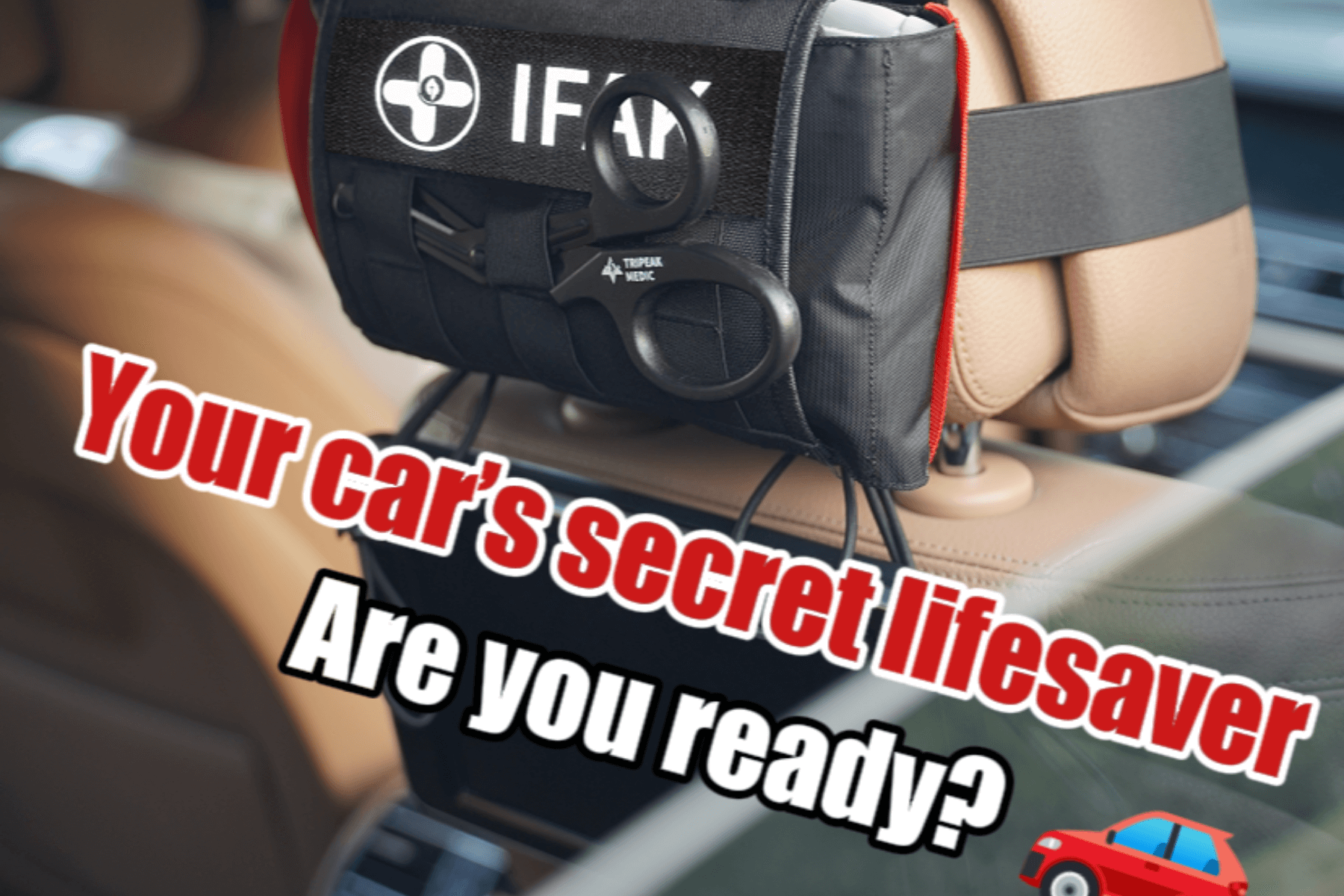
The "Vehicle First-Responder" Setup: A FlareSyn kit mounted via our Velcro-headrest or under-seat adapter. This keeps the kit "invisible" to outside observers while ensuring a 3-second deployment time during a roadside emergency.
As we navigate the complexities of 2026, the hallmark of a seasoned responder is no longer the amount of gear they display, but the efficiency with which they carry it. Moving toward a low-profile posture is a sign of "Maturity in Preparedness." It demonstrates an understanding that being ready for a crisis does not require a sacrifice of one's professional identity or social ease. By stripping away the unnecessary bulk and the aggressive visual cues of traditional tactical gear, we return to the core mission: the preservation of life.
Ultimately, preparedness is a mindset, not a fashion statement. The most effective tool in any emergency is the one you actually have on your person when the unthinkable occurs. By choosing equipment that blends seamlessly into your urban life, you ensure that your trauma kit is a constant companion rather than a burdensome accessory left in a locker or a car trunk. True mastery lies in being the most capable person in the room without anyone ever knowing why.
Q: Does vacuum-sealing my medical components damage their structural integrity?
A: No, provided it is done correctly. Vacuum-sealing is a standard practice in 2026 for minimizing the footprint of gauze and elastic bandages. However, you must ensure that the "tear notches" remain accessible and that the pressure hasn't compressed components like chest seal valves to the point of deformation. We recommend inspecting vacuum-sealed kits every six months for "pinhole" leaks that might let air back in, increasing the kit's bulk.
Q: Can I take my low-profile FlareSyn kit through airport security?
A: Generally, yes, but with one caveat: the medical shears. While many folding shears are TSA-compliant (blunt-tipped and under 4 inches from the pivot point), local security in different countries may have varying standards. The medical components themselves—tourniquets, gauze, and hemostatics—are not prohibited items. Carrying them in a low-profile pouch like the FlareSyn Micro helps avoid the "tactical profiling" that often leads to secondary inspections.
Q: How do I explain my medical kit to a curious co-worker or a security guard?
A: The beauty of low-profile gear is that you rarely have to. However, if asked, the most effective response is "De-escalation through Professionalism." Instead of using "combat" terminology, refer to it as a "Personal Trauma Kit" or an "Advanced First-Aid Kit for vehicular accidents." In 2026, being a "certified first responder" or simply a "safety-conscious commuter" is a socially respected position that diffuses curiosity.
Q: Is an ankle kit really comfortable for 8+ hours of daily wear?
A: Comfort is highly dependent on the "counter-weight" design. Modern 2026 ankle rigs utilize moisture-wicking paddings and multi-strap systems that distribute weight across the calf muscle rather than the ankle bone. Most users report that after a three-day "break-in" period, the kit becomes "invisible" to the wearer’s sensory perception, much like a wristwatch or a concealed holster.
Q: Why choose Wolf Grey over traditional Black for urban concealment?
A: While Black is common, it is actually a "high-contrast" color that creates a sharp silhouette against lighter backgrounds (like khaki pants or grey car interiors). Wolf Grey is a "mid-tone" color that mimics shadows. In the world of visual science, mid-tones are harder for the human eye to track in peripheral vision, making Wolf Grey the superior choice for staying "under the radar" in diverse urban environments.


Elias.H.Hwang
Elias H. Hwang is a tactical medicine expert and lead contributor at FlareSyn. He specializes in emergency trauma protocols and preparedness education, helping civilians and professionals alike master the tools and skills needed to save lives in critical moments.

Deixar comentário
Este site é protegido por hCaptcha e a Política de privacidade e os Termos de serviço do hCaptcha se aplicam.