

Tiered Medical Preparedness: Why One Trauma Kit Isn't Enough
Quick Navigation: Master Your 2026 Safety Net
The "all-in-one" myth is perhaps the most dangerous misconception in modern emergency preparedness. For years, the industry marketed the "perfect" first aid kit—a single, often bulky bag intended to solve every medical crisis from a minor scrape to a catastrophic arterial bleed. However, as we navigate the complexities of 2026, the reality of high-stress emergencies has proven otherwise. A trauma kit sitting in your trunk is useless when a life-threatening hemorrhage occurs in a shopping mall; conversely, a pocket-sized EDC pouch lacks the depth required to manage a multi-person scene or a prolonged extraction.
Relying on a single piece of equipment creates a critical "single point of failure." If that one kit is out of reach, misplaced, or depleted after a single use, your life-saving capability drops to zero. True readiness in 2026 is not about finding the "perfect bag"—it is about building a Tiered Response System. This philosophy shifts the focus from static ownership to dynamic access. By layering your medical capabilities across different environments—on your person, in your vehicle, and at your home base—you ensure that the right tools are always within a "time-appropriate" distance. This tiered approach is the new standard for professionals and prepared civilians alike, transforming preparedness from a one-time purchase into a resilient, fail-safe lifestyle.
The thesis of this guide is a strategic pivot: Global readiness requires a total shift from "Tactical Aesthetics" to "Medical Necessity." To remain a "Global Responder," you must de-escalate the visual profile of your trauma kit without compromising its life-saving utility. We aren't asking you to carry less; we are asking you to carry smarter. By reconfiguring your FlareSyn system to emphasize clinical professionalism over paramilitary styling, you ensure that your gear stays on your person, through the checkpoint, and ready for the moment it is truly needed.


The Philosophy of Tiers: The Battle Between Seconds and Minutes
The foundation of the Tiered Response Strategy lies in a brutal, uncompromising reality: in a medical emergency, time is the only currency that matters. While modern medicine has made incredible leaps by 2026, the laws of biology remain unchanged. To survive a catastrophic injury, you must win the battle against the clock. This is not a philosophical debate; it is a tactical calculation. By organizing your gear into tiers, you are essentially "buying time" at different stages of a crisis.
The Golden Hour vs. The Platinum Ten: The Temporal Core of First Aid
For decades, the "Golden Hour" was the benchmark for trauma care—the window within which a patient needed to reach a surgical suite to maximize survival. However, in 2026, tactical medicine has shifted its focus to an even more critical window: the "Platinum Ten Minutes." If an arterial bleed is not controlled within the first few minutes, the body enters a state of irreversible shock. By the time the "Golden Hour" becomes relevant, the battle may already be lost. The Tiered Response recognizes that your gear's location is just as important as its contents. Your Tier 1 gear (On-Body) is designed specifically for those "Platinum Ten" seconds. It is the toolset that prevents a "patient" from becoming a "casualty" before the ambulance even leaves the station. In 2026, as urban environments become more congested and response times fluctuate, your ability to provide immediate care within that first 120 seconds is the literal difference between life and death.
The "On-Body" Constraint: Why the Big Bag is a False Security
There is a psychological trap in preparedness known as "The Backpack Fallacy." It is the belief that because you own a comprehensive, 5-lb trauma medical kit, you are "prepared." But the physical reality of daily life in 2026—whether you are commuting via high-speed rail, working in a professional office, or hiking—dictates that you will not have that 5-lb bag strapped to you 100% of the time.
The "On-Body" constraint is the filter through which all Tier 1 gear must pass. If it is too bulky, it creates "gear fatigue," leading the user to eventually leave it in the car "just this once." That is precisely when the accident happens. A Tier 2 vehicle kit, no matter how advanced, cannot help you if you are trapped in a collapsed building or a crowded venue 500 meters away from your car. Tier 1 gear must be minimalist, low-profile, and specialized. It doesn't replace the big bag; it acts as the bridge that allows you to survive long enough to get to the big bag.
Self-Aid vs. Buddy-Aid – Functional Requirements
The design of your tiers must reflect who you are treating and under what conditions. The equipment needs change drastically between these two modes:
-
Self-Aid (Tier 1 Emphasis):
One-Handed Operation: Gear must be deployable with a single hand (e.g., a windlass tourniquet) in case one arm is incapacitated.
Gross Motor Skills: Under high stress, fine motor skills disappear. Tier 1 gear uses simple, high-friction interfaces.
Immediate Access: Must be reachable by either hand, usually located on the centerline of the body or in a dedicated "reach-zone."
-
Buddy-Aid (Tier 2 & 3 Emphasis):
Volume & Variety: Requires multiple sets of gloves, more gauze, and varied dressings for different wound types.
Diagnostic Tools: Includes items like stethoscopes, pulse oximeters, or 2026-gen smart health monitors to track another person's vitals.
Environmental Protection: Space blankets and hypothermia wraps to stabilize a victim while waiting for extraction.
The Core Logic: The Progressive Hand-off
The "Tiered Response" is a logical progression—a hand-off of capability.
The Pocket (Tier 0/1): Immediate hemorrhage control. This is your "Life-Preserver."
The Pouch/IFAK (Tier 1.5/2): Wound packing, chest seals, and basic stabilization. This is your "Clinic."
The Trunk/Base (Tier 3): Sustained care, splinting, and massive casualty support. This is your "Field Hospital."
Tier 1 – The Immediate Action Layer: The "Zero-Second" Tiered Medical Preparedness (EDC)
The first tier is the most critical and, paradoxically, the most difficult to maintain. It is the Immediate Action Layer, more commonly known as your Everyday Carry (EDC). In the 2026 landscape of urban density and unpredictable emergencies, Tier 1 is defined by a single rule: If it isn’t on your body, it doesn’t exist. This layer is not designed to treat a patient for an hour; it is designed to stop a human being from bleeding to death in sixty seconds. It is your "bridge to life" that buys you the time to reach the more comprehensive tools in your vehicle or home.
Minimum Viable Capability: What Truly Belongs in Your Pocket?
In Tier 1, space is your most expensive commodity. Every cubic centimeter must be justified by its life-saving potential. To achieve Minimum Viable Capability (MVC), you must focus exclusively on the "M" in the M.A.R.C.H. protocol: Massive Hemorrhage.
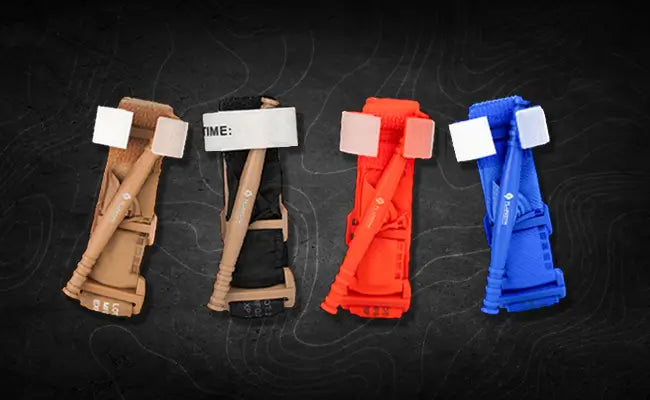
The absolute essentials for a 2026 EDC setup include a high-quality windlass or mechanical tourniquet, hemostatic gauze (like Chitosan or Kaolin-based strips), and a pair of nitrile gloves. While a chest seal is a "nice-to-have" in a pocket, it is often too bulky for true EDC unless folded specifically. The priority is the Tourniquet (TQ). In 2026, we have seen a shift toward ultra-compact, rapid-deploy sleeves that allow a full-sized TQ to be carried as easily as a smartphone. If you can only carry one thing, it must be the tool that stops an arterial bleed. Everything else—bandages, meds, and diagnostics—belongs in Tier 2.
The 2026 Low-Profile Aesthetic: Tiered Medical Preparedness
One of the biggest barriers to consistent Tier 1 carry has historically been the "tactical" look. Walking into a corporate office or a high-end restaurant with a multicam pouch strapped to your belt creates unnecessary social friction. In 2026, the trend has shifted toward Low-Profile Preparedness.
Modern EDC gear now utilizes high-performance materials like laser-cut laminates and elasticized nylons that "disappear" under a standard t-shirt or inside a suit jacket. The goal is to be Concealed but Capable. By using deep-carry clips and "silent" textures, you can maintain a full trauma capability without looking like you are heading into a combat zone. This aesthetic choice isn't just about fashion; it’s about compliance. If your gear looks and feels like part of your clothing, you are 100% more likely to have it on you when a crisis occurs.
Tier 1 Component Analysis – Speed vs. Bulk
Note: Scores are rated on a scale of 1–10 (10 being the best/fastest/smallest).
| Component | Life-Saving Priority | Deployment Speed | Concealability (Bulk) | Best For |
| Windlass Tourniquet | 10/10 | 9/10 | 5/10 | Extremity Arterial Bleeds |
| Hemostatic Gauze | 9/10 | 6/10 | 9/10 | Junctional Wounds (Groin/Armpit) |
| Pressure Dressing | 7/10 | 5/10 | 6/10 | Venous Bleeding & Wound Protection |
| Chest Seal (Compact) | 8/10 | 7/10 | 8/10 | Penetrating Thoracic Trauma |
FlareSyn Integration: The Micro EDC Pouch Advantage
This is where the FlareSyn Micro EDC Pouch redefines the category. Traditional pouches require you to open a zipper or a heavy velcro flap, costing you precious seconds of fine motor movement under stress. The FlareSyn design features a Rapid-Deploy Tourniquet Sleeve that utilizes a "pull-and-present" mechanic.
By separating the tourniquet into an external, high-access sleeve while keeping the hemostatic gauze and gloves in a slim internal compartment, FlareSyn solves the "bulk vs. speed" dilemma. It is specifically engineered for the 2026 professional who demands a low-profile footprint but refuses to compromise on deployment velocity. In a Tier 1 scenario, you aren't just fighting an injury; you are fighting your own adrenaline. The Micro EDC Pouch’s intuitive layout ensures that even when your hands are shaking and your vision is tunneling, the right tool is exactly where your hand expects it to be,which is so called Tiered Medical Preparedness.
Tier 2 – The Mobile Response Layer: From Self-Aid to Scene Management
If Tier 1 is your "Life-Preserver," then Tier 2 is your "Field Clinic." In the 2026 tiered response strategy, the Mobile Response Layer—typically centered around your vehicle or a dedicated Individual First Aid Kit (IFAK) worn on a belt or plate carrier—represents the most significant jump in medical capability. While Tier 1 is restricted by the physics of pocket space, Tier 2 leverages the storage capacity of your daily environment to move beyond simple hemorrhage control and into the realm of stabilization and life support.
The Shift in Mission: From Victim to Responder
The transition from Tier 1 to Tier 2 is more than just a change in equipment; it is a role upgrade. In Tier 1, your primary mission is almost always Self-Aid: stopping your own bleed or that of someone within arm's reach while moving to safety. In Tier 2, you have successfully "stopped the clock." Now, you are transitioning into Scene Management. At this level, you have the resources to treat multiple injuries, manage a victim's airway more effectively, and prevent the onset of shock. You are no longer just a bystander with a tourniquet; you are a first responder equipped to hold the line until professional EMS arrives. In 2026, where "last-mile" rescue times can be unpredictable due to urban complexity, the ability to sustain life for 15–30 minutes is the hallmark of a truly prepared individual.
The Vehicle as Your Mobile Trauma Station
Your vehicle is the ultimate force multiplier in emergency preparedness. It offers two things your pockets never will: Tiered Medical Preparedness. Because weight is less of a factor, Tier 2 allows for "heavy-duty" medical intervention.
A vehicle-based Tier 2 system allows you to carry diagnostic tools, larger splinting materials, and environmental controls that are physically impossible to carry on-body. Moreover, the vehicle itself provides a controlled environment—a shield from wind, rain, or prying eyes—where you can perform more delicate procedures like wound packing or applying chest seals with greater precision. In 2026, your car shouldn't just be a mode of transport; it should be a mobile sanctuary of safety.
The Tier 2 Essential Expansion
While Tier 1 focuses on the "M" (Massive Hemorrhage) of the MARCH protocol, Tier 2 completes the acronym. Here are the non-negotiable additions for your Mobile Layer:
Vented Chest Seals: Crucial for treating penetrating thoracic trauma (sucking chest wounds) that can lead to a tension pneumothorax.
Hypothermia Prevention (Space Blankets): Trauma patients lose the ability to regulate body temperature rapidly. Even in warm climates, a "shocked" body needs external heat retention.
Malleable Splints (SAM Splints): Essential for stabilizing fractures or severe sprains to prevent further tissue damage during transport.
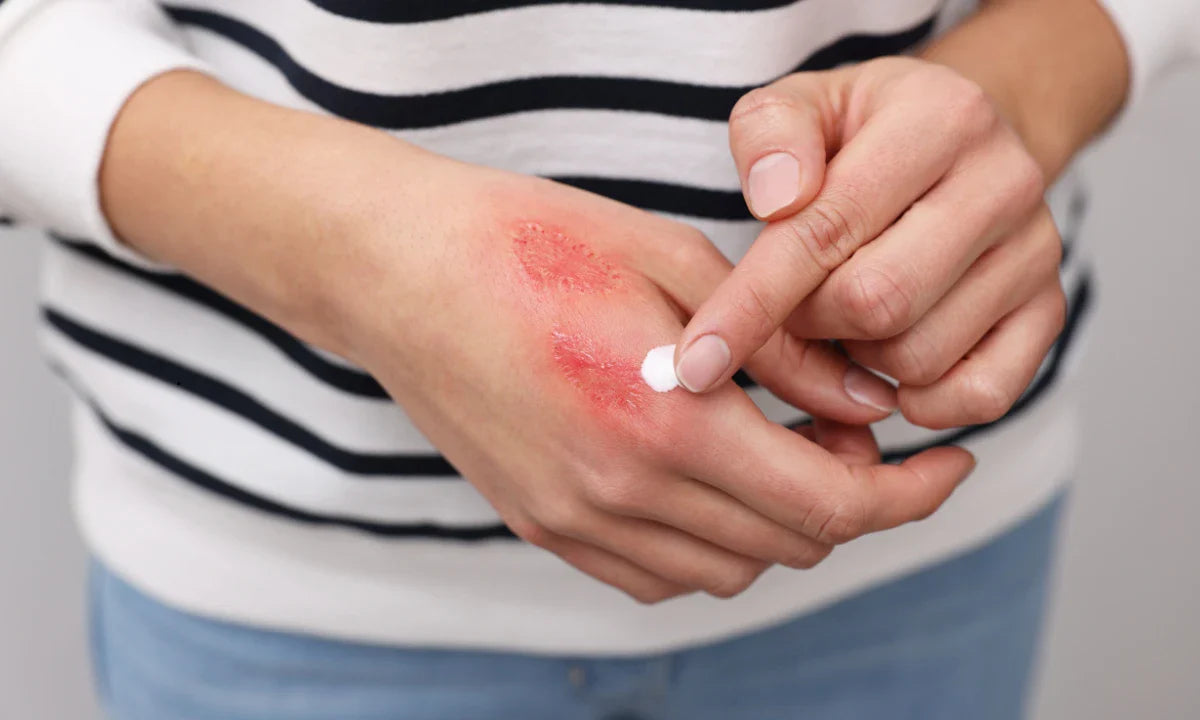
Burn Dressings: Hydrogel-based sheets to cool and protect thermal injuries.
NPA (Nasopharyngeal Airway): To maintain an open airway in unconscious patients.
FlareSyn Integration: The SE IFAK as Your Tier 2 Backbone
This is where the FlareSyn SE IFAK Series serves as the definitive anchor for your mobile response. Whether you choose the Standard or the Pro version, the SE IFAK is engineered to be the bridge between "immediate" and "sustained" care.
The Tiered Medical Preparedness provides the perfect density of components for a personal vehicle kit—compact enough to fit under a seat or behind a headrest, yet comprehensive enough to manage a major trauma event. For those operating in higher-risk environments or carrying for a family, the SE IFAK Pro with Zipper offers expanded internal organization, allowing for "tearsheet" access to supplies. The Pro version’s internal layout is optimized for high-stress environments where you need to see all your diagnostic and treatment tools at a single glance. By making the SE IFAK the backbone of your Tier 2, you ensure that the transition from your EDC pouch to your vehicle kit is seamless, intuitive, and—most importantly—life-saving.
Tier 3 – The Sustained & Group Care Layer: The "Home Base" Command Center
The final and most comprehensive level of the 2026 tiered response strategy is Tier 3: The Sustained & Group Care Layer. While Tiers 1 and 2 are mobile, reactive, and focused on the immediate "Platinum Ten Minutes," Tier 3 is rooted in your home, office, or base of operations. In the 2026 landscape—where localized infrastructure failures or large-scale emergencies can isolate households for hours or even days—Tier 3 serves as your private field hospital. It is the tactical "Mother Ship" that supports all other layers of your medical defense.
Managing Group Casualties (MCI) and Family Logistics
The transition to Tier 3 marks a shift from individual survival to Group Sustainability. In a Mass Casualty Incident (MCI)—such as a natural disaster or a major structural accident—you are no longer just treating yourself; you are managing a triage environment.
The logic of Tier 3 is built on Redundancy and Volume. While an EDC pouch has one tourniquet, a Tier 3 Home Station should contain four to six, along with stacks of trauma dressings and multi-packs of chest seals. This layer allows for the simultaneous treatment of multiple family members or neighbors. Furthermore, Tier 3 introduces "Comfort Care" and "Secondary Treatment"—items like pulse oximeters, blood pressure cuffs, and over-the-counter medications that manage the fallout of an emergency once the initial life-threatening bleeding has been controlled. In 2026, being a "provider" for your family means having the depth of supply to handle more than just the first person injured.
The "Mother Ship": Resupply and Long-Term Maintenance
The most overlooked function of Tier 3 is its role as a Logistical Resupply Station. Every time you use a pair of gloves from your Tier 1 EDC pouch or a gauze roll from your Tier 2 Vehicle IFAK, those kits become compromised. A Tier 3 setup ensures you have a dedicated inventory to immediately "Refill and Reset" your mobile kits.
Maintaining Tier 3 gear in 2026 involves more than just stacking boxes. It is about environmental control and organizational logic. A high-quality Home Base kit should be stored in a climate-controlled, accessible location (like a dedicated "Go-Bag" or a wall-mounted station) to protect sensitive hemostatic agents and adhesives from degradation. It acts as the "Archive" of your safety net, holding the heavy splints, large-volume irrigation fluids, and bulk dressings that are physically impossible to carry in a car or on a belt.
The Capacity Matrix – Tiers 1-3 Comparison
This matrix illustrates how each tier scales in terms of endurance and patient volume.
| Response Tier | Primary Focus | Patient Capacity | Sustained Care Duration | Mobility Level |
| Tier 1 (EDC) | Immediate Self-Aid | 1 Person | 0 – 5 Minutes | Maximum (On-Body) |
| Tier 2 (IFAK/Vehicle) | Scene Stabilization | 1 – 2 Persons | 10 – 60 Minutes | High (Mobile) |
| Tier 3 (Home/Base) | Sustained/Group Care | 4 – 6+ Persons | 24 – 72+ Hours | Stationary (Command) |
Core Logic: The "Logistical Anchor" of 2026
In 2026, emergency preparedness is an ecosystem, not a single product. The Tier 3 Home Kit is the anchor of that ecosystem. It provides the psychological "Peace of Mind" that comes from knowing you can handle a prolonged isolation event where professional medical help is delayed by hours.
As we navigate the complexities of 2026, the traditional approach to first aid is no longer sufficient. True preparedness is not a static purchase—it is a dynamic, evolving lifestyle. Owning a single high-quality kit is a start, but it is the integration of those tools into a Tiered Response Strategy that truly transforms you from a bystander into a resilient responder. By layering your capabilities from the pocket to the vehicle and back to the home base, you eliminate the "single point of failure" and ensure that time—the most precious commodity in a crisis—is always on your side.
The "Tiered Response" philosophy acknowledges that life is mobile, unpredictable, and often high-stress. It respects the physical constraints of what you can carry while maximizing the logistical depth of your home and vehicle. In 2026, being "ready" means having a safety net that follows you wherever you go, providing the exact level of care needed for the exact moment of the emergency.
Now is the time to look at your current setup through the lens of tiers. Do you have a Tier 2 vehicle kit but find yourself "naked" in Tier 1 during your daily commute? Or perhaps you have an excellent EDC pouch but lack the Tier 3 depth to support your family during a prolonged power outage or natural disaster?
Audit your gear today. Identify which tier is currently missing from your life. Whether you need to bridge the gap with a low-profile FlareSyn Micro EDC Pouch or anchor your mobile defense with a robust SE IFAK, building that next layer is the most important step you can take for the safety of yourself and those around you. Don't wait for the crisis to expose the gap—close it now.
Q: If I can only afford one tier right now, which should I prioritize?
A: Always prioritize Tier 1 (On-Body/EDC). While Tier 2 and 3 have more supplies, Tier 1 is the only gear guaranteed to be with you during the critical "Platinum Ten" minutes of an arterial bleed. You cannot use a car kit if you cannot reach your car.
Q: Do I need professional training to use these tiers?
A: Gear is only as good as the hands holding it. We strongly recommend a Stop the Bleed® course or TCCC-AC (Active Bystander) training. However, FlareSyn kits are designed with intuitive layouts to assist you even under high-stress "gross motor skill" conditions.
Q: How often should I audit my Tiered Response System?
A: We recommend a quarterly audit (every 3 months). Check for expired hemostatic agents, ensure your tourniquet windlass isn't becoming brittle due to UV/heat exposure (especially in Tier 2 vehicle kits), and verify that all seals remain airtight.
Q: Can I combine Tier 1 and Tier 2?
A: Yes, many users wear a FlareSyn SE IFAK on their belt (Tier 2 capability) while keeping a Micro EDC Pouch in their pocket. The goal is redundancy; the more layers you have, the lower your risk of being caught unprepared.


Elias.H.Hwang
Elias H. Hwang is a tactical medicine expert and lead contributor at FlareSyn. He specializes in emergency trauma protocols and preparedness education, helping civilians and professionals alike master the tools and skills needed to save lives in critical moments.


Deixar comentário
Este site é protegido por hCaptcha e a Política de privacidade e os Termos de serviço do hCaptcha se aplicam.