
The Ultimate "Bug-Out Bag" Medical Strategy: How to Build Your Tiered Trauma Setup for Grid-Down Scenarios
Survival Strategy Guide: Core Sections
The modern approach to emergency preparedness is saturated with a dangerous complacency. When assembling a disaster kit or a "Bug-Out Bag" (BOB), the average individual typically relies on pre-packaged, consumer-grade first aid kits available at big-box retail stores. These kits are often proudly marketed as containing hundreds of pieces, yet they are structurally incapable of handling a true catastrophic emergency. They are built on the underlying assumption that a municipal infrastructure remains intact—meaning emergency medical services (EMS) are merely a phone call away, and the kit only needs to bridge a narrow, comfortable gap until professional help arrives. This assumption is a fatal flaw. When the grid goes down, the nature of injury shifts instantly, rendering standard commercial medical supplies entirely obsolete.
Why Ointments and Band-Aids Fail When the Grid Goes Down
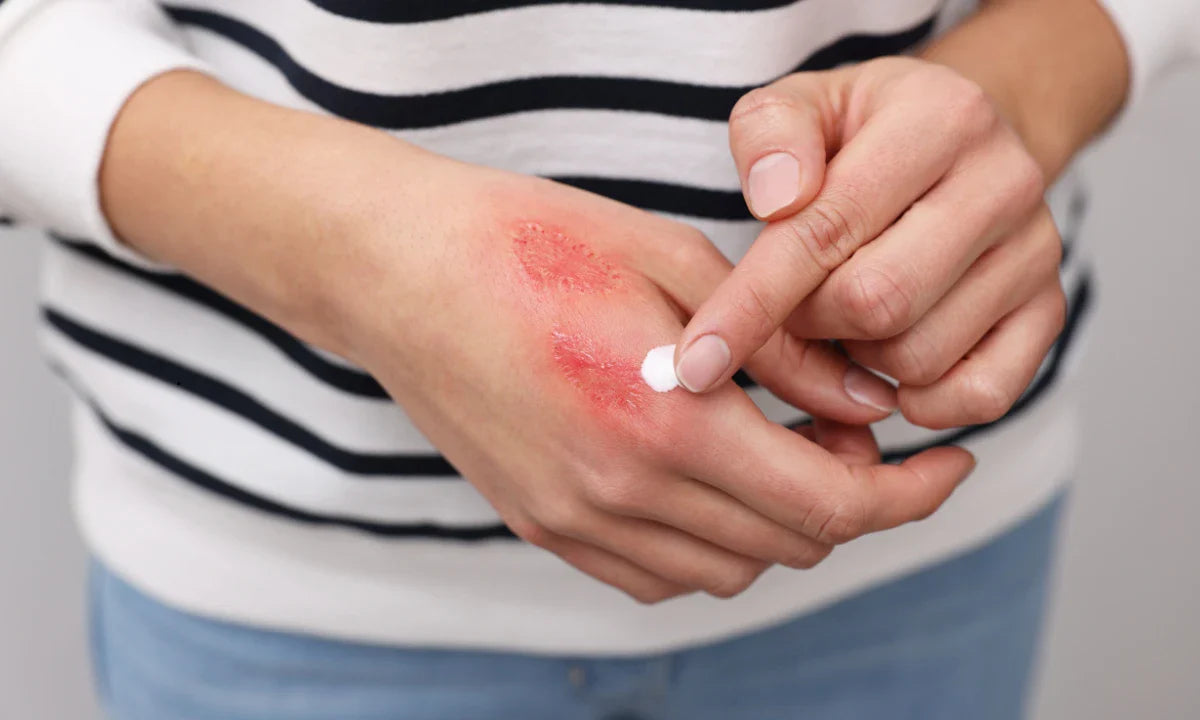
The overwhelming majority of components in a retail first aid kit are geared toward minor, low-energy domestic injuries. Antiseptic wipes, plastic adhesive bandages, hydrocortisone creams, and safety pins are excellent for treating minor abrasions, paper cuts, and superficial insect bites sustained in a controlled home environment. However, when a widespread grid-down event occurs—whether triggered by natural disasters, severe cyber infrastructure failure, or geopolitical instability—these items fail completely.
A plastic Band-Aid cannot stop a severe arterial bleed from an accidental chainsaw slip during debris clearance. Triple-antibiotic ointment cannot stabilize a crushed pelvis or open chest wound caused by structural collapse. In a systemic survival scenario, you do not die from unsoothed minor discomforts; you die from rapid exsanguination, airway compromise, and untreated shock.
Defining the "Bug-Out" Reality: High-Energy Trauma in Uncontrolled Environments
To build a truly resilient medical strategy, you must realistically define the environment of a Bug-Out scenario. Evacuation and relocation force individuals out of sheltered, predictable spaces and drop them into highly volatile, high-risk physical landscapes.
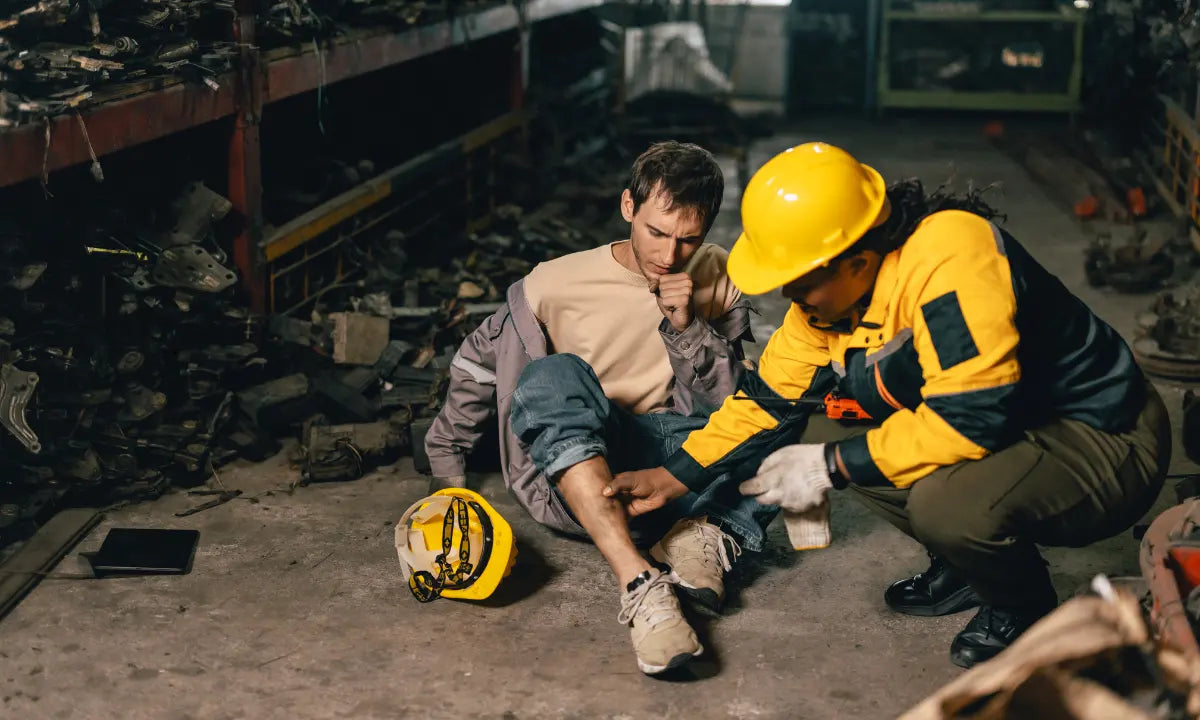
In these uncontrolled environments, the likelihood of experiencing high-energy trauma skyrockets. Navigating shattered urban centers, handling unfamiliar heavy tools for barrier breaching or firewood harvesting, and moving quickly through broken terrain under heavy physical load all introduce extreme structural risks to the human body. Ballistic injuries, severe penetrating lacerations from shattered window glass or jagged metal, deep puncture wounds from impalement, and high-impact orthopedic fractures become the primary medical threats. These are high-consequence injuries that demand aggressive, clinical-grade tactical interventions, not standard domestic first aid.
The Concept of Tiered Medical Readiness (Scale, Mobility, and Access)
To survive this hostile shift in medical reality, experienced operators deploy the concept of Tiered Medical Readiness. This organizational strategy rejects the idea of a single, monolithic medical kit buried deeply inside a survival backpack. Instead, it distributes your life-saving medical assets across three distinct, overlapping physical layers based on scale, mobility, and speed of access.
This architectural approach ensures that no matter your immediate situation—whether you are separated from your primary backpack, trapped inside a vehicle, or managing a mass-casualty incident within your family group—the correct caliber of life-saving medical gear is instantly accessible within your immediate physical reach.
Why Infrastructure Collapse Shifts Medical Priorities
When public infrastructure collapses and emergency response times transition from minutes to days, your medical philosophy must undergo a fundamental evolution. Consider why severe grid-down realities shift your immediate needs from "comfort care" to "life preservation":
Complete Absence of Higher-Echelon Care: In a true grid-down emergency, hospitals may be offline, roads blocked, and ambulances non-existent. Your medical gear must be capable of definitive, long-term stabilization, rather than just temporary comfort while waiting for a siren.
Mechanized and Environmental Hazards: Clearing fallen trees, operating manual valves, moving debris, and constructing emergency shelters dramatically increase exposure to deep puncture wounds, crushing trauma, and high-velocity lacerations.
The Proximity of Compromised Security: Tactical evacuations often involve navigating chaotic, densely populated bottlenecks where interpersonal violence, kinetic altercations, and ballistic or bladed injuries become realistic survival variables.
Environmental Exposure and Secondary Shock: High-energy physical exertion combined with a lack of climate-controlled shelter accelerates the onset of hypothermia and systemic acidosis, transforming otherwise manageable blood loss into a rapid, fatal downward spiral.


Tier 1 - The EDC Layer: Constant Contact Trauma Essentials
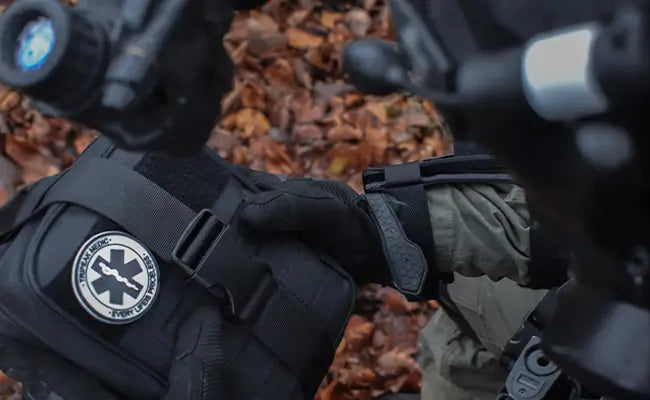
The foundation of any serious disaster medical strategy is the first physical layer of your gear: Tier 1, or your Every Day Carry (EDC) medical setup. In a dynamic emergency or evacuation scenario, your primary survival backpack is highly vulnerable to separation. You may have to drop your heavy pack to cross broken terrain, lose it during a chaotic vehicle egress, or be separated from it during a kinetic security incident. If your only trauma gear is packed away inside that distant backpack, you are effectively operating with zero medical capability. Tier 1 mandates that your absolute baseline of life-saving medical gear never leaves your physical body.
The Philosophy of Tier 1: On-Body, No-Fail Gear
The guiding philosophy of Tier 1 is simple: if it is not on your body, it does not exist. This layer represents your immediate line of defense against the clock during a catastrophic hemorrhage event. Tier 1 gear is not designed to treat illness, set broken limbs, or manage long-term wounds. Its singular, unyielding objective is to keep a casualty alive for the critical first 180 seconds of an emergency. This requires components that are incredibly rugged, compact, and completely reliable. Tier 1 gear must be able to withstand the constant friction, body heat, and moisture of daily on-body wear without degrading the structural or sterile integrity of the medical components inside.
Micro EDC Pouches vs. Standard Pockets
When carrying medical gear on your person, a major operational hurdle is balancing tactical function with low-profile discretion. Stuffing loose medical components directly into standard pant pockets is a recipe for failure. Loose gear shifts constantly, wears through packaging due to repetitive friction, and becomes incredibly difficult to extract under the fine-motor-skill degradation of extreme stress.
To solve this, advanced operators utilize ultra-compact, dedicated micro EDC MOLLE pouches or low-profile pocket organizers. These hyper-minimalist platforms aggregate your life-saving components into a rigid, structured format. They prevent the gear from printing through your clothing—maintaining a low-profile, non-tactical appearance—while ensuring that the moment you pull the deployment tab, the entire medical cell is delivered into your hand in an identical, predictable orientation every single time.
Minimum Viable Components for Instant Hemorrhage Control
Because space is at an absolute premium on your physical person, a Tier 1 setup must ruthlessly strip away non-essential items to focus purely on Minimum Viable Components (MVC) for massive hemorrhage control. This means bypassing items like splints, chest seals, or secondary medications in favor of tools that arrest high-velocity blood loss.
The MVC for a Tier 1 kit centers entirely on a compact, rapid-deploy windlass tourniquet and a single module of high-efficiency compressed gauze. By focusing exclusively on the primary killer—catastrophic extremity and junctional bleeding—you can maintain a lightweight, highly concealable profile that guarantees you will actually carry the kit every single day, rather than leaving a bulky pouch behind on a table.
Tier 1 Absolute Essentials Checklist
During a critical relocation or evacuation scenario, your Tier 1 on-body setup must contain these exact, uncompromised assets:
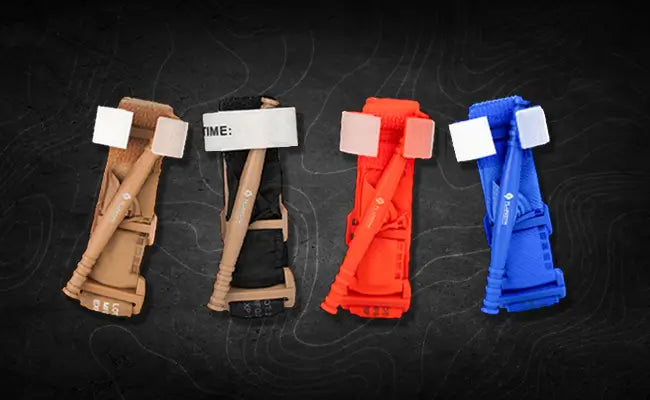
Low-Profile Windlass Tourniquet: A rugged, rapidly adjustable extremity tourniquet folded into a flat-pack or ultra-compact configuration, allowing instant, one-handed application to close a severed limb artery.
Z-Folded Hemostatic Gauze: One vacuum-sealed, micro-packaged module of advanced chitosan-treated gauze, optimized for high-speed wound packing into deep junctional voids under zero-visibility conditions.
Compact Mini-Pressure Bandage: A highly compressed, elastic wrap containing an integrated sterile pad, designed to quickly back up a wound packing site and maintain targeted mechanical pressure without the bulk of a standard civilian dressing.
Heavy-Duty Nitrile Barrier Gloves: A single pair of thick, dark-colored medical gloves folded tightly into the configuration, providing immediate personal biohazard protection the moment the kit is deployed.
Tier 2 - The Bug-Out Bag (BOB) Layer: The Mobile Lifeline Platform
While your Tier 1 on-body setup acts as your immediate emergency anchor, it is inherently limited by physical space. To survive a prolonged evacuation, grid-down transition, or multi-day wilderness dislocation, you must scale up your medical capabilities. This brings us to Tier 2: The Bug-Out Bag (BOB) medical layer. This platform serves as your comprehensive mobile lifeline. Typically mounted externally on your primary survival pack or integrated as a standalone tear-away module, the Tier 2 platform expands your medical footprint from simple self-aid hemorrhage control to the full spectrum of Individual First Aid Kit (IFAK) capabilities, allowing you to treat both yourself and members of your immediate party.
The Anatomy of a True Mobile IFAK
A professional Tier 2 IFAK is a masterclass in spatial efficiency and functional anatomy. Unlike commercial first aid kits that dump loose components into deep, unorganized zippered voids, a true mobile IFAK utilizes a rigid, modular interior layout.
The core anatomy centers on an integrated, removable insert—frequently referred to as a medical sled. This sled organizes life-saving gear chronologically or by critical priority of care (following the M.A.R.C.H. protocol). High-priority items like tourniquets, chest seals, and hemostatic agents are retained by heavy-duty elastic loops on the top layers, while secondary airway management tools, burn dressings, and orthopedic stabilization items are nested beneath. This structured anatomy prevents the contents from shifting during heavy movement while completely eliminating the chaos of digging through loose gear.
Why Deployment Speed and Ambidextrous Access Dictate Survival
In a severe trauma event, your motor skills will degrade rapidly due to a massive adrenaline surge. If you are injured in your dominant arm, your medical kit must be engineered to accommodate that severe physical limitation.
A poorly designed Tier 2 kit that requires two hands to open, or is mounted in a position where it can only be reached from one side of your pack, becomes a liability. Advanced mobile trauma platforms solve this by utilizing ambidextrous, rapid-deployment pull handles. These systems allow you to reach behind your back or down to your hip with either hand, execute a single blind pull, and instantly rip the entire medical sled completely free from its outer shell. This speed of deployment ensures that even if you are pinned down, severely fatigued, or functioning with only one working hand, your life-saving tools are delivered into your lap within two seconds.
Environmental Hardening: Shielding Your Lifesaving Gear
A Bug-Out scenario routinely exposes your gear to harsh environmental extremes—including torrential rain, river crossings, thick mud, and intense UV radiation. Standard fabric medical pouches absorb moisture, which can quickly rot cotton backing gauzes, delaminate adhesive chest seals, and rust the internal spring mechanisms of trauma shears.
Environmental hardening is a non-negotiable metric for a Tier 2 platform. This requires an outer shell constructed from high-denier, water-resistant tactical nylon coated with a durable water repellent (DWR) finish, paired with rugged, reverse-coiled YKK zippers to seal out dust and debris. Inside the pouch, critical medical consumables must be vacuum-sealed in heavy-duty, puncture-resistant polymer film. This dual-layer defense guarantees that when you slice open a package in a freezing downpour, the sterile components inside emerge completely bone-dry and 100% chemically reactive.
The Mobile IFAK Component Mapping
To effectively manage high-energy trauma in uncontrolled environments, your Tier 2 platform must map specific traumatic injuries directly to engineered clinical tools. Use this structural mapping matrix to audit your mobile kit:
| Target Injury Type | Specific Pathological Threat | Exact Tier 2 Medical Tool Required | Operational Role in the Field |
| High-Velocity Shrapnel / Blast Injury | Penetrating chest wall trauma leading to tension pneumothorax | Vented Chest Seal | Occludes the atmospheric breach while allowing trapped air and blood to escape the thoracic cavity. |
| Severe Deep Laceration / Impalement | Catastrophic junctional bleeding in axillary or inguinal zones | Chitosan Hemostatic Gauze + Compressed Backing Gauze | Packed directly into the deep wound track to electrostatically freeze red blood cells and fill physical voids. |
| Blast or Kinetic Airway Occlusion | Midface trauma or unconscious tongue relapse blocking the trachea | Nasopharyngeal Airway (NPA) with Lubricant | Inserted via the nasal passage to secure a patent, clear airway path to the lungs independently of consciousness. |
| High-Impact Falls / Crush Trauma | Dislocated joints, open compound fractures, or unstable skeletal breaks | Malleable Aluminum Splint (SAM Style) + Cohesive Wrap | Conforms around the broken limb to immobilize the bone fragments, preventing secondary vascular damage. |
| Flash Burns / Thermal Exposure | Specialized tissue degradation from open flames or ruptured machinery | Hydrogel-Infused Sterile Burn Dressing | Instantly cools the structural skin layers via heat dissipation while providing a sterile, non-adherent barrier. |
Tier 3 - The Base Station Layer: Comprehensive Care When Help Isn't Coming
When a widespread infrastructure collapse occurs, the window of isolation can stretch from hours into weeks. In a prolonged grid-down scenario, local clinics shut their doors, supply chains disintegrate, and professional emergency services are completely non-existent. This extreme reality introduces the need for Tier 3: The Base Station Layer. This is the ultimate peak of your preparedness pyramid. Unlike Tiers 1 and 2, which are tightly bound by the strict limitations of weight and personal mobility, Tier 3 shifts the operational focus entirely toward volume, depth of care, and multi-patient sustainability. It is the definitive medical firewall built to protect your family or team when external help is simply not coming.
Defining Tier 3: The Household Trauma Node and Vehicle Sustained Kit
A Tier 3 platform is not something you carry on your back during an active evacuation. It is a stationary or vehicular medical asset. Structurally, it manifests in two primary configurations: a heavy-duty, dustproof, and waterproof hard-shell case located at your primary household shelter node, or a securely mounted, large-format trauma organizer stationed inside your evacuation vehicle.
Because it leverages the structural load-bearing capacity of a house or a vehicle trunk, a Tier 3 kit completely bypasses weight restrictions. This allows you to stock high-volume medical hardware, advanced diagnostic tools, diagnostic monitoring gear, and extensive resupply consumables that would be impossibly heavy or bulky to carry in a standard mobility backpack.
Mass Casualty (MASCAL) Capability for Families and Small Teams
The defining operational differentiator of a Tier 3 Base Station is its Mass Casualty (MASCAL) capability. Tiers 1 and 2 are fundamentally rationed systems—they contain enough gear to treat one, perhaps two, severely injured individuals before running completely empty.
However, real-world disasters do not respect individual limits. A structural collapse, a vehicle accident, or a severe environmental hazard can instantly injure multiple family members or teammates simultaneously. A Tier 3 station is stocked with structural redundancy. It holds multiple tourniquets, dozens of compressed gauze modules, and multiple pressure dressings packed into clear, color-coded, modular sub-bins. This allows a single responder to rapidly establish a casualty collection point, distribute gear across multiple casualties, and manage a chaotic multi-injury scene without facing an immediate, terrifying shortage of life-saving medical assets.
Long-Term Care: Airway, Advanced Splinting, and Environmental Traps
As a grid-down emergency transitions into a long-term survival event, injuries that are typically simple to treat in a functioning society can quickly become life-threatening complications. Without access to a sterile hospital operating room, advanced airway management, deep orthopedic stabilization, and severe burn care become your immediate responsibility in the field.
A Tier 3 setup addresses these vulnerabilities by expanding your clinical capability. It includes advanced supraglottic airway devices to secure breathing pathways in unconscious patients, extensive burn care sheets infused with soothing hydrogels to halt deep tissue destruction, and full-length structural aluminum splints to completely immobilize complex joint fractures. By packing these advanced materials along with diagnostic tools like blood pressure cuffs and pulse oximeters, a Tier 3 station allows you to monitor vital signs and maintain a patient’s physiological stability over an extended timeline, successfully bridging the long, precarious gap between the initial trauma injury and ultimate recovery.
The Definitive 3-Tier Medical Hierarchy
To systematically evaluate and balance your entire emergency readiness ecosystem, use this comprehensive structural matrix to compare the roles and boundaries of each tier:
| Medical Layer | Occupation / Location | Primary Objective | Weight Profile | Deployment Time | Target Survival Timeline |
| Tier 1: EDC Layer | Carried directly on your body (Pockets, Micro Pouch, Belt) | Immediate, self-aid hemorrhage control during the first critical seconds of trauma | Ultra-lightweight (under 1 lb); optimized for maximum concealment | Instant (1 to 5 seconds); rapid blind-draw access | 0 to 30 minutes; stabilizes the patient until Tier 2 gear can be retrieved |
| Tier 2: Mobile IFAK | Mounted externally on Bug-Out Bag (BOB) or worn on a combat belt | Comprehensive individual stabilization across the full M.A.R.C.H. protocol | Moderate (1.5 to 3 lbs); balanced for high mobility and distance travel | Rapid (5 to 10 seconds); deployed via an ambidextrous pull-sled system | 30 minutes to 24 hours; manages a single casualty during transit or relocation |
| Tier 3: Base Station | Positioned inside a residential shelter node or a vehicle trunk | Mass casualty (MASCAL) treatment, deep asset resupply, and sustained multi-day care | Heavy-duty (10 to 30+ lbs); packed inside rigid, protective hard-cases | Deliberate (1 to 3 minutes); retrieved and set up at a fixed casualty point | 24 hours to multiple weeks; provides long-term team sustainability when help is missing |
The Logic of Redundancy: Cross-Compatibility and Module Swapping
In a prolonged grid-down evacuation or survival cycle, medical gear is a rapidly depleting asset. Every time you open a vacuum-sealed package to treat a wound, patch a laceration, or stabilize a fractured limb, your overall medical capability shrinks. If your emergency gear operates in isolated silos—where components from one kit cannot fit or function within another—you risk experiencing a catastrophic system failure. True tactical readiness relies heavily on the logic of redundancy and cross-compatibility. Your kits must be engineered to interact seamlessly as a single, unified ecosystem, allowing medical supplies to flow dynamically between different layers as the situation demands.
Why One is None: Resupply Mechanics in Grid-Down Realities
The classic tactical adage "one is none, and two is one" takes on a literal, high-stakes meaning when public infrastructure collapses. In a standard urban environment, a paramedic uses a medical component and immediately replaces it from an ambulance supply cabinet or a hospital pharmacy. When the grid goes down, that entire supply loop vanishes.
If your medical setup consists of just a single mobile IFAK, you are exactly one severe injury away from operating with zero medical capability. Resupply mechanics in a crisis dictate that your gear must be distributed across multiple touchpoints. You must have a clear strategy for transferring fresh consumables from your high-volume storage nodes straight down to your fast-moving on-body kits, ensuring your immediate-access platforms never run completely dry.
Standardizing Components Across Family Members and Teams
A major point of failure during a multi-person evacuation is equipment mismatch. If every member of your family or survival team purchases a different brand of medical kit, chaos will inevitably erupt during a high-stress medical emergency.
Standardization is a mandatory operational rule. Every individual in your team should carry identical medical components stored in identical physical locations within their gear. When a team member goes down, you should never hunt through their unfamiliar pouch layout or struggle to figure out how their specific brand of tourniquet functions. By standardizing your gear, any responder can reach out blindly, pull an identical deployment handle, and instantly operate a familiar medical tool with pure, unhindered muscle memory.
The FlareSyn System Integration: How Tiers 1, 2, and 3 Lock Together
The design matrix of the FlareSyn medical ecosystem is explicitly built around this requirement for modular cross-compatibility. Rather than engineering isolated individual pouches, FlareSyn platforms utilize a nested, scaling architecture where Tier 1, Tier 2, and Tier 3 systems physically lock together.
The core wound-packing cells and bleeding control modules are identical in internal layout across the entire product spectrum. A vacuum-sealed hemostatic module can be ripped instantly out of a Tier 3 vehicular hard-case and snapped directly into the rapid-deploy pull sled of a Tier 2 mobile IFAK, or packed down into a Tier 1 micro pouch. This universal formatting ensures that your high-volume base stations function as direct, hot-swappable resupply hubs for your high-speed mobility platforms.
Standard Operating Procedure (SOP) for Modular Resupply
To maintain maximum medical readiness during a prolonged evacuation or multi-day survival cycle, your team must follow this standardized, 5-step fluid rotation protocol:
Conduct a Post-Incident Tactical Audit: The moment a medical emergency is stabilized, immediately count and log every single medical consumable used during the treatment cycle.
Retrieve Consumables from the Bulk Tier 3 Node: Access your stationary household node or vehicular hard-case to extract identical, fresh, vacuum-sealed replacement components.
Execute Bottom-Up Component Swapping: Prioritize replenishing your on-body gear first; always restore your Tier 1 EDC setup to 100% capacity before building out secondary bags.
Consolidate Partially Depleted Mobile Kits: If Tier 3 resupply is inaccessible, merge the remaining contents of multiple partially used Tier 2 IFAKs into a single, fully stocked platform.
Re-Seal and Stress-Test the Restored Modules: Verify that all replaced components are locked securely into their elastic retaining loops, zip the weatherproof shells shut, and confirm that all rapid-deployment pull handles are unobstructed and fully operational.
Tactical Drills: Testing Your Tiered Medical Strategy Under Stress
The most sophisticated three-tier medical system in the world is utterly worthless if your mind and body freeze when blood is actively spilling. Under the physiological crushing weight of a real-world emergency, your heart rate spikes, your vision narrows to a hyper-focused tube, and your fine motor skills disintegrate. You will not rise to the occasion; you will sink to the level of your lowest tier of realistic training. Testing your tiered disaster strategy under induced stress is the only definitive way to bridge the gap between theoretical emergency preparedness and an actual, life-saving field intervention.
Muscle Memory vs. Equipment Layout (The Midnight Drill)
True trauma readiness means possessing the ability to deploy your life-saving gear in total darkness, in freezing temperatures, or while completely disoriented. To evaluate your equipment layout, you must conduct The Midnight Drill.
Without prior warning, set an alarm for 3:00 AM, wake up in complete darkness, and attempt to locate, extract, and correctly deploy your Tier 1 on-body kit or Tier 2 mobile IFAK within a strict 15-second window. If you find yourself fumbling with complex zippers, searching through unorganized pockets, or struggling to identify components by pure physical touch, your gear layout has failed. Your medical gear must be positioned so consistently across your platforms that your hands move toward it on pure, unhindered muscle memory alone.
Simulating One-Handed Deployments and Physical Fatigue
Real-world trauma is frequently accompanied by personal physical compromise. If you are caught in a building collapse or involved in a high-impact vehicle accident during an evacuation, there is a very high probability that one of your limbs will be pinned, severely fractured, or actively bleeding.
Your tactical drills must reflect this brutal variable. Practice deploying your Tier 1 windlass tourniquet and executing a full wound-packing sequence using only your non-dominant hand. To simulate the cognitive and physical exhaustion of a true grid-down emergency, run these drills immediately after a high-intensity workout or a long-distance rucking exercise. Forcing your mind to process a complex medical sequence while your muscles are trembling and your lungs are burning is the only way to validate your system under stress.
Auditing and Rotating Expiring Assets in Your Disaster Node
A tiered trauma system is not a static installation; it is a dynamic, living ecosystem that undergoes continuous environmental degradation. Even the highest quality clinical components have a definitive shelf life. Over time, fluctuating vehicle temperatures, high humidity, and ambient UV exposure will slowly break down the adhesives on your chest seals, degrade the elastic polymers of your pressure wraps, and compromise the integrity of vacuum-sealed packaging.
To prevent a catastrophic failure when the grid goes down, you must implement a strict, non-negotiable annual audit and asset rotation schedule. Any item approaching its expiration date must be pulled from your active Tier 1, 2, or 3 kits and immediately rotated into your training stock for active scenario drills, ensuring that your frontline life-saving nodes remain 100% sterile, chemically reactive, and structurally uncompromised.
Annual Medical Asset Audit Checklist
To ensure the structural, mechanical, and chemical integrity of your tiered preparedness architecture, execute this comprehensive checklist every 12 months:
Hermetic Seal Verification: Inspect every vacuum-sealed module of advanced hemostatic and compressed cotton gauze across all three tiers; if a seal has lost its vacuum and inflated, discard the module or relegate it strictly to training stock.
Adhesive and Hydrogel Viability Test: Check the manufacturing dates on all vented chest seals and hydrogel-infused burn sheets; replace any modules that have exceeded their 3-to-5-year shelf life to prevent adhesive failure on sweaty or blood-slicked skin.
Tourniquet Structural Integrity Check: Inspect the windlass rods, internal bands, and fastening hook-and-loop sections of every Tier 1 and Tier 2 tourniquet; look for micro-fraying or plastic discoloration caused by UV exposure, especially on externally mounted vehicle gear.
Shear and Hardware Function Review: Extract your trauma shears and mechanical diagnostic tools from their retaining loops; verify that cutting blades are free of rust or pitting, and ensure that all moving pivot points are lightly lubricated and operating smoothly.
Barrier Layer and Glove Degradation Audit: Inspect your backup pairs of high-tactility nitrile gloves; stretch the material slightly to check for brittleness, dry rot, or texturing degradation caused by exposure to intense heat inside vehicle trunks or EDC pouches.
Q1: Why can’t I just buy one large, comprehensive trauma kit and keep it in my car?
A: Relying on a single, centralized medical kit is a massive tactical vulnerability. In a true grid-down emergency or sudden evacuation, your car may become trapped in a gridlock, damaged, or completely inaccessible, forcing you to abandon it and move on foot. If your entire medical capability is locked inside that vehicle trunk, you instantly drop to zero readiness. A tiered trauma setup ensures that your life-saving capabilities are decentralized—meaning your baseline survival gear is permanently attached to your body (Tier 1), your mobile platform travels with your backpack (Tier 2), and your high-volume bulk assets remain protected at your base or vehicle (Tier 3).
Q2: What is the operational difference between an IFAK and a standard First Aid Kit (FAK)?
A: The difference is defined by the type of injuries they are engineered to treat. A standard civilian First Aid Kit (FAK) is built for "comfort care"—it contains items like band-aids, burn creams, and antiseptic wipes designed to manage minor, low-energy superficial wounds. Conversely, an Individual First Aid Kit (IFAK) is a heavy-duty tactical platform built for "life preservation." An IFAK completely bypasses minor comfort items to prioritize high-energy trauma, containing clinical-grade tools like windlass tourniquets, vented chest seals, and advanced hemostatic gauzes designed to halt catastrophic bleeding and secure compromised airways under extreme stress.
Q3: How often should I check the components inside my tiered medical platforms?
A: You should execute a rapid visual inspection of your gear every 6 months and perform a rigorous, item-by-item structural and chemical audit every 12 months. Pay close attention to your Tier 1 and Tier 2 gear, as constant carrying and exposure to changing vehicle temperatures, humidity, and UV rays can break down packaging seals and degrade elastic materials faster than items stored in a climate-controlled household Tier 3 station.


Elias.H.Hwang
Elias H. Hwang is a tactical medicine expert and lead contributor at FlareSyn. He specializes in emergency trauma protocols and preparedness education, helping civilians and professionals alike master the tools and skills needed to save lives in critical moments.


Deixar comentário
Este site é protegido por hCaptcha e a Política de privacidade e os Termos de serviço do hCaptcha se aplicam.