Niveaux de risque de préparation aux urgences : guide clair 2026
Pourquoi la préparation aux situations d'urgence semble si déroutante en 2026
Les deux extrêmes entre lesquels la plupart des gens restent coincés
En 2026, la préparation aux situations d'urgence tient moins à un manque d'information qu'à un excès de la mauvaise information. La plupart des gens ne se situent pas confortablement dans un juste milieu équilibré ; ils sont plutôt attirés vers l'un de deux extrêmes, qui déforment tous deux la qualité de la prise de décision.
D'un côté, il y a la surpréparation alimentée par des scénarios extrêmes. Les contenus en ligne, surtout les fils guidés par des algorithmes, ont tendance à récompenser les récits les plus spectaculaires : effondrement de la société, catastrophes en pleine nature, ou désastres qui surviennent une fois par décennie présentés comme s'il s'agissait de risques du quotidien. Pour quelqu'un qui consomme ce contenu de façon occasionnelle, cela crée une pression subtile : si vous n'êtes pas préparé au pire scénario imaginable, vous seriez en quelque sorte négligent. Le résultat n'est pas la préparation, mais l'anxiété. Les gens accumulent du matériel, des concepts et des plans très éloignés de leur vie réelle, sans idée claire du moment ni de la raison pour lesquels ils seraient un jour utilisés.
De l'autre côté, il y a la sous-préparation alimentée par l'idée que « ça ne m'arrivera pas ». Cet état d'esprit est plus discret, mais bien plus courant. Le quotidien dans les villes modernes paraît stable et bien soutenu, si bien que les urgences sont mentalement classées comme rares, lointaines ou comme un problème pour quelqu'un d'autre. Comme rien de grave ne s'est produit auparavant, les gens supposent que rien de grave ne se produira à l'avenir. Ce n'est pas de l'insouciance — c'est une tendance humaine naturelle à utiliser l'expérience passée comme prédicteur. Le problème, c'est que lorsque cette hypothèse échoue, elle échoue totalement, sans laisser de marge d'erreur.
Ce qui rend la préparation déroutante, c'est que ces deux extrêmes semblent rationnels de l'intérieur. L'un paraît prudent et responsable ; l'autre paraît calme et réaliste. En pratique, tous deux évitent la tâche la plus difficile : évaluer avec précision son risque personnel.
Cet article ne parle pas de matériel — il parle de clarté
Les discussions sur la préparation aux urgences partent souvent du matériel parce qu'il est tangible. Il est plus facile de demander que devrais-je acheter que de demander à quelle situation est-ce que je me prépare réellement. Mais se concentrer trop tôt sur le matériel saute l'étape la plus importante : comprendre que tout le monde n'a pas besoin du même niveau de préparation.
Une personne qui passe presque tout son temps à quelques minutes d'une aide médicale professionnelle vit dans un environnement de risque fondamentalement différent de celui de quelqu'un qui voyage régulièrement, travaille en extérieur ou évolue loin d'une assistance immédiate. Traiter ces situations comme équivalentes mène à la confusion, au gaspillage d'efforts ou à une fausse confiance. La préparation n'est pas une liste de vérification universelle — elle dépend du contexte.
Le vrai problème, donc, c'est de mal évaluer son risque personnel. La plupart des gens surestiment soit les événements rares et extrêmes, soit sous-estiment les urgences courantes mais sensibles au temps. Cet article existe pour corriger ce déséquilibre. Plutôt que de vous dire quoi emporter ou comment agir, il vise à vous aider à identifier votre position réelle. Une fois cette clarté en place, les décisions de préparation cessent d'être abstraites ou écrasantes. Elles deviennent proportionnées, intentionnelles et ancrées dans la réalité plutôt que dans la peur ou la complaisance.
Quand vous connaissez votre niveau de risque, la préparation cesse d'être confuse — et devient précise.
Le risque n'est pas l'urgence — c'est le temps avant l'arrivée des secours
Pourquoi la seule probabilité est un mauvais moyen de mesurer le risque
Quand les gens pensent au risque, ils pensent généralement en termes de probabilité. Quelle est la probabilité que quelque chose arrive ? Si la réponse semble faible, le risque est écarté. Cette façon de penser fonctionne assez bien pour les petits désagréments du quotidien, mais elle ne tient plus du tout lorsqu'on l'applique aux urgences.
Certaines des situations les plus dangereuses sont statistiquement rares, mais terriblement impitoyables. Une hémorragie sévère, une obstruction des voies respiratoires ou une blessure traumatique soudaine ne surviennent peut-être pas souvent, mais lorsqu'elles se produisent, la fenêtre d'action efficace se compte en minutes. Dans ces cas, la gravité de l'issue l'emporte sur la probabilité de l'événement. Un événement peu probable qui entraîne un dommage irréversible n'est pas une situation à faible risque — c'est une situation à fortes conséquences.
Se concentrer uniquement sur la probabilité crée un faux sentiment de sécurité. Cela pousse les gens à demander, « Quelles sont les chances ? » plutôt que la question plus pertinente : « Si cela arrive, est-ce que j'ai un véritable contrôle sur l'issue ? » Dans un contexte d'urgence, l'issue compte bien plus que la fréquence. Une situation que vous ne rencontrez qu'une fois dans votre vie peut quand même exiger une préparation si le coût de l'inaction est immédiat et permanent.
Les trois facteurs qui définissent réellement le risque d'urgence
Une façon plus juste de comprendre le risque d'urgence consiste à dépasser la probabilité et à examiner les conditions qui façonnent l'issue une fois qu'un problème survient. Dans presque tous les scénarios d'urgence, trois facteurs déterminent de manière constante si une situation reste maîtrisable ou dégénère en crise.
Le premier est la distance qui vous sépare d'une aide professionnelle. Il ne s'agit pas seulement de géographie — il s'agit du temps de réponse. Être physiquement proche d'un hôpital ou d'un service d'urgence change la signification du mot « risque ». Quand une aide formée peut arriver rapidement, de nombreuses blessures sont survivables sans intervention. À mesure que cette distance augmente, la responsabilité se déplace. Plus l'attente est longue, plus les premières actions deviennent cruciales.
Le deuxième facteur est la vitesse d'aggravation de la blessure. Certains problèmes restent stables pendant des heures ; d'autres se dégradent rapidement. Une blessure qui s'aggrave lentement laisse du temps pour décider, communiquer et transporter. Une blessure qui évolue vite ne le permet pas. Une perte de sang rapide, une respiration compromise ou un état de choc peuvent submerger le corps avant même l'arrivée des secours. Ces situations définissent le seuil où la préparation commence à compter.
Le troisième facteur est la capacité d'intervenir durant les premières minutes critiques. C'est là que la connaissance théorique devient une réalité pratique. S'il n'y a rien à faire pour ralentir la détérioration, attendre est la seule option. Mais dans de nombreuses urgences, une intervention précoce — même limitée — peut préserver la vie, gagner du temps et changer l'issue. Le risque augmente fortement lorsque ces premières minutes s'écoulent sans aucune action efficace.
Pris ensemble, ces trois facteurs expliquent pourquoi deux personnes confrontées à la même blessure peuvent faire face à des niveaux de risque très différents. L'urgence elle-même n'est qu'une partie de l'équation. Le vrai risque réside dans ce qui se passe avant l'arrivée des secours — et dans ce qu'il est possible de faire pendant cet intervalle.
Quand vous êtes presque toujours à l'intérieur du rayon de secours
Pourquoi la vie urbaine quotidienne entre généralement dans les catégories à faible risque
Pour une large partie de la population, la vie quotidienne se déroule largement à l'intérieur de ce qu'on peut appeler le « rayon de secours ». Dans les environnements urbains denses, les services médicaux d'urgence sont généralement rapides, arrivant souvent en quelques minutes. Ce délai de réponse court réduit considérablement le besoin d'une intervention individuelle, car les soins professionnels ne sont jamais très loin.
La forte densité de population renforce ce filet de sécurité. Les espaces publics sont rarement vides, ce qui signifie que les incidents sont plus susceptibles d'être remarqués rapidement. Les témoins peuvent appeler à l'aide, fournir une assistance de base ou faire remonter la situation plus vite qu'une personne seule. Même sans formation formelle, la présence d'autres personnes augmente les chances qu'une urgence soit reconnue et prise en charge rapidement.
Les villes modernes bénéficient aussi de systèmes de sécurité redondants. La vidéosurveillance, les normes de construction, la circulation routière, les campagnes de sensibilisation du public et les infrastructures de communication à grande échelle travaillent ensemble pour réduire à la fois la fréquence et l'impact des urgences. Aucun de ces systèmes n'est parfait, mais, combinés, ils créent un environnement où la plupart des problèmes sont gérés avant de devenir critiques.
En raison de ces facteurs, la routine urbaine moyenne — trajets, travail, courses, vie sociale — entre naturellement dans une catégorie de risque plus faible. Ce n'est pas parce que les urgences n'arrivent pas, mais parce que le système environnant absorbe une grande partie du risque à votre place.
À quoi ressemble une préparation « suffisante » à ce niveau
Au niveau 0–1, la préparation est volontairement modeste. L'objectif n'est pas de remplacer les intervenants professionnels, mais de comprendre votre rôle dans un système qui fonctionne déjà bien. La sensibilisation de base — reconnaître quand quelque chose ne va pas et savoir comment déclencher les secours — suffit souvent. Cela inclut la connaissance des numéros d'urgence, l'identification des signes de danger évidents et le fait de ne pas hésiter à faire escalader une situation quand c'est nécessaire.
Des attentes minimales d'intervention font partie de cet équilibre. Dans la plupart des contextes urbains, l'action la plus sûre et la plus efficace consiste souvent à sécuriser les lieux, appeler à l'aide et éviter d'aggraver la situation. Surestimer son rôle peut être aussi nuisible que manquer de préparation. À ce niveau, la préparation relève moins de l'action que du jugement — savoir quand ne pas intervenir directement.
Cette approche fonctionne parce que les infrastructures environnantes font l'essentiel du travail. Votre préparation complète le système au lieu de tenter de le remplacer.
L'hypothèse cachée que la plupart des gens ne remarquent pas
Ce qui rend le niveau 0–1 fragile, c'est une hypothèse souvent non examinée : que votre mode de vie reste prévisible. Le modèle à faible risque dépend du fait de rester dans des environnements où l'aide est toujours proche, où la communication est fiable et où les routines sont constantes.
Dès que ces conditions changent — même temporairement — les hypothèses qui sous-tendent ce niveau commencent à s'éroder. Un trajet de nuit, une course dans un endroit isolé, une escapade spontanée ou un changement des habitudes de travail peuvent augmenter discrètement l'exposition sans déclencher de réévaluation consciente du risque. Le niveau de préparation n'a pas changé, mais l'environnement, lui, a changé.
C'est pourquoi tant de gens se sentent « pris au dépourvu » lors des urgences. Ce n'est pas que la situation était inimaginable ; c'est que leur modèle mental ne s'est jamais mis à jour. Le niveau 0–1 fonctionne très bien — mais seulement tant que le contexte qui le soutient reste intact.
Quand le mode de vie change, mais pas votre modèle de risque
Comment de petits changements de mode de vie augmentent discrètement l'exposition
Le risque augmente rarement à cause d'une seule décision spectaculaire. Plus souvent, il évolue au fil d'une série de petits choix raisonnables qui ne semblent pas risqués isolément. Des distances de déplacement plus longues en sont un exemple courant. Un nouvel emploi, un loisir du week-end ou un changement de routine peuvent progressivement vous éloigner des environnements familiers et des systèmes de réponse rapides, sans jamais donner l'impression que vous entrez dans une zone de danger.
En même temps, la baisse de connectivité commence à jouer un rôle. Une couverture réseau inégale, un accès limité aux données ou une infrastructure locale inconnue peuvent ralentir la communication en cas de problème. Appeler à l'aide peut prendre plus de temps, le partage de localisation peut être moins précis et les informations peuvent être plus difficiles à obtenir. Ces retards sont souvent invisibles jusqu'au moment où ils comptent.
Enfin, les temps de réponse s'allongent sans que personne ne le remarque. Les services d'urgence existent toujours, mais la distance qu'ils doivent parcourir augmente. Ce qui prenait autrefois cinq minutes devient quinze ou vingt. Cette différence peut sembler minime en temps normal, mais dans une urgence où le temps compte, elle change fondamentalement ce qu'il faut pour rester en sécurité. Aucun de ces changements n'a l'air spectaculaire, mais ensemble, ils vous font sortir du rayon de secours qui définissait autrefois votre niveau de risque.
Pourquoi le risque augmente généralement progressivement, pas soudainement
L'une des raisons pour lesquelles les gens ont du mal à adapter leur préparation est que les transitions de risque sont subtiles. Il existe rarement un moment clair où la vie annonce : « Votre environnement est désormais plus risqué. » Au lieu de cela, les habitudes évoluent, les trajets changent, les activités s'élargissent, et les hypothèses sous-jacentes restent les mêmes.
Parce que la plupart des gens ne remarquent pas la transition, ils continuent de s'appuyer sur des modèles mentaux formés dans des conditions très différentes. L'attente que l'aide soit proche, que la communication soit instantanée ou que d'autres interviennent automatiquement persiste longtemps après que ces conditions ne sont plus réunies. Ce décalage crée un angle mort : les gens se sentent aussi en sécurité qu'avant, alors que les variables qui soutenaient cette sécurité ont changé.
De vieilles hypothèses qui guident de nouvelles situations est l'un des points de défaillance les plus courants en matière de préparation aux urgences. Ce n'est ni de l'ignorance ni du déni. C'est de la continuité. Le cerveau préfère la cohérence, donc il prolonge des règles qui ont autrefois bien fonctionné. Reconnaître cette dérive progressive est la première étape pour recalibrer le risque — non par la peur, mais par la conscience de la manière dont les choix quotidiens remodèlent les environnements que nous traversons.
Quand vous devenez responsable des 15 à 30 premières minutes
Ce qui change quand l'aide immédiate n'est plus garantie
Le basculement déterminant au niveau 2 est subtil mais profond : vous ne pouvez plus supposer que les secours arriveront à temps pour empêcher une aggravation. Les intervenants professionnels peuvent toujours être en route, mais l'issue de la situation est désormais influencée par ce qui se passe avant leur arrivée. Dans cet intervalle, l'autonomie devient nécessaire, non pas comme remplacement des soins médicaux, mais comme pont vers eux.
Quand les temps de réponse dépassent la fenêtre immédiate, l'intervention précoce commence à déterminer l'issue. Le corps ne fait pas pause en attendant de l'aide. Les conditions évoluent, souvent rapidement, et de petits retards peuvent s'accumuler en conséquences graves. À ce niveau, la préparation ne consiste plus seulement à observer — elle consiste à effectuer des actions limitées et intentionnelles qui préservent la stabilité jusqu'à l'arrivée des soins.
Cette responsabilité ne signifie pas gérer tout vous-même. Elle signifie accepter que, pendant une courte période mais critique, vous êtes la première et la seule ligne de réponse.
Les types d'urgences qu'on ne peut pas « laisser passer »
Certaines urgences laissent le temps de décider et de transporter ; d'autres non. L'hémorragie incontrôlée en est l'un des exemples les plus clairs. Une perte de sang importante peut submerger le corps en quelques minutes, bien avant que les secours professionnels ne puissent intervenir. Attendre dans ces cas n'est pas neutre — cela aggrave activement l'issue.
La compromission des voies respiratoires présente la même urgence. Qu'elle soit causée par un traumatisme, une obstruction ou un gonflement, une voie aérienne altérée devient rapidement mortelle. Sans oxygénation adéquate, la marge de retard est extrêmement faible, et la différence entre l'action et l'inaction se mesure souvent en instants plutôt qu'en minutes.
La progression rapide du choc relie ces scénarios entre eux. À mesure que la circulation s'effondre et que l'apport en oxygène diminue, le corps entre dans un état où même un traitement ultérieur réussi devient moins efficace. Ce ne sont pas des problèmes qui se résolvent d'eux-mêmes avec le temps. Ils exigent une intervention immédiate et basique pour ralentir l'enchaînement et préserver une possibilité de rétablissement.
Comprendre quelles urgences ne peuvent pas être « laissées passer » définit la préparation de niveau 2. Il ne s'agit pas de tout anticiper — il s'agit de reconnaître les quelques situations où le temps lui-même devient l'ennemi.
Pourquoi ce niveau concerne la capacité, pas la complexité
La préparation de niveau 2 est souvent mal comprise comme un appel à davantage de matériel, davantage de techniques ou davantage de connaissances avancées. En réalité, c'est l'inverse. L'objectif est de retarder la détérioration, pas de tout résoudre. Vous achetez du temps, vous ne fournissez pas de soins définitifs.
Pour cette raison, des objectifs d'intervention simples et ciblés comptent bien plus que la complexité. Sous stress, la prise de décision se rétrécit et la motricité fine se dégrade. Les systèmes faciles à comprendre, rapides à déployer et conçus autour d'un petit nombre d'actions critiques sont bien plus fiables que des solutions élaborées qui exigent des conditions parfaites.
À ce niveau, l'efficacité vient de la clarté : savoir quels problèmes doivent être traités immédiatement, et avoir la capacité de les traiter de la manière la plus simple possible. Ici, la préparation ne se mesure pas à ce que vous emportez, mais à la qualité avec laquelle vous pouvez stabiliser une situation quand chaque minute compte.
Pourquoi les professionnels compliquent souvent trop leur préparation
Quand plus de matériel ralentit la prise de décision
Cela peut sembler contre-intuitif, mais au niveau 3, davantage de matériel peut en réalité réduire la préparation. C'est particulièrement vrai pour les professionnels formés et motivés à être rigoureux. Le problème n'est pas la compétence — c'est la réalité du fonctionnement du cerveau humain sous pression.
Quand le stress augmente, la charge cognitive augmente, et la prise de décision devient plus lente et moins fiable. L'esprit tente de simplifier, mais s'il y a trop d'options, trop d'outils ou trop d'étapes, le cerveau peut être submergé. C'est pourquoi des professionnels très formés peuvent quand même commettre des erreurs : l'environnement n'est pas statique, et le stress reconfigure les priorités. Dans une crise, l'instinct est d'agir vite, mais la vitesse sans structure peut conduire à des erreurs.
Davantage de matériel signifie aussi plus de temps passé à chercher, choisir et déployer. La vitesse d'exécution baisse parce que chaque élément supplémentaire ajoute un point de décision. Même lorsque les outils sont utiles, le moment où on en a besoin n'est pas le moment pour la complexité. La différence entre une installation bien conçue et une autre encombrée peut se mesurer en secondes — des secondes qui peuvent décider si une intervention est efficace.
Au niveau 3, les intervenants les plus efficaces sont souvent ceux qui ont délibérément réduit les options, et non augmenté. Ils savent ce qui compte le plus, et ils font confiance à leur configuration pour le fournir sans hésitation.
L'intérêt des configurations simplifiées et standardisées
Les systèmes de préparation les plus fiables ne sont pas les plus élaborés. Ce sont les plus simples qui accomplissent encore les tâches essentielles. Les configurations simplifiées et standardisées offrent un niveau de cohérence qui devient un avantage puissant sous stress.
Un avantage majeur est la mémoire musculaire. Lorsque le matériel et les procédures restent cohérents, les actions deviennent automatiques. Dans une crise, les actions automatiques sont plus rapides et moins vulnérables à la panique. Vous n'avez pas à réfléchir à chaque étape ; votre corps connaît déjà le mouvement.
La standardisation crée aussi des schémas de réponse reproductibles. Quand chaque intervention suit une séquence prévisible, l'ensemble du processus devient plus efficace. Cette cohérence réduit le risque d'oublier une étape ou d'utiliser un outil de travers. Elle rend aussi la formation plus efficace, parce que la répétition construit la compétence plus vite que la complexité.
Dans les environnements professionnels, les configurations épurées ne sont pas un compromis — ce sont un choix stratégique. Elles permettent d'agir avec rapidité, confiance et précision.
La préparation comme système, pas comme collection d'outils
La préparation de niveau 3 ne consiste pas seulement à avoir du matériel — il s'agit d'intégrer ce matériel dans un système fonctionnel. C'est là que beaucoup de professionnels se trompent : ils traitent la préparation comme une liste d'outils plutôt que comme une pratique coordonnée.
Un système exige un alignement de la formation. Le matériel doit correspondre aux compétences, et les compétences doivent correspondre aux scénarios probables. En cas de décalage, les meilleurs outils deviennent inefficaces. La formation doit renforcer la configuration afin que chaque outil soit utilisé de manière cohérente et correcte.
Le but d'un système est des résultats prévisibles. Dans une crise, l'imprévisibilité est l'ennemie. Un système réduit les variables et crée une structure de réponse fiable. Les professionnels qui comprennent cela ne cherchent pas à tout avoir — ils se concentrent sur les bons éléments, au bon endroit, utilisés de la bonne façon.
Au niveau 3, la préparation devient une discipline. Il s'agit moins de ce que vous possédez que de la manière dont votre matériel, votre formation et votre prise de décision fonctionnent ensemble sous pression. C'est cette intégration qui sépare la préparation efficace d'une collection encombrée d'outils.
Quand le risque n'est plus personnel
La responsabilité change la définition de « suffisant »
Au niveau 4, la préparation n'est plus un choix personnel — elle devient une responsabilité qui dépasse l'individu. Le changement est subtil, mais profond : lorsque vous êtes responsable d'autres personnes, le « suffisant » devient une question de devoir, et non de préférence.
Cela commence avec le devoir de protection. Que vous gériez une équipe, dirigiez un programme de plein air ou supervisiez un lieu de travail, vous êtes responsable de créer des conditions où les personnes ne sont pas exposées à des préjudices évitables. Cette responsabilité ne se mesure pas aux intentions, mais aux résultats. Dans ce contexte, le « suffisant » se définit par ce qui est raisonnable de fournir, compte tenu de l'environnement et des personnes concernées.
La définition du suffisant change aussi parce que des limites juridiques et éthiques entrent en jeu. Les organisations et les dirigeants peuvent subir des conséquences s'ils ne respectent pas les normes de sécurité, surtout lorsqu'un incident survient. Même si le pire scénario est peu probable, l'attente est que les risques aient été identifiés et réduits à un niveau jugé raisonnable et responsable. La responsabilité éthique n'attend pas les règlements — elle commence avec la reconnaissance que d'autres vies dépendent de vos décisions de préparation.
Au niveau 4, la question n'est plus « De quoi ai-je besoin pour me sentir en sécurité ? » mais « De quoi ai-je besoin pour garantir la sécurité des autres ? » Ce changement de perspective change tout dans la manière d'aborder la préparation.
Pourquoi la préparation organisationnelle doit être évolutive
La préparation organisationnelle introduit de la complexité parce qu'elle doit fonctionner pour plusieurs utilisateurs. Une seule personne peut apprendre un système en profondeur, mais un groupe exige de la cohérence. En cas de crise, la réponse ne peut pas dépendre de la présence d'un seul expert ; elle doit fonctionner même lorsque les personnes sont stressées, peu familières ou sous pression.
La réalité des organisations est qu'elles réunissent des niveaux de compétence variés. Certains membres de l'équipe peuvent avoir une formation formelle, tandis que d'autres n'ont jamais été exposés à une intervention d'urgence. Cette diversité crée un besoin crucial de systèmes intuitifs et fiables pour toutes les personnes concernées. Si un plan est trop complexe pour la personne la moins préparée, il échoue.
L'évolutivité signifie aussi que la préparation doit fonctionner dans différents contextes et situations sans adaptation constante. Un système organisationnel efficace est conçu pour opérer dans la plus large gamme de conditions possible, et il y parvient en réduisant la dépendance à la compétence individuelle. L'objectif n'est pas de créer des experts chez chaque membre, mais de mettre en place une structure qui soutient une action raisonnable de la part de n'importe qui.
La standardisation comme contrôle du risque
Au niveau 4, la standardisation devient un moyen principal de gérer le risque. La cohérence plutôt que la personnalisation est le principe. Lorsque les systèmes et le matériel sont standardisés, chacun sait à quoi s'attendre. Aucun temps n'est perdu à décider quel outil utiliser ou comment y accéder. La standardisation réduit la confusion, qui est l'une des causes les plus fréquentes d'échec en situation d'urgence.
Les systèmes standardisés créent aussi moins de points de défaillance. Les configurations personnalisées peuvent être adaptées à des préférences spécifiques, mais elles introduisent souvent des variables — dispositions différentes, outils différents, protocoles différents. En cas de crise, ces variables peuvent provoquer des erreurs. La standardisation élimine la complexité inutile et garantit que le système fonctionne de manière fiable, quel que soit son utilisateur.
C'est pourquoi les grandes organisations, les équipes et les institutions réussissent souvent grâce à la répétition et à la cohérence plutôt qu'à l'innovation. Quand le risque est partagé entre de nombreuses personnes, l'approche la plus sûre consiste à réduire l'incertitude. La standardisation n'est pas un manque de flexibilité — c'est un choix délibéré de contrôler le risque par la prévisibilité.
Choisir les niveaux de risque de préparation aux urgences avec intention
Tout le monde n'a pas besoin du même niveau de préparation
L'erreur la plus fréquente en matière de préparation aux urgences est de la traiter comme une exigence uniforme. Ce n'est pas le cas. La préparation n'est pas un test moral, et ce n'est pas une mesure de force personnelle. Quand vous vous forcez à adopter un niveau de préparation qui ne correspond pas à votre réalité, vous créez des frictions inutiles. La surpréparation crée des frictions sous forme de coût, d'entretien, de charge mentale et de sensation constante de vivre dans un état d'alerte fondé sur la menace.
Cette friction se manifeste de façons subtiles : du matériel qui reste inutilisé et devient obsolète, un entraînement vécu comme une corvée, ou une vigilance permanente qui épuise l'énergie. Ce n'est pas seulement un gaspillage de ressources — cela peut aussi mener à l'épuisement. Quand la préparation devient un mode de vie basé sur la peur, elle cesse d'être utile.
À l'inverse, la sous-préparation crée de la vulnérabilité. Elle n'est pas toujours évidente jusqu'au moment où vous en avez besoin. La sous-préparation n'est pas forcément de la négligence ; elle est souvent la conséquence d'une mauvaise évaluation du contexte dans lequel vous vivez. Le problème, c'est que la vulnérabilité n'est pas une sensation progressive. C'est binaire. Soit vous avez ce qu'il faut au moment venu, soit vous ne l'avez pas.
La clarté en matière de préparation consiste à comprendre où vous en êtes et à adapter votre niveau de préparation à votre exposition réelle. Cet alignement réduit à la fois les frictions et la vulnérabilité, parce qu'il vous permet de vous préparer efficacement plutôt qu'émotionnellement.
Quand vous connaissez votre niveau, les décisions deviennent simples
Une fois votre niveau de risque identifié, le processus de décision devient simple. Il cesse d'être un débat sur ce qui pourrait arriver et devient une évaluation pratique de ce qui est probable dans votre environnement.
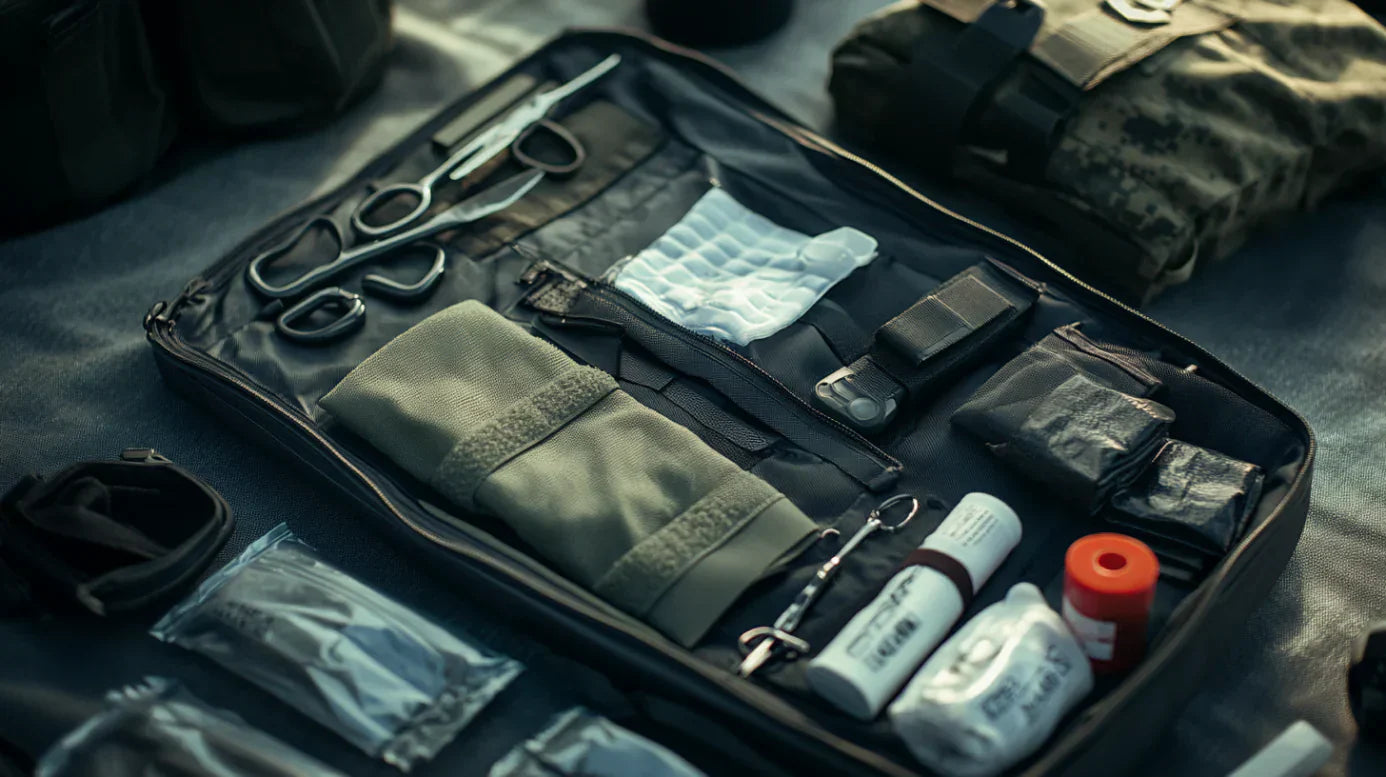
Le choix du matériel s'aligne naturellement quand vous connaissez votre niveau. Vous ne vous sentez plus obligé d'acheter tout et n'importe quoi parce que vous n'essayez plus de vous préparer à tous les scénarios possibles. À la place, vous choisissez des outils adaptés au délai et aux conditions auxquels vous êtes susceptible d'être confronté. Le résultat est une trousse utilisable, entretenable et réaliste.
De même, les priorités de formation deviennent claires. Il n'est pas nécessaire de devenir expert en tout. Il suffit d'être compétent dans les compétences qui correspondent à votre niveau de risque. La formation devient ciblée plutôt que dispersée, et la compétence remplace l'anxiété.
La force de cette approche est qu'elle transforme la préparation d'un concept abstrait en une pratique gérable et intentionnelle. Elle devient quelque chose que vous faites avec un but, et non quelque chose que vous faites parce que vous pensez devoir le faire.
La préparation comme pratique calme et rationnelle
Le changement final est le plus important : la préparation doit être dictée par la situation, et non par la peur ou par l'identité.
Si la préparation est dictée par la peur, elle devient réactive. Elle amplifie l'anxiété et encourage une pensée permanente centrée sur le pire scénario. Cet état d'esprit peut pousser les gens à accumuler du matériel, mais il conduit rarement à une préparation efficace, car la peur est une mauvaise enseignante. Elle déforme les priorités et brouille le jugement.
Si la préparation est dictée par l'identité, elle devient performative. Les gens se préparent parce que cela leur donne l'impression d'être un certain type de personne — responsable, robuste ou autonome. Le danger, c'est que l'identité peut devenir plus importante que la réalité. Le matériel peut être impressionnant, mais la capacité réelle à réagir sous pression peut rester faible.
La vraie préparation est calme et rationnelle. Elle repose sur la compréhension de votre environnement, l'acceptation de ce que vous pouvez et ne pouvez pas contrôler, et une préparation adaptée en conséquence. C'est une pratique de clarté, pas une réaction de panique.
Quand la préparation est abordée ainsi, elle devient durable. Elle ne domine pas votre vie ; elle la soutient. Et elle garantit que, le moment venu, vous n'agissez pas sous l'effet de la peur — vous agissez avec intention.