
Article: Improvised Tourniquet vs Commercial Tourniquet: Is DIY Safe?
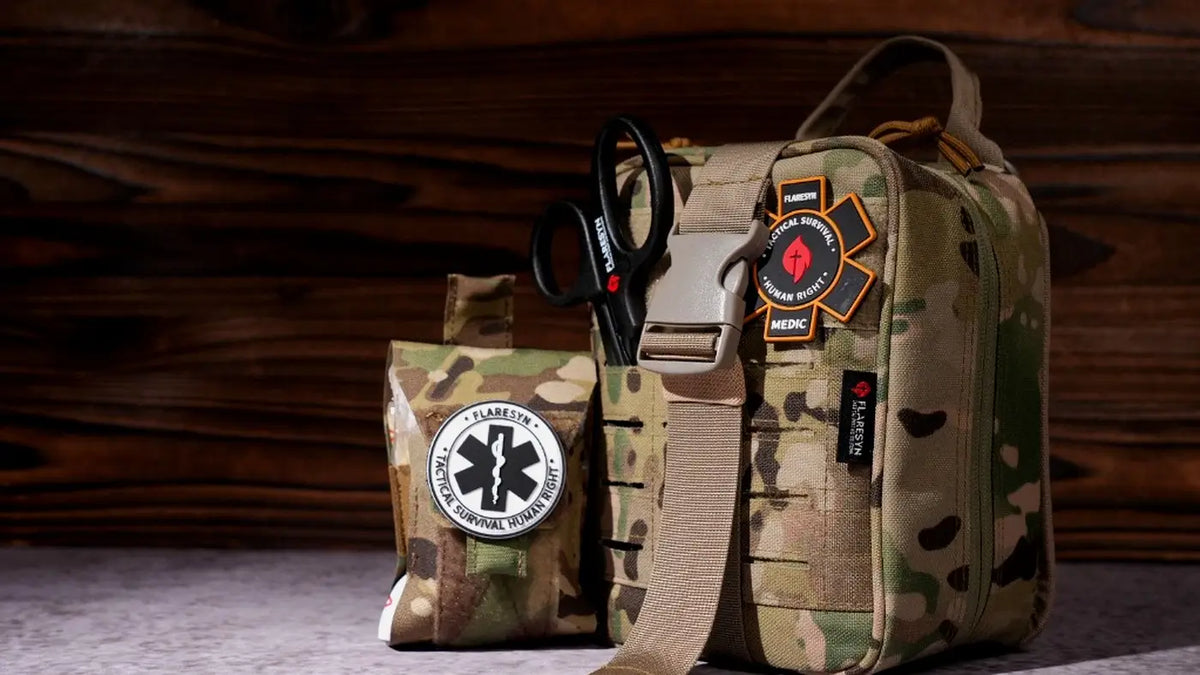
Improvised Tourniquet vs Commercial Tourniquet: Is DIY Safe?
Quick Navigation
Why People Consider an Improvised Tourniquet
Most people do not carry a tourniquet every day. When a severe bleeding emergency happens far from a kit — on a trail, at a worksite, or by the roadside — improvising can feel like the only option. An improvised tourniquet made from a belt, a shirt sleeve, or a piece of rope seems better than doing nothing, and in the absence of any alternative, that instinct to act is correct.
But understanding what makes an effective device work is the difference between one that slows bleeding and one that makes the situation worse. The goal of this article is not to discourage action in an emergency. It is to explain why a purpose-built device is dramatically more effective, and why carrying one is the only reliable strategy you can control in advance. An improvised tourniquet is a last resort, not a plan.
Families, outdoor groups, and workplaces that recognize this distinction avoid the costly — and sometimes tragic — gap between "doing something" and "doing the right thing" under pressure. True readiness means owning the right tool before you need it, not searching for materials while someone is bleeding. The distinction between preparation and improvisation is what this article explores in detail.


How a Commercial Tourniquet Is Engineered
- To understand why an improvised tourniquetfalls short, it helps to understand what a commercial windlass device is designed to do. The engineering is not arbitrary. Every component has a specific role in achieving arterial occlusion — the complete stoppage of arterial blood flow to a limb.
Strap Width and Pressure Distribution
A commercial tourniquet uses a strap at least 1.5 inches wide. This width is not for comfort. It is for pressure distribution. A narrow strap — like a shoelace or thin rope — concentrates force on a small band of tissue, which can cut into skin and muscle without fully compressing the artery beneath. A wider strap applies pressure evenly, compressing the artery without destroying surface tissue. An improvised tourniquet rarely achieves this width consistently, and even a belt can be too stiff to conform to the limb properly.
Windlass Mechanism
The windlass is a rigid rod that allows controlled torque. Twisting it tightens the strap in small increments until the artery is occluded. The windlass can be locked in place with a clip or hook. An improvised tourniquet rarely has a reliable windlass. Without one, generating enough sustained pressure to stop deep arterial bleeding is nearly impossible. A stick may serve temporarily, but it lacks a locking mechanism and can rotate loose under muscle movement or patient transport. For a purpose-built option, see the FlareSyn Tactical Windlass Tourniquet.
Time Documentation
A real tourniquet has a place to write the application time. This is not a minor feature; hospitals use the tourniquet time to plan limb salvage surgery. An improvised tourniquet typically has no place for time marking. These built-in features — width, windlass, locking clip, time documentation — are what separate a medical device from a piece of scavenged cloth. When you compare the two side by side, the engineering gap becomes obvious.


The Real Risks of an Improvised Tourniquet
An improvised tourniquet can fail in several specific ways. These are documented failure modes in the prehospital literature, not theoretical concerns.
Uneven Pressure and Incomplete Occlusion
A belt or cloth tightened by hand or a stick typically fails to achieve full arterial occlusion. It may slow venous return while allowing arterial blood to continue flowing. This "venous tourniquet" effect can actually increase blood loss because blood enters the limb but cannot exit. This is the most dangerous failure mode of an improvised tourniquet. The limb swells, the bleeding does not stop, and the responder believes they have done the right thing. In reality, the partial obstruction has made the situation worse than if no intervention had been attempted.
Tissue Injury from Narrow Materials
Thin cords, ropes, or wire can cut through skin and muscle. They create a laceration that adds a new wound without controlling the original bleeding. An improvised tourniquet made from these materials is a secondary injury in itself. The damage can complicate later surgical repair and extend recovery time, turning a survivable injury into a more complex medical event.
Mechanical Failure Under Stress
Belts slip. Sticks rotate. Tied knots loosen. An improvised tourniquet lacks a locking mechanism, so the pressure applied at placement may not be the pressure that exists five minutes later. A commercial windlass device locks mechanically and stays locked. In a real emergency, the minutes between placement and hospital arrival are exactly when you cannot afford a device that loosens on its own.
Side-by-Side Comparison: Commercial vs Improvised Tourniquet
The table below summarizes why a commercial device is superior in every dimension that matters for a comparison involving an improvised tourniquet:
Dimension |
Commercial Device |
Improvised Device |
Pressure uniformity |
Evenly distributed via wide strap |
Concentrated, often on tissue edge |
Locking mechanism |
Windlass locks in clip or hook |
Relies on friction or knots |
Occlusion reliability |
Designed and tested for complete occlusion |
Rarely achieves full arterial occlusion |
Reusability after practice |
Training versions available; live device stays sealed |
Varies; not designed for medical use |
Applicable scenarios |
All environments, all users |
Only when no medical device exists |
When Improvisation Is the Only Option
If you are in a life-threatening bleeding emergency and no commercial device is available, an improvised tourniquet is better than inaction — but only if done with understanding of the risks. The goal is to buy time, not to replicate the performance of a medical device.
Reduce the Risk
- · Choose the widest material available. A folded triangular bandage is better than a belt, which is better than a shoelace.
- · Use a rigid windlass. A sturdy stick or pen can serve as one. Do not rely on hand-tightening alone.
- · Tighten until bleeding stops, then lock. If it does not stop bleeding, it is not working.
- · Document the time. Write it on the limb, the device, or a nearby surface.
- · Get to definitive care immediately. An improvised tourniquet is not designed for extended use.
If you are reading this before an emergency, the best decision is to purchase a purpose-built device before you ever need one. An improvised tourniquet should never be your strategy. The cost of being caught without the right tool is measured in a way no one wants to calculate.
Why Carrying the Real Thing Costs Less Than You Think
A commercial windlass tourniquet is a small, lightweight device that fits in a pocket, a glove compartment, or a backpack hip belt. It does not need a special carrier, a permit, or a course — though a short class is highly recommended. Owning one means that when something goes wrong, you are not improvising under fear.
The cost of a single purpose-built device is less than most people spend on a restaurant meal. The cost of not having one in a severe bleeding emergency is measured in a different currency entirely. The FlareSyn Compact Tactical Trauma IFAK includes a tourniquet sleeve, compressed gauze, and a pressure dressing. For families and vehicles, the FlareSyn best-seller collection offers larger options that serve as shared response layers.
An improvised tourniquet is what you make when there is no other choice. A commercial device is what you carry so you never have to make that choice. The peace of mind that comes from carrying purpose-built medical gear is worth far more than the small effort required to buy one and learn to use it.
The historical context of tourniquet use also sheds light on why improvised devices remain so common. For much of modern history, purpose-built tourniquets were not widely available to civilians. Military medics carried them, but the general public did not. That gap led to a culture of improvisation — belts, ropes, and strips of fabric were seen as acceptable substitutes because nothing better was within reach. Today, that gap no longer exists. Commercial windlass tourniquets are affordable, widely distributed, and designed specifically for the physics of arterial occlusion. The cultural habit of improvising persists, but the practical justification for it has disappeared.
Another dimension worth exploring is the training gap. Many people who attempt to improvise a tourniquet have never been trained in tourniquet use at all. They are simultaneously choosing the wrong materials and applying them with incorrect technique. Even a commercial device applied by an untrained user can fail, but an improvised device applied by an untrained user compounds every possible failure mode. This is why pairing the purchase of a real tourniquet with even a short training session dramatically improves expected outcomes. A two-hour Stop the Bleed course, for example, covers placement, tightening, locking, and documentation in a hands-on format that builds lasting competence.
The cost-benefit analysis is stark when you compare the two approaches side by side. A commercial windlass tourniquet costs roughly the same as a fast-food meal and weighs less than a smartphone. It requires no assembly, no scavenging, and no guesswork under pressure. An improvised device, by contrast, costs nothing in dollars but demands time, materials, luck, and skill that most people do not have when blood is flowing. The real cost of improvisation is measured in the seconds lost while searching for materials, the uncertainty of whether the device will hold, and the risk of making the bleeding worse through partial occlusion.
For organizations — workplaces, schools, range facilities, and outdoor groups — the case for commercial devices is even stronger. A fleet of standardized tourniquets, stored in known locations and inspected on a schedule, creates a system that works the same way every time. Improvised devices, by definition, cannot be standardized. Each one is a unique experiment conducted under the worst possible conditions. For any group that takes safety seriously, replacing the improvisation mindset with a procurement and training mindset is the single most impactful step they can take.
It is also worth noting that the regulatory environment around tourniquet use has evolved significantly. Many states in the United States now have Good Samaritan laws that explicitly protect civilians who apply tourniquets in good faith during emergencies. This legal protection reflects a broader recognition that civilian tourniquet use saves lives and should not be discouraged. However, these protections generally assume the use of a reasonable device — a commercial windlass tourniquet — rather than a scavenged belt or rope. Using an improvised tourniquet may still be legally defensible, but it introduces unnecessary ambiguity into a situation that is already complex enough.
The manufacturing standards behind commercial tourniquets also deserve mention. Devices like the CAT and SOF are produced under quality controls that ensure consistent strap width, windlass strength, and hook-and-loop performance. Each batch is tested. Each unit is traceable. An improvised tourniquet has no such assurance. The belt in your closet may look sturdy, but you do not know its tensile strength, its behavior under sustained torque, or its performance when soaked in blood. These are variables that commercial manufacturers have already engineered out of their products.
Conclusion
An improvised tourniquet may seem like a reasonable backup, but the reality is that few improvised devices can generate the pressure, width, and mechanical lock needed to stop arterial bleeding. Belts slip. Shoelaces cut. Sticks rotate. The result can be worse than no device at all — a partially occluded vessel that increases blood loss while creating the illusion of control.
Carry a commercial windlass tourniquet. Inspect it regularly. Train with a separate training device so your live tourniquet stays sealed and ready. When you understand the engineering behind a real device, the argument for carrying one becomes obvious. The only thing cheaper than buying a tourniquet is wishing you had. Making the choice to carry purpose-built medical gear — not an improvised tourniquet — is the single most practical step you can take for severe bleeding preparedness.
Q: Can I use a belt?
A: A belt is one of the better materials because of its width, but it still lacks a reliable locking mechanism. Use a stick as a windlass and tighten until bleeding stops. It is always a last resort.
Q: How long can an improvised device stay on?
A: There is no safe long-term duration because pressure is unreliable. Treat it as a life-threatening emergency and get to a hospital immediately.
Q: Is a rope or shoelace safe?
A: No. Thin materials concentrate force, causing lacerations without reliably occluding the artery. They are among the worst options.
Q: What is the best civilian strategy?
A: Carry a commercial windlass device daily. It costs less than a meal out and eliminates the need to improvise under stress.


Elias.H.Hwang
Elias H. Hwang is a tactical medicine expert and lead contributor at FlareSyn. He specializes in emergency trauma protocols and preparedness education, helping civilians and professionals alike master the tools and skills needed to save lives in critical moments.


Laisser un commentaire
Ce site est protégé par hCaptcha, et la Politique de confidentialité et les Conditions de service de hCaptcha s’appliquent.