Wilderness Trauma Kit Guide: Prepare Beyond City Limits
Quick Navigation
Why Wilderness Trauma Response Follows Different Logic
When a traumatic injury happens in a city, the typical response window is short. An ambulance can arrive within minutes. A hospital emergency department is a short drive away. Bystanders may call for help, and the chain of survival is well understood. In the backcountry, none of that is guaranteed. The person on scene becomes the first responder, the field medic, and the communication link all at once.
The time between injury and professional care can stretch from minutes into hours. If the trail is remote, weather turns bad, or the group is deep in a canyon without cell signal, evacuation may take even longer. That is why carrying the right medical supplies matters enormously. The wilderness trauma kit you pack is the bridge between the moment of injury and the arrival of trained help.
The logic shifts in other ways too. In an urban setting, you might focus on keeping someone stable for ten minutes. In the backcountry, you may need to manage bleeding, prevent hypothermia, splint a fracture, and monitor consciousness for several hours. Your medical loadout must therefore carry more depth than a comparable everyday-carry pouch. A wilderness trauma kit addresses this gap by bundling bleeding-control tools, thermal protection, and wound-care supplies into a single weather-resistant package designed for sustained field use.
Another critical difference is decision-making authority. In the city, a bystander applies first aid and hands off to EMS within minutes. In the wilderness, the same bystander may need to decide whether to move the patient, whether to send someone for help, how to ration supplies, and when to improvise. A well-organized wilderness trauma kit supports those decisions by making every tool visible, accessible, and labeled. When the pouch opens, the layout should immediately tell the responder what is available and where it sits.
This guide is educational and does not replace medical advice, product instructions, or qualified training. Call emergency services whenever possible and use medical equipment only within your training and applicable local guidance.


Common Wilderness Injury Patterns
- Understanding what actually goes wrong in the backcountry helps you pack supplies that serve real needs rather than imagined ones. The most frequently reported injuries fall into several categories.
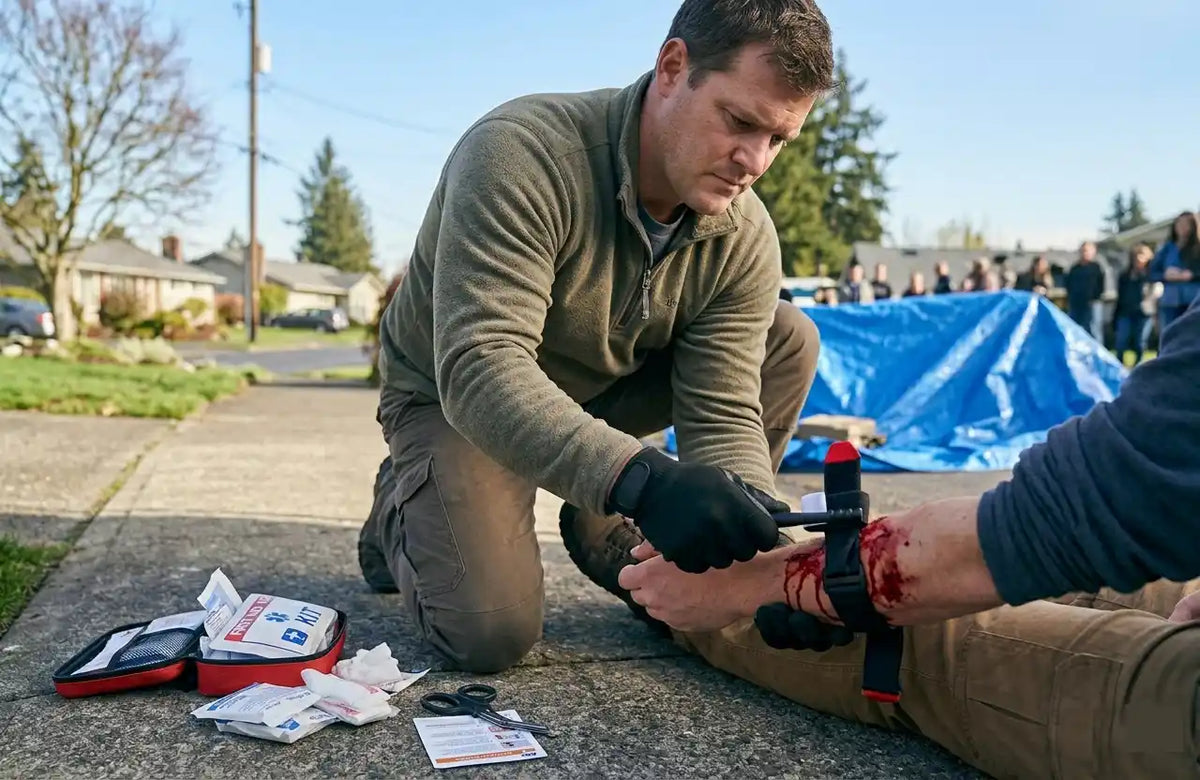
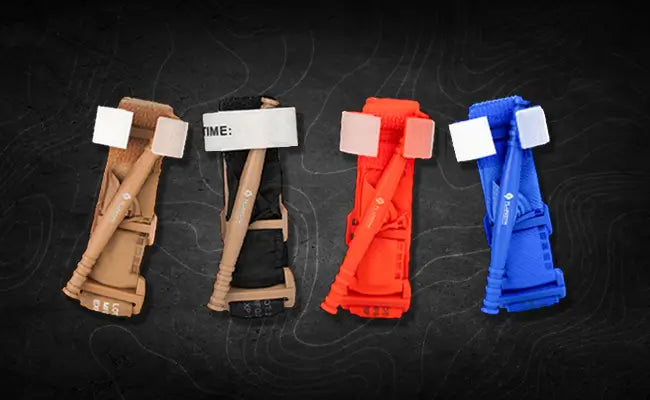
Lacerations and Puncture Wounds. Knives, axes, fishing hooks, and sharp rocks all cause deep cuts. A proper field kit should include enough compressed gauze and hemostatic gauze to pack at least one deep wound, plus a windlass tourniquet for severe extremity bleeding. In hunting and backcountry cooking scenarios, knife slips are one of the most common mechanisms of serious laceration, and the distance from definitive care means even a moderate cut can become dangerous if not managed early.
Falls and Fractures. Uneven terrain, loose scree, and wet roots are the setting for twisted ankles, fractured wrists, and worse. Splinting material, elastic wraps, and a triangular bandage belong in any serious backcountry medical loadout. A wilderness trauma kit that includes rigid splinting material or at least the wraps needed to improvise one with a trekking pole gives you a practical fracture-management option that could mean the difference between walking out and being carried out.
Animal Encounters. Snake bites, animal bites, and insect stings are not uncommon in certain regions. While a field kit cannot treat envenomation, it should contain supplies to clean wounds, control bleeding, and protect against infection during extended evacuation. In remote areas, the distance to antivenom or rabies post-exposure treatment can be significant, making wound hygiene especially important in the first minutes after the injury occurs.
Hypothermia and Exposure. Even in moderate weather, an injured person loses heat rapidly. Emergency blankets and thermal layers are not optional accessories. They are integral to backcountry preparedness because hypothermia is a leading secondary threat after injury. Every wilderness trauma kit should include at least one emergency blanket, and groups traveling in cold environments should carry multiples so that both the patient and the responder can be insulated from the ground.
Burns. Camp stoves, campfire spark-back, and hot cookware cause burns. Burn dressings or clean cling-film alternatives deserve a slot in your pack. In the wilderness, even a small burn can become infected if not properly dressed, and the distance to medical care means initial wound management matters more than it does at home. A water-gel burn dressing is lightweight and can be stored flat in a side compartment without taking up meaningful space.


Core Wilderness Trauma Kit Contents Checklist
The table below maps common injury types to the supplies that should be in your wilderness trauma kit to address them.
Injury Type |
Essential Supplies |
Carry Suggestion |
Severe limb bleeding |
Windlass tourniquet, 2x compressed gauze, hemostatic gauze |
Tourniquet in outer sleeve for one-handed access; gauze stored flat |
Deep laceration or puncture |
Hemostatic gauze, pressure dressing, nitrile gloves |
Pack enough for one deep wound; do not rely on a single roll |
Fracture or sprain |
Triangular bandage, elastic wrap, mini splint |
Store flat in outer compartment for rapid access |
Chest wound |
Vented chest seal (2 pieces) |
Check adhesive condition before every trip |
Hypothermia or exposure |
Emergency blanket, thermal layer |
Replace after any use; do not fold back damaged blankets |
Burns |
Burn dressing or sterile film, clean gauze |
Keep sealed until needed; check expiration dates seasonally |
Wound care and hygiene |
Antiseptic wipe, medical tape, shears, marker |
Place in small organizer pouch; note tourniquet time on marker |
A well-organized field medical loadout lets you find each item without reading labels in low light or under stress. Take a photo of the correct layout after you organize it so you can restore it quickly after use or training. The photo becomes especially valuable when a different group member needs to find an item while the primary responder is occupied with the patient. A wilderness trauma kit that is photographed, labeled, and maintained gives every member of the group a shared visual reference they can rely on under pressure.
The Importance of Waterproof Packaging
In the backcountry, water is everywhere — rain, stream crossings, sweat, condensation inside a tent. Sterile packaging that survives a closet may fail inside a soaked backpack. That is why the outer shell of a wilderness trauma kit matters as much as the contents.
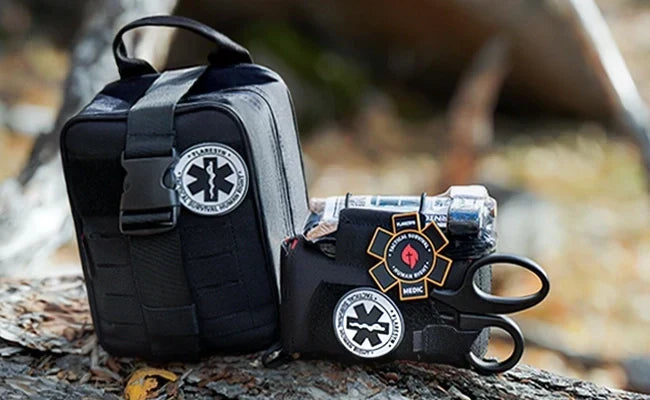
Moisture damages paper wrappers, weakens adhesive-backed products, and can compromise glove integrity. A kit stored in a water-resistant pouch with sealed inner compartments gives you a better margin of reliability when conditions get rough. FlareSyn Outdoor series trauma kits are built with water-resistant materials and internal organizers that keep critical supplies dry and findable.
Beyond the pouch itself, consider how individual items are protected. A tourniquet left loose in a wet pack can absorb moisture into its hook-and-loop surface, reducing grip over time. Gauze wrappers that rub against rough fabric can develop micro-tears. A loadout that uses dedicated internal slots and retention straps reduces friction damage and keeps the layout predictable. When you are assembling a wilderness trauma kit, think of the pouch as a system: the outer shell keeps water out, the internal organizers keep items separated, and the layout photo keeps the contents findable even when your hands are shaking or the light is fading.
Solo vs Group Carry Strategies
Your approach should change based on group size. A solo traveler needs a medical kit optimized for self-rescue: items must be operable with one hand, and the kit must be accessible even if one arm is injured. A group can distribute loads and carry a deeper support layer.
Solo Carry Priorities
- · Tourniquet in a rapid-deploy sleeve reachable with either hand
- · Pre-packed gauze that opens with one tear
- · Glove packaging designed for quick donning
- · A compact mirror or phone camera to inspect wounds you cannot see
Group Carry Priorities
- · Designated responder carries the primary wilderness trauma kit
- · Secondary member carries a support bag with refill gauze, extra tourniquets, and splinting material
- · All members know where both kits are stored before the trip begins
- · A simple communication plan: who calls for help, who stays with the injured person
Whether solo or in a group, the backcountry medical loadout should live in the same pocket of the same pack on every trip. Muscle memory under stress depends on consistency. If you move the kit to a different pocket on each trip, you lose the speed advantage of familiarity.
Communication and Signaling Preparation
A field medical kit handles the physical injury, but communication is just as critical. If nobody can tell rescuers where you are, the best supplies only delay the outcome. A wilderness trauma kit without a communication plan is only half a system — the medical supplies manage the injury, but the communication plan manages the rescue timeline.
Before a trip, carry at least one of the following: a satellite messenger device, a personal locator beacon, or a satellite phone. Test it before departure. Know how to describe your location using coordinates, trail markers, or terrain features. Carry a simple signaling aid — a whistle, a signal mirror, or a high-visibility panel. These are light, inexpensive, and can make the difference between a fast rescue and a long wait. Three short whistle blasts is the universal distress signal in most outdoor contexts.
Building a Communication Plan
- · Share your itinerary with someone who will notice if you do not return on time
- · Agree on check-in times and what to do if a check-in is missed
- · Identify the nearest trailhead, ranger station, or cell-signal point along your route
- · Keep emergency numbers and your medical information written on a card stored inside the kit
Pre-Trip Skills Practice
Owning a wilderness trauma kit without practicing with it is like owning a fire extinguisher you have never pulled. Under stress, fine motor skills degrade. Complex packaging becomes difficult. Decision-making slows. Practice builds the speed and confidence that matter in the first minutes.
Recommended Practice Routine
- · Practice opening every component by touch alone, in low light
- · Time yourself applying a tourniquet to your own leg
- · Practice wound packing on a foam model or rolled towel
- · Rehearse the communication plan end to end
- · Review expiration dates for every sterile item before each season
Separate training gear from live gear. Repeated use of a tourniquet during drills wears the strap, windlass, and hook-and-loop surface. Keep a marked training device for rehearsal and your live wilderness trauma kit sealed and ready. Practice does not mean opening your real supplies — it means rehearsing the motions with training equivalents so the real kit stays intact for the moment it is actually needed.
How FlareSyn Outdoor Gear Matches Your Needs
The backcountry medical loadout you build should match the environment you actually enter. FlareSyn Outdoor kits are engineered for exactly the conditions described above — variable weather, extended response times, and limited access to professional care.
Key design features that support backcountry use:
- · Modular internal organization so the layout stays predictable after rough handling
- · Water-resistant outer shell that protects sterile packaging from rain and condensation
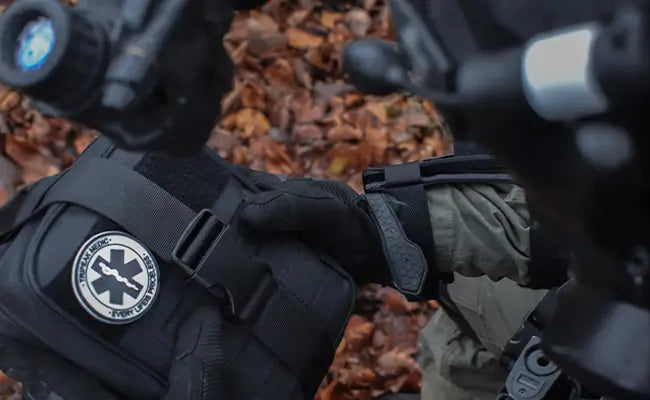
- · Tourniquet sleeve access designed for one-handed deployment
- · Thermal layer included to address the hypothermia risk that follows every serious injury
For groups, FlareSyn's best-seller collection includes larger kits that can serve as the shared support layer. A solo hiker may prefer the Compact Tactical Trauma IFAK for its balance of depth and low profile.
A reliable backcountry medical system is not a one-time purchase. Inspect it before every trip, replace anything questionable, and keep the layout consistent. Whether you call it a wilderness trauma kit or simply the most important item in your pack, its value is measured in readiness, not in owning it.
Conclusion
A well-stocked and maintained backcountry medical loadout is the difference between hoping for the best and being ready for the worst when help is hours away. The wilderness changes the rules: longer response times, harsher environments, and fewer resources. Your wilderness trauma kit must match that reality with deeper supplies, weather-resistant packaging, and a carry strategy that fits your group size.
Pack for the injuries that actually happen — lacerations, fractures, hypothermia, burns. Practice with your equipment before you need it. Carry a communication plan alongside your medical gear. And inspect everything every season the way you would check your boots or your shelter before a long trip.
FlareSyn Outdoor systems are designed to be staged, accessed, and maintained as part of a larger preparedness plan. Before the next trail, open your pouch. Check the layout. Refill what is missing. The most dependable field kit is not the one you bought once — it is the one you keep ready, season after season, trip after trip.
Q: What is the difference between a wilderness medical kit and a regular IFAK?
A: A backcountry kit carries more depth — extra gauze, thermal protection, splinting material, and weather-resistant packaging — because professional help may be hours away. A regular IFAK is optimized for the first few minutes until EMS arrives.
Q: How often should I inspect my backcountry medical supplies?
A: Inspect before every trip and at least once per season. Check expiration dates, packaging integrity, and layout consistency. Replace anything that looks swollen, torn, brittle, or adhesive-compromised.
Q: What if I have no cell signal during a wilderness emergency?
A: Use a satellite messenger or personal locator beacon to send your coordinates. If you have no device, send a group member to the nearest signal point while the injured person stays with a companion and the medical kit.
Q: Can I use the same kit for hunting and hiking?
A: Yes, but add environment-specific items. For hunting, include extra hemostatic gauze for deep knife or arrow wounds. For winter hiking, add additional thermal layers. The core system stays the same.


Elias.H.Hwang
Elias H. Hwang is a tactical medicine expert and lead contributor at FlareSyn. He specializes in emergency trauma protocols and preparedness education, helping civilians and professionals alike master the tools and skills needed to save lives in critical moments.