
Car First Aid Kit vs. Vehicle Trauma Kit
Car First Aid Kit vs. Vehicle Trauma Kit The phrase “car first aid kit” c...

Car First Aid Kit vs. Vehicle Trauma Kit
The phrase “car first aid kit” can mean almost anything
Search for a car first aid kit and you will find hundreds of small boxes and zipper pouches. Many are useful. They can contain adhesive bandages, antiseptic wipes, basic dressings, tweezers, and other supplies that make everyday travel more comfortable. The issue is not that these kits are bad. The issue is that the same label is often used for very different levels of preparation.
A family sedan, work truck, overland rig, rideshare vehicle, and road-trip SUV all face the same basic truth: an emergency does not wait until the vehicle is parked near a hospital. You may be the person who notices a serious injury, calls for help, keeps someone warm, or hands a useful piece of equipment to a trained responder. The contents and placement of your vehicle medical gear determine whether that first minute is organized or chaotic.
The most practical approach is a layered one. Keep a conventional car first aid kit for minor problems. Add a clearly accessible vehicle trauma module for the time-sensitive problems that require a different level of readiness. Then maintain both systems so they are not just props living under a seat.
This article is educational and is not medical advice. Call emergency services for serious injuries, prioritize scene safety, and obtain qualified training before attempting any intervention beyond your level of competence.
What a basic car first aid kit does well
Minor injuries are common on the road. A child gets a scrape at a rest stop. Someone needs a blister dressing after a hike. A passenger gets a small cut while unloading a cooler. A basic car first aid kit is ideal for these moments because it keeps routine supplies together and prevents a vehicle from becoming a scavenger hunt for a bandage or wipe.
The best minor-care kit is straightforward. It is easy to identify, regularly checked, and sized for the people who normally ride in the vehicle. It can include everyday wound-care items, personal medications that are appropriate for your group, a small notepad, and items selected with advice from a health professional when special needs are involved.
What it usually does not do is provide a complete response system for severe bleeding, a deep wound, a serious crash injury, or a situation where the responder must act while emergency care is still several minutes away. That is not a criticism. It is simply a different job.


Keep minor care separate from critical care
Separating the kits reduces confusion. A small first aid pouch can live in the glove compartment, center console, or travel tote. The trauma module should be more visible and more deliberately organized. When everything is mixed together, a responder may waste time sorting through sunburn gel, insect-bite cream, and adhesive strips to find a critical item.
Clear labeling helps every passenger. “Minor care” and “trauma / emergency” are easier to understand than one generic bag that nobody has opened in years. In a stressful scene, labels are not cosmetic; they are directions.
What makes a vehicle trauma kit different
A vehicle trauma kit is not defined by camouflage fabric, a large price tag, or an intimidating list of products. It is defined by purpose. It should support the first actions that matter most before professional care arrives: protecting the responder, identifying and addressing severe external bleeding within appropriate training, preserving warmth, keeping equipment organized, and communicating useful information during handoff.
The kit should be built around a simple, repeatable layout. Gloves should be easy to find. Critical supplies should not be buried. A marker and trauma shears should have designated locations. Packaging should remain protected from vehicle heat, dust, and compression. The entire pouch should detach quickly enough to travel from the cabin to the patient without unpacking the vehicle.
The access test
Ask these questions about your vehicle trauma kit:
- Can the driver reach it or direct someone to it in one short sentence?
- Can a front-seat passenger remove it while wearing a seatbelt?
- Would the kit still be reachable if the trunk or rear hatch were blocked?
- Are its contents protected from loose cargo, spills, and everyday clutter?
- Can you restore the layout after using or inspecting it?
If the answer to these questions is no, the kit may contain useful equipment but still fail as a system. Accessibility is what turns inventory into readiness.
Build a layered vehicle medical setup
The strongest vehicle setup does not force one bag to do every job. It assigns each layer a role.
This layered approach matters after a crash. The trunk is a logical storage place for jumper cables, spare water, and a large support bag. It can also be jammed, blocked, unsafe to reach in traffic, or simply too far from the injured person. A cabin-mounted trauma module closes that access gap.
At the same time, do not expect a compact headrest pouch to hold every item needed for a long trip. The cargo layer provides depth. It can hold refill supplies, additional warming layers, utility items, and the things that would make a fast-access pouch too bulky to use.
Placement matters as much as contents
Many vehicle owners put all medical equipment under a seat or in the trunk because it looks tidy. Tidy is not the same as accessible. In a roadside emergency, you may be working around broken glass, traffic, darkness, rain, or a door that will not open fully. You need a kit that a passenger can identify without a storage map.
A headrest-mounted or seat-back-mounted pouch is effective because it stays in the passenger compartment, away from floor clutter and most loose cargo. It can act as a visual anchor: people see it, remember it, and can point to it. The mounting system should be secure enough for driving but simple enough to detach under stress.
For a family vehicle, teach one phrase: “The emergency kit is behind the seat.” For a work fleet, use the same location in every vehicle. Consistency lowers the cognitive load when someone is scared or unfamiliar with the specific car.
Do not let equipment replace a plan
Buying a better bag is only the first step. A vehicle medical plan includes how you will call for help, where you will pull over safely, how passengers will avoid traffic, how you will describe your location, and how you will communicate what happened to emergency responders.
Keep a charged phone and a vehicle charger available. If your route includes remote areas, understand where service may be limited and consider your communication backup. Keep high-visibility equipment in the support layer where it can be reached safely. If the scene is dangerous, your first responsibility is not to rush into it; it is to avoid becoming another casualty and to call for professional help.
Training matters here. Qualified instructors can help you practice scene safety, communication, bleeding-control concepts, patient assessment limits, and equipment use within your level of certification. A kit gives trained hands something useful to work with. It does not turn an untrained person into a clinician.
Inspect both kits before they become false confidence
Cars are harsh on supplies. Heat can affect packaging and gloves. Cold, moisture, vibration, sunlight, dust, and spilled drinks can make a once-organized bag less reliable. A car first aid kit and a vehicle trauma kit both need routine inspection.
Check the basic kit for used bandages, dried-out wipes, missing personal items, and date-sensitive products. Check the trauma module for intact packaging, working zippers, secure mounting, a consistent layout, and any supply that was opened during training or borrowed for another purpose. Check the cargo layer for crush damage and for whether seasonal gear is still appropriate.
Make the review part of a normal habit: before a long road trip, at the start of summer and winter, after any training event, and after real use. A five-minute inspection is much easier than discovering an empty or damaged kit during an emergency.
A practical starting point
If you have no vehicle medical setup today, begin with three simple moves:
- Carry a clearly labeled minor-care kit for daily travel problems.
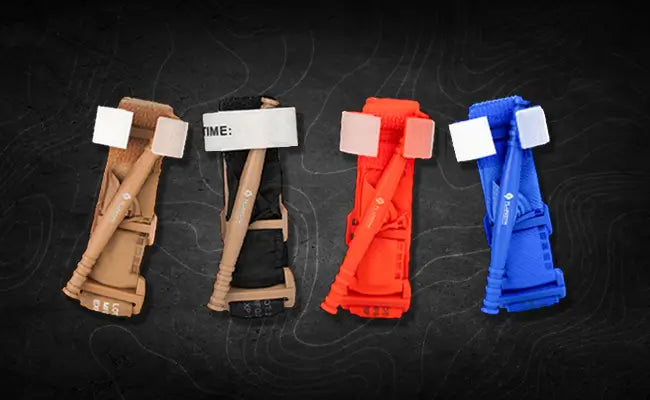
- Add a purpose-built, quickly accessible trauma module that matches your training and can be found by passengers.
- Create a small support and refill layer in the cargo area, then inspect it before major trips.
Do not chase a perfect loadout on day one. Build a system you understand, mount it consistently, and improve it through training and regular checks. Readiness is not the number of items you own. It is the confidence that the right item is available, protected, and reachable when the first minute gets difficult.
Conclusion
A car first aid kit and a vehicle trauma kit are not competing ideas. They are two layers of the same preparedness system. One handles the normal problems of travel. The other is staged for the moments when time, access, and organization matter most.
FlareSyn™ vehicle-ready gear is designed around practical access: compact modules that can be staged in the cabin, organized supplies that are easier to find under stress, and a system that can be expanded with a deeper support layer. Start with the vehicle you drive today. Decide where the first kit should live, tell your passengers, inspect the supplies, and seek the training that gives the equipment real value.
Q: Is a car first aid kit enough for a road trip?
A: A basic kit is valuable for minor injuries and travel discomfort, but it may not be organized or equipped for the first minutes of a serious roadside emergency. Many drivers benefit from pairing it with a clearly accessible vehicle trauma module.
Q: Where is the best place to store a vehicle trauma kit?
A: Keep the rapid module in the passenger compartment, where the driver or a passenger can identify and remove it quickly. A secured headrest or seat-back location often works well. Store deeper supplies in a secured cargo layer.
Q: How often should I check my car first aid kit?
A: Check before long trips, after use, and at least seasonally. Look for missing, opened, heat-damaged, expired, or disorganized supplies.
Q: Can a vehicle trauma kit replace emergency services?
A: No. Call emergency services early for serious injuries. The kit is intended to support the first response while professional care is coming and should be used only within your training and local guidance.


Elias.H.Hwang
Elias H. Hwang is a tactical medicine expert and lead contributor at FlareSyn. He specializes in emergency trauma protocols and preparedness education, helping civilians and professionals alike master the tools and skills needed to save lives in critical moments.


