CAT vs SOF Tourniquet: Emergency Hemorrhage Control
Severe Hemorrhage is one of the fastest causes of preventable death in trauma situations. In many emergencies, such as road accidents, workplace injuries, or active shooter incidents, uncontrolled Arterial bleeding can lead to fatal blood loss within minutes. This is where rapid Tourniquet application becomes a life-saving skill.
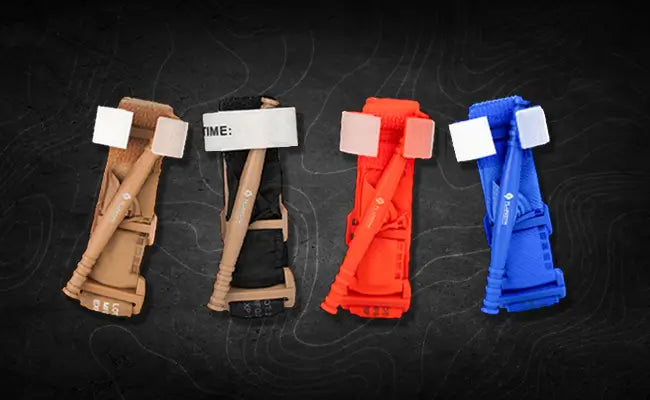
The comparison between C.A.T. (Combat Application Tourniquet) and SOF Tactical Tourniquet (SOF-T) is widely discussed in emergency medicine, EMS (Emergency Medical Services), and military trauma care. Both devices are commonly included in an Individual First Aid Kit (IFAK) and used by professionals trained in TCCC (Tactical Combat Casualty Care).
Which one performs better in real emergencies where every second counts? The answer depends on speed, durability, training level, and real-world application under stress.
Understanding Tourniquets in Hemorrhage Control
A Tourniquet is a medical device designed to stop severe bleeding from limbs by applying pressure strong enough to block arterial blood flow. This process is a core part of modern hemorrhage control in emergency situations, especially in trauma care and battlefield medicine. The device works using a windlass system, which is a twisting rod that tightens a strap around the limb until bleeding stops. This pressure compresses blood vessels, preventing further loss of blood from injured arteries. Tourniquets are used in:
- Civilian trauma response
- Military combat zones
- Emergency medical response systems
- First aid kits (IFAK, EDC kits)
In modern trauma systems, early application of a tourniquet is considered more effective than waiting for advanced care in cases of massive limb bleeding.
Core Types of Tourniquets Used in Emergency Medicine
In emergency and tactical medicine, several types of tourniquets are used depending on training level, environment, and injury type. Each device has unique strengths in hemorrhage control and field application.
Windlass Tourniquets (CAT, SOF-T, SAM XT)
These use a twisting rod system to apply high pressure. They are widely used in EMS, military units, and United States Army Combat Lifesaver Course training. They are preferred for rapid and reliable control of life-threatening bleeding.
Stretch-Band Tourniquets (SWAT-T)
The SWAT-T Tourniquet is a multi-use device that works by stretching and wrapping around the limb. It can also be used as a pressure dressing or splint, making it highly versatile in emergency kits.
Elastic and Alternative Systems (RATS Tourniquet)
The RATS Tourniquet is compact and easy to carry but is less commonly used in formal EMS systems due to variability in pressure control.
Each type plays a role in modern trauma care, but windlass systems remain the standard in high-risk emergency response.
C.A.T. (Combat Application Tourniquet): Design and Clinical Use
The C.A.T. (Combat Application Tourniquet) is one of the most widely used devices in both civilian and military trauma systems. It is commonly carried in IFAK kits by police officers, paramedics, and military personnel.
Key Features of the CAT Tourniquet
- One-handed application for self-aid
- Strong hook and loop strap system
- Lightweight and compact design
- Approved in TCCC (Tactical Combat Casualty Care) guidelines
Clinical Strengths
The CAT is highly effective in rapid bleeding control, especially in situations involving Arterial bleeding from arms or legs. Its design allows quick deployment even under stress, which is critical in emergency response scenarios.
Limitations
- A polymer windlass may weaken under extreme force
- Strap wear over repeated training use
- Less durable in extreme environmental conditions
Despite limitations, CAT remains one of the most trusted tools in civilian and military trauma systems.
SOF Tactical Tourniquet (SOF-T) – Strength, Build & Field Performance
The SOF Tactical Tourniquet (SOF-T) is designed with a focus on durability and field reliability. It also uses a windlass system, but instead of plastic, it features a metal windlass, which increases strength and resistance in extreme conditions. This makes it highly trusted in military and tactical medicine environments.
Key Advantages of SOF-T Tourniquet
The SOF-T is known for its rugged construction and strong performance under pressure. It is often preferred in tactical trauma care where equipment must survive harsh environments. The metal windlass provides greater resistance during tightening, making it effective for controlling severe hemorrhage in emergencies.
It is also effective for larger limb injuries, making it suitable for a wider range of trauma scenarios. Many Emergency Medical Technician-Basic (EMT-B) providers and tactical responders trust it for buddy aid / first responder care due to its durability and secure locking system.
Limitations of the SOF-T Tourniquet
The SOF-T requires slightly more training to apply efficiently. In high-stress environments, beginners may find it slower compared to CAT. It is also heavier and slightly bulkier, which can affect quick access in an IFAK setup or civilian emergency kit. However, once trained, its performance is highly consistent.
CAT vs SOF-T – Direct Performance Tourniquet Comparison
|
Feature |
C.A.T. (Combat Application Tourniquet) |
SOF Tactical Tourniquet (SOF-T Wide) |
|
Primary Design Goal |
Fast, simple self-application tourniquet use in high-stress emergencies |
Maximum strength and durability for tactical and field trauma care |
|
Windlass System |
Polymer windlass (lightweight, quick rotation) |
Metal windlass (high strength, rigid under pressure) |
|
Application Speed |
Very fast; optimized for immediate arterial bleeding control |
Slightly slower due to locking and strap setup |
|
Ease of One-Hand Use |
Excellent; widely used in civilian IFAK (Individual First Aid Kit) kits |
Moderate; requires more training for solo application |
|
Durability in Extreme Conditions |
Good, but polymer parts may wear over time |
Excellent; built for harsh military environments |
|
Performance in Massive Bleeding |
Very effective in rapid response scenarios |
Very effective in sustained or prolonged field care |
|
Training Requirement |
Low to moderate (easier for beginners and civilians) |
Moderate (better with repeated practice and muscle memory) |
|
Weight & Portability |
Lightweight and compact |
Slightly heavier due to metal components |
|
Best Use Environment |
Civilian trauma, EMS, roadside emergencies, active shooter response |
Military operations, tactical trauma care, extended field deployment |
|
Failure Resistance |
Good under normal conditions |
Higher resistance to mechanical failure |
|
Common Users in US |
EMS, police, civilians, Emergency Medical Technician-Basic (EMT-B) |
Military units, tactical medics, advanced EMS teams |
|
Ease of Storage in IFAK |
Very compact and easy to stage for quick access |
Slightly bulkier but still IFAK-compatible |
|
Guideline Alignment |
Fully compliant with TCCC (Tactical Combat Casualty Care) standards |
Fully compliant with TCCC standards |
|
Overall Strength Profile |
Speed-focused life-saving tool |
Durability-focused life-saving tool |
This comparison shows a clear pattern: the CAT focuses on speed and simplicity, while the SOF-T focuses on strength and long-term durability in harsh conditions.
Self-Application vs Buddy Aid in Real Trauma Situations
In real emergencies, such as arterial bleeding, the ability to apply a tourniquet on yourself is critical. The CAT performs slightly better with self-applied tourniquet use, especially for upper-limb injuries. This makes it highly valuable in civilian scenarios like car crashes or workplace accidents.
The SOF-T, on the other hand, performs better in buddy aid situations where another trained responder applies it. This is common in military units, EMS teams, and structured trauma response environments. Both devices are widely included in IFAK (Individual First Aid Kit) setups in the United States, especially in high-risk professions and outdoor activities.
Windlass System and Its Role in Hemorrhage Control
Both CAT and SOF-T rely on a windlass system, which is central to modern tourniquet application. The windlass creates controlled pressure by twisting a rod, tightening the strap around the limb until blood flow stops. This mechanism is essential in controlling life-threatening hemorrhage, especially in cases where direct pressure is not enough.
Proper use of the windlass system reduces the risk of excessive blood loss and increases survival chances in trauma situations. However, improper tightening or delayed application can increase the risk of tissue damage, which is why training and repetition are strongly emphasized in programs like TCCC (Tactical Combat Casualty Care).
Key Medical Trade-Off – Speed vs Reliability
One of the most important factors in the CAT vs SOF tourniquet decision is the balance between speed and reliability. The CAT is optimized for fast application under stress, while the SOF-T prioritizes durability and secure locking under extreme conditions. In emergency medicine, especially under EMS (Emergency Medical Services) response systems, speed often matters more in early survival. However, in prolonged field operations or tactical environments, reliability becomes equally important. This is why many professionals in the United States carry both devices in their trauma bleeding management tool to cover different emergency scenarios.
Training, Muscle Memory & Real-World Effectiveness
No matter how advanced a tourniquet is, effectiveness depends heavily on training. In high-pressure trauma situations, fine motor skills decrease, and the body relies on muscle memory. Training programs such as the United States Army Combat Lifesaver Course and civilian Stop the Bleed initiatives focus on repeated practice of tourniquet application.
This ensures responders can act quickly without hesitation during emergency response situations. Without training, even the best device can fail due to incorrect placement or delayed application. FlareSyn provides emergency safety kits and first aid trauma kits that is helpful.
Which Tourniquet Is Better – CAT or SOF-T?
Choosing between C.A.T. (Combat Application Tourniquet) and SOF Tactical Tourniquet (SOF-T) depends on how, where, and by whom it will be used. Both are proven devices for hemorrhage control, but their strengths align with different real-world situations in emergency care.
The CAT is generally preferred in fast-moving civilian emergencies such as car crashes, workplace accidents, or public incidents where self-application tourniquet use may be required. Its quick deployment and simple design make it ideal for people with basic training or limited experience, including civilians carrying an IFAK (Individual First Aid Kit).
The SOF-T is more commonly used in tactical environments such as military operations, advanced EMS units, and extended field care. Its metal windlass system provides extra durability, making it suitable for harsh conditions where equipment strength matters more than speed alone.
In simple terms:
CAT = faster, easier, better for self-use
SOF-T = stronger, more durable, better for controlled environments
Use Case Scenarios in Real Emergency Situations
Understanding where each device performs best helps make a better decision in trauma care situations involving massive bleeding or arterial bleeding.
In civilian emergencies in the United States, such as road traffic accidents or construction injuries, the CAT is often more practical. A person with limited training can apply it quickly under stress, which is critical when Emergency Medical Services (EMS) response time is still in progress.
In contrast, SOF-T is often used in military and tactical operations where trained personnel handle buddy aid / first responder care. In these environments, durability and secure locking are more important than ultra-fast application.
Both devices are part of modern bleeding control kits used in the Stop the Bleed program, which trains civilians and professionals to manage life-threatening hemorrhage before EMS arrives.
Should You Carry Both CAT and SOF-T?
Many trauma experts and tactical medics recommend carrying both devices in certain situations. This approach provides redundancy in case one fails or is less suitable for a specific injury. For example, a CAT can be placed in an easily accessible position for immediate response, while an SOF-T can serve as a backup in the same IFAK setup. This dual approach is often seen in advanced Tactical Combat Casualty Care (TCCC) systems used by military and high-risk responders.
Carrying both is especially useful for:
- First responders and EMTs
- Law enforcement officers
- Outdoor professionals (hunting, hiking, construction)
- High-risk civilian environments
Common Mistakes in Tourniquet Use (Safety Risks to Avoid)
Even a high-quality tourniquet can fail if used incorrectly. One of the most serious mistakes is placing it too loosely, which allows continued hemorrhage control failure and ongoing blood loss. Another common issue is delayed application. In cases of arterial bleeding, even a few minutes of delay can significantly increase the risk of shock or death. Improper placement is also a concern, especially when applied over joints instead of the correct limb position.
Removing or loosening a tourniquet without medical supervision is also dangerous. This can restart bleeding and worsen the patient’s condition before hospital care.
Counterfeit Tourniquets and Quality Standards
A major hidden risk in emergency preparedness is counterfeit medical equipment. Fake tourniquets may look similar to CAT or SOF-T but often fail under pressure due to weak materials or poor design. Reliable tourniquets should meet recognized medical and quality standards, such as:
- TCCC (Tactical Combat Casualty Care) approval
- FDA medical device guidelines
- ISO 9001 certification for manufacturing quality
In real trauma situations, equipment failure can directly lead to loss of life. This is why verified products are strongly recommended in all emergency medical kit setups.
Final Recommendation – CAT vs SOF-T Decision Summary
Both the CAT and SOF-T are trusted life-saving tools used globally in EMS, military, and civilian trauma systems. The decision is not about which one is universally better, but which one fits the situation and user training level.
- Choose CAT Gen 7 if speed, simplicity, and self-application matter most
- Choose SOF-T Wide if durability, strength, and tactical use are priorities
- For advanced preparedness, carrying both provides maximum flexibility
In real-world hemorrhage control, the most important factor is not the device itself but how quickly it is applied and how well the user is trained.
Frequently Asked Questions
What is the main difference between CAT and SOF-T?
The CAT is faster and easier to apply, while the SOF-T is stronger and more durable due to its metal windlass system.
Which tourniquet is used by the military?
Both are used in military settings under TCCC guidelines, but CAT is more widely issued for general use.
Can civilians carry tourniquets in the US?
Yes, civilians can carry tourniquets as part of an IFAK or emergency preparedness kit.
Which tourniquet is better for beginners?
CAT Gen 7 is generally easier for beginners due to its simple design and fast application.
Can a tourniquet cause damage?
Improper use can cause tissue damage, but in life-threatening bleeding, saving life takes priority over temporary injury risk.
Choosing the Right Tool for Life-Saving Response
A tourniquet is not just medical equipment; it is a critical survival tool in emergency response situations involving severe trauma. Whether used in civilian accidents or tactical environments, both CAT and SOF-T play an important role in controlling life-threatening bleeding. Proper training, correct placement, and fast decision-making matter more than brand choice. In any hemorrhage control situation, early action supported by reliable equipment can significantly improve survival outcomes. FlareSyn focuses on practical emergency awareness and first aid kits for real-world situations.