

Tiered Medical Preparedness: Build Your 3-Layer Defense Plan
Navigating Your 3-Tier Defense
One of the most pervasive myths in the world of emergency readiness is the idea of the "Universal Medical Kit"—the belief that a single, well-stocked bag stashed under the kitchen sink or tucked in the trunk of a car constitutes a complete safety plan. In reality, a medical kit is only as effective as its proximity to the point of injury. If a life-threatening hemorrhage occurs in the driveway while your supplies are in the master bedroom, or if a multi-vehicle accident happens on the highway while your kit is stashed in the garage, your readiness is effectively zero.
The hard truth of emergency medicine is that distance equals time, and in a trauma scenario, time is the only currency that matters. To overcome the limitations of physical location, elite tactical medical units and professional first responders utilize a philosophy known as Tiered Preparedness. Instead of relying on one bulky, "all-in-one" bag, this strategy breaks medical gear down into logical layers that move with the individual across different environments.
This approach ensures that you always have the right tool for the specific level of risk you are facing, whether you are sitting in a boardroom, commuting on a freeway, or securing your home. The goal of this guide is to help you transition from being an accidental owner of scattered medical supplies to becoming a systematic defender. By building a 3-tiered medical defense system, you ensure that no matter where an emergency strikes, you are not just a witness—you are a responder with a plan.


The EDC Layer: Immediate Response in Your Pocket
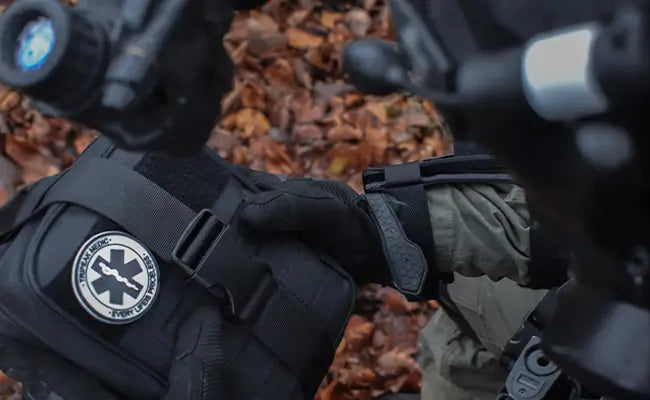
In the world of tactical medicine, we often speak about the "Golden Hour," but in reality, when a major artery is breached, you are living in the "Platinum Ten Minutes." Even more granularly, Tier 1 is defined by the Zero-Second Reality. This concept dictates that the only medical gear that truly matters in the first moments of a catastrophic event is the gear physically attached to your body. Whether you are in a grocery store, at a child's school play, or walking to your car in a dark parking lot, Tier 1 ensures that you never have to say, "The kit is in the car."
The "Zero-Second" Reality: Why Portability Trumps Capacity
Portability is the most vital feature of Tier 1 because a kit that is "too bulky to carry" is a kit that will be left at home. The psychology of Everyday Carry (EDC) suggests that if an item disrupts the silhouette of your clothing or adds significant weight, you will eventually find an excuse not to wear it. However, Tier 1 is not about treating every possible ailment; it is about life-preservation. It is designed to buy you enough time to reach Tier 2 or Tier 3 supplies. In this layer, we prioritize the "MAR" of the MARCH protocol: Massive Hemorrhage, Airway, and Respiration.
Essential Components of a Mini IFAK
A Tier 1 Individual First Aid Kit (IFAK) must be ruthless in its curation. It focuses on high-consequence, low-probability events.
Massive Hemorrhage Control: The primary inclusion is a compact hemostatic agent. Traditional gauze is too bulky, so Tier 1 utilizes vacuum-sealed, high-concentration hemostatic gauze that can be packed into a deep wound to stop bleeding in seconds.
Basic Airway and Barrier: A pair of nitrile gloves is mandatory—not just for the patient's safety, but to protect the responder from bloodborne pathogens in a public setting.
Wound Bridging: Compression is achieved through ultra-compact elastic wraps that can serve as a pressure dressing until more robust tools are available.
Everyday Scenarios: Beyond the Battlefield
While the term "IFAK" has tactical origins, Tier 1 is designed for the modern civilian. Consider the Office Accident: a glass partition shatters or a high-pressure warehouse line snaps. In these environments, you may be floors away from a wall-mounted first aid station. Consider the Public Transit Incident: in a crowded subway or bus, you are restricted to what is in your pockets. Tier 1 provides the immediate capability to self-treat or assist a bystander during the chaotic minutes before professional EMS can navigate traffic or security perimeters.
The Vehicle Layer: Handling High-Kinetic Trauma
While Tier 1 is about what you carry, Tier 2 is about what you travel with. Your vehicle is more than just a mode of transport; in a crisis, it serves as a mobile medical station. Statistics show that you are far more likely to encounter a life-threatening emergency on the road than anywhere else. Whether it’s a high-speed collision on the interstate or a rural road accident where EMS arrival times are measured in half-hours, Tier 2 is designed to bridge the massive gap between the point of impact and the hospital.
The Dynamics of Roadside Emergencies: Why "Trauma Grade" is Non-Negotiable
Roadside accidents involve high-kinetic energy. This means the injuries you encounter are rarely simple cuts; they are "high-velocity" traumas—crush injuries, deep arterial lacerations from shattered glass, and penetrating chest wounds from steering columns or debris.
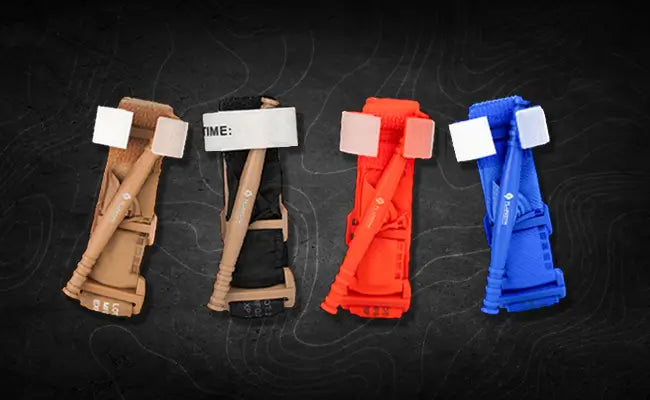
In these scenarios, a box of bandages is effectively useless. Tier 2 requires "Trauma Grade" gear. This includes the Windlass Tourniquet, the gold standard for stopping limb exsanguination, and Vented Chest Seals, which are critical for treating "sucking chest wounds" (pneumothorax) resulting from blunt force or penetrating trauma to the torso. Without these specific tools, a bystander is forced to watch helplessly as a treatable injury becomes fatal.
Environmental Durability: Preparing for the "Kiln" Effect
One of the most overlooked aspects of vehicle preparedness is the environment inside the car itself. A vehicle parked in the sun can reach internal temperatures exceeding 160°F (71°C), while winter nights can drop to sub-zero.
Standard medical supplies often fail in these conditions; adhesives melt, plastic components become brittle, and low-quality ointments separate. A true Tier 2 system, like those developed by FlareSyn, utilizes environmentally stabilized materials. This means the tourniquet’s windlass won't snap under tension after a summer in the trunk, and the chest seal's hydrogel adhesive remains aggressive enough to stick to a victim's sweaty or bloody skin regardless of the ambient temperature.
Being the First Responder: The Moral and Tactical Responsibility
When you are the first person on the scene of a crash, you have a brief window to change the outcome of someone’s life. Having professional gear gives you the tactical agency to act. Moreover, if a trained professional (such as an off-duty nurse or EMT) stops to help but has no supplies, your Tier 2 kit becomes the force-multiplier they need to save a life. Carrying a professional kit isn't just about your own safety; it’s about having the capacity to protect your community.
| Feature | Grocery Store First Aid Kit | FlareSyn Vehicle Trauma Kit |
| Primary Goal | Minor comfort (scrapes/headaches) | Life-saving (hemorrhage/trauma) |
| Bleeding Control | Plastic bandages & gauze pads | Windlass Tourniquet & Hemostatic Gauze |
| Respiratory Support | None | Vented Chest Seals (Twin Pack) |
| Tools | Small plastic tweezers | Stainless Trauma Shears (cut through belts) |
| Durability | Cardboard/thin plastic box | Weather-resistant, high-denier nylon |
The Home & Tactical Layer: Comprehensive Defense
The final and most robust layer of your medical defense is the Home and Tactical Layer. While Tier 1 buys you minutes and Tier 2 gets you through the commute, Tier 3 is designed for the long haul. This is the "Base Station" of your preparedness strategy. It is not meant to be carried on a belt or tucked under a car seat; it is a comprehensive system designed to handle multiple victims, complex injuries, and prolonged care scenarios. In a world of increasing unpredictability, Tier 3 is your insurance policy against the systemic failure of external help.
Sustainability in Place: When the Sirens Don’t Come
The fundamental assumption of Tier 3 is delayed professional intervention. In the event of a natural disaster (like a hurricane or earthquake), civil unrest, or a mass-casualty event, Emergency Medical Services (EMS) may be overwhelmed or physically unable to reach your location for hours or even days.
In these "Black Swan" events, your home becomes a makeshift clinic. Tier 3 supplies must be sustainable. This means having a high volume of consumables—not just one tourniquet, but four; not just a few gauze pads, but bulk rolls of sterile wrap. It is about having the "depth of bench" to treat a family member, a neighbor, and yourself simultaneously without running out of critical supplies in the first thirty minutes.
Beyond Trauma: Integrating Diagnostics and Long-Term Management
A true Tier 3 system expands its scope from "Life-Saving" to "Life-Sustaining." While Tiers 1 and 2 focus exclusively on the MARCH protocol (Massive Hemorrhage, Airway, etc.), Tier 3 integrates diagnostic capability and secondary care.
This includes tools to monitor vitals, such as blood pressure cuffs, pulse oximeters, and high-grade thermometers. It also includes supplies for long-term wound management, such as irrigation syringes, advanced antimicrobial ointments, and secondary dressings that prevent infection over several days. When hospitals are unreachable, your ability to diagnose a worsening condition or keep a wound sterile becomes as important as stopping the initial bleed.
The Tactical Edge: Medical Readiness as Home Defense
In the context of home security, we often discuss locks, cameras, and self-defense tools. However, a "Home Defense" plan that lacks a Tier 3 medical system is dangerously incomplete. Whether it’s a home invasion, a fire, or a serious DIY construction accident, the presence of a professional-grade medical system ensures that you can manage the "aftermath" of a threat. Tactical readiness isn't just about the ability to neutralize a danger; it’s about the ability to preserve life once the scene is safe.
How the Tiers Work as a Unified System
Owning individual pieces of medical gear is a start, but true safety is found in synergy. A tiered strategy is not a collection of independent bags; it is a unified defensive net where each layer supports the others. When your EDC (Tier 1), Vehicle (Tier 2), and Home (Tier 3) setups are synchronized, you eliminate the "dead zones" in your daily life where you might otherwise be vulnerable.
Redundancy is Reliability: The Case for Multiple Tourniquets
In the world of professional rescue, the phrase "One is none, and two is one" is a guiding principle. You might wonder: “If I have a tourniquet in my home kit, why do I need one in my pocket?” The answer is accessibility.
Trauma doesn't wait for you to walk to your car or run to your bedroom. By having critical life-saving tools—like tourniquets and hemostatic gauze—present in every tier, you create redundancy. If Tier 1 fails or is lost during a struggle, Tier 2 is your backup. If you are treating multiple victims at a scene, having a tourniquet in both your pocket and your vehicle allows you to save two lives instead of one.
Training Across Tiers: Building Muscle Memory
A unified system like FlareSyn ensures that your gear is standardized. If the tourniquet in your pocket is the same model and brand as the one in your car and your home, you develop deep muscle memory. In a high-stress adrenaline dump, you won't have to "learn" how to use a different piece of equipment. Standardized gear placement and selection across all tiers mean that your hands will know exactly what to do, even when your brain is in shock.
Scalability: Building Your Defense Over Time
You don't have to build a Tier 3 system overnight. The beauty of this strategy is its scalability. Most responders begin with Tier 1, securing their immediate personal safety. From there, you scale to Tier 2 to protect your family during travel, and finally anchor your preparedness with Tier 3. This modular approach allows you to invest in high-quality, professional-grade gear at a pace that fits your lifestyle, ensuring that every dollar spent is a permanent upgrade to your medical defense.
True medical preparedness is far more than a one-time purchase; it is a lifestyle of readiness. By adopting the 3-Tiered Strategy, you have shifted your mindset from hope to certainty. You no longer rely on the "Universal Kit" myth, but instead operate with a layered defense that scales with the risks of your daily life. Whether you are at your desk, on the highway, or at the dinner table, your capacity to preserve life remains constant.
Now, it is time for a cold, honest audit. Take a moment to visualize your typical day. If an emergency struck while you were commuting, would you have the "Trauma Grade" tools of Tier 2? If you were forced to stay in your home during a disaster, would Tier 3 provide the depth of supplies needed for your family?
Audit your life: Which tier are you missing? Do not wait for a crisis to expose a hole in your defense. Complete your medical system with FlareSyn today and ensure that you are ready for whatever comes next.
Q: Do I really need a tourniquet in my pocket if I have one in my car?
A: Absolutely. Time is the most critical factor in arterial bleeding. If you are involved in an incident even 50 yards away from your vehicle, the time it takes to run back, retrieve the kit, and return could be the difference between life and death. Tier 1 is for immediate intervention; Tier 2 is for sustained or secondary response.
Q: Is it expensive to build all three tiers at once?
A: Think of it as a scalable investment rather than a single expense. Most users start with Tier 1 (EDC) for personal security, then add Tier 2 for family travel safety. Building a system over 6-12 months allows you to prioritize high-quality, professional-grade gear like FlareSyn without compromising your budget.
Q: Can I just buy a large kit and split it up into smaller bags?
A: We don't recommend this. Different tiers require different types of gear, not just different amounts. A vehicle kit needs high-durability components that can withstand extreme heat, while a pocket kit needs vacuum-sealed, low-profile packaging. FlareSyn kits are purpose-built for the specific mechanical and environmental demands of each tier.
Q: How often should I "audit" my 3-tiered system?
A: We recommend a "Quarterly Readiness Check." Every three months, open your kits to ensure seals are intact, batteries in diagnostic tools are functional, and that no gear has been borrowed and not replaced. This habit ensures your system is always "Green" and ready for deployment.


Elias.H.Hwang
Elias H. Hwang is a tactical medicine expert and lead contributor at FlareSyn. He specializes in emergency trauma protocols and preparedness education, helping civilians and professionals alike master the tools and skills needed to save lives in critical moments.


Hinterlasse einen Kommentar
Diese Website ist durch hCaptcha geschützt und es gelten die allgemeinen Geschäftsbedingungen und Datenschutzbestimmungen von hCaptcha.