
Low-Profile Preparedness: How to Carry Life-Saving Gear Without Looking "Tactical"
The Invisible Responder: Mastering Low-Profile Preparedness
The landscape of personal safety has shifted dramatically as we move through 2026. In the past, "preparedness" was often synonymous with overt tactical gear—think rugged Multicam pouches, MOLLE-webbed backpacks, and thick nylon belts adorned with visible medical shears. While that aesthetic serves a purpose in a high-intensity conflict zone, it presents a significant dilemma in the modern urban environment. Walking into a corporate boardroom, a high-end restaurant, or onto a crowded subway car with a full-sized "Battlefield" Individual First Aid Kit (IFAK) isn't just a fashion faux pas; it is a tactical error. Overt gear can trigger unnecessary social friction, invite unwanted scrutiny from law enforcement, or—in the worst-case scenario—identify you as a primary target during a civil disturbance or active shooter event.
This friction has birthed a refined survival philosophy known as "Low-Profile Preparedness," often referred to within the community as the "Gray Man" doctrine. The goal is simple yet mathematically complex: to possess the life-saving capability of a first responder while remaining aesthetically indistinguishable from an average civilian. It is about the ability to respond to a mass casualty incident (MCI) or a traumatic vehicle accident with the same clinical efficacy as a soldier, but without drawing attention to yourself until the moment your skills are required. In 2026, being prepared shouldn't mean looking like you’re looking for a fight; it means being the calm, invisible professional who is ready to end one—or save a life in the aftermath.
The thesis of this guide is that real survival isn't about the camouflage you wear; it's about the capability you hide. We are moving beyond the era of "tactical posturing" and into the era of "integrated readiness." True preparedness in the modern city requires a sophisticated balance between Capability (having the right $Chitosan$ gauze and tourniquets) and Concealability (ensuring those items don't "print" or bulge through your clothing). In the following sections, we will explore how FlareSyn is engineering the future of stealth medicine, ensuring that your most critical tools stay hidden in plain sight until the second they are needed most.


Urban Risk Assessment: Why Low-Profile is the New Tactical
The urban landscape of 2026 is a paradox of high security and high density. While technological advancements have improved many aspects of city life, the concentration of people in "soft targets"—shopping malls, transit hubs, and high-rise office complexes—has created a specific set of risks that differ significantly from the wilderness or the battlefield. In these environments, the most likely threats aren't prolonged firefights, but sudden, violent "flash events." High-speed vehicle collisions, industrial accidents in aging infrastructure, and the persistent threat of mass casualty incidents (MCIs) or active shooter scenarios define the modern urban risk profile. In such cases, the "tactical" response isn't just about having gear; it is about having the right gear that fits the social and physical architecture of the city.
The Social Cost of Being "Too Tactical"
One of the most overlooked aspects of urban preparedness is the Social Cost. In a high-tension city environment, appearing "over-prepared" can actually be counterproductive. Carrying overt tactical gear—such as a plate carrier-style medic bag or visible tourniquets on your belt—can trigger "Normalcy Bias" in those around you, causing panic before an event even occurs. Furthermore, in scenarios of civil unrest or domestic volatility, looking "tactical" can make you a target. You may be mistaken for a combatant by opposing groups or viewed with suspicion by security forces. The "Gray Man" approach mitigates this by allowing you to blend into the crowd. By remaining visually anonymous, you retain the element of surprise and the ability to move through checkpoints or crowds without being impeded. You are, for all intents and purposes, a non-threat until you choose to become a responder.
The "Two-Second Rule" and Hidden Accessibility
However, concealability must never come at the expense of accessibility. In a severe arterial bleed, the difference between life and death is measured in seconds. This brings us to the "Two-Second Rule." In a low-profile setup, your primary life-saving gear (specifically your tourniquet) must be reachable and deployable within two seconds, even if it is hidden under a tailored suit jacket or tucked into the sleeve of a laptop bag. This requires a sophisticated understanding of "Staging." You cannot afford to be digging through the bottom of a backpack filled with gym clothes and charging cables while a victim is hemorrhaging. Modern 2026 preparedness focuses on "Deep Concealment" that utilizes rapid-access zippers, magnetic closures, and body-mapped positioning to ensure that "hidden" does not mean "hard to reach."
Top 5 Urban Scenarios Where Low-Profile Gear is Essential
Public Transit Incidents: Derailments or collisions in subway tunnels where space is cramped and appearing calm is vital to preventing a stampede.
Active Shooter/MCI Response: The ability to provide immediate care to yourself or others while remaining inconspicuous to the threat.
Workplace Accidents: Responding to a severe laceration in a corporate office without causing mass panic among untrained coworkers.
Civil Disturbances: Navigating through protests or riots where looking like a "civilian" allows for safer extraction and movement.
High-Traffic Tourist Areas: Being prepared for "lone wolf" attacks in areas where security is high and "tactical" clothing would invite constant questioning or denial of entry.
The Anatomy of an EDC Trauma Kit: Essential Slim-Line Gear
To carry life-saving equipment in an urban setting without looking like a "prepper," one must adopt the "Essentials Only" Doctrine. In a battlefield scenario, a medic might carry enough supplies to sustain a patient for hours. In the 2026 urban environment, your goal is much narrower: you need to bridge the gap between the moment of injury and the arrival of Advanced Life Support (ALS) or an ambulance, which is usually less than ten minutes. To achieve this, we prioritize the M.A.R.C.H. protocol, but with a ruthless focus on Massive Hemorrhage and Airway. If you can stop the bleed and keep the oxygen flowing, you’ve solved 90% of preventable deaths in the city.
Innovative Form Factors: The Death of Bulk
The greatest enemy of low-profile carry is "bulk." A standard tourniquet is a bulky cylinder; a standard roll of gauze is a thick puck. To solve this, 2026 gear engineering has moved toward Flat-Packing and Vacuum-Sealing.
-
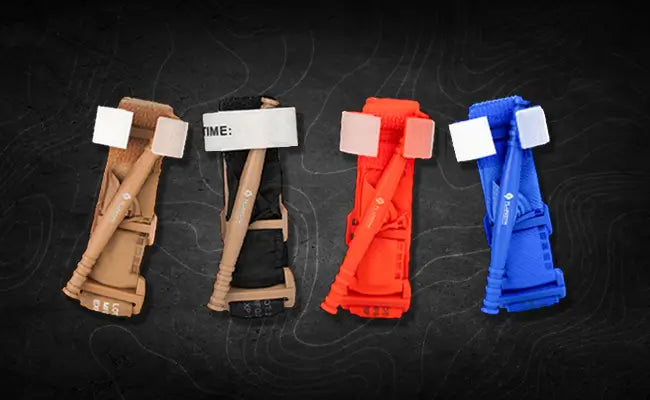
The Folding Tourniquet: Modern EDC tourniquets have evolved from rigid, circular designs to "flat-fold" configurations. By utilizing high-tensile technical polymers that can be stored flat without losing their structural memory, these devices can now sit flush against the hip or inside a pocket.
$Chitosan$ Strips: Instead of a bulky 12-foot roll of gauze, low-profile kits utilize Z-folded, vacuum-compressed $Chitosan$ strips. These provide the same pro-coagulant power as their larger counterparts but are thin enough to fit inside a standard leather wallet or a smartphone case.
Micro-Chest Seals: Modern chest seals are now being manufactured in "half-size" folded formats that can be stored in the lining of a laptop sleeve, providing essential treatment for penetrating chest wounds without the signature square outline of traditional packaging.
FlareSyn Design Philosophy: Miniaturization Without Compromise
At FlareSyn, our design philosophy is centered on the "Clinical Efficacy per Cubic Inch" metric. We recognize that if a kit is too large, it stays in the car; if it stays in the car, it is useless. For the SE IFAK Low-Viz line, we re-engineered our $Chitosan$ gauze to use a denser, higher-concentration weave that reduces volume by 40% while maintaining the same surface area for blood contact. We replaced traditional bulky trauma shears with ultra-slim, folding rescue cutters that can slide into a pen slot. This miniaturization isn't about doing less; it’s about doing the same amount of life-saving work in a footprint that respects the constraints of modern fashion and professional life.
| Feature | Tactical/Full-Size IFAK | FlareSyn Low-Profile EDC | Tactical Trade-off |
| Average Weight | 650g - 900g | 180g - 250g | EDC is 70% lighter for all-day comfort. |
| Thickness (Bulk) | 3.5 - 5.0 inches | 0.75 - 1.2 inches | EDC vanishes under a T-shirt or suit. |
| TQ Type | Windlass (Overt) | Flat-Fold or Integrated | EDC sacrifices 1 second of deployment for 100% concealment. |
| Hemostatic | Full 12ft Z-fold roll | Compact 4ft $Chitosan$ strip | EDC focuses on the initial "plug" rather than deep cavity packing. |
| Social Profile | High-Target / Aggressive | Invisible / "Gray Man" | EDC prevents "Normalcy Bias" triggers in crowds. |
Concealment Strategies: Where and How to Carry
In the world of low-profile preparedness, how you carry is just as important as what you carry. Concealment is a game of geometry and physics; it’s about breaking up the recognizable outlines of medical gear so that the eye of an observer sees only the natural folds of your clothing. To achieve this in 2026, we utilize a combination of specialized carry positions and staging techniques that prioritize both stealth and the "Two-Second Rule."
Ankle Carry: The Professional’s Secret Weapon
For those whose daily "uniform" involves slacks, chinos, or suit trousers, the Ankle Medical Kit (AMK) is arguably the most effective concealment solution ever devised. By utilizing the naturally "dead space" around the lower leg, an ankle rig allows you to carry a full hemostatic kit—including a tourniquet, $Chitosan$ gauze, and even a chest seal—completely out of sight. The weight is distributed low, preventing the sagging often associated with pocket carry. Furthermore, when you are seated—whether in a boardroom or a vehicle—the gear remains accessible by simply lifting the pant leg, a movement that is much faster than trying to dig into a pocket while belted into a car seat.
Pocket Staging and Off-Body Optimization
If ankle carry isn't an option, Pocket Staging is the next line of defense. The primary challenge here is "printing"—when the sharp corners of a bandage or the windlass of a tourniquet create a visible bulge. To combat this, FlareSyn utilizes thin, rigid pocket organizers that act as a buffer. These organizers flatten the gear against the thigh, making the bulge look like a standard smartphone or a slim wallet rather than "tactical" equipment.
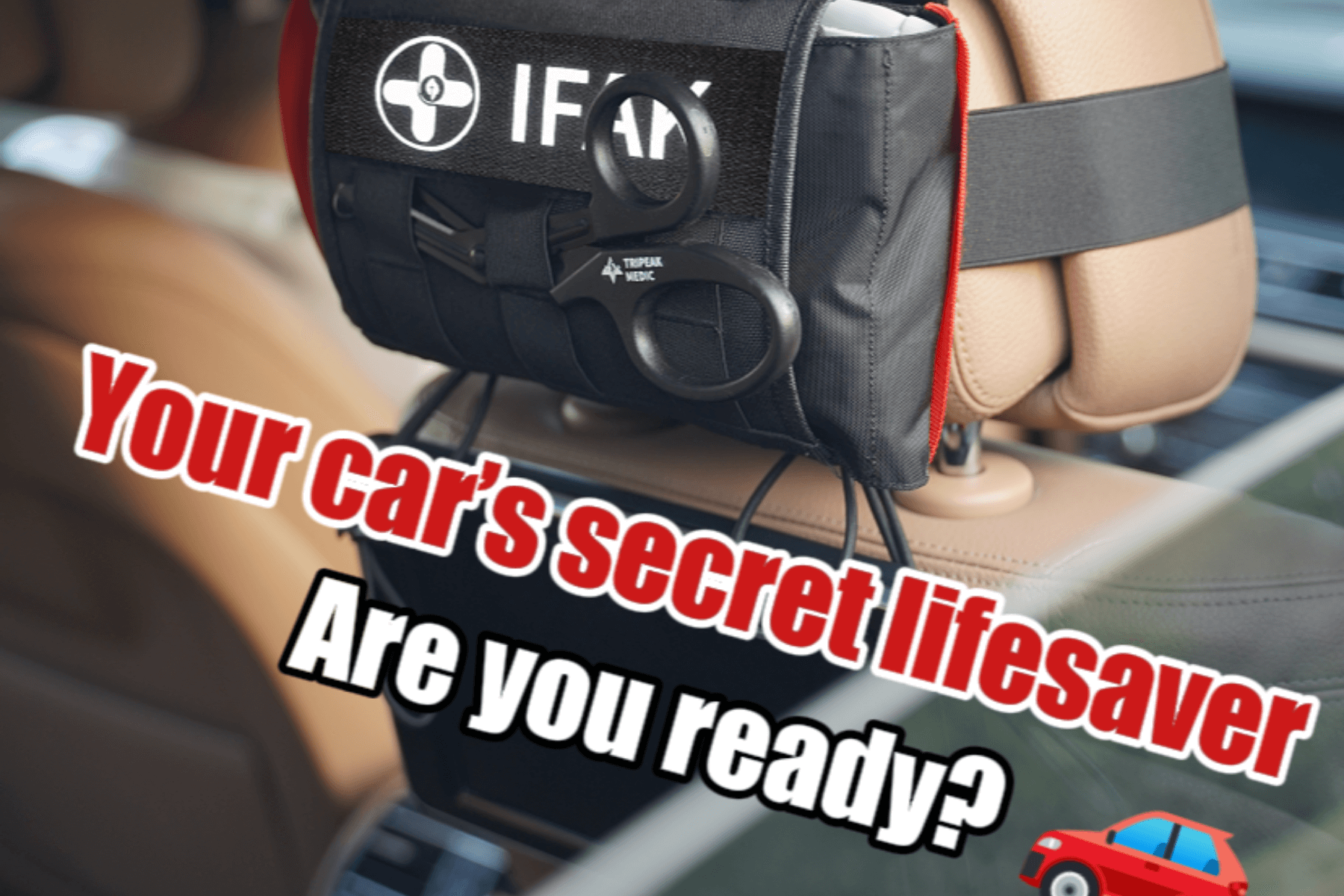
For those who prefer Off-Body Carry, such as in a laptop bag or briefcase, the strategy shifts to Internal Staging. Throwing an IFAK into the main compartment of a bag is a recipe for failure. Instead, optimize your commuter bag by using a dedicated "Rapid-Access Sleeve" that sits at the very top of the bag or in a dedicated side pocket. The goal is sub-3-second access: you should be able to unzip the bag and have the kit in your hand without ever having to look inside.
The "Layered" Approach
The most sophisticated "Gray Man" strategy is Layered Distribution. Instead of keeping all your eggs in one basket (a single pouch), you distribute your capability across your person. A flat-folded tourniquet might sit on the belt line at the small of the back; a packet of $Chitosan$ gauze sits in the front left pocket; and the supplemental items, like chest seals and shears, remain in the commuter bag. This ensures that even if you are separated from your bag, you still possess the "Massive Hemorrhage" components of the M.A.R.C.H. protocol on your body at all times.
5 Tips for Preventing Gear "Printing" in Professional Settings
Diagonal Staging: Position long items (like tourniquets) diagonally across the pocket or limb to follow the natural movement of the fabric.
The "Flat-Fold" Rule: Always vacuum-seal your gauze to the thinnest possible profile; a 1-inch thick puck is 50% more likely to be spotted than a 0.5-inch flat-pack.
Color Blending: Choose pouches that match your attire. A black pouch against black trousers is invisible; a tan pouch is a beacon.
Break the Edge: Use a "buffer" item (like a notebook or a slim battery pack) in front of your medical gear to disguise its specific shape.
Tailored Slack: If you EDC an ankle rig, ensure your trousers have a "Straight" or "Athletic" cut rather than "Slim Fit" to provide the necessary clearance for the gear.
Training for the Invisible Response
Possessing the world’s most advanced low-profile gear is only half the battle; the other half is the ability to deploy it in the friction-filled environments of 2026 urban life. Unlike a shooting range or a spacious classroom, a real-world emergency in the city often occurs in "confined chaos"—inside a packed subway car, a stalled elevator, or a crowded theater. Training for the "Stealth Deployment" means practicing your draw strokes in these restricted spaces. Can you reach your ankle rig while sitting in a narrow airline seat? Can you retrieve your $Chitosan$ gauze from a pocket organizer while pressed against a wall in a crowd? Your training must move beyond the "perfect" stance and into the realistic, cramped, and often awkward positions of modern life.
The "Professional Responder" Persona
Low-profile preparedness also extends to your psychological and verbal output. In an urban crisis, the "Gray Man" transition from bystander to responder must be seamless. This involves Verbal De-escalation and the adoption of a "Professional Responder" persona. When you deploy gear in a public space, people will panic. If you look and act like a frantic amateur, you will exacerbate the chaos. If you use calm, authoritative commands—"I have a medical kit, make space, call 911"—you manage the social environment as effectively as you manage the wound. Your mindset must remain as "low-profile" as your gear: avoid the "hero" complex and focus on the clinical objective. You are there to solve the problem, not to be the center of the spectacle.
The "Improvisation" Myth
A common trap in the "Gray Man" community is the belief that one can simply "improvise" medical gear using a leather belt or a t-shirt to save space. In 2026, we must debunk the Improvisation Myth. Data from the last decade of tactical medicine proves that improvised tourniquets fail upwards of 75% of the time, often because they cannot exert the $300mmHg$ of pressure required to occlude an arterial bleed. Relying on a belt isn't "low-profile"; it’s a gamble with a high probability of loss. Carrying dedicated, ultra-slim gear like the FlareSyn SE Compact is always superior. It is better to spend the effort figuring out how to hide a real tourniquet than to spend your last few minutes of consciousness realizing a leather belt won't stop the flow.
| Carry Position | Average Draw Speed (Seconds) | Concealment Level | Best For |
| Belt (Small of Back) | 1.5 - 2.0s | High (under jacket) | Rapid response in casual or outerwear. |
| Ankle Rig | 2.5 - 4.0s | Maximum (invisible) | Office environments and seated positions (driving). |
| Pocket (Front) | 2.0 - 3.0s | Medium (may "print") | Quick access to hemostatic gauze and gloves. |
| Commuter Bag (Top Staged) | 4.0 - 6.0s | High (Off-body) | Secondary supplies (Chest seals, extra gauze). |
| Commuter Bag (Internal) | 10.0s + | Extreme | Not recommended for life-saving tools. |
As we navigate the complexities of 2026, the definition of the "modern responder" has evolved. We have learned that true readiness does not require a tactical uniform or a display of aggressive hardware. Ultimately, preparedness is a lifestyle, not a fashion statement. It is the quiet discipline of the individual who chooses to walk through the world with the tools and the training to save a life, while maintaining the humility to blend into the background. The "Gray Man" philosophy isn't about hiding in fear; it is about strategically maintaining your effectiveness by staying below the social radar.
At FlareSyn, our mission is to bridge the gap between high-level clinical capability and the realities of urban aesthetics. We believe you shouldn't have to choose between looking professional and being prepared. This is why we are proud to introduce the FlareSyn "Urban Stealth" product line—a suite of ultra-slim, vacuum-sealed, and body-mapped medical tools designed to vanish under a suit or inside a commuter bag without losing a single ounce of life-saving performance.
Your gear should be like your training: invisible until the moment it becomes indispensable. Audit your current everyday carry today. Ask yourself the hard question: Is your kit as discreet as it is deadly effective? If not, it’s time to upgrade to a system that respects your professional life as much as it protects your physical one.
Q1: Won't carrying a trauma kit in my pocket look suspicious or bulky?
Not if you use Flat-Packed gear. Modern 2026 designs, like FlareSyn’s $Chitosan$ strips and flat-fold tourniquets, are engineered to be less than an inch thick. When used with a pocket organizer, they mimic the shape of a smartphone, effectively eliminating "printing."
Q2: Is an ankle medical kit comfortable for all-day wear?
Yes, provided you choose a kit with moisture-wicking padding and ergonomic weight distribution. Ankle carry is the "secret weapon" for professionals because it places the weight in a natural "dead space," making it invisible and comfortable even during long office hours.
Q3: Can I just use a regular belt as an improvised tourniquet to save space?
We strongly advise against this. Statistics show that improvised tourniquets have a failure rate of over 75% because they cannot provide enough circumferential pressure. Low-profile preparedness is about carrying real gear in a smarter way, not relying on inferior substitutes.
Q4: How do I access my gear quickly if it’s hidden under a suit?
This is where the "Two-Second Rule" and "Staging" come in. By placing your most critical item (the tourniquet) in a consistent, reachable location—like an ankle rig or a specific bag pocket—you can train the muscle memory to deploy it without needing to look or fumble.
Q5: What is the most important item for a low-profile urban kit?
A high-quality Tourniquet and Hemostatic Gauze ($Chitosan$). In urban settings, severe bleeding from accidents or violence is the primary preventable cause of death. These two items provide the highest "life-saving ROI" for the least amount of space.


Elias.H.Hwang
Elias H. Hwang is a tactical medicine expert and lead contributor at FlareSyn. He specializes in emergency trauma protocols and preparedness education, helping civilians and professionals alike master the tools and skills needed to save lives in critical moments.

Leave a comment
This site is protected by hCaptcha and the hCaptcha Privacy Policy and Terms of Service apply.