

2026 Guide
IFAK Checklist 2026: What to Pack, How to Carry It, and How to Keep It Ready
The best IFAK for 2026 is not the biggest kit you can buy. It is the kit you can reach fast, understand under stress, and keep stocked. This guide breaks down core IFAK contents, smart add-ons, car...
The right IFAK in 2026 should cover the injuries you are realistically preparing for, fit where you will actually carry it, and stay simple enough to use under stress. For most people, that means starting with bleeding-control basics: a tourniquet, wound packing material, pressure dressing, chest seals, gloves, trauma shears, and a compact pouch that can be reached fast.
This guide is written for everyday carry, vehicle readiness, range bags, outdoor kits, and team or workplace setups. It is not medical training, and it does not replace emergency services. Use gear you understand, seek hands-on instruction, and follow local protocols.
Quick Answer: What Should Be in an IFAK in 2026?
A practical 2026 IFAK should include a quality tourniquet, hemostatic or wound-packing gauze, an emergency pressure bandage, chest seals, nitrile gloves, trauma shears, a marker, and a pouch that opens quickly. Add items based on the use case: smaller gear for EDC, more supplies for vehicles, and duplicate bleeding-control items for range or group kits.
Choose Your IFAK Setup
Start with the kit that matches where you will actually keep it: pocket, bag, vehicle, or range loadout.


What Changed for IFAKs in 2026?
The core idea has not changed: stop severe bleeding, protect breathing, and keep the kit accessible. What has changed is how people shop and carry.
More buyers are building scenario-specific kits instead of one oversized bag. An EDC user may need a flat wallet-style kit. A vehicle owner may need a headrest pouch. A range shooter may want duplicate tourniquets, chest seals, and pressure dressings. A workplace or team buyer may need a more visible kit with enough supplies for more than one person.
Training also matters more than ever. Stop the Bleed and TCCC-style education have made terms like tourniquet, wound packing, chest seal, and MARCH more familiar, but familiar words are not the same as hands-on confidence. A kit should match the user's training level and be reviewed before it sits in a drawer for a year.
The 2026 IFAK Core Checklist
Use this as the base layer. Then adjust for the way you carry.
| Category | Common IFAK Item | Why It Is Included |
|---|---|---|
| Severe bleeding | Tourniquet | Often used for life-threatening extremity bleeding when appropriate training and protocols support it |
| Wound packing | Hemostatic gauze or compressed gauze | Helps support wound-packing readiness in a compact format |
| Pressure | Emergency pressure bandage | Helps hold direct pressure and secure dressing material |
| Chest trauma | Vented or non-vented chest seals | Commonly included for penetrating chest injury preparedness |
| Protection | Nitrile gloves | Reduces exposure risk while helping keep the kit usable |
| Access | Trauma shears | Helps expose the injury area without needing a knife |
| Marking | Permanent marker | Useful for noting time or labeling in an emergency response context |
| Organization | Compact IFAK pouch | Keeps supplies together and reachable |
Definition: IFAK
An IFAK, or Individual First Aid Kit, is a compact trauma-focused kit meant to be carried by one person or staged for one responder. Unlike a household first aid kit, an IFAK is usually built around bleeding control, fast access, and emergency trauma supplies.
Core Bleeding-Control Supplies
These are common refill and upgrade items for building out the bleeding-control side of an IFAK.

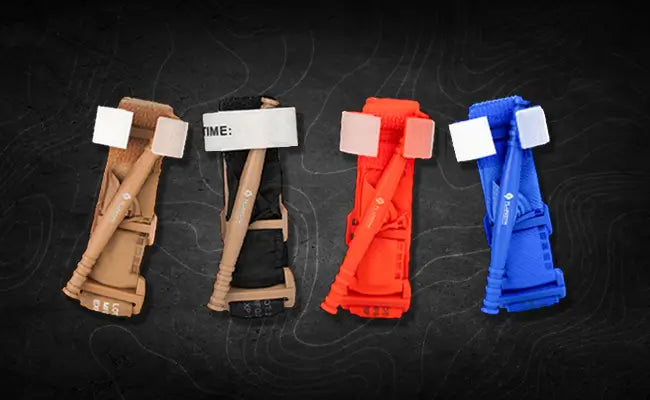
Tactical Windlass Tourniquet
A dedicated tourniquet for staging in kits, vehicles, and bags.
View Product


Chitosan Hemostatic Gauze
A compact wound-packing upgrade for bleeding-control readiness.
View Product

Emergency Trauma Compression Bandage
A pressure bandage refill or add-on for trauma kit restocking.
View Product
Build the Kit Around the Mission
There is no single perfect IFAK. A kit that is excellent in a truck may be too bulky for a pocket. A kit that disappears into an EDC bag may be too limited for range or team use.
| Use Case | Better Starting Point | What to Prioritize |
|---|---|---|
| Everyday carry | Wallet IFAK or micro trauma kit | Thin profile, fast access, compact bleeding-control items |
| Vehicle readiness | Vehicle headrest trauma IFAK | Visibility, glove-friendly access, heat-aware storage |
| Range bag | Compact tactical trauma IFAK | Duplicate tourniquets, chest seals, pressure dressings |
| Outdoor or field use | Standard IFAK with refill room | Durability, water resistance, easy inventory checks |
| Team or workplace | Larger medic or group kit | Multiple sets of core supplies and clear placement |
| Refill and maintenance | IFAK refill kits | Replacing used, expired, or damaged supplies |
EDC IFAK: Keep It Flat and Reachable
For everyday carry, the best kit is the one you do not leave behind. A pocket or bag-friendly IFAK should focus on a small number of items that solve high-priority problems. Avoid turning an EDC kit into a miniature ambulance bag.
Good EDC priorities include:
- A compact tourniquet or tourniquet staged nearby
- Compressed gauze or hemostatic gauze
- Gloves
- A small pressure dressing
- A slim pouch or organizer
If your EDC kit lives in a backpack, put it in a consistent location. If someone else needs to grab it, they should not have to search through cables, snacks, and loose tools.
Vehicle IFAK: Stage It Where Hands Can Find It
A vehicle trauma kit has one big advantage: space. It also has one big weakness: people hide it too well.
For 2026, a strong vehicle IFAK should be visible, secured, and easy to open. A headrest or seat-back kit can work well because it keeps trauma supplies away from the trunk and closer to passengers.
Vehicle kit priorities:
- Tourniquet
- Gauze or hemostatic gauze
- Emergency pressure bandage
- Chest seals
- Gloves in multiple sizes if possible
- Trauma shears
- Marker
- Small light source
- Inventory card
Check vehicle kits more often than indoor kits. Heat, cold, and vibration can shorten the useful life of some supplies.
Range Bag IFAK: Build for Redundancy
Range bags and field kits deserve a slightly different approach. If the environment includes tools, blades, firearms, machinery, or remote locations, a single-item kit may be too thin.
For a range bag trauma kit, consider carrying duplicates of the core bleeding-control items. That does not mean stuffing the kit with everything. It means adding depth where the risk profile justifies it.
Range and field priorities:
- Two tourniquets if space allows
- Wound-packing gauze
- Hemostatic gauze
- Pressure bandage
- Chest seals
- Gloves
- Trauma shears
- Marker
- Compact emergency blanket
The goal is not to perform advanced care. The goal is to have organized supplies available while emergency services are contacted and trained responders act within their scope.
Standard vs Pro IFAK: How to Choose
Choose a compact or standard IFAK if you want a balanced kit for one person, EDC bag staging, vehicle readiness, or a range bag. Choose a larger or pro-style IFAK if you need more capacity, duplicate supplies, or a kit that may support more than one person.
| Choose This | If You Need |
|---|---|
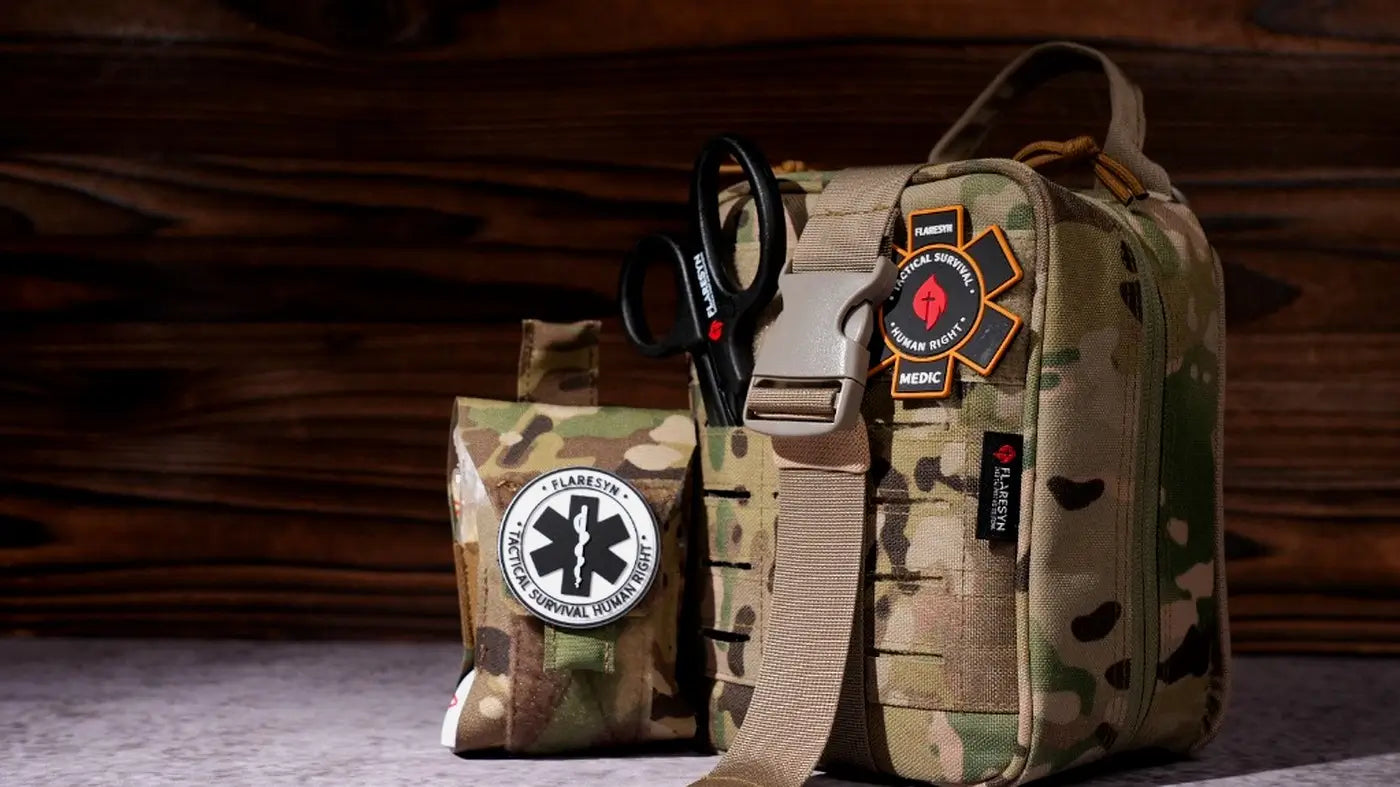
| Compact Tactical Trauma IFAK | A balanced personal kit that fits bags, vehicles, or belt setups |
| Premium/Standard IFAK Trauma Kit | A stronger all-around kit with a more complete trauma core |
| Tactical Windlass Tourniquet | A dedicated tourniquet for staging in multiple locations |
| Chest Seal | A focused refill or upgrade item for chest trauma readiness |
| Chitosan Hemostatic Gauze | A compact wound-packing upgrade for bleeding-control preparedness |
| Emergency Trauma Bandage | A pressure dressing refill or add-on |
Helpful starting point: browse the FlareSyn Best Sellers collection if you want to compare the most commonly chosen kits and supplies in one place.
How to Pack an IFAK So It Works Under Stress
Packing matters almost as much as the list itself. A perfect checklist can fail if the pouch is too hard to open or the most urgent item is buried at the bottom.
Use these rules:
- Put the tourniquet where it can be reached first.
- Keep gloves near the opening, not under the heaviest items.
- Group bleeding-control items together.
- Do not overpack the pouch so tightly that it becomes hard to open.
- Label the kit clearly if it lives in a vehicle, workplace, or shared bag.
- Practice opening the pouch and identifying items before an emergency.
Definition: MARCH
MARCH is a trauma-care memory aid often used in tactical and emergency training contexts. It stands for Massive hemorrhage, Airway, Respiration, Circulation, and Hypothermia/Head injury. For civilian kit planning, it is useful as a simple way to think about priorities, not as a substitute for training.
IFAK Maintenance Schedule for 2026
Most kit problems are boring: missing gloves, expired dressings, packaging damage, or supplies that were used and never replaced. That is exactly why maintenance matters.
| When | What to Check |
|---|---|
| Monthly | Pouch location, seal condition, obvious damage, missing items |
| Every 3 months | Expiration dates, glove condition, heat exposure, inventory card |
| After training | Replace opened practice items with sealed supplies |
| After use | Restock immediately and review what was hard to access |
| Before travel or range days | Confirm the kit is packed and reachable |
Keep training supplies separate from emergency supplies. If you open gauze or a bandage for practice, do not put it back as your ready-use item.
Common IFAK Mistakes to Avoid
- Buying a kit and never opening it.
- Carrying a tourniquet without learning when and how it is used.
- Hiding the kit in a trunk, closet, or deep bag pocket.
- Letting heat-damaged or expired supplies stay in the kit.
- Packing too many low-priority items and crowding out the trauma core.
- Assuming one small kit can cover every person, vehicle, and activity.
- Mixing practice items with emergency-ready sealed supplies.
FlareSyn 2026 IFAK Buying Path
If you are starting from zero, begin with a compact IFAK or a premium/standard trauma kit. If you already have a pouch, add core bleeding-control supplies first: tourniquet, gauze, pressure bandage, and chest seals. If your kit lives in a vehicle or range bag, consider adding duplicates and a simple inventory card.
Shop starting points:
- Best Sellers: https://flaresyn.com/collections/best-sellers
- Premium/Standard IFAK Trauma Kit: https://flaresyn.com/products/ifak-trauma-kits-premium-standard
- Compact Tactical Trauma IFAK: https://flaresyn.com/products/flsresyn-compact-tactical-trauma-ifak
- Tactical Windlass Tourniquet: https://flaresyn.com/products/tactical-tourniquet-1
- Chest Seal: https://flaresyn.com/products/chest-seal-1
- Chitosan Hemostatic Gauze: https://flaresyn.com/products/chitosan-hemostatic-gauze
- Emergency Trauma Bandage: https://flaresyn.com/products/emergency-medical-4-6-trauma-bandage
FAQ
What should be in an IFAK in 2026?
A 2026 IFAK should usually include a tourniquet, wound-packing gauze or hemostatic gauze, an emergency pressure bandage, chest seals, nitrile gloves, trauma shears, a marker, and a pouch that opens quickly. The exact contents should match your training, carry method, and expected use.
Is an IFAK different from a regular first aid kit?
Yes. A regular first aid kit often focuses on minor cuts, scrapes, and everyday supplies. An IFAK is usually more trauma-focused and built around severe bleeding control, fast access, and emergency organization.
Do I need a tourniquet in my IFAK?
Many trauma-focused IFAKs include a tourniquet because severe extremity bleeding is time-sensitive. A tourniquet should be selected carefully, staged where it can be reached, and paired with hands-on training.
Should I carry one IFAK or several?
Many people are better served by staging more than one kit: a compact EDC kit, a vehicle kit, and a range or field kit. The point is not to collect gear; it is to keep supplies where they are most likely to be needed.
How often should I check my IFAK?
Check your IFAK monthly for location and obvious damage, and do a deeper inventory every three months. Always restock after training or use.
Can an IFAK replace medical training?
No. An IFAK is a supply kit, not a skill set. Training is strongly recommended, and emergency services should be contacted when medical help is needed.
Sources and Notes
- Stop the Bleed program information and training emphasis: https://www.stopthebleed.org/
- Joint Trauma System Clinical Practice Guidelines and TCCC guideline resources: https://jts.health.mil/index.cfm/PI_CPGs/cpgs
- American Red Cross emergency kit supply guidance: https://www.redcross.org/get-help/how-to-prepare-for-emergencies/survival-kit-supplies.html
- ANSI/ISEA Z308.1 workplace first aid kit standard reference: https://safetyequipment.org/standard/ansi-isea-z308-1-2021-american-national-standard-minimum-requirements-for-workplace-first-aid-kits-and-supplies/
Not Sure Where to Start?
If you are still comparing options, start with the collection that matches your carry location and emergency plan.
Best Sellers
Compare customer-favorite IFAK kits, trauma supplies, and readiness gear.
Shop Best Sellers
IFAK Collection
Start with compact, pre-filled, and field-ready individual first aid kits.
Shop IFAK Kits
Vehicle & RV Safety
Find vehicle-ready kits and emergency supplies for cars, trucks, and RVs.
Shop Vehicle Kits


