

Chitosan vs. Traditional Gauze: Why Seconds Count in Severe Bleeding
Engineering the 60-Second Clot
In the unforgiving physics of human biology, life is measured in milliliters. The average adult body contains approximately five liters of blood, and the margin for error during a major traumatic event is terrifyingly slim. When a large vessel is compromised, the body can enter Class IV Hemorrhagic Shock—a state of irreversible organ failure—after losing just 40% of its total blood volume. In a high-pressure arterial bleed, that critical threshold can be reached in less than three minutes. This isn't just a medical emergency; it is a biological race against a countdown that ends in tragedy.
In the tactical and emergency medicine community, we operate by the 60-Second Rule. This is the vital window where intervention must be decisive and absolute. Within these sixty seconds, the objective is not merely to "cover" a wound, but to physically and chemically arrest the flow of blood before the body’s internal pressure drops beyond the point of no return. Traditional first aid, built on the foundations of simple cotton and manual pressure, often fails to meet this 60-second demand when faced with the violent kinetic energy of a severe laceration or puncture.
This brings us to a fundamental truth of modern survival: Material science is the deciding factor between a life saved and a life lost. The gap between a standard $2 gauze roll and a professional-grade hemostatic agent is not just price—it is technology. By understanding the biochemistry of how blood interacts with different materials, we can move beyond passive absorption toward active, immediate clot formation. In the following analysis, we will explore why upgrading your kit to include advanced Chitosan technology and precision-engineered mechanical anchors is the most important investment you can make for the next 60 seconds of your life.


Hemostasis 101: How Your Body (and Gauze) Stops Bleeding
To understand why professional-grade gear is essential, one must first understand the battlefield: the human circulatory system. Our bodies are equipped with a sophisticated defense mechanism known as the Coagulation Cascade. When an injury occurs, the body initiates a complex series of chemical reactions where platelets aggregate at the site and proteins called clotting factors work together to form a fibrin mesh. This "biological net" traps red blood cells to create a clot. Under normal circumstances—a scraped knee or a small kitchen cut—this system is a masterpiece of biological engineering.
The Coagulation Cascade: Nature’s Fragile Defense
However, the Coagulation Cascade is not an instantaneous switch; it is a slow-building process that requires specific conditions to succeed. It relies heavily on temperature, pH levels, and the physical presence of clotting factors. In a severe trauma scenario, this cascade often fails. If a patient is losing blood rapidly, they may also be losing the very clotting factors needed to stop that blood. Furthermore, as the body cools (hypothermia) or the blood becomes acidic (acidosis) due to shock, the chemical reactions required for clotting simply stop working. This is the "Triad of Death" in trauma medicine, where the body's natural defenses surrender.
The Limits of Traditional Cotton: Why Pressure is Not Enough
Traditional cotton gauze, the kind found in standard pharmacy kits, is a passive material. It functions primarily through mechanical pressure and absorption. While it can soak up blood, it does nothing to assist the chemical process of clotting. In a high-pressure arterial bleed, the sheer force of the blood pumping out of the vessel often pushes a standard gauze plug right out of the wound track. Relying solely on mechanical pressure with cotton is like trying to plug a high-pressure fire hose with a kitchen sponge; the material lacks the structural and chemical integrity to hold the line against systemic arterial pressure.
Absorption vs. Aggregation: The Shift in Strategy
The critical difference between amateur and professional wound care lies in the shift from absorption to active aggregation. Standard gauze is designed to absorb—it pulls blood away from the wound, which can actually mask the severity of the bleed. Modern hemostatic technology, however, focuses on aggregation. Instead of just soaking up fluid, professional materials interact with the blood to accelerate the formation of a physical plug. We are no longer waiting for the body's slow and fragile cascade to catch up; we are bringing the "clot" to the wound in the form of advanced material science.
Why Traditional Gauze Fails in Tactical Scenarios
Zero Chemical Activity: It cannot stimulate clotting in patients with compromised coagulation.
Structural Weakness: Cotton fibers tear easily and lack the density to pack deep, narrow wound channels (like puncture wounds).
The "Sponge" Effect: By absorbing blood rather than stopping it, it can lead to a false sense of security while internal bleeding continues.
Friction Issues: It often adheres to the newly formed clot, causing the wound to re-open and bleed again when the dressing is removed at the hospital.
Failure in Extremes: Traditional gauze becomes nearly useless when the patient is cold or has lost a significant volume of blood.
The Chitosan Revolution: Engineering the "Bio-Plug"
When traditional methods fail, we turn to the cutting edge of biomaterial science. Chitosan—a natural polymer derived from the shells of crustaceans—represents the most significant leap forward in trauma care since the invention of the tourniquet. Unlike traditional gauze, which waits for the body to do the work, Chitosan takes an aggressive, proactive role in closing the wound. It is not just a dressing; it is a bio-active engineering solution designed to stop high-pressure bleeding through direct molecular interaction.
The Biochemistry of Chitosan: The "Red Cell Magnet"
The secret to Chitosan’s efficacy lies in its electrical charge. At a molecular level, Chitosan is positively charged. Human red blood cells, conversely, carry a negative charge. When Chitosan-infused gauze, such as FlareSyn’s proprietary blend, comes into contact with blood, it acts like a high-powered magnet. It attracts red blood cells at a rapid rate, forcing them to aggregate and cross-link into a dense, viscous "bio-plug."
This process occurs independently of the body's natural coagulation cascade. While the body might take minutes to form a fragile fibrin mesh, Chitosan creates a robust mechanical seal in as little as 30 to 60 seconds. This is the literal manifestation of "engineering the clot."
Independence from Clotting Factors: Survival Against the Odds
One of the most dangerous challenges in modern emergency medicine is treating patients whose natural clotting ability is compromised. Millions of individuals are on anticoagulant therapy (blood thinners like Aspirin, Warfarin, or Heparin), which effectively disables the body's natural Coagulation Cascade. In these patients, traditional gauze is almost entirely ineffective.
Furthermore, in severe trauma, patients often suffer from hypothermia, which causes the enzymes responsible for natural clotting to become dormant. Chitosan is the solution to these "un-clottable" scenarios. Because its mechanism is based on electrostatic attraction rather than enzyme-driven chemical reactions, Chitosan works just as effectively on a patient taking blood thinners or a victim in the advanced stages of hypothermic shock. It bypasses the body's broken systems to save the life.
Chitosan vs. Kaolin: Choosing the Superior Technology
For years, the hemostatic market was divided between Chitosan and Kaolin (a clay-based mineral). While Kaolin is effective, it has distinct disadvantages in tactical settings. Kaolin-based products work by activating Clotting Factor XII, meaning they still rely on the body’s internal chemistry to a certain degree.
More importantly, early generations of mineral-based hemostatics were known for exothermic reactions—generating significant heat that could actually cause tissue burns inside the wound. Chitosan, by contrast, is non-exothermic. It generates zero heat, ensuring that while you are stopping the bleed, you are not causing secondary thermal damage to delicate nerves and tissue. Chitosan is also mucoadhesive, meaning it bonds to the moist surfaces of the wound track, providing a more stable seal during patient transport.
| Feature | Standard Cotton Gauze | Kaolin-Based Gauze | FlareSyn Chitosan Gauze |
| Mechanism | Passive Absorption | Factor XII Activation | Electrostatic Aggregation |
| Speed to Clot | 5-10+ Minutes | 2-3 Minutes | 30-60 Seconds |
| Works on Blood Thinners? | No | Partially | Yes (High Efficacy) |
| Works in Hypothermia? | No | Poorly | Yes |
| Heat Generation | None | Potential Exothermic | None (Safe) |
| Ease of Removal | Poor (Re-bleeds) | Moderate | Excellent (Gels for removal) |
The Mechanical Anchor: Tactical Tourniquets and the Windlass System
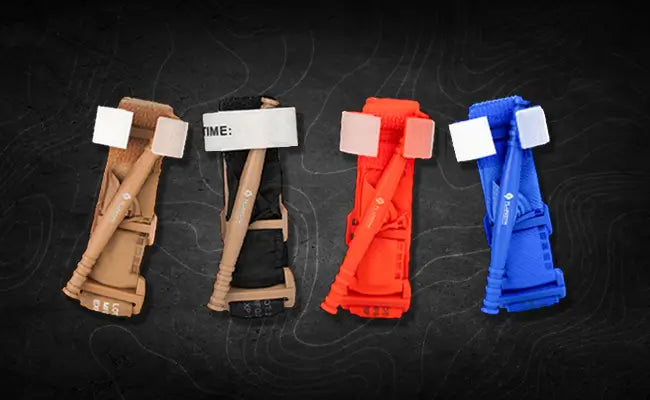
While advanced hemostatic gauze is a miracle of biochemistry, there are moments where chemistry alone cannot fight the laws of hydraulics. When a major artery in an extremity—such as the femoral artery in the leg—is completely severed, the internal blood pressure is too high for any topical agent to hold. In these catastrophic scenarios, we move from chemical aggregation to total mechanical occlusion. This is the domain of the Tactical Tourniquet: the ultimate fail-safe in the 3-Tiered Preparedness system.
When Gauze Isn’t Enough: The Tourniquet Threshold
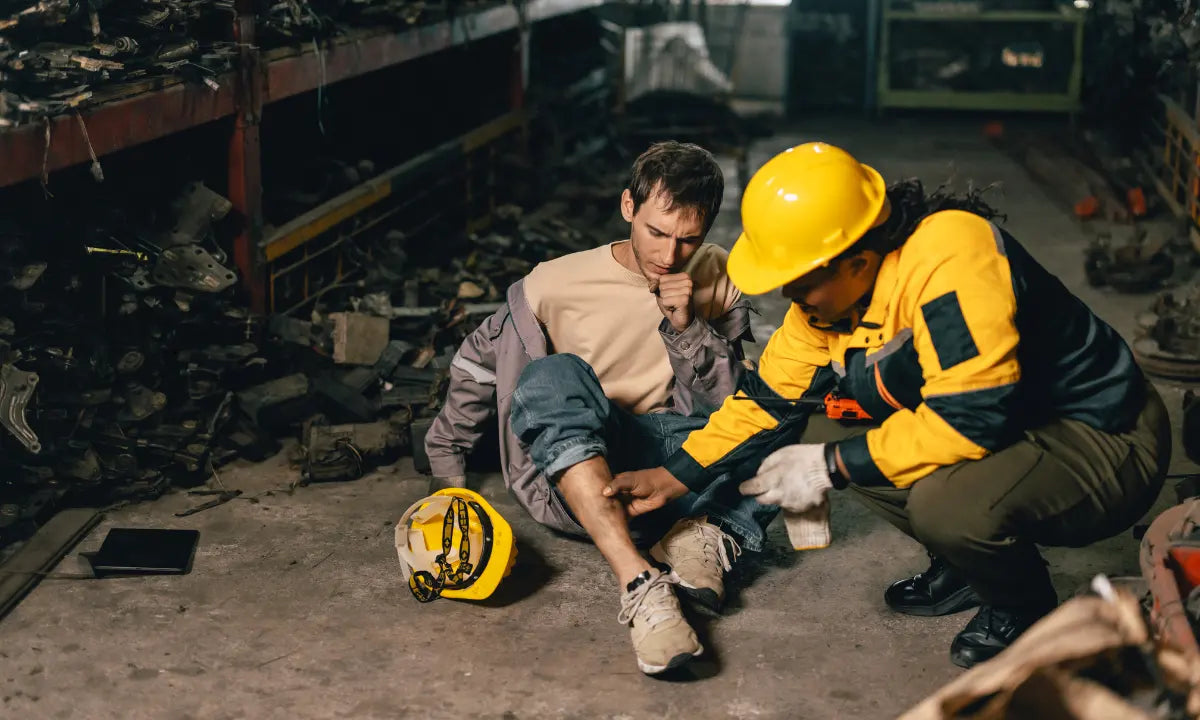
The decision to apply a tourniquet is governed by the severity and location of the bleed. If a wound in an arm or leg exhibits "bright red, spurting blood" or creates a rapidly expanding pool on the ground, you have crossed the threshold. In these "life-over-limb" moments, packing the wound with gauze may take too long or fail to reach the source of the hemorrhage. A tourniquet acts as a structural circuit breaker, shutting off the flow of blood at the source to buy the responder time to assess secondary injuries. It is the most effective tool ever designed for preventable death on the battlefield or in the aftermath of a severe industrial or transit accident.
The Engineering of Tension: Why the Windlass Wins
Not all tourniquets are created equal. You will often see "elastic" or "ratchet-only" bands marketed for emergency use, but in the professional tactical medical community, the Windlass System remains the undisputed gold standard. The reason is simple: Mechanical Advantage.
To stop arterial flow, the tourniquet must exert enough circumferential pressure to compress the artery against the bone. Elastic bands often lose tension as they stretch or slip when covered in blood and rain. A windlass—a rigid rod that is twisted to tighten the internal band—allows the responder to apply massive, concentrated pressure with minimal physical strength. This mechanical advantage ensures that the occlusion is absolute and, more importantly, that it stays locked in place during the rough vibrations of emergency transport.
Avoiding the "Nerve Damage" Myth: The Modern Perspective
For decades, many were taught that applying a tourniquet meant the automatic loss of the limb due to nerve damage or lack of oxygen. Modern medical data has thoroughly debunked this myth. In studies from recent global conflicts and urban trauma centers, tourniquets have been safely left in place for up to two hours with zero long-term complications. The risk of death from exsanguination (bleeding to death) is 100% without intervention, while the risk of permanent limb damage from a properly applied tourniquet used for a reasonable duration is statistically negligible. In short: Don't fear the tourniquet; fear the delay.
If you are auditing a tourniquet for your kit, it must meet these professional criteria:
Reinforced Windlass Rod: Must be made of high-strength polymer or aluminum to prevent snapping under maximum torque.
Aggressive Cleat System: For securing the windlass so it cannot "unwind" during movement.
High-Tenacity Internal Band: To ensure even pressure distribution without tearing the skin or the device.
Writeable Time-Stamp: A dedicated area to record the time of application—critical for surgeons at the hospital.
One-Handed Operation: The design must allow a user to apply the device to their own arm using only one hand.
The Economic Logic of Premium Trauma Gear
When assembling a trauma kit, the price disparity between generic pharmacy supplies and professional-grade gear like FlareSyn can be striking. However, evaluating life-saving equipment through the lens of traditional consumer economics is a dangerous mistake. In the world of emergency medicine, we must move beyond the "shopping mall" mindset and adopt a "mission-critical" perspective.
Cost-Per-Use vs. Cost-Per-Life: A New Equation
In a typical household, we measure value by "cost-per-use." But trauma gear is different; it is equipment you hope to never use. Therefore, the true metric is Cost-Per-Life. A $5 generic tourniquet from an unverified marketplace might save you money today, but if the windlass snaps or the buckle slips during a femoral bleed, the "savings" are irrelevant. When a life is on the line, the $30 or $50 difference between a replica and a certified FlareSyn component represents the cheapest insurance policy you will ever buy. You aren't paying for a piece of nylon and plastic; you are paying for the certainty that the device will perform exactly as engineered at the one moment it matters most.
Training and Confidence: Reducing the "Adrenaline Tax"
In a high-stress emergency, the human brain suffers from what we call an "Adrenaline Tax"—a significant drop in fine motor skills and cognitive processing. This is where premium gear proves its worth. Professional-grade equipment is designed with ergonomic intuition. High-contrast markings, tactile textures that provide grip even when bloody, and simplified mechanical interfaces reduce the cognitive load on the responder. Superior gear compensates for user error and shaking hands, allowing you to act with the confidence of a professional.
The FlareSyn Guarantee: Quality Control in Life-Critical Manufacturing
At FlareSyn, we treat our manufacturing process with the same rigor as aerospace engineering. Every batch of our Chitosan Hemostatic Gauze undergoes rigorous bio-compatibility testing, and every batch of our Tactical Tourniquets is stress-tested to ensure the windlass can withstand forces far exceeding human capability. When you see the FlareSyn logo, you are seeing a commitment to quality control that generic manufacturers simply cannot match. We don't just sell products; we provide a guarantee of performance in the face of tragedy.
In the final assessment, emergency preparedness is not about accumulating supplies; it is about buying time. When a catastrophic bleed occurs, the clock begins a relentless countdown toward zero. In those moments, the difference between a survivor and a statistic is the technology you hold in your hands. Traditional cotton and makeshift solutions are passive observers to a crisis, but advanced Chitosan and precision-engineered windlass systems are active participants in the fight for life.
You are not merely buying gauze or a nylon strap; you are investing in the next 60 seconds of your life—or the life of someone you love. These are the seconds that allow a father to see his children again, or a traveler to make it home from a remote trail. By choosing professional-grade hemostatics, you are ensuring that when the "Zero-Second" reality strikes, you have the tactical and chemical advantage to win the race against the clock.
Equip yourself with the technology of survival. Don’t just pack a kit—build a defense. Shop FlareSyn Hemostatics today.
Q: I have a shellfish allergy. Is Chitosan gauze safe for me to use?
A: This is a common concern. While Chitosan is derived from the shells of crustaceans, the manufacturing process for medical-grade Chitosan (like that used by FlareSyn) involves a process called deacetylation. This removes the proteins—the specific components that trigger allergic reactions. Most medical studies indicate that Chitosan hemostatics do not provoke a reaction even in those with severe shellfish allergies, but always consult with your physician regarding your specific medical history.
Q: Why choose Chitosan over cheaper "Quick Clot" style powders?
A: Powders were a popular early innovation, but they have largely been phased out in favor of impregnated gauze. Powders are difficult to apply in windy environments, can blow into the eyes of the responder, and are nearly impossible for surgeons to clean out of a wound entirely. FlareSyn’s Chitosan Gauze keeps the active agent contained in a material that can be packed deeply and removed cleanly in the operating room.
Q: Can a tourniquet be reused for training purposes?
A: We strongly advise against this. A tactical tourniquet is a life-critical device designed for a single use. The immense torque generated by the windlass can cause micro-stress fractures in the polymer or stretch the internal band. Using a "training tourniquet" for a real-world emergency is a risk you should never take. Always keep a dedicated, factory-sealed FlareSyn tourniquet in your kit and a separate one for practice.
Q: How does Chitosan behave in cold weather?
A: Chitosan is exceptionally resilient in cold climates. Because it relies on electrostatic attraction (positive and negative charges) rather than temperature-sensitive enzymatic reactions, it remains effective even when the victim is hypothermic. This makes it a superior choice for hikers, skiers, and those living in northern climates compared to traditional or mineral-based options.


Elias.H.Hwang
Elias H. Hwang is a tactical medicine expert and lead contributor at FlareSyn. He specializes in emergency trauma protocols and preparedness education, helping civilians and professionals alike master the tools and skills needed to save lives in critical moments.
%20...)