
RICE Method Explained: Rest, Ice, Compression, Elevation
Acute injuries like sprains, strains, contusions, and soft-tissue damage can happen in workplaces, sports, or daily life. Knowing how to respond immediately can reduce pain, minimize swelling, and prevent further tissue damage. The RICE method, Rest, Ice, Compression, Elevation, is a widely recommended protocol for initial injury management. By understanding the steps, their purpose, and modern updates, you can optimize recovery, manage inflammation, and prepare the injury for rehabilitation. This guide explains each step of RICE, clarifies when it is most effective, and highlights alternatives like MEAT and PEACE & LOVE for continued healing.
What Is the RICE Method?
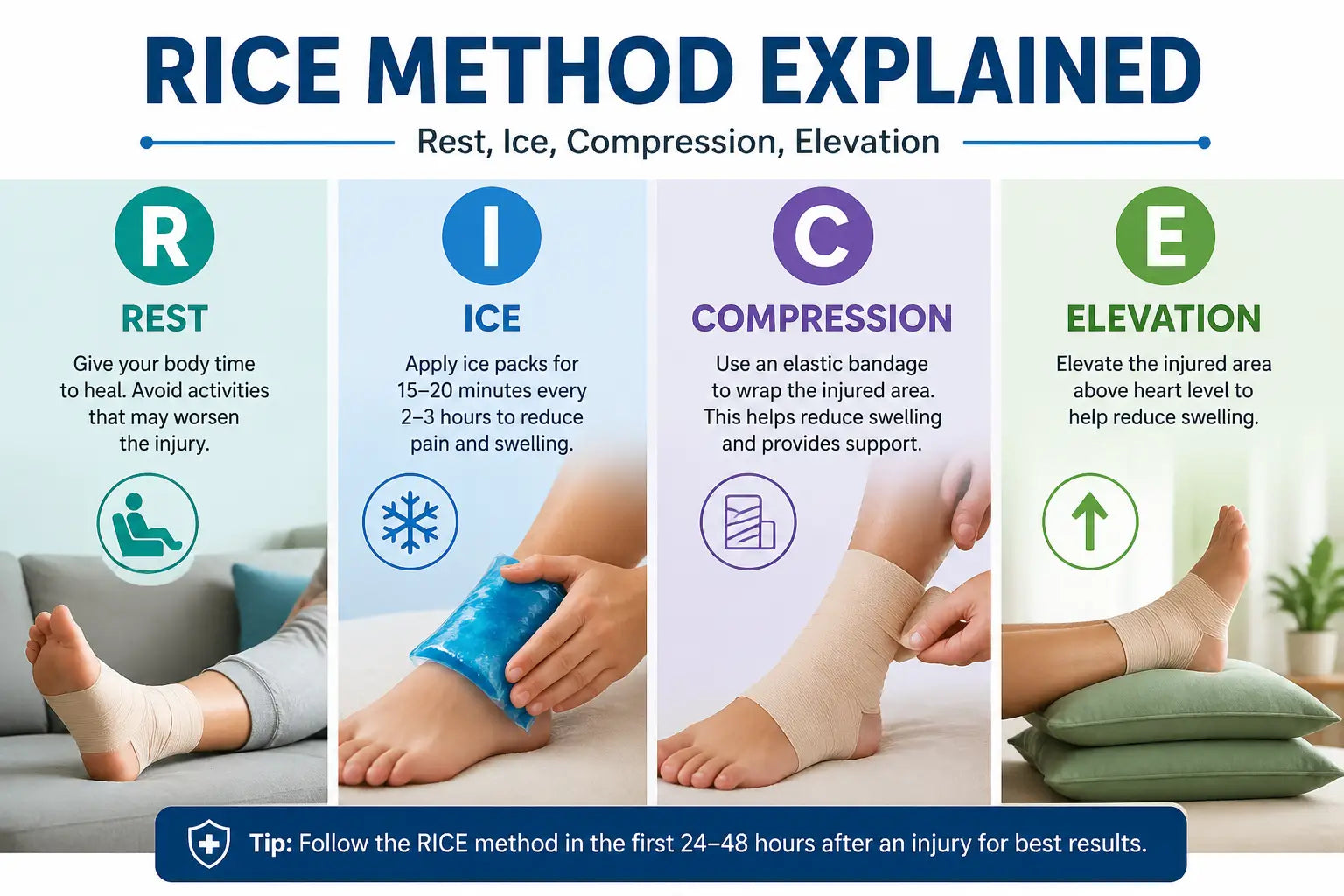
The RICE protocol stands for Rest, Ice, Compression, and Elevation. It was introduced by Dr. Gabe Mirkin in 1978 as a standard approach for soft-tissue injuries. The primary goal is to reduce swelling, bleeding, and pain in the acute phase, usually the first 1–3 days after injury.
RICE is used for a variety of injuries, including:
-
Sprains: Ligament stretches or tears
-
Strains: Muscle or tendon overstretch injuries
-
Contusions: Bruising from blunt trauma
-
General soft-tissue injuries: Tendinitis flare-ups, minor overuse injuries
Each component of RICE addresses a specific aspect of tissue response and inflammation control, ensuring the injured area is stabilized for safe recovery and rehabilitation.
1. Rest: Protecting the Injured Area
Rest involves temporarily reducing or avoiding the use of the injured body part. This prevents secondary tissue damage and allows the body to initiate the natural inflammatory repair process.
Acute phase (first 1–3 days): Gentle rest is recommended, but complete immobilization is often discouraged, as minor movement may support blood flow and lymphatic drainage.
Subacute phase (3–5 days post-injury): Gradual, pain-guided activity can prevent stiffness and maintain function.
Rest does not mean inactivity for the entire body; unaffected areas should continue normal movement to prevent systemic stiffness and maintain circulation.
Warnings: Over-rest can delay healing, reduce flexibility, and increase recovery time. It’s important to balance protection with gentle activity as tolerated.
2. Ice: Cryotherapy for Pain and Swelling
Ice or cryotherapy is applied to injured tissues to reduce pain, swelling, and bleeding by constricting blood vessels and slowing metabolic activity.
- Apply an ice pack or cold compress wrapped in a towel for 15–20 minutes at a time.
- Repeat every 2–3 hours for the first 24–48 hours, or follow modern guidance: 10 minutes on, 20 minutes off, 1–2 more times.
- Ice is most effective within the first 6–8 hours post-injury.
- For subacute recovery, prolonged icing may not be necessary and could interfere with the natural inflammation response essential for tissue repair.
Warnings: Avoid placing ice directly on the skin to prevent frostbite. Excessive icing can reduce blood flow too much, slowing healing and reducing lymphatic drainage.
3. Compression: Controlling Swelling
Compression uses elastic bandages, braces, or wraps to limit swelling and support the injured area.
- The bandage should be snug but not tight enough to cause numbness, tingling, or cold skin.
- Compression is most effective in conjunction with rest and elevation to control edema and facilitate fluid return via lymphatic pathways.
- Compression is particularly useful for ankle, knee, wrist, or elbow sprains where swelling can impair mobility.
Warnings: Excessive pressure can compromise circulation, so always check distal pulses and skin color regularly.
4. Elevation: Using Gravity to Reduce Swelling
Elevation involves raising the injured limb above heart level to decrease blood flow to the affected area, reduce throbbing pain, and encourage lymphatic drainage.
- Use pillows, slings, or wedges for support.
- Elevate as much as possible, especially during the acute phase.
- Elevation works best in combination with compression and rest to limit swelling effectively.
Warnings: Insufficient elevation may allow fluid accumulation, prolonging swelling and discomfort. Ensure every injury is managed quickly and safely by using Flaresyn first-aid kits for home, sports, and workplace use.
Injuries Treated With RICE
RICE is most effective for mild to moderate soft tissue injuries:
-
Sprains: Ligament injuries from twists or falls
-
Strains: Muscle or tendon overstretch injuries
-
Contusions: Blunt force trauma causing bruising
-
Repetitive strain injuries: Minor overuse injuries affecting wrists, shoulders, or knees
RICE is not appropriate for severe injuries such as fractures, dislocations, organ injuries, or injuries with significant bleeding or deformity, which require immediate professional evaluation.
1 Duration of RICE
-
Acute phase (first 1–3 days): Apply full RICE protocol to limit inflammation and swelling.
-
Subacute phase (3–5 days post-injury): Begin gentle pain-guided movement if tolerated.
- If swelling or pain persists beyond 5–7 days, consult a medical professional or physical therapist.
2. Warnings and Common Mistakes
Over-rest: Can delay recovery and increase stiffness
Excessive icing: May interfere with the inflammation necessary for healing
Tight compression: Can restrict circulation, causing numbness or blue skin
Ignoring swelling, bleeding, or numbness: Signs that medical evaluation is needed
Scientific Evidence and Modern Perspectives on RICE
Since its introduction in 1978 by Dr. Gabe Mirkin, the RICE protocol has been a cornerstone of acute soft-tissue injury management, particularly for sprains, strains, and contusions. However, modern research has examined the effectiveness of each component in detail. Studies such as the 2012 review on sprained ankles and the 2015 Red Cross evaluation highlighted that while ice is effective for immediate pain relief, the evidence supporting complete rest and elevation is mixed.
Rest, while essential to prevent further injury during the acute inflammatory phase, can, if over-applied, delay tissue healing by reducing blood flow and lymphatic drainage. Similarly, while compression and elevation are generally low-risk methods that reduce swelling, some studies suggest that controlled, pain-guided movement may encourage faster recovery and prevent stiffness. Despite these nuances, RICE remains widely recommended because it provides a structured, immediate-response framework that minimizes secondary injury and prepares the patient for subsequent rehabilitation.
Alternative and Updated Recovery Methods
1. P.O.L.I.C.E. Method
The P.O.L.I.C.E. protocol is a modern update to RICE, emphasizing Optimal Loading instead of complete rest. Optimal loading allows gentle, pain-guided movement to maintain circulation, prevent joint stiffness, and encourage early tissue remodeling. While Ice, Compression, and Elevation remain components, Optimal Loading replaces strict rest to better align with current rehabilitation science. This approach is particularly effective for athletes and physically active patients, allowing them to maintain mobility while protecting the injured area. Proper application ensures swelling is controlled without compromising the natural inflammation-mediated healing process.
2. PEACE & LOVE Protocol
The PEACE & LOVE method divides treatment into two phases: the acute phase (PEACE) and post-acute rehabilitation (LOVE). The PEACE acronym includes Protection, Elevation, Avoid anti-inflammatories, Compression, and Education, focusing on early tissue protection, swelling control, and patient understanding of recovery. The LOVE acronym, Load, Optimism, Vascularization, and Exercise, applies after the initial inflammation subsides, emphasizing gradual reintroduction of stress, a positive mindset, increased circulation, and controlled rehabilitation exercises. This approach supports soft tissue recovery while reducing the risk of reinjury. PEACE & LOVE is particularly useful in cases of moderate sprains or strains where long-term rehabilitation is required.
3. MEAT Method
The MEAT approach, Movement, Exercise, Analgesia, Treatment, also challenges the notion of total rest. Here, gentle movement and exercise are encouraged as long as they do not exacerbate pain. Analgesia addresses discomfort, and treatment refers to adjunct therapies such as physical therapy or supportive devices. The MEAT method ensures the injured tissue receives adequate blood flow and oxygenation, which is essential for healing, particularly in ligaments, tendons, and muscles. Using MEAT instead of strict RICE is often recommended for subacute injuries or rehabilitation of recurring soft-tissue damage.
Optimal Timing and Duration of RICE
The timing of RICE application is critical for effectiveness. The protocol is most beneficial during the acute phase, typically the first 1–3 days following injury. During this period, the goal is to limit swelling, control pain, and protect the tissue. Ice should be applied intermittently, usually 15–20 minutes every 2–3 hours, to avoid skin damage, and compression should be snug but not restrictive.
Elevation works best when combined with rest and compression to facilitate lymphatic drainage. After the acute phase, usually after 48–72 hours, it is recommended to transition from strict rest to pain-guided movement. This helps maintain joint mobility, prevent stiffness, and promote early tissue repair. Overuse of rest or ice beyond this period may delay the subacute phase of healing, highlighting the importance of timing and phase-specific application.
Tools and Techniques for Effective RICE Application
Effective RICE treatment relies on using the correct tools and techniques. For icing, reusable ice packs, gel packs, or cryotherapy wraps are recommended, ensuring a towel barrier between the ice and skin to prevent frostbite. For compression, elastic bandages or braces provide support and reduce swelling, but must be monitored to prevent numbness or impaired circulation. Elevation can be achieved using pillows, wedges, or slings, depending on the injured limb. In some modern clinical or athletic settings, pneumatic compression devices or smart compression garments are used to optimize fluid return and reduce edema. Proper use of these tools ensures that RICE is applied safely and effectively, improving both patient comfort and healing outcomes.
Pain Management in the RICE Method
Pain control is an essential component of recovery when applying RICE. Ice provides immediate analgesic effects, while compression and elevation help reduce swelling-related discomfort. When necessary, NSAIDs such as ibuprofen or naproxen may be used to manage pain; acetaminophen is an alternative if anti-inflammatory effects are not required. It is important to note that while NSAIDs can reduce inflammation and pain, overuse may interfere with the natural healing process, particularly during the acute phase, as inflammation plays a role in tissue repair. Pain-guided movement ensures that exercises or activity do not exacerbate injury while allowing the tissue to recover properly.
Frequently Asked Questions
Q1: What does RICE stand for and why is it important?
RICE stands for Rest, Ice, Compression, Elevation. It reduces swelling, pain, and bleeding in soft-tissue injuries during the acute phase and prepares the tissue for rehabilitation.
Q2: How long should ice be applied after an injury?
Ice should be applied in 10–20 minute intervals, with 20-minute breaks in between, during the first 24–48 hours. Avoid direct skin contact to prevent frostbite.
Q3: Is complete rest necessary?
No. Pain-guided rest is recommended to prevent further injury while allowing gentle movement to maintain circulation and prevent stiffness.
Q4: When should I seek medical attention instead of relying on RICE?
Seek care for fractures, dislocations, severe ligament tears, persistent swelling, deformity, numbness, or inability to bear weight.
Q5: What are modern alternatives to RICE?
P.O.L.I.C.E., PEACE & LOVE, and MEAT methods incorporate controlled movement, gradual loading, and active rehabilitation to enhance recovery beyond the acute phase.
Final Thought
The RICE method remains a foundational approach for managing acute soft-tissue injuries like sprains, strains, contusions, and overuse injuries. While research has refined the understanding of rest and ice, the protocol still provides structured guidance for swelling control, pain management, and early tissue protection. Modern adaptations like P.O.L.I.C.E., PEACE & LOVE, and MEAT emphasize safe, pain-guided movement to enhance recovery and long-term function. By combining proper RICE application with rehabilitation strategies, pain management, and preventive measures, individuals can recover more quickly, reduce complications, and restore mobility safely.
Ensure your Tactical Trauma kits are stocked, educate staff and family on proper RICE techniques, and integrate modern recovery methods for optimal results in sports, workplace, or home injury scenarios.


