First Aid Kit Requirements: OSHA and ANSI Workplace Guide
Reviewed and Updated: July 18, 2026
A workplace injury can become more serious when the right supplies are missing, locked away, expired, or located too far from the injured employee. For U.S. employers, meeting first aid kit requirements is not simply a matter of buying a box labeled “OSHA compliant.” The kit must be appropriate for the hazards employees face, readily accessible during an emergency, properly maintained, and supported by trained personnel when professional medical care is not nearby. This guide explains what OSHA requires, how ANSI Class A and Class B kits differ, and how to build a practical first aid program for offices, warehouses, construction sites, workshops, industrial facilities, and mobile crews.
Quick Answer: What Are the Workplace First Aid Kit Requirements?
OSHA requires adequate first aid supplies to be readily available when an infirmary, clinic, or hospital is not in near proximity to the workplace. OSHA does not provide one universal supply list for every business because the correct contents depend on workplace hazards, staffing, layout, previous injuries, and access to emergency medical services. Many employers use the ANSI/ISEA Z308.1 standard as a starting point, select a Class A or Class B kit, and then add supplies for site-specific risks.
A complete workplace first aid program should address five areas:
- Appropriate first aid supplies
- Fast and unrestricted access to those supplies
- Regular inspection and restocking
- Trained first aid personnel when required
- Emergency procedures for contacting professional medical help
What Does OSHA Require for Workplace First Aid?
OSHA’s requirements focus on whether injured employees can receive prompt and appropriate care. The regulation does not treat a first aid kit as a standalone compliance product. Employers must consider the complete response system, including medical consultation, trained personnel, available supplies, emergency communication, and special equipment for hazards such as corrosive chemicals.
OSHA Requirements for General Industry
Under 29 CFR 1910.151, employers must ensure that medical personnel are available for advice and consultation on workplace health matters. When an infirmary, clinic, or hospital is not in near proximity and available to treat injured employees, one or more people must be adequately trained to provide first aid. Adequate first aid supplies must also be readily available.
The word “adequate” is important. A small administrative office may need supplies for minor cuts, burns, sprains, and eye irritation. A manufacturing facility may need additional products for serious bleeding, crush injuries, burns, machinery-related wounds, or chemical exposure.
OSHA has clarified that employers should provide supplies appropriate for the incidents that could reasonably occur in their particular workplace. A generic kit can provide a starting point, but employers must evaluate whether additional supplies are necessary.
OSHA Requirements for Construction Sites
Construction employers must follow the more specific requirements in 29 CFR 1926.50. First aid supplies must be easily accessible, stored in a weatherproof container, and individually sealed by item type. The employer must check the kit before sending it to a job and inspect it at least weekly while it remains on the job. Used supplies must be replaced promptly.

Construction employers must also arrange prompt medical attention before work begins. When a hospital, clinic, infirmary, or physician is not reasonably accessible, a person with verifiable first aid training must be available at the worksite. The site must have suitable transportation or an effective communication system for contacting emergency medical services.
Emergency Washing and Flushing Facilities
When employees may be exposed to injurious corrosive materials, OSHA requires suitable facilities for quickly drenching or flushing the eyes and body within the work area. These facilities must be available for immediate emergency use.
A small bottle of eyewash stored inside a first aid kit should not automatically be treated as a substitute for a properly selected emergency eyewash or safety shower. Employers should evaluate the chemical, expected exposure, required flushing time, distance to the equipment, water delivery, temperature, and maintenance requirements.
OSHA and ANSI First Aid Standards: What Is the Difference?
OSHA and ANSI serve different purposes. OSHA establishes and enforces federal workplace safety requirements, while ANSI-accredited standards provide detailed industry guidance. The International Safety Equipment Association identifies ANSI/ISEA Z308.1-2021 as the voluntary consensus standard establishing minimum performance requirements for workplace first aid kits and their supplies.
The difference can be summarized as follows:
|
OSHA requirements |
ANSI/ISEA guidance |
|
Federal workplace safety requirements |
Voluntary industry consensus standard |
|
Requires adequate and readily available supplies |
Defines minimum kit contents and performance requirements |
|
Focuses on workplace conditions and emergency response |
Organizes workplace kits into Class A and Class B |
|
Does not approve ordinary first aid kits as products |
Helps employers select a suitable baseline kit |
|
May include industry-specific requirements |
Must still be supported by a workplace hazard assessment |
A kit marketed as meeting ANSI/ISEA requirements may help an employer establish a baseline, but purchasing it does not automatically make the workplace compliant. The employer must still assess hazards, provide suitable quantities, place kits correctly, inspect them, replace used supplies, and arrange first aid training where necessary.
Class A and Class B First Aid Kits
ANSI/ISEA workplace kits are divided into Class A and Class B according to the expected level and variety of workplace hazards. Employers should choose a class after reviewing the work being performed rather than selecting a kit based only on its price, size, or total number of pieces. ISEA specifically recommends conducting a workplace hazard assessment when deciding which class provides the appropriate minimum fill.
Class A First Aid Kits
Class A kits are intended for common workplace injuries in relatively low-risk environments. They provide a practical baseline for locations where serious trauma is less likely but employees may still experience cuts, scrapes, minor burns, strains, headaches, or eye irritation.
Class A kits may be appropriate for:
- Offices
- Retail stores
- Schools and libraries
- Reception areas
- Administrative facilities
- Small service businesses
- Other lower-hazard workplaces
A Class A kit is not automatically sufficient for every office. Employers should still consider the number of employees, building size, previous incidents, employee medical response procedures, and distance from professional care.
Class B First Aid Kits
Class B kits are intended for workplaces with more varied, complex, or higher-risk operations. They generally contain a broader selection and greater quantity of first aid supplies than Class A kits.
Class B kits may be more suitable for:
- Warehouses and distribution centers
- Manufacturing facilities
- Construction sites
- Workshops and maintenance departments
- Utility operations
- Industrial plants
- Fleet and transportation operations
- Workplaces using machinery or sharp tools
Selecting a Class B kit does not remove the need for customization. A warehouse using forklifts may have different risks from a metal fabrication shop, chemical facility, commercial kitchen, or remote maintenance crew.
What Should Be Included in a Workplace First Aid Kit?
A workplace first aid kit should contain supplies that match the injuries employees could reasonably experience. The following categories provide a practical baseline, but they should not be presented as one universal legal checklist or as a replacement for the current ANSI/ISEA standard.
Wound-Care Supplies
Wound-care products are used for minor cuts, abrasions, punctures, and larger wounds. The kit should include multiple sizes so employees are not forced to use a small adhesive bandage for an injury that requires sterile gauze or a larger dressing.
Common wound-care supplies include:
- Adhesive bandages in assorted sizes
- Sterile gauze pads
- Roller gauze
- Larger trauma dressings
- Medical adhesive tape
- Antiseptic wipes
- Wound-cleaning materials
- Antibiotic treatment products where permitted by company policy
Personal Protective Equipment
First aid responders may come into contact with blood or other potentially infectious materials. The kit should therefore contain suitable protective products, and employers should consider whether additional bloodborne-pathogen procedures apply to designated responders.
Common protective supplies include:
- Disposable medical gloves
- CPR breathing barrier
- Protective eyewear or face protection where appropriate
- Biohazard waste bags
- Hand-cleaning products
Burn-Care Supplies
Burn hazards vary significantly between workplaces. Offices may only require basic products for minor thermal burns, while commercial kitchens, welding operations, electrical work areas, laboratories, and manufacturing facilities may need more specialized supplies and emergency procedures.
Potential burn-care supplies include:
- Sterile burn dressings
- Burn gel or suitable burn treatment
- Non-adherent dressings
- Larger sterile coverings
- Emergency instructions for chemical, electrical, or serious thermal burns
Serious burns require professional medical evaluation. First aid supplies should support immediate care without delaying emergency services.
Eye-Care Supplies
Dust, debris, metal particles, cleaning chemicals, and corrosive substances can create different types of eye hazards. Employers should select eye-care products according to the actual exposure rather than assuming one small eyewash bottle addresses every risk.
Potential eye-care supplies include:
- Sterile eye pads
- Eye wash for minor irritation or loose particles
- Eye shields where appropriate
- Emergency flushing equipment for chemical hazards
- Clear instructions for seeking medical help
General First Aid Tools
Tools should help responders access, apply, or secure first aid supplies. They should be durable, easy to find, and appropriate for the workplace.
Useful first aid tools may include:
- Medical scissors or trauma shears
- Tweezers
- Instant cold packs
- Elastic wraps
- Triangular bandages
- Splinting materials
- Emergency foil blanket
- First aid instructions
- Emergency contact information
ANSI/ISEA Z308.1-2021 added an emergency foil blanket to its minimum requirements and includes updated guidance related to tourniquets and bleeding-control kits.
How to Match First Aid Supplies to Workplace Hazards
A hazard assessment prevents employers from relying on a generic kit that contains many low-value items but lacks supplies for the most serious risks. Review normal work activities, machinery, tools, chemicals, injury records, employee locations, emergency response times, and the number of workers on each shift.
|
Workplace hazard |
Supplies or planning to consider |
|
Knives, glass, sharp metal or machinery |
Larger dressings, trauma pads, bleeding-control products and trained responders |
|
Welding, hot surfaces or commercial cooking |
Burn dressings, non-adherent coverings and burn response procedures |
|
Corrosive chemicals |
Suitable emergency eyewash or drenching equipment within the work area |
|
Dust, particles or flying debris |
Eye pads, eye shields, eyewash and appropriate eye protection |
|
Falls, lifting and manual handling |
Cold packs, elastic wraps and suitable splinting materials |
|
Remote or mobile work |
Additional supplies, reliable communication and clear location information |
|
Outdoor or cold environments |
Weather-resistant storage and emergency thermal protection |
|
Potential blood exposure |
Gloves, breathing barriers, face protection and disposal materials |
Severe Bleeding Risks
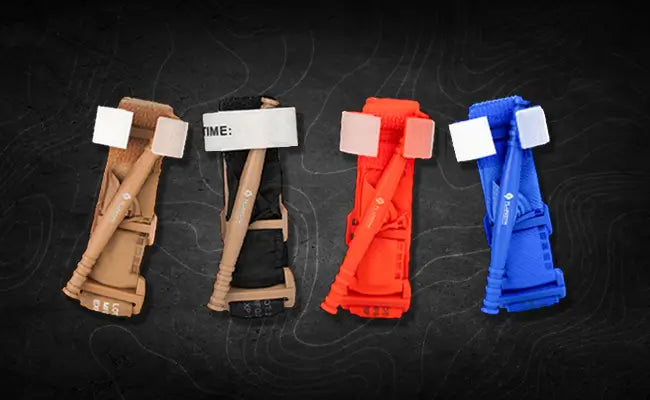
Workplaces involving sharp tools, heavy machinery, glass, metal, construction equipment, or violent-injury risks should evaluate whether a separate bleeding-control kit is appropriate. Such a kit may contain trauma dressings, hemostatic gauze, tourniquets, gloves, and clear instructions. Advanced bleeding-control equipment should not be added simply for appearance. Employers should select reputable products, place them where they can be reached quickly, inspect them regularly, and train the people expected to use them.
Remote and Mobile Work
Employees working in vehicles, remote job areas, utility locations, construction zones, or large outdoor facilities may be farther from the primary first aid cabinet and professional medical care. These workers may require additional kits, weather-resistant storage, emergency blankets, location details, and reliable communication equipment. A kit kept in a vehicle should be secured so it does not move during travel. It should also be protected from moisture and temperature extremes that could damage adhesives, liquids, gloves, medications, or sterile packaging.
How Many First Aid Kits Does a Workplace Need?
OSHA does not establish one universal number of first aid kits for every general-industry workplace. The correct number depends on whether employees can access appropriate supplies promptly from every active work area.
Employers should consider:
- Number of employees on each shift
- Size and physical layout of the workplace
- Separate floors, buildings, departments, or work zones
- Distance between employees and the nearest kit
- Location of high-risk operations
- Employees working outdoors or in vehicles
- Locked or restricted areas
- Expected emergency medical response time
One central kit may be suitable for a small office. It may be inadequate for a multi-floor warehouse, large manufacturing plant, construction project, vehicle fleet, or site with separate buildings. A practical approach is to position kits so employees do not have to cross an unsafe area or travel an unreasonable distance during an emergency.
Where Should Workplace First Aid Kits Be Located?
First aid supplies should be placed in visible, clearly marked, and readily accessible locations. Employees should know where the nearest kit is and should not need to locate a supervisor before obtaining emergency supplies.
Suitable locations may include:
- Central work areas
- Break rooms
- Reception or security stations
- Maintenance departments
- Near higher-risk operations
- On each floor of a large building
- Inside work vehicles
- At remote work zones
- In separate buildings or warehouses
Avoid placing the only kit:
- Behind stored equipment
- In an unmarked cabinet
- In a manager’s locked office
- In an area inaccessible during certain shifts
- Near contaminants that may damage supplies
- Where extreme heat, cold, or moisture can affect the contents
Emergency equipment should remain accessible without exposing employees to an additional hazard.
First Aid Kit Inspection and Maintenance
A first aid kit can appear full while containing expired, damaged, opened, or unsuitable products. A written inspection process helps employers confirm that supplies remain usable and that missing items are replaced before the next emergency.
General Workplace Inspections
ISEA recommends inspecting workplace first aid kits at least monthly and after an incident in which products are used. Cabinet surfaces should also be cleaned or disinfected regularly.
During each inspection:
- Replace used or missing supplies
- Check expiration dates
- Remove damaged or contaminated products
- Confirm that sterile packages remain sealed
- Check liquids for leaks
- Examine gloves for brittleness or damage
- Confirm that labels and instructions are readable
- Verify that hazard-specific supplies are still present
- Make sure the kit remains easy to access
- Record the inspection date and responsible person
The kit should also be reassessed after a workplace injury, staffing increase, change in machinery, introduction of a new chemical, relocation, renovation, or significant change in work procedures.
Construction Kit Inspections
Construction kits require more frequent checks. OSHA requires the employer to inspect the kit before sending it to each job and at least weekly while it is on the job. Supplies must be stored in a weatherproof container, and each type of item must be individually sealed.
A construction inspection log should identify the project, kit location, inspection date, missing items, expired products, replacements made, and the name of the person completing the check.
First Aid Training and Emergency Response
Supplies cannot replace training. Employees expected to provide first aid should understand how to assess a scene, protect themselves, contact emergency services, control bleeding, provide basic care, and avoid procedures beyond their training.
Depending on workplace risks, designated employees may need training in:
- Basic first aid
- CPR
- AED use
- Bleeding control
- Chemical exposure response
- Bloodborne-pathogen precautions
- Burn response
- Workplace emergency procedures
OSHA requires adequately trained first aid personnel when an infirmary, clinic, or hospital is not in near proximity and available to treat injured employees. Construction sites have a similar requirement when professional medical care is not reasonably accessible.
Every employee should know how to report an injury, contact emergency services, provide the site address or location, guide responders into the building, and find the nearest first aid equipment.
Can Workplace First Aid Kits Contain Medication?
Medication should not be treated as a universal workplace first aid requirement. Before placing pain relievers, antihistamines, or other over-the-counter products in a shared kit, the employer should establish a clear policy covering storage, labeling, allergies, contraindications, expiration dates, access, and responsibility for administration.
Never place loose, unidentified, damaged, or expired medication in a workplace kit. Businesses without a clear medication policy can focus the main kit on wound care, protective equipment, burn products, eye care, cold packs, dressings, and other non-medication supplies.
How to Choose a Pre-Packed Workplace First Aid Kit
A pre-packed kit can save time, but the label and piece count should not be the only deciding factors. A kit containing hundreds of small items may still lack the supplies needed for the workplace’s most serious hazards.
Before purchasing, check:
- Whether the kit identifies an ANSI/ISEA class
- Which edition of the standard the manufacturer references
- Exact product quantities
- Quality and performance of critical items
- Expiration dates and shelf life
- Availability of individual refills
- Container durability
- Ease of access and organization
- Portability or wall-mounting options
- Suitability for the workplace hazard assessment
Avoid relying on vague claims such as “OSHA approved.” The employer remains responsible for deciding whether the kit, its placement, and the overall emergency response program are appropriate for the workplace.
Strengthen Workplace Trauma Readiness With FlareSyn
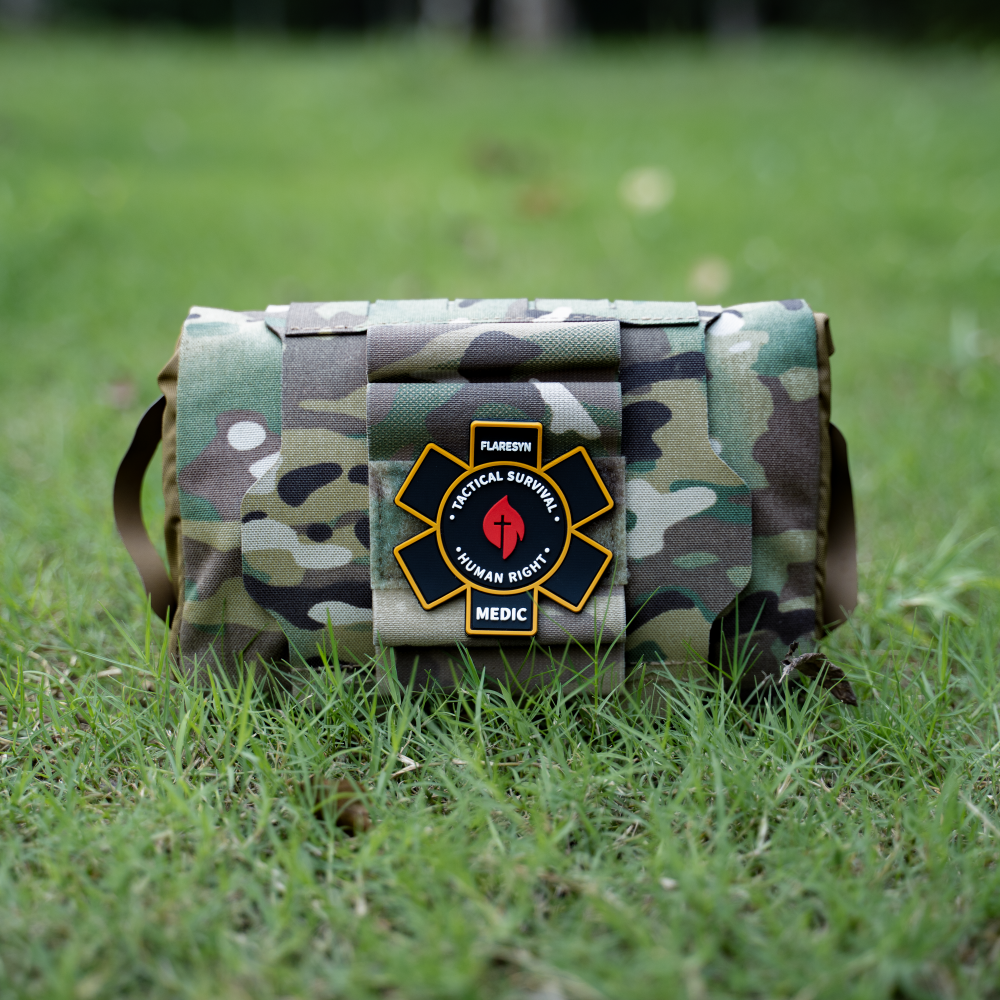
FlareSyn supports organizations that need more than a basic box of adhesive bandages. The product range includes pre-packed IFAKs, tourniquets and holders, bandages and gauze, chest seals, medical refills, tools, and trauma-focused equipment for emergency response. FlareSyn also offers B2B and wholesale support for law enforcement, military, fire and rescue services, retailers, distributors, and corporate or industrial safety buyers.
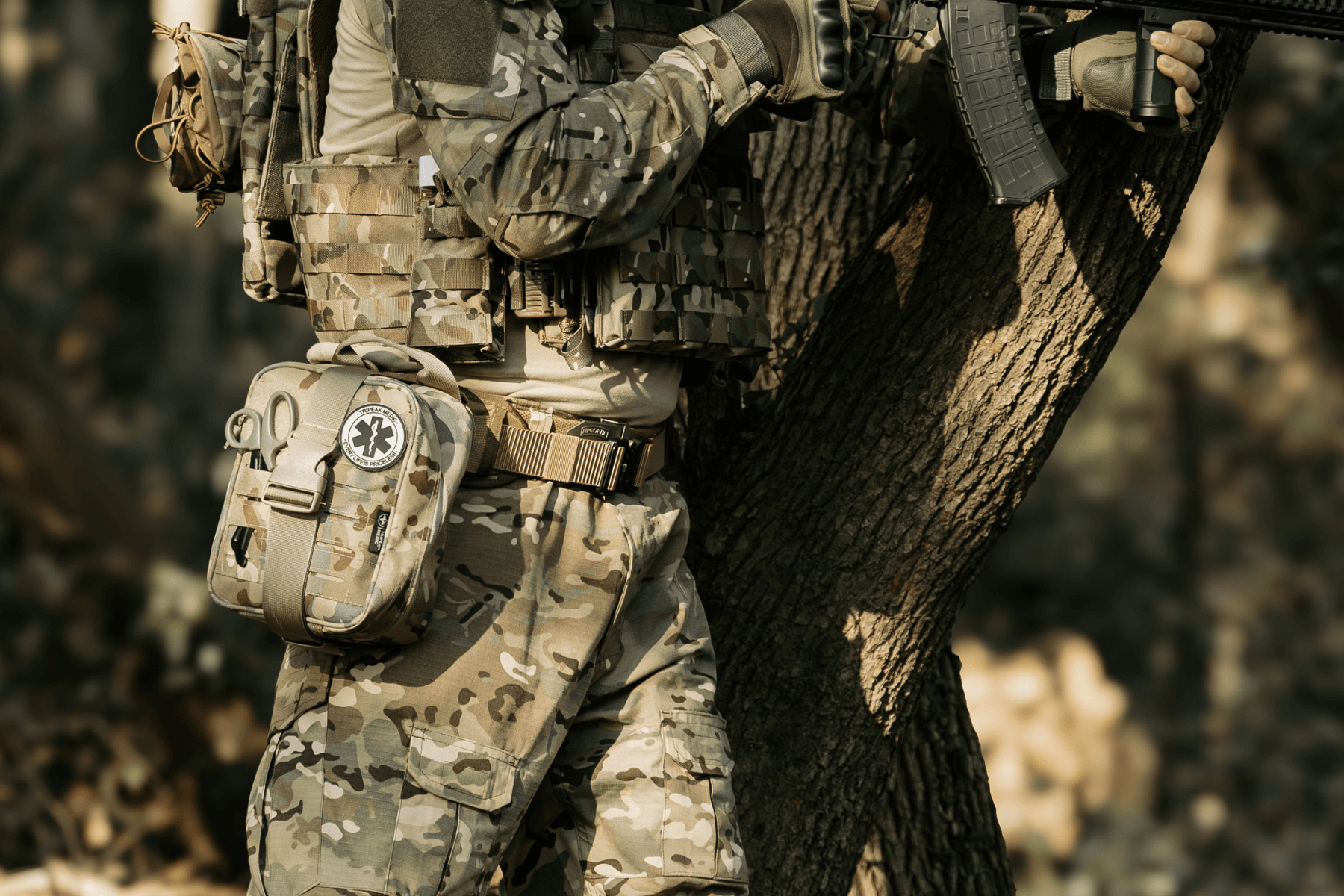
Trauma supplies or an IFAK should normally supplement, not automatically replace, a workplace Class A or Class B first aid kit. Businesses should begin with a hazard assessment, identify any serious bleeding or trauma risks, and then select appropriate equipment for trained personnel. Organizations purchasing for multiple sites, vehicles, teams, or departments can contact FlareSyn for bulk ordering and product-category support.
Workplace First Aid Compliance Checklist
A reliable first aid program requires more than a one-time purchase. Use this first aid checklist to review whether your workplace is prepared:
- Complete a workplace hazard assessment.
- Review previous injuries and near-miss incidents.
- Identify the supplies needed for likely injuries.
- Select an appropriate Class A or Class B baseline kit.
- Add supplies for burns, chemicals, severe bleeding, eye hazards, or remote work.
- Confirm that enough kits are available for every shift and work area.
- Place kits in visible and readily accessible locations.
- Assign responsibility for inspections and restocking.
- Inspect general workplace kits at least monthly and after use.
- Inspect construction kits before each job and at least weekly on the job.
- Remove expired, damaged, opened, or contaminated products.
- Keep construction kits in weatherproof containers.
- Provide suitable emergency flushing facilities for corrosive hazards.
- Ensure trained first aid personnel are available when required.
- Maintain reliable emergency communication and location information.
- Reassess the program whenever workplace conditions change.
Frequently Asked Questions
Does OSHA Require Every Workplace to Have a First Aid Kit?
OSHA requires adequate first aid supplies to be readily available when the conditions described in its medical and first aid standards apply. Employers should not assume that nearby emergency services remove every first aid responsibility. The correct arrangement depends on workplace hazards, access to medical care, trained personnel, and applicable industry requirements.
What Makes a First Aid Kit OSHA Compliant?
No single kit automatically guarantees OSHA compliance. The supplies must be appropriate for the workplace, readily accessible, properly maintained, and supported by suitable training and emergency procedures. Employers must also follow any additional requirements that apply to their industry or hazards.
Does OSHA Approve First Aid Kits?
Employers should be cautious with the phrase “OSHA approved.” OSHA establishes workplace requirements rather than providing a general approval program for ordinary first aid kit products. Look for clear information about ANSI/ISEA classification, included supplies, product quality, and suitability for the workplace hazard assessment.
Is a Class A Kit Enough for an Office?
A Class A kit may provide a suitable starting point for many lower-hazard offices. The employer should still consider employee numbers, building layout, previous incidents, accessibility, and the time required for professional medical assistance to arrive.
When Is a Class B Kit More Appropriate?
A Class B kit may be more suitable for warehouses, manufacturing facilities, construction operations, workshops, utilities, industrial sites, and other workplaces with more varied or serious injury risks. The final decision should be based on a hazard assessment.
How Often Should a Workplace First Aid Kit Be Checked?
ISEA recommends inspecting workplace first aid kits at least monthly and after products are used. Construction employers must check kits before sending them to a job and at least weekly while they are on the job.
How Many First Aid Kits Are Required?
There is no universal number for every workplace. Employers should provide enough kits to ensure that appropriate supplies are readily accessible from all active work areas, floors, buildings, vehicles, and shifts.
Is an Eyewash Bottle Enough for a Workplace?
An eyewash bottle may be useful for minor particles or irritation, but it may not satisfy OSHA requirements where employees could be exposed to injurious corrosive materials. Such workplaces require suitable quick-drenching or flushing facilities within the work area for immediate emergency use.
Should a Workplace Have a Bleeding-Control Kit?
A separate bleeding-control kit may be appropriate where severe bleeding could reasonably occur, including workplaces involving machinery, sharp metal, glass, construction equipment, remote work, or security risks. Employers should pair advanced equipment with suitable training and inspection procedures.
Can an IFAK Replace a Workplace First Aid Kit?
An Individual First Aid Kit is normally designed for rapid trauma response for one person or responder. It may contain critical bleeding or airway supplies but may not include the full range or quantities expected in a workplace Class A or Class B kit. An IFAK is generally better used as a supplement based on the workplace hazard assessment.
Final Takeaway
Workplace first aid kit requirements are based on actual risk, not advertising claims or total piece count. Start with OSHA’s requirement for adequate and readily available supplies, use ANSI/ISEA Class A or Class B guidance to establish a baseline, and add products for the injuries employees could realistically experience.
Place kits where workers can reach them quickly, inspect them on a written schedule, replace used or expired supplies, and ensure trained responders are available when required. A well-planned first aid program helps employees act quickly while professional medical care is being contacted or is on the way.