
Vehicle Trauma Kit Guide for Car Emergency Readiness
Vehicle Trauma Readiness


Why Your Car First Aid Kit Is Not Enough
The traditional car kit is built around comfort care. That is useful, but it is not trauma readiness. A crash does not usually create clean little cuts that wait patiently while you search for a bandage. It creates crushed panels, jagged glass, seatbelt bruising, scalp wounds, open fractures, and deep limb lacerations. A Vehicle Trauma Kit must be built around the injuries that kill before the ambulance arrives: massive bleeding, compromised breathing, shock, and exposure.
The Roadside Time Gap
Many drivers mentally outsource emergency care to 911. Calling emergency services is essential, but the call is not the treatment. Dispatch takes time. Location confirmation takes time. Traffic, weather, road closures, rural distance, locked gates, multi-vehicle pileups, or a crash scene on the wrong side of a divided highway can all stretch the response window. During severe bleeding, the body is operating on a much shorter clock.
This is why an Emergency trauma kit for vehicles must support action before EMS arrives. Direct pressure, wound packing, and tourniquet use are not replacements for professional care; they are the bridge to it. If a major artery is compromised, the first responder on scene may need to control bleeding immediately while another person calls 911, warns traffic, and guides emergency crews to the exact location.
Crash Injuries Are High-Energy Trauma
Vehicle trauma is not just "a bad cut." It is kinetic energy transferred into human tissue. A side-impact crash can drive glass into the face, neck, and arms. A rollover can create multiple lacerations while the patient is upside down or partially trapped. A motorcycle collision can produce road rash, open fractures, and severe bleeding. A seatbelt can save a life while still leaving bruising, chest pain, or abdominal injury that requires careful monitoring.
For this reason, a true Automotive Medical Kit should combine trauma supplies with scene-management thinking. You need gloves because blood exposure is likely. You need shears because clothing and seatbelts hide injuries. You need a tourniquet because limb bleeding can be catastrophic. You need gauze and pressure dressings because not every severe wound can be solved with a tourniquet. You need thermal protection because shock patients lose heat rapidly on pavement, snow, dirt, or wet ground.
What Belongs in a Vehicle Trauma Kit
A vehicle kit should be built in layers. The first layer is rapid bleeding control inside the cabin. The second layer is deeper trauma support for the trunk, cargo area, or seatback. The third layer is comfort and utility care. Most people reverse this order, filling the easiest-to-reach pouch with minor items and burying the trauma supplies. FlareSyn™ recommends the opposite: place the life-saving tools where your hand naturally goes first.
Massive Bleeding Control for the Cabin
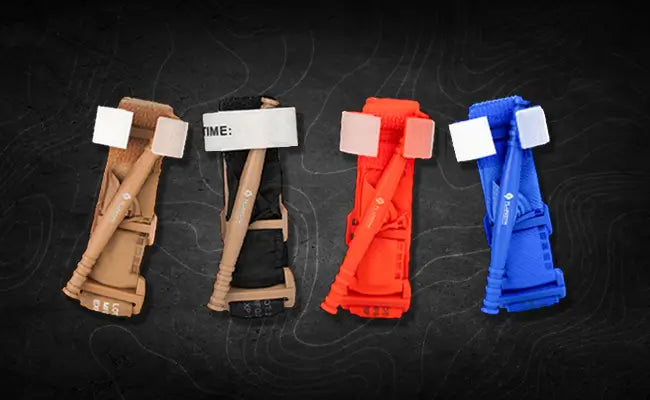
- At minimum, the cabin-accessible section of a Vehicle Trauma Kit should include a windlass tourniquet, compressed gauze or hemostatic gauze, gloves, a pressure dressing, trauma shears, and a marker for tourniquet time. These items support the first actions a civilian responder can perform: expose the injury, apply direct pressure, pack a wound if needed, apply a tourniquet for severe limb bleeding, and maintain compression until help arrives.
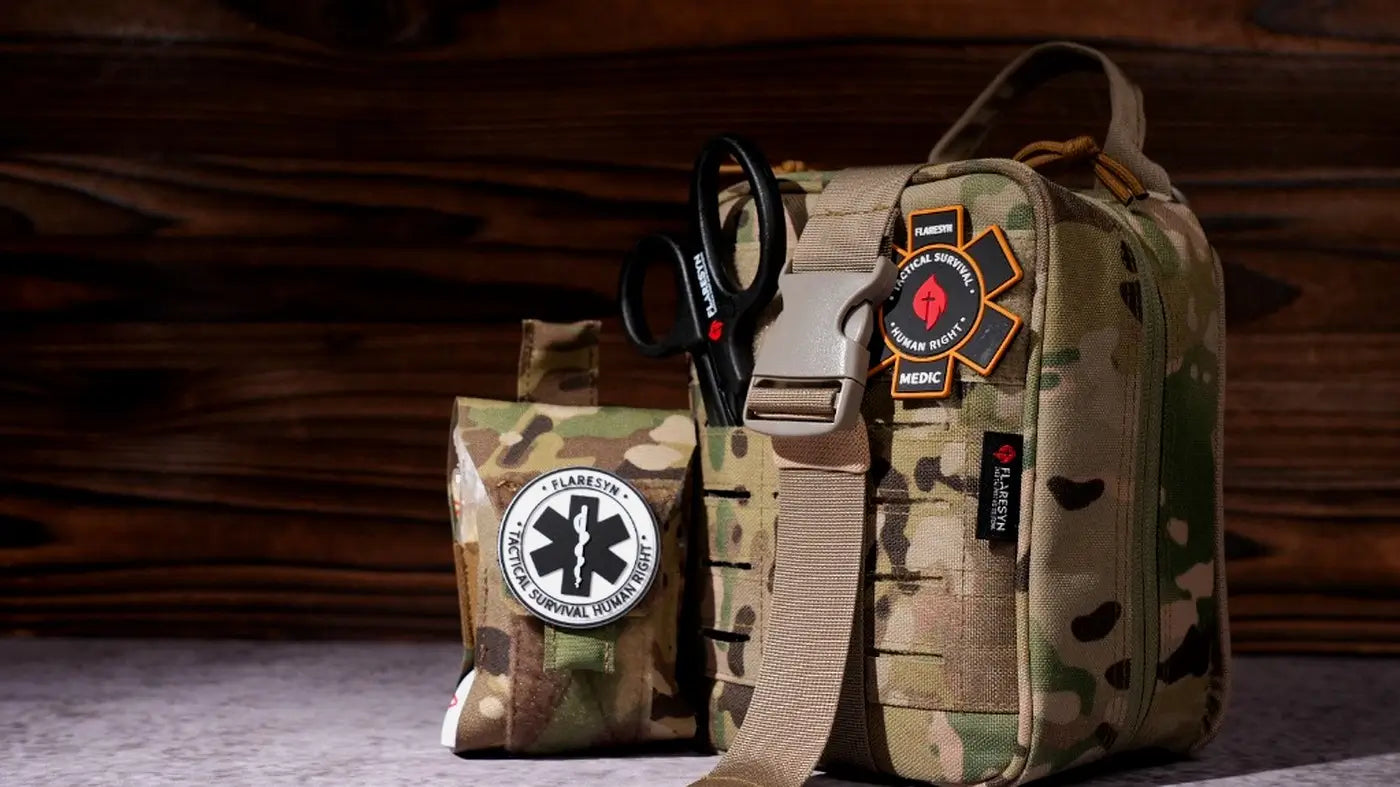
A larger Emergency trauma kit for vehicles may also include vented chest seals, additional gauze, extra gloves, emergency blankets, eye protection, a small flashlight or headlamp, and simple documentation cards. The goal is not to turn every driver into a paramedic. The goal is to make sure a trained civilian can control the immediate preventable threats while waiting for professional responders.
Hypothermia, Visibility, and Scene Control
- Vehicle trauma often happens in hostile environments: cold shoulders, wet ditches, dark highways, summer asphalt, remote gravel roads, or rain-soaked parking lots. Once a patient is bleeding or in shock, heat loss becomes a medical problem. Emergency blankets, insulation from the ground, and fast movement out of wind or rain can support survival while EMS is en route.
Visibility also matters. If you are treating someone beside a road, the scene itself can become the next casualty generator. Hazard lights, reflective triangles, high-visibility gear, and a bystander assigned to traffic awareness can protect everyone. These are not glamorous items, but they are part of a mature Automotive Medical Kit strategy. You cannot provide care if the scene becomes unsafe for the responder.
| Vehicle Kit Layer | Recommended Contents | Purpose |
| Cabin Access | Tourniquet, gloves, gauze, pressure dressing | Immediate control of severe bleeding before exiting or opening cargo areas. |
| Headrest or Seatback | Headrest IFAK, shears, chest seals, emergency blanket | Fast access for front and rear passengers during a crash scene. |
| Cargo Backup | Extra gauze, extra tourniquets, larger dressings, utility items | Depth for multiple patients, longer waits, or restocking after first use. |
| Minor Care | Bandages, wipes, burn gel, comfort supplies | Useful for everyday injuries, but secondary to life-threatening trauma gear. |
Why Headrest IFAK Placement Matters
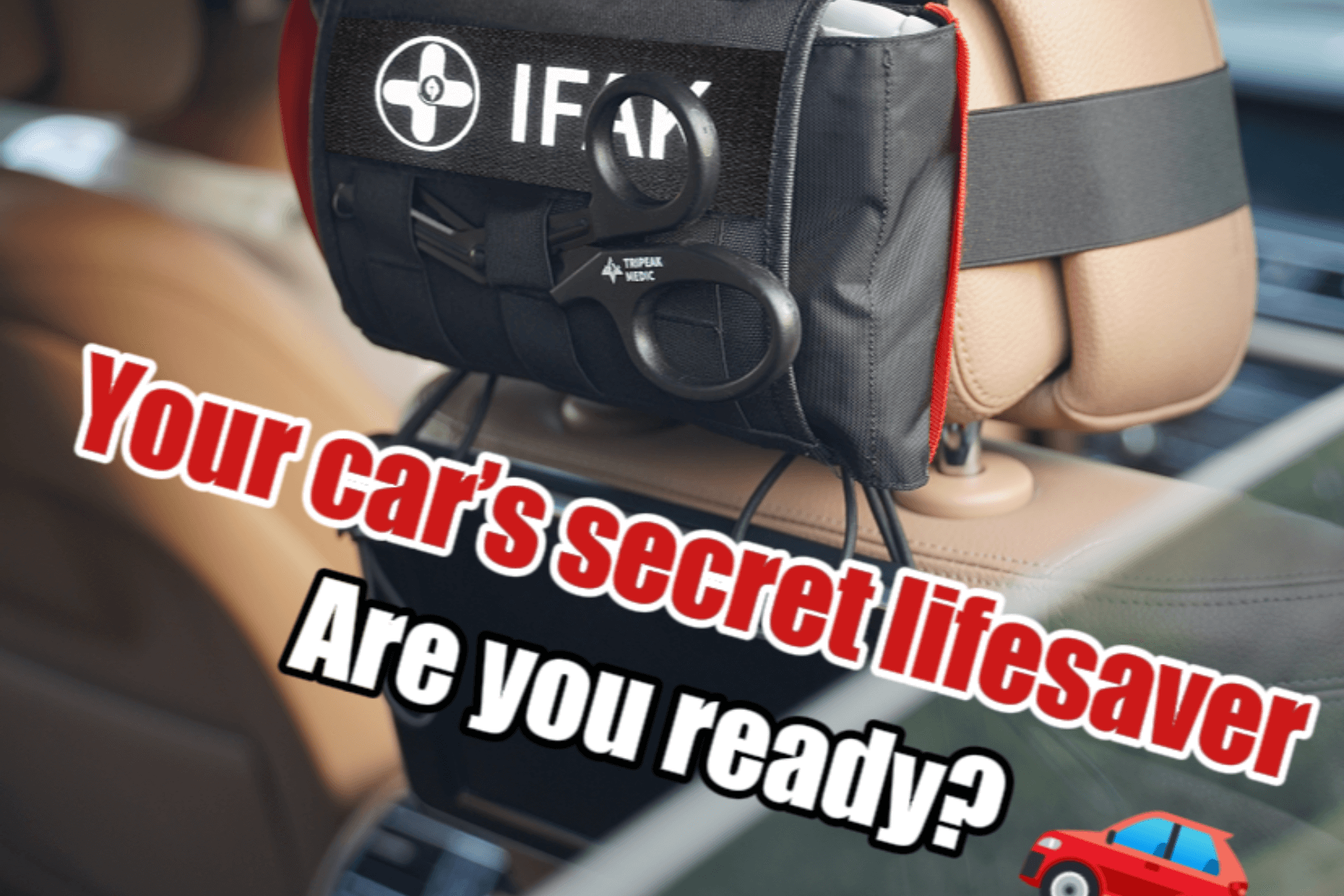
- A Headrest IFAK solves one of the biggest problems in vehicle preparedness: access after impact. After a collision, the trunk may be crushed, jammed, blocked by traffic, or unsafe to reach. A glove box may be inaccessible if the dashboard is damaged. A backpack may be thrown across the cabin. A headrest-mounted or seatback-mounted kit keeps trauma supplies visible, predictable, and reachable from inside or immediately outside the vehicle.
Glove Box, Trunk, Seatback, or Headrest?
Each storage location has strengths and weaknesses. The glove box is convenient but small and sometimes blocked by passenger-side damage. The trunk has space but often fails the first-minute access test. A center console may be excellent for a tourniquet and gloves, but it cannot hold a deeper kit. The headrest or seatback position offers a strong compromise: visible, stable, accessible to passengers, and fast to detach when you need to move toward another vehicle or casualty.
The ideal setup combines locations. Keep one compact trauma item within arm's reach of the driver. Mount a Headrest IFAK or seatback kit for shared access. Store additional refill supplies in the cargo area. This layered approach keeps the first tool close while still giving the vehicle enough depth for multiple injuries or longer delays.
Vehicle Drills and Maintenance
Do not wait for a crash to discover that nobody can find the kit. Run simple vehicle drills. Sit in the driver's seat with your seatbelt on and locate your tourniquet with your eyes closed. Have a passenger detach the headrest kit and hand you gloves and gauze. Practice opening the pouch in low light. Time how long it takes to retrieve the kit from the trunk compared with the headrest. The results usually make the argument for better placement immediately obvious.
Maintenance is even more important in vehicles than in home kits. Heat, cold, UV exposure, vibration, dust, moisture, and compression can degrade medical supplies. Inspect your Vehicle Trauma Kit at least twice a year. Check sterile packaging, adhesive chest seals, hemostatic gauze expiration dates, elastic wraps, glove condition, and any packaging that may have been crushed. A kit that lives in a vehicle is working even when it is not being used.
Family education matters too. Every regular passenger should know where the kit is located. Older children can learn to point to the medical pouch, retrieve gloves, or tell emergency dispatch the vehicle location. You do not need to turn every family member into a medic, but you do need to remove confusion. In a crash, a clearly staged Emergency trauma kit for vehicles can become the one fixed point in a chaotic scene.
Conclusion
A basic Car First Aid Kit is useful, but it is not enough for the realities of modern driving. Roadside trauma is fast, violent, and often isolated from immediate professional care. Severe bleeding does not wait for a perfect response window. The first person with access to the patient may need to act with the tools already inside the vehicle.
That is why a dedicated Vehicle Trauma Kit belongs in every serious preparedness plan. It turns the car from a passive transportation tool into an active survival platform. With a reachable tourniquet, gauze, gloves, pressure dressing, shears, chest seals, and thermal protection, you can begin controlling preventable threats while EMS is still on the way.
Audit your vehicle today. Open the glove box, trunk, console, and seatback pockets. Ask whether your trauma gear is reachable from the driver's seat, visible to passengers, and capable of handling more than a paper cut. Upgrade from passive comfort care to mission-ready roadside response with FlareSyn™ vehicle trauma solutions. When the road turns chaotic, your kit should be close, complete, and ready to work.
Q: What is the difference between a Vehicle Trauma Kit and a Car First Aid Kit?
A: A Car First Aid Kit usually handles minor cuts, scrapes, and comfort care. A Vehicle Trauma Kit is designed for severe roadside injuries such as major bleeding, crash-related lacerations, penetrating trauma, and shock. It prioritizes tourniquets, gauze, pressure dressings, gloves, shears, chest seals, and thermal protection.
Q: Where should I store a Headrest IFAK?
A: A Headrest IFAK should be mounted where it is visible, secure, and easy to detach. Front passenger or rear seat headrest positions are common because they allow access from inside the cabin or from outside the vehicle after a crash. Pair it with a smaller driver-accessible tourniquet or compact kit.
Q: Can vehicle heat damage an Automotive Medical Kit?
A: Yes. Heat, cold, sunlight, vibration, and moisture can degrade sterile packaging, adhesives, gloves, and elastic materials over time. Inspect your Automotive Medical Kit at least twice a year, especially before summer road trips or winter travel, and replace expired or compromised components immediately.
Q: Should every vehicle have an emergency trauma kit?
A: Yes, especially vehicles used for commuting, family travel, outdoor recreation, work crews, road trips, firearms training, or rural driving. An Emergency trauma kit for vehicles gives drivers and passengers immediate tools for severe bleeding and shock while professional responders are still en route.


Elias.H.Hwang
Elias H. Hwang is a tactical medicine expert and lead contributor at FlareSyn. He specializes in emergency trauma protocols and preparedness education, helping civilians and professionals alike master the tools and skills needed to save lives in critical moments.

Leave a comment
This site is protected by hCaptcha and the hCaptcha Privacy Policy and Terms of Service apply.