From the Streets of Mogadishu to Your EDC: How TCCC Revolutionized Civilian Trauma Preparedness
The 1996 Paradigm Shift: The Birth and Anatomy of TCCC
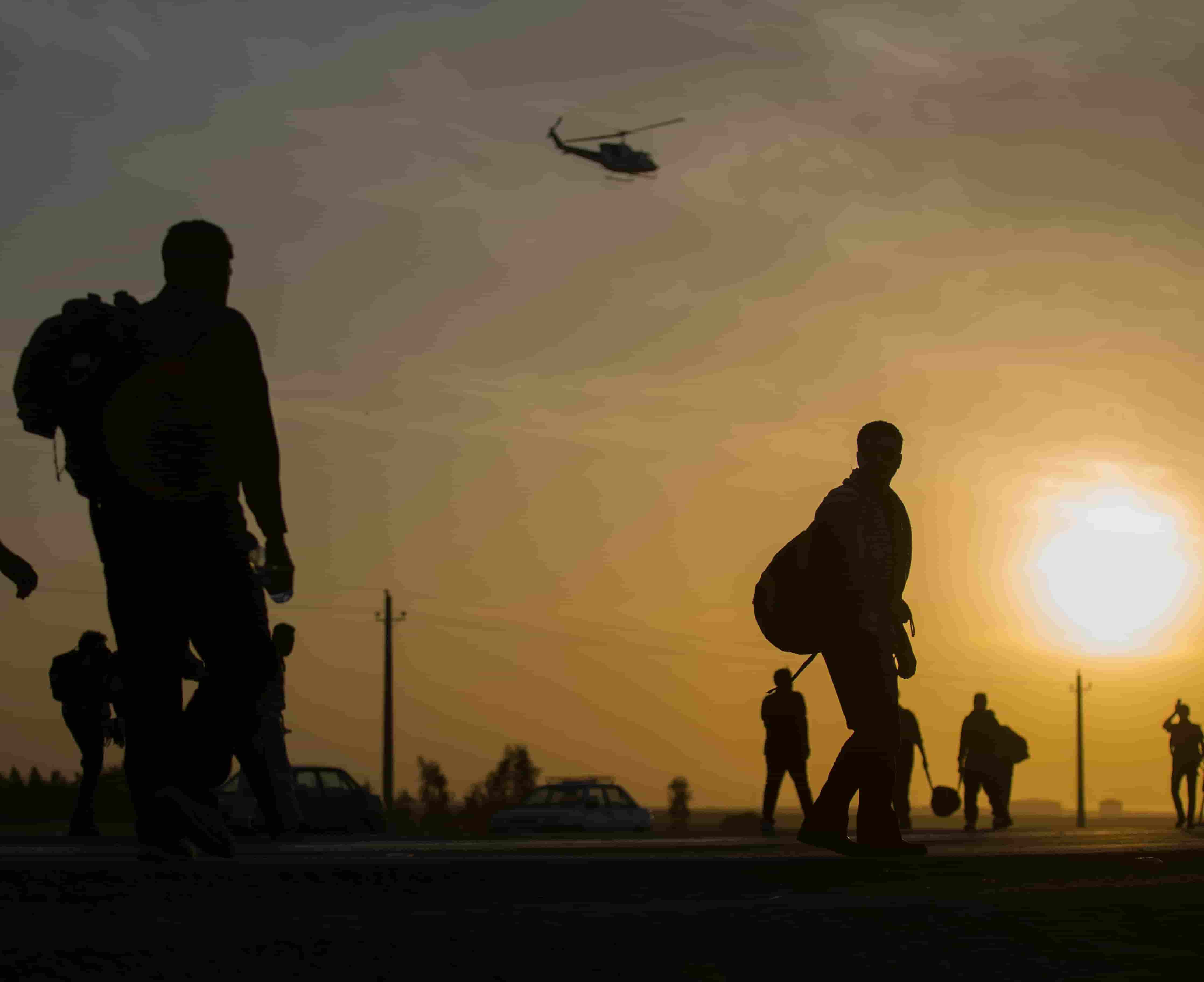
On the afternoon of October 3, 1993, the dust-choked skies of Mogadishu, Somalia, erupted into a chaotic symphony of gunfire, screaming metal, and RPG explosions. What was supposed to be a routine, one-hour capture mission under Operation Gothic Serpent rapidly spiraled into an downing of two MH-60 Black Hawk helicopters. Stranded deep within a hostile urban labyrinth, an elite force of U.S. Army Rangers and Delta Force operators found themselves fighting a desperate, 18-hour battle for survival on the blood-slicked streets.
Yet, as the smoke cleared, a hidden tragedy emerged from the debris. It wasn't just the sheer volume of militia fire that took American lives; it was a systemic failure of conventional military medicine. At the time, field medics were shackled by rigid, peacetime hospital doctrines that completely ignored the tactical reality of a hot combat zone. Men were bleeding to death from simple extremity wounds because outdated protocols actively discouraged the use of tourniquets, while medics attempting advanced procedures under heavy fire became casualties themselves.
The blood spilled on the streets of Mogadishu became a brutal wake-up call for the Special Operations medical community. It led directly to the birth of Tactical Combat Casualty Care (TCCC) in 1996—a revolutionary paradigm shift that threw out civilian hospital dogmas and rewrote the rules of survival. Today, the lessons learned from that fateful day have transcended the battlefield, fundamentally changing how both elite soldiers and modern, prepared civilians survive catastrophic trauma in an unpredictable world.


The Lethal Dogma: Why Pre-1990s Military Medicine Failed in Combat
The Ghost of the Vietnam War
For more than two decades following the conclusion of the Vietnam War, military medicine remained frozen in a state of dangerous stagnation. Despite the massive geopolitical shifts and tactical evolutions of the late 20th century, the medical manuals issued to battlefield corpsmen and medics looked almost identical to civilian first aid textbooks. The military relied heavily on standardized Red Cross guidelines—protocols engineered for safe, sterile, and controlled domestic environments. These doctrines operated on a deeply flawed assumption: that a patient on a battlefield could be treated using the exact same step-by-step sequence as a victim found on a quiet suburban sidewalk. This fundamental disconnect meant that instead of adapting to the chaotic fluid dynamics of active fire, military medical doctrine prioritized bureaucratic, clinical perfection over tactical reality.
The Tourniquet Myth
Nowhere was this institutional stagnation more lethal than in the widespread, dogmatic condemnation of the tourniquet. For generations, field medical manuals hammered home a terrifying myth: that applying a tourniquet was a desperate, "last resort" measure that would inevitably result in tissue necrosis and mandatory limb amputation. Medics were taught to rely almost exclusively on direct pressure and simple gauze dressings, even when dealing with severed major arteries. This institutional tourniquet phobia created a catastrophic reality where soldiers routinely bled to death from simple extremity exsanguination—injuries to arms and legs that were entirely survivable. The fear of losing a limb blinded the medical establishment to the fact that their caution was costing men their lives, making extremity hemorrhage the leading cause of preventable death on the battlefield.
The Chaos of Operation Gothic Serpent
When the elite forces of Operation Gothic Serpent dropped into the urban maze of Mogadishu, this rigid, hospital-centric training collided head-on with the brutal chaos of modern asymmetric warfare. Under a relentless hail of RPG fragments and AK-47 fire, medics desperately tried to enforce peacetime protocols. They were trained to execute time-consuming procedures such as full-body immobilization for potential cervical spine injuries or prolonged cardiopulmonary resuscitation (CPR) right where the casualty fell. In the middle of an intense firefight, attempting to perform chest compressions on a soldier with non-survivable blast trauma was worse than useless; it anchored the medic to a static, exposed position. Medics who blindly adhered to these civilian-style hospital protocols were unable to defend themselves, resulting in a devastating compounding of casualties as rescuers were shot trying to apply peacetime medicine to an active kill zone.
The 3 Fatal Flaws of Pre-1996 Combat Medicine
Tourniquet Phobia: The institutional misconception that windlass systems were a guaranteed path to amputation, which directly caused hundreds of preventable deaths from limb bleeding.
Blind Adherence to Hospital Protocols: Forcing field medics to prioritize slow, methodical clinical procedures—like CPR and spinal immobilization—in environments that demanded immediate tactical movement.
Neglect of Tactical Threat Levels: Treating medical care as an isolated act, completely ignoring whether the provider and patient were under active fire or safely behind cover.
The 1996 Paradigm Shift: The Birth and Anatomy of TCCC
Captain Frank K. Butler’s Revolution
The tactical and medical disaster of Mogadishu demanded an immediate, uncompromising response. It arrived in 1996 through a groundbreaking paper co-authored by Captain Frank K. Butler, a Navy SEAL officer and ophthalmologist, alongside fellow military medical visionaries. Butler recognized that the medical establishment was fundamentally looking at battlefield survival through the wrong lens. By challenging decades of stubborn military status quo, his work led directly to the founding of the Committee on Tactical Combat Casualty Care (CoTCCC). This body was tasked with a singular, radical mission: to continuously rewrite pre-hospital trauma guidelines based on real-world combat data rather than civilian hospital theory. For the first time in history, elite special operations experience and raw data drove the evolution of lifesaving medicine.
The Core Philosophy
At the absolute center of this medical mutiny was a simple, elegant realization: medicine must be entirely subordinate to tactics. Butler famously established the core axiom that defines modern trauma management: "The best medical care in the world can be worse than useless if it occurs at the wrong time." In a civilian setting, the patient is the only priority. On the battlefield or during an active emergency, the tactical situation dictates what is medically possible. If you are being shot at, trying to pack a wound or apply a complicated splint will only get you and your patient killed. TCCC shifted the metric of success from simply treating injuries to achieving a balance of three distinct goals: treating the casualty, preventing additional casualties, and completing the mission.
Breaking Down the Three Phases of Care
To operationalize this philosophy, TCCC divided emergency response into three strict, chronological phases based on the threat level of the environment:
Care Under Fire (CUF): This is the phase where you and the casualty are under active, effective threat. The medical protocol here is minimalist and brutal: the best medicine is fire superiority. The only physical intervention permitted is the rapid deployment of a CoTCCC-approved tourniquet to stop catastrophic extremity bleeding, preferably applied by the casualties themselves via self-aid. All other care is delayed until the threat is neutralized.
Tactical Field Care (TFC): Once active fire has ceased or you have successfully transitioned behind hard cover, the protocol shifts to Tactical Field Care. Here, providers have the time and relative safety to conduct a systematic, head-to-toe assessment using the rigorous M.A.R.C.H. protocol (Massive Hemorrhage, Airway, Respiration, Circulation, Hypothermia/Head). This is where wound packing, chest seals, and airway management occur.
Tactical Evacuation Care (TACEVAC): The final phase occurs during transit as the casualty is moved via ground vehicle, helicopter, or boat toward a higher tier of medical care. Because the provider is no longer exposed to direct threats and has access to more robust gear, this phase allows for advanced life support, including electronic monitoring, supplemental oxygen, and intravenous fluid resuscitation.
| Comparison Feature | Traditional First Aid / Red Cross | TCCC (Tactical Combat Casualty Care) |
| Primary Environment | Safe, controlled civilian settings (offices, homes). | Hostile, dynamic, or unpredictable high-threat zones. |
| Operational Priority | Immediate, sequential patient care. | Tactical security first; medicine is subordinate to threat level. |
| Tourniquet Policy | Deprecated or viewed as a dangerous "last resort." | Primary, immediate intervention for major limb bleeding. |
| Treatment Under Threat | Wait for professional first responders to clear the scene. | Deploy self-aid/buddy-aid immediately to stabilize and move. |
| Systematic Protocol | Airway, Breathing, Circulation (A-B-C). | Massive Hemorrhage, Airway, Respiration, Circulation, Hypothermia (M.A.R.C.H.). |
| CPR Protocol | Immediate execution for any pulseless patient. | Strongly discouraged under threat; prioritized only in non-trauma settings. |
The Anatomy of a Modern IFAK: How Gear Evolved to Match the Doctrine From the Medic Satchel to the Individual First Aid Kit
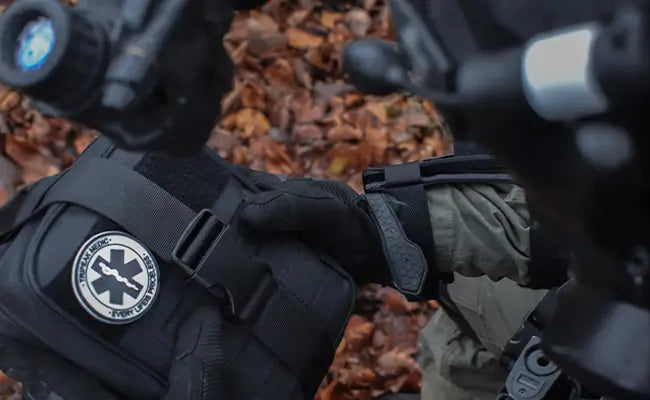
As the revolutionary principles of TCCC took hold, it became immediately obvious that existing medical hardware was completely inadequate. Historically, medical gear was centralized, packed into a heavy canvas satchel carried exclusively by a single designated platoon medic. If that medic was pinned down, incapacitated, or separated from the squad, an entire unit was left without lifesaving interventions. TCCC completely dismantled this single-point-of-failure model. The doctrine mandated that every individual soldier must carry their own specialized, standardized, and rapid-deploy Individual First Aid Kit (IFAK). Crucially, the IFAK was designed not for treating others, but for self-aid or for a buddy to use on the owner's body, ensuring that life-saving tools were always instantly accessible at the point of injury.
The Evolution of Key Lifesaving Tools
This shift in deployment philosophy ignited an era of rapid technological innovation, fundamentally transforming the raw components found inside a trauma kit:
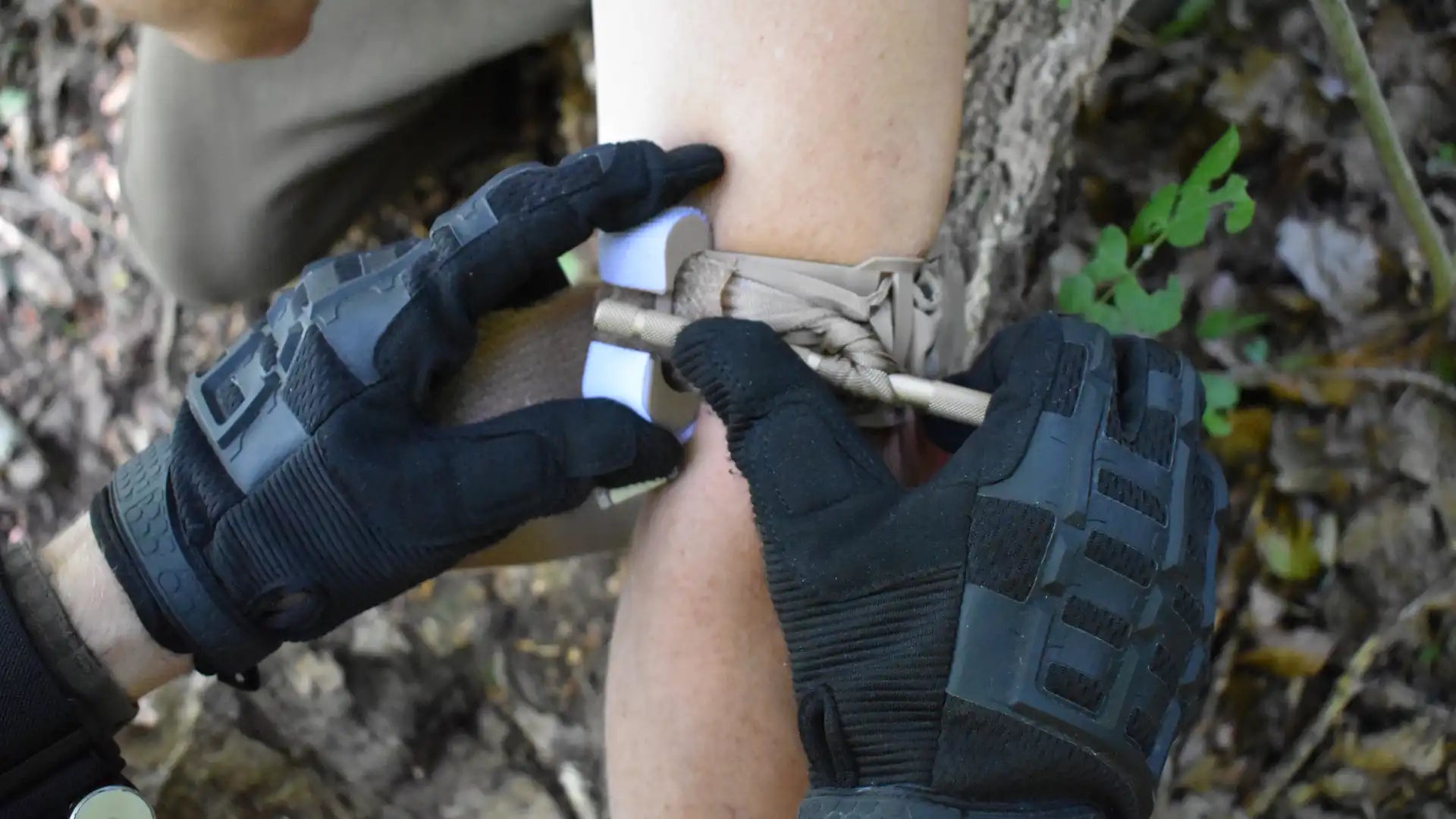
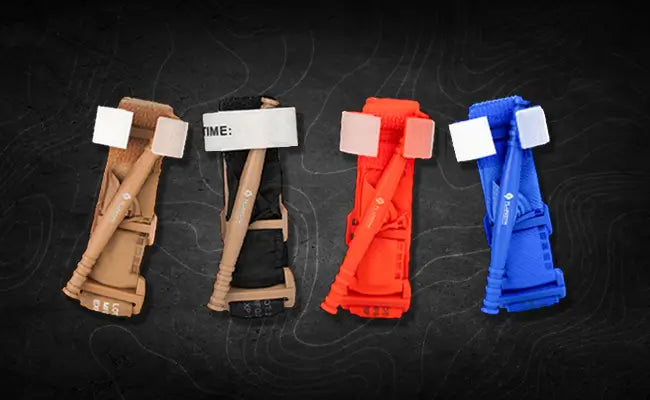
CoTCCC-Approved Tourniquets: The primitive, narrow canvas straps and heavy metal buckles of the past—which frequently slipped and caused severe nerve damage—were replaced by highly engineered windlass systems like the Combat Application Tourniquet (CAT) and the SOF Tourniquet (SOFTT-W). These modern systems allow a user to reliably apply occlusion pressure to a major arterial bleed with one hand in under 30 seconds.
Hemostatic Agents: Early chemical blood-clotting agents utilized a mineral called zeolite in loose powder form. When poured into an open wound, it caused a violent, exothermic reaction that literally cooked human tissue, causing severe secondary chemical burns. Modern engineering solved this by infusing safe, non-heating biopolymers like Chitosan (derived from shellfish) or inert minerals like Kaolin directly into sterile surgical gauze, allowing for safe, rapid clotting via direct wound packing.
Chest Seals: To treat open blast or puncture wounds to the torso, medics previously had to improvise by taping plastic MRE wrappers or Vaseline gauze on three sides. These improvised seals often failed under sweat and blood, leading to a fatal buildup of air pressure in the chest cavity known as tension pneumothorax. Today, medical-grade, highly adhesive hydrogel chest seals with integrated one-way vents allow air to escape the thoracic cavity while preventing outside air from entering, effortlessly stabilizing the patient's respiration.
The Core TCCC Components That Defined the Modern IFAK Layout
To achieve true, combat-grade emergency preparedness, a modern trauma kit must move past basic bandages and include these essential, rapid-deploy components:
CoTCCC-Approved Windlass Tourniquet: For immediate control of life-threatening extremity hemorrhage during Care Under Fire.
Chitosan or Kaolin Hemostatic Gauze: For deep wound packing in junctional areas (groin, armpits) where tourniquets cannot be applied.
Vented Hydrogel Chest Seals: A dual-pack system to seal both entry and exit torso wounds, preventing a fatal tension pneumothorax.
Compressed Emergency Trauma Dressing (ETD): A heavy-duty, elasticized pressure bandage to secure wound packing and maintain continuous pressure.
Hypothermia Prevention Blanket: A compact, heat-reflective foil barrier to prevent the body temperature drops that disrupt blood clotting.
The Civilian Migration: Why You Need Combat-Grade Readiness in 2026 Trauma is Trauma, Regardless of the Battlefield
The mechanics of catastrophic trauma do not care whether you are standing on a contested battlefield in a global conflict zone or driving on a quiet suburban highway. When human tissue is subjected to extreme kinetic force, the resulting physiological crisis is identical. In civilian life, the explosive blast of an RPG is mirrored by the devastating impact of a high-speed car accident. The shrapnel wound from an explosive device requires the exact same immediate intervention as an industrial machinery malfunction or a chainsaw slippage during weekend yard maintenance. Even a severe compound fracture suffered during a remote backcountry hike or a deep laceration from an active shooter incident presents the exact same medical challenge: rapid, life-threatening blood loss. Because the injuries are the same, the doctrine used to treat them must be just as uncompromising.
The Illusion of "911 is Only 5 Minutes Away"
The most dangerous vulnerability in modern civilian safety is the comforting illusion that professional help is always just a phone call away. Many people believe that because they live in a developed urban area, emergency medical services (EMS) will arrive in time to save a life. However, the mathematics of severe arterial bleeding are brutally unforgiving. If a major artery—such as the femoral artery in the leg or the brachial artery in the arm—is severed, a human being can lose enough blood to lose consciousness in less than 60 seconds. Full, fatal exsanguination can occur in as little as 3 to 5 minutes. In 2026, even under ideal conditions, urban traffic congestion, emergency dispatch routing, and the time it takes for first responders to physically locate a patient mean that average EMS response times rarely drop below 7 to 10 minutes. When someone is bleeding out, the ambulance isn't too late; it's simply operating on a different timeline. In that critical window, whoever is standing next to the casualty—or the casualties themselves—is the true first responder.
Redefining Civilian Preparedness (The Low-Profile EDC)
Embracing combat-grade readiness in 2026 has nothing to do with adopting an aggressive, militaristic persona or looking like a "tactical LARPer." Instead, modern emergency preparedness has undergone an aesthetic and philosophical evolution toward a smart, responsible, and low-profile lifestyle choice. Today's prepared citizens are professionals, parents, commuters, and outdoor enthusiasts who prioritize safety without drawing unnecessary attention to themselves. Carrying a streamlined, TCCC-aligned trauma kit—whether it is an industrial minimalist vehicle IFAK mounted discreetly to a headrest or an ultra-compact everyday carry (EDC) pouch slid into a commuter laptop bag—is a logical extension of personal responsibility. It is an acknowledgment that while we cannot always predict a crisis, we can absolutely control our level of readiness.
From the blood-slicked urban maze of Mogadishu in 1993 to the unpredictable challenges of modern daily life, the lesson of tactical medicine remains unchanged: your gear must match the reality of the threat. It is time to audit your personal readiness. Open up your current emergency kit. If it consists entirely of a flimsy plastic box filled with grocery-store adhesive strips, antiseptic wipes, and safety pins, you are prepared for a minor scratch—not a true life-threatening emergency. Do not wait for a critical highway collision or a severe accident to realize your equipment is insufficient. Elevate your preparedness today by upgrading to a genuine, life-saving trauma setup. Explore FlareSyn’s range of professional, TCCC-aligned IFAKs and rapid-deploy EDC pouches, and ensure that when seconds dictate the line between life and death, you have the tools to survive.
Q: What is the difference between TCCC and standard Red Cross First Aid?
A: Standard Red Cross First Aid is designed for safe, controlled environments (like offices or homes), prioritizing clinical steps like CPR and spinal immobilization. TCCC (Tactical Combat Casualty Care) is engineered for high-threat, unpredictable environments, prioritizing tactical security first and utilizing specialized tools like windlass tourniquets and hemostatic gauze to stop life-threatening bleeding before performing any other treatments.
Q: Why are grocery-store first aid kits insufficient for real trauma?
A: Most consumer first aid kits are packed with adhesive bandages, antiseptic wipes, and gauze pads designed for minor cuts and scrapes. They completely lack the medical-grade equipment—such as CoTCCC-approved tourniquets, vented chest seals, and hemostatic agents—required to control severe arterial hemorrhaging or traumatic torso punctures.
Q: Can civilians legally carry and use TCCC-aligned trauma gear?
A: Yes, absolutely. Carrying trauma gear like an Individual First Aid Kit (IFAK) or an EDC trauma pouch is fully legal and highly encouraged for civilians. However, possessing the gear is only half the battle; acquiring proper muscle-memory training through courses like "Stop the Bleed" is essential to using these lifesaving tools effectively under high stress.
Q: How often should I audit or replace components in my vehicle IFAK?
A: While hard tactical gear like windlass tourniquets do not have an expiration date, chemical-based medical consumables do. You should conduct a thorough audit of your trauma kit at least once a year. Pay close attention to the expiration dates of hemostatic gauzes and hydrogel chest seals, as their sterile packaging and active bonding agents typically degrade after 3 to 5 years, especially when exposed to fluctuating vehicle temperatures.


Elias.H.Hwang
Elias H. Hwang is a tactical medicine expert and lead contributor at FlareSyn. He specializes in emergency trauma protocols and preparedness education, helping civilians and professionals alike master the tools and skills needed to save lives in critical moments.