Chitosan vs. Traditional Gauze: Which Is Better for Severe Bleeding?
Reviewed and Updated: July 18, 2026
A deep cut, workplace injury, vehicle accident, hunting incident, or penetrating wound can cause dangerous blood loss before emergency help arrives. In that moment, the question is not simply whether you have gauze; it is whether the material can reach the bleeding site, generate sufficient pressure, and help the body form a stable clot. Understanding chitosan vs. traditional gauze can help families, outdoor enthusiasts, first responders, security professionals, and workplace safety teams build better trauma kits and make more informed decisions during a bleeding emergency.
Traditional gauze controls bleeding mainly through wound packing and direct mechanical pressure. Chitosan gauze uses the same physical principles but adds a hemostatic material that interacts with blood and the wound surface. This additional mechanism can make chitosan gauze a valuable option for severe, compressible bleeding, particularly when the wound is deep or difficult to control with surface pressure alone.
However, chitosan gauze is not a magic patch, and traditional gauze is not useless. Both require proper placement, firm pressure, and immediate emergency assistance. The safest comparison is not about declaring one product perfect. It is about understanding where each dressing performs best and how technique affects the outcome.
Emergency warning: Severe bleeding is a medical emergency. Call 911 in the United States or your local emergency number immediately. Apply direct pressure, pack an appropriate wound, or use a suitable tourniquet according to your training. This article does not replace certified bleeding-control training or professional medical care.
Chitosan vs. Traditional Gauze: Quick Answer
Traditional gauze contains no active hemostatic ingredient. It controls bleeding by filling the wound, absorbing blood, and creating pressure against the damaged blood vessels. Chitosan gauze is coated or impregnated with a chitosan-based hemostatic material. It combines wound packing and pressure with an additional mechanism that helps blood cells gather at the wound surface and supports the formation of a physical barrier. For severe, compressible bleeding, chitosan gauze may provide an advantage when it is applied correctly. Traditional gauze remains a useful, recognized option when hemostatic gauze is unavailable and can still control bleeding through firm packing and sustained pressure.
Chitosan Gauze vs. Traditional Gauze Comparison
|
Feature |
Chitosan Gauze |
Traditional Gauze |
|
Active hemostatic ingredient |
Chitosan |
None |
|
Main bleeding-control action |
Supports local clot formation while providing pressure |
Provides mechanical pressure and absorption |
|
Requires direct pressure |
Yes |
Yes |
|
Suitable for wound packing |
Yes, when approved for that use |
Yes, when using appropriate packing gauze |
|
Common use |
Severe, compressible external bleeding |
Mild, moderate, or severe external bleeding |
|
Dependence on normal clotting |
May work partly independently of the normal clotting pathway |
Relies more heavily on pressure and the patient’s clotting response |
|
Cost |
Usually higher |
Usually lower |
|
Availability |
Trauma kits and specialized first aid suppliers |
Widely available |
|
Training required |
Strongly recommended |
Strongly recommended |
The correct dressing depends on the wound, location, amount of bleeding, available equipment, responder training, and product instructions.
What Is Traditional Gauze?
Traditional gauze is a woven or nonwoven medical material used to absorb blood, cover injuries, pack deep wounds, and create direct pressure. It does not normally contain an active ingredient that accelerates or supports clot formation. When traditional gauze is used for a deep wound, its purpose is not merely to absorb blood. Properly packed gauze fills the wound cavity and presses directly against the damaged blood vessel. This focused compression helps slow the flow of blood and allows the body to form a clot.
Traditional gauze is available in several forms:
-
Compressed gauze: Vacuum-packed to save space in trauma kits.
-
Z-fold gauze: Folded for controlled and continuous deployment.
-
Rolled gauze: Commonly used for wrapping, securing, and wound packing.
-
Gauze pads: Primarily used for surface pressure and wound coverage.
-
Non-adherent gauze: Designed to avoid sticking during routine wound care.
-
Petroleum-coated gauze: Intended for specific clinical uses rather than severe wound packing.
Not every type of gauze should be packed into a wound. Non-adherent or petroleum-coated dressings may interfere with the contact and absorption required for effective packing. A trauma kit should contain gauze specifically intended for wound packing.
How Traditional Gauze Controls Bleeding
Traditional gauze controls bleeding through three main actions.
Mechanical Pressure
The most important function is pressure. When the gauze is packed firmly into a wound, it presses against the damaged vessels. This is why loosely placing gauze over the skin is often less effective than packing a deep wound correctly.
Absorption
Gauze absorbs blood and helps keep the wound area manageable. However, absorption alone does not stop severe bleeding. A dressing that becomes soaked without creating pressure may allow blood loss to continue beneath it.
Support for Natural Clotting
By slowing blood flow and holding pressure at the injury site, traditional gauze gives platelets and clotting proteins more time to form a natural clot.
Traditional gauze can be effective, but its performance depends heavily on correct wound packing, continuous pressure, and the patient’s ability to clot.
What Is Chitosan Hemostatic Gauze?
Chitosan gauze is a type of hemostatic dressing made by combining gauze with chitosan, a biopolymer commonly produced from chitin. Chitin is found naturally in sources such as crustacean shells and fungal cell walls, although the manufacturing process and source can differ between products.
In a hemostatic dressing, chitosan carries a positive electrical charge. Blood cells and many wound surfaces carry negative charges. This difference allows chitosan to interact with blood cells and tissue, helping concentrate blood components at the wound site.
The resulting interaction can create a gel-like or adhesive physical barrier that supports bleeding control. Because this action does not depend entirely on the complete normal clotting cascade, chitosan has been studied in situations involving impaired clotting, hypothermia, and anticoagulation.
That does not mean every chitosan product will perform identically. The amount and form of chitosan, gauze construction, coating method, product size, wound type, pressure, and application technique can all influence performance.
How Chitosan Gauze Works
Chitosan gauze combines several bleeding-control actions.
It Attracts and Concentrates Blood Cells
The positively charged chitosan material interacts with negatively charged red blood cells and wound surfaces. This helps gather blood components where they are needed instead of relying solely on absorption.
It Supports a Physical Barrier
As chitosan interacts with blood, it can form an adhesive barrier at the wound surface. This barrier helps limit continued blood flow while pressure is maintained.
It Adds to Mechanical Compression
Chitosan gauze still functions as gauze. When packed into a wound, it fills space and creates pressure against the bleeding point. The hemostatic material supports this process rather than replacing it.
It May Be Less Dependent on the Full Clotting Cascade
Traditional clot formation involves platelets and several clotting factors. Chitosan’s physical and electrostatic properties may enable it to support hemostasis even when components of the normal clotting process are impaired.
However, chitosan gauze still requires correct use. It must reach the source of bleeding, remain in contact with the wound, and usually be held under firm pressure according to the product instructions.
Is Chitosan Gauze Better Than Traditional Gauze?
Chitosan gauze may offer a practical advantage during severe bleeding because it adds a hemostatic mechanism to the pressure created by wound packing. This can be especially helpful when blood loss is heavy, the wound is deep, or normal clotting may be impaired. Traditional gauze, however, remains an effective emergency tool. Official bleeding-control guidance recognizes ordinary gauze as an acceptable wound-packing material when hemostatic gauze is unavailable.
A balanced comparison looks like this:
- Chitosan gauze offers an additional clot-supporting mechanism.
- Traditional gauze relies primarily on pressure and natural clot formation.
- Chitosan gauze may be preferred for severe, compressible bleeding.
- Traditional gauze is affordable, versatile, and widely available.
- Either dressing can fail if it is placed incorrectly.
- Neither dressing replaces emergency medical treatment.
- Neither dressing is suitable for every wound.
Chitosan gauze should therefore be viewed as an advanced bleeding-control option rather than a guarantee of immediate hemostasis.
Chitosan Gauze and Blood-Thinning Medications
People taking blood-thinning medications may have more difficulty forming a stable clot after an injury. These medications include anticoagulants and antiplatelet drugs.
Common examples include:
- Warfarin
- Heparin
- Apixaban
- Rivaroxaban
- Dabigatran
- Clopidogrel
- Aspirin
Aspirin is technically an antiplatelet drug rather than an anticoagulant, although both categories are commonly described as blood thinners. Because chitosan works partly through a physical and electrostatic interaction with blood cells, it may be less dependent on the normal clotting cascade than traditional gauze. This is one reason chitosan products have been studied in experimental anticoagulated bleeding models.
However, it would be inaccurate to claim that chitosan gauze works equally well in every person taking blood-thinning medication. Medication type, dose, wound severity, product design, patient health, and application technique can all affect the outcome. Anyone experiencing severe bleeding while taking blood-thinning medication requires immediate emergency care.
Chitosan Gauze in Cold Conditions and Hypothermia
Cold conditions can make severe trauma more dangerous. Hypothermia can interfere with platelet function and clotting-factor activity, making it harder for the body to form a stable clot.
This issue is particularly relevant for:
- Hunters
- Hikers
- Campers
- Farmers
- Search-and-rescue teams
- Military personnel
- Winter drivers
- Outdoor workers
Because chitosan’s action is not based entirely on normal enzymatic clotting, it may offer a useful advantage when the body’s clotting response is affected by cold. Experimental studies have examined chitosan-based dressings under hypothermic and coagulopathic conditions.
Still, the person must also be protected from further heat loss. Bleeding control and hypothermia prevention should happen together whenever possible. After controlling the wound, cover the injured person with an emergency blanket or other available insulation while waiting for medical help.
When Chitosan Gauze May Be Preferred
Chitosan gauze may be a useful first choice for severe external bleeding that can be compressed or packed.
Possible situations include:
- Deep lacerations with heavy blood flow
- Penetrating wounds suitable for packing
- Junctional wounds near the groin, shoulder, or armpit
- Industrial or construction injuries
- Hunting and outdoor accidents
- Vehicle collisions
- Remote emergencies with delayed medical response
- Range and shooting-sports trauma kits
- Workplace bleeding-control stations
- Professional emergency or security kits
Chitosan gauze may be especially valuable when a tourniquet cannot be placed around the injured area. For example, a wound high in the groin or near the shoulder may require packing and direct pressure instead of a standard limb tourniquet.
When Traditional Gauze Remains Useful
Traditional gauze should remain part of a complete trauma kit even when chitosan gauze is available.
It may be used for:
- Applying direct pressure to an accessible wound
- Packing a wound when hemostatic gauze is unavailable
- Providing additional packing material
- Reinforcing a hemostatic dressing
- Securing a pressure dressing
- Managing moderate bleeding
- Covering minor injuries
- Training and wound-packing practice
- Serving as an affordable backup
A practical trauma kit may contain one or more chitosan gauze dressings for serious emergencies and additional compressed traditional gauze for backup and general wound management.
Why Correct Wound Packing Matters
The performance of both chitosan and traditional gauze depends on reaching the bleeding source. Placing a dressing only over the wound opening may not stop blood flowing from a damaged vessel deeper inside the tissue.
For a wound that is appropriate for packing, the general principles are:
-
Call emergency services. Severe bleeding requires professional medical care.
-
Expose the injury. Cut or move clothing so the wound can be seen.
-
Identify the source. Look for the point where blood is flowing most heavily.
-
Place the gauze at that point. Begin packing directly against the bleeding source.
-
Continue packing firmly. Fill the wound cavity while maintaining pressure.
-
Apply strong direct pressure. Follow the product instructions and your training.
-
Do not repeatedly lift the dressing. Checking too often can disturb the developing clot.
-
Secure the dressing. Use a pressure bandage when appropriate.
-
Monitor the injured person. Watch for continued bleeding and signs of shock.
Do not pack wounds involving the chest, abdomen, eyes, or protruding organs unless specifically directed by trained medical professionals. Wound packing should only be used in appropriate, compressible areas.
Chitosan Gauze vs. a Tourniquet
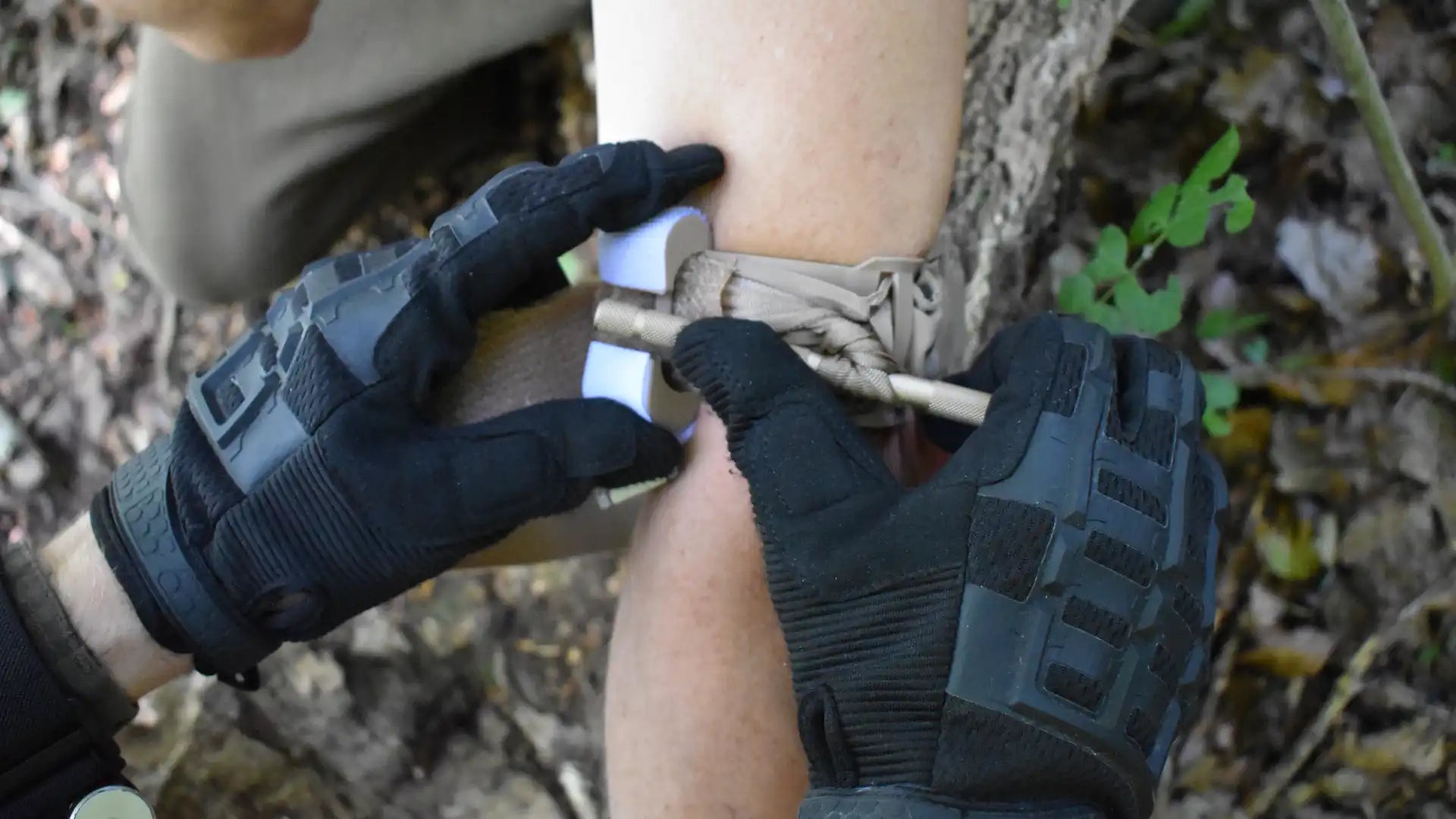
Chitosan gauze and tourniquets are designed for different situations. A tourniquet controls severe bleeding from an arm or leg by compressing blood vessels around the entire limb. Chitosan gauze controls bleeding through direct contact, wound packing, local clot support, and pressure.
A tourniquet may be appropriate when:
- Severe bleeding is coming from an arm or leg.
- Blood is flowing rapidly or continuously.
- Direct pressure is ineffective or cannot be maintained.
- The injury involves a traumatic amputation.
- The responder must move the injured person quickly.
Chitosan gauze may be appropriate when:
- The wound is too high on a limb for a tourniquet.
- The injury is near the groin, armpit, or shoulder.
- The wound is deep and suitable for packing.
- The bleeding source can be compressed directly.
Never place a standard tourniquet around the neck, chest, or abdomen. Once a tourniquet has been applied correctly for life-threatening limb bleeding, leave it in place for emergency medical professionals unless your formal training or protocol directs otherwise.
What Chitosan Gauze Cannot Do
Chitosan gauze has important limitations. It cannot:
- Treat internal bleeding
- Replace emergency medical care
- Replace a tourniquet in every severe limb injury
- Work without reaching the source of bleeding
- Eliminate the need for direct pressure
- Correct poor wound-packing technique
- Treat shock
- Guarantee survival
- Remain in a wound indefinitely unless specifically approved for that purpose
Hemostatic gauze is intended to provide temporary bleeding control until definitive medical care becomes available.
How to Choose Chitosan Gauze
Not all chitosan gauze products are identical. Compare the following factors before adding one to a trauma kit.
Product-Specific Evidence
Look for testing or research related to the actual product rather than relying only on studies involving a different brand or formulation.
Intended Use
Confirm that the gauze is intended for external bleeding control and wound packing. Some products are made for minor bleeding and are not designed for major trauma.
Gauze Format
Z-fold gauze is often easier to deploy because it feeds continuously from the package. Rolled gauze can also work but may be harder to control with wet or gloved hands.
Size and Length
The package should contain enough gauze to fill a deep wound. A small dressing may not provide sufficient material for larger injuries.
Packaging
The packaging should be durable, sealed, and easy to open during an emergency. It should protect the gauze from moisture, dirt, and physical damage.
Instructions for Use
Read the instructions before placing the product in your kit. Application method, pressure time, removal instructions, and warnings may vary.
Shelf Life
Check the expiration date regularly. Replace expired products and any package that is torn, punctured, wet, or otherwise damaged.
Storage Conditions
Products kept in vehicles, outdoor bags, or industrial environments may experience extreme heat, cold, and moisture. Follow the manufacturer’s recommended storage conditions.
Training
Practise with separate training gauze rather than opening your emergency dressing. Familiarity with the packaging and wound-packing technique can save valuable time.
Add FlareSyn Chitosan Gauze to Your Trauma Kit
FlareSyn Chitosan Hemostatic Gauze is designed for emergency bleeding-control preparedness. Its compact format makes it suitable for individual trauma kits, vehicles, workplaces, range bags, outdoor equipment, and professional response kits.
The chitosan-based material is intended to support local clot formation while the gauze provides wound packing and mechanical pressure. Its Z-fold construction allows the dressing to be deployed in a controlled manner, helping the user pack a deep wound without managing a loose roll of gauze.
FlareSyn Chitosan Gauze can be added to:
- Home emergency kits
- Vehicle trauma kits
- Workplace first aid stations
- Construction and industrial safety kits
- Range bags
- Hunting and outdoor equipment
- Security response kits
- Emergency preparedness supplies
For a more complete bleeding-control setup, carry chitosan gauze alongside:
- Traditional compressed gauze
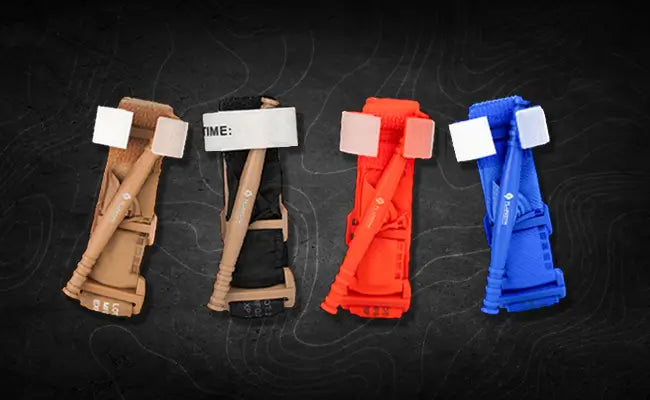
- A suitable windlass tourniquet
- A pressure dressing
- Nitrile gloves
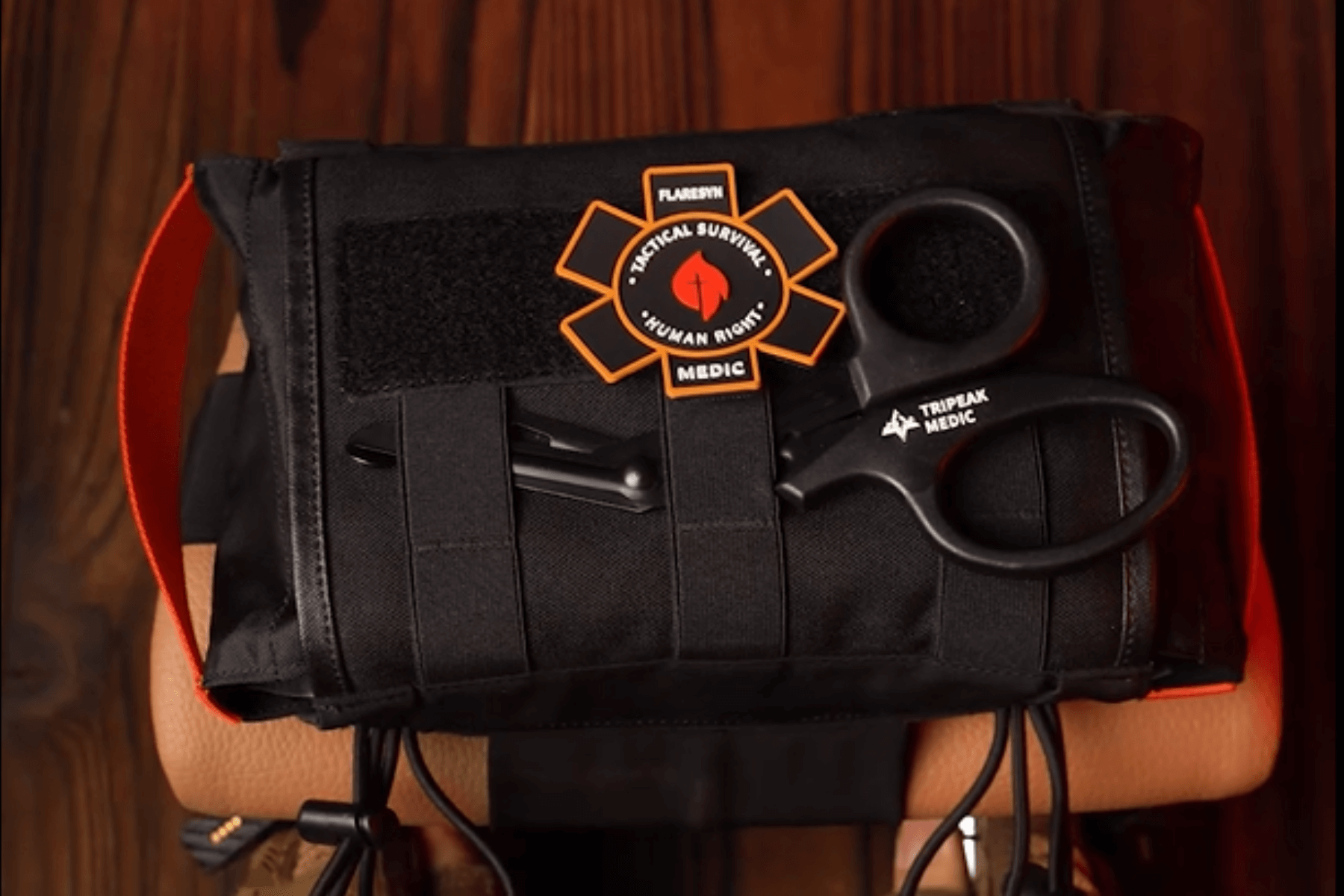
- Trauma shears
- A permanent marker
- An emergency blanket
Read all supplied instructions before an emergency and complete certified bleeding-control training so that the product can be used properly.
Frequently Asked Questions
Is chitosan gauze faster than traditional gauze?
Chitosan gauze is designed to support clot formation in addition to providing pressure, so it may control severe bleeding more effectively in some situations. However, the exact time depends on the product, wound, patient, pressure, and application technique. Avoid relying on a universal clotting-time claim.
Does chitosan gauze work without pressure?
Most chitosan gauze products still require firm direct pressure. The material must remain in contact with the bleeding source according to the manufacturer’s instructions.
Can traditional gauze stop severe bleeding?
Yes. Traditional wound-packing gauze can help control severe bleeding when it is packed firmly against the bleeding source and followed by sustained direct pressure.
Is chitosan gauze safe for people with shellfish allergies?
Chitosan is commonly derived from crustacean shells, but the proteins associated with shellfish allergy are generally removed during processing. Product formulations differ, so users should review the manufacturer’s labeling and consult a healthcare professional about specific allergy concerns.
Can chitosan gauze be used on every wound?
No. It is mainly intended for external, compressible bleeding. It should not be used as a treatment for internal bleeding, eye injuries, open chest wounds, or abdominal injuries with protruding organs.
Should I remove chitosan gauze after the bleeding stops?
Do not remove or disturb a dressing during an active emergency unless directed by trained medical professionals or the product instructions. Removing it may disrupt the clot and restart bleeding.
Is chitosan better than kaolin?
Chitosan and kaolin work differently. Chitosan interacts with blood cells and the wound surface, while kaolin helps activate part of the clotting pathway. Neither ingredient is automatically best for every injury. Product design, evidence, and correct application matter more than marketing claims.
Should a trauma kit contain both chitosan and traditional gauze?
Carrying both is practical. Chitosan gauze provides an advanced option for severe bleeding, while traditional compressed gauze offers affordable backup material for wound packing, reinforcement, and general injury care.
Final Verdict: Chitosan vs. Traditional Gauze
The difference between chitosan vs. traditional gauze is not that one works while the other does nothing. Traditional gauze controls bleeding through wound packing, mechanical pressure, and support for the body’s natural clotting process. Chitosan gauze combines those same physical actions with a hemostatic material that helps concentrate blood cells and form an adhesive barrier at the wound surface.
Chitosan gauze may be the better first option for severe, compressible bleeding when it is available, appropriate for the wound, and used by someone who understands proper packing and pressure. Traditional gauze remains essential as a backup, additional packing material, and versatile dressing for many other injuries.
The best bleeding-control kit does not depend on one product. It combines suitable hemostatic gauze, traditional compressed gauze, a proven tourniquet, a pressure dressing, protective gloves, and hands-on training. Equipment matters, but preparation and correct technique are what allow that equipment to work.