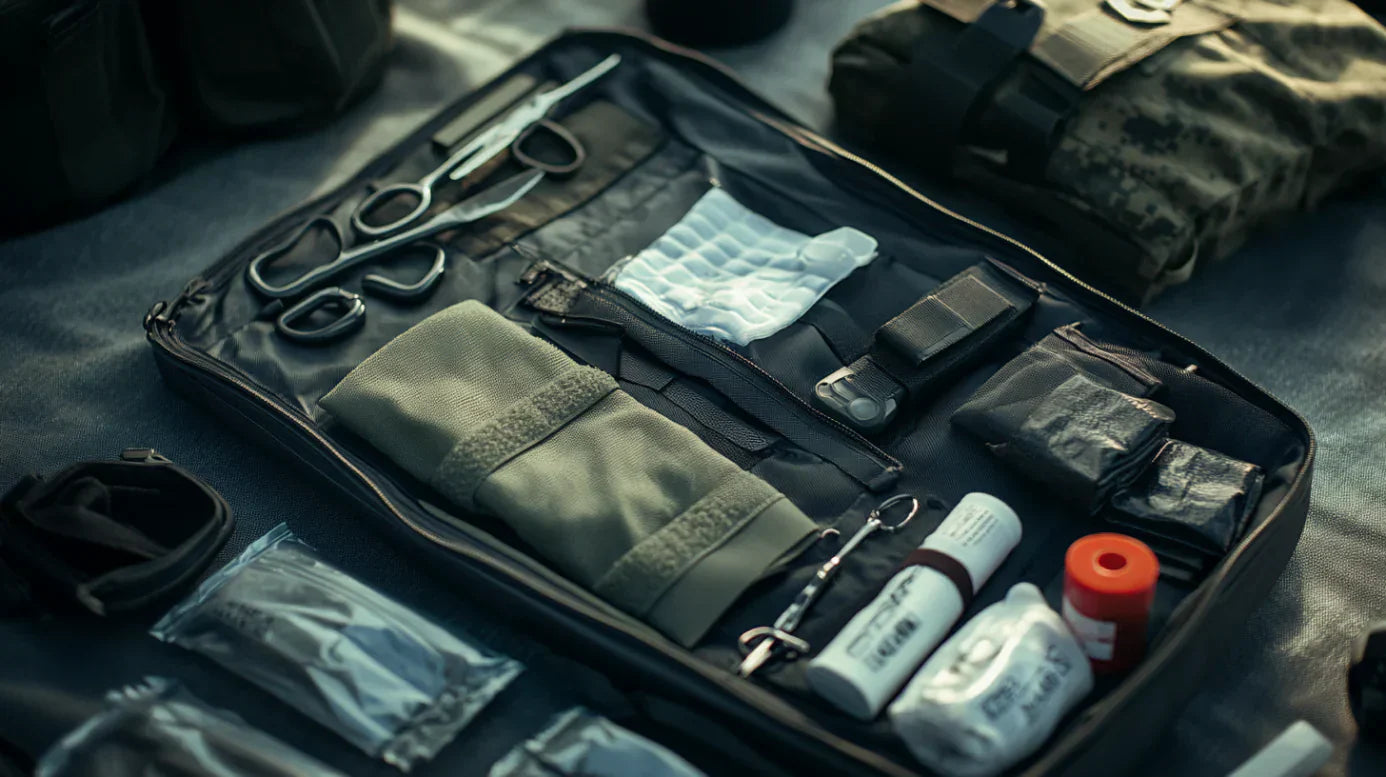
Why Every Household Should Have a Tactical Medical Kit
A tactical medical kit can look impressive while still being poorly suited to the person carrying it. A pouch filled with unfamiliar airway devices, unverified tourniquets, and minor bandages may offer less practical value than a smaller kit containing dependable bleeding-control supplies that the owner has been trained to use. The right tactical medical kit should match your skills, the injuries you are most likely to face, the number of casualties you may need to help, and how quickly emergency medical services can reach your location.
This guide explains what belongs in a tactical trauma kit, how the MARCH framework organizes medical priorities, which components require additional training, and how to choose a kit for a vehicle, range, workplace, outdoor trip, home workshop, or duty setup. It also explains how to compare pouch quality, inspect medical supplies, and avoid paying for equipment that adds weight without adding useful capability.
What Is a Tactical Medical Kit?
A tactical medical kit is an organized collection of trauma supplies intended for fast access during serious injuries. It commonly gives priority to severe external bleeding, penetrating trauma, chest injuries, airway support, shock, and heat-loss prevention. The exact contents should depend on the owner’s training, likely hazards, carry method, number of possible casualties, and expected time before professional medical care arrives.
The word tactical should describe how the kit functions rather than how the pouch looks. Camouflage fabric and MOLLE webbing do not make a medical kit effective. A useful tactical kit should remain secure during movement, open quickly, keep urgent equipment easy to reach, and protect the supplies from dirt, moisture, and damage.
A tactical medical kit may be carried by:
- Military personnel
- Law enforcement officers
- Security teams
- Emergency medical responders
- Range staff and firearms instructors
- Hunters and outdoor users
- Drivers and work crews
- Civilians trained in severe-bleeding control
- Workplace safety teams
The term covers several sizes and configurations. It may refer to a compact individual pouch, a vehicle-mounted trauma kit, a range bag, or a larger medical pack supporting several casualties. The name on the product matters less than its exact contents, intended user, and practical capability.
Tactical Medical Kit vs. IFAK
An Individual First Aid Kit, commonly called an IFAK, is usually a compact trauma kit intended to support one person through self-aid or buddy aid. Its contents often focus on immediate threats such as severe bleeding and penetrating trauma. It is commonly worn on a belt, vest, plate carrier, backpack, or duty rig. A tactical medical kit is a broader term. It may describe an IFAK, but it can also refer to a larger vehicle kit, a range trauma pouch, a team kit, or a medical response pack. An IFAK is therefore one type of tactical medical kit rather than a completely separate category.
Tactical Medical Kit vs. Standard First Aid Kit
A standard first aid kit is mainly intended for common injuries such as small cuts, scrapes, minor burns, blisters, sprains, and routine workplace incidents. It often contains adhesive bandages, antiseptic wipes, small gauze pads, tape, and cold packs.
A tactical first aid kit gives greater priority to serious trauma. Its main supplies may include a tourniquet, compressed gauze, hemostatic gauze, a pressure dressing, chest seals, trauma shears, gloves, and an emergency blanket. These products address immediate threats that a box of adhesive bandages cannot control.
The two kits should complement each other. A trauma kit is not convenient for every minor injury, while a standard kit may lack the supplies needed for major blood loss.
Tactical Medical Kit Checklist
A practical tactical medical kit should begin with a small group of high-value trauma supplies rather than dozens of low-priority accessories. Severe-bleeding equipment usually forms the core because rapid blood loss may become fatal before an ambulance arrives. The American College of Surgeons Stop the Bleed program teaches three main public bleeding-control actions: direct pressure, wound packing, and tourniquet use when appropriate.
|
Category |
Core Item |
Main Purpose |
Training Consideration |
|
Severe limb bleeding |
Quality windlass tourniquet |
Controls suitable life-threatening arm or leg bleeding |
Hands-on practice strongly recommended |
|
Wound packing |
Compressed gauze |
Fills deep, compressible wounds and creates pressure |
Wound-packing instruction recommended |
|
Hemostatic support |
Chitosan or other hemostatic gauze |
Adds a local bleeding-control material to packing and pressure |
Follow the exact product instructions |
|
Compression |
Pressure dressing |
Maintains focused pressure over a wound |
Basic trauma training |
|
Chest trauma |
Chest-seal pair |
Covers appropriate open chest wounds |
Specific instruction recommended |
|
Protection |
Nitrile gloves |
Reduces contact with blood and body fluids |
Suitable for most users |
|
Injury access |
Trauma shears |
Cuts clothing to expose an injury |
Suitable for most users |
|
Heat-loss prevention |
Emergency blanket |
Helps limit further body-heat loss |
Suitable for most users |
|
Documentation |
Permanent marker or casualty card |
Records tourniquet time and care provided |
Useful for EMS handover |
This checklist is a planning starting point rather than a universal standard. A compact vehicle kit, a range trauma station, and a medic backpack should not contain identical quantities or equipment. Final choices should reflect training, workplace or agency policy, likely hazards, available backup, and the instructions supplied with each device.
How MARCH Organizes Tactical Medical Kit Contents
MARCH is a trauma-care priority framework used in Tactical Combat Casualty Care and related operational medical training. The letters stand for Massive Hemorrhage, Airway, Respirations, Circulation, and Hypothermia/Head Injury. Current Joint Trauma System guidance continues to use MARCH and the expanded MARCH-PAWS sequence to organize assessment, treatment, reassessment, and casualty handover.
MARCH can also help arrange a tactical medical kit. Supplies used for the most immediate threats should be easiest to reach, while equipment intended for later reassessment or documentation can sit deeper in the pouch. MARCH is a care-priority framework, however, not a retail certification. A seller should not call a kit “MARCH compliant” without clearly listing the contents, intended user, and capability.
M — Massive Hemorrhage
Massive external bleeding is addressed first because a damaged major blood vessel can cause critical blood loss rapidly. A responder must be able to expose the wound, identify the source, apply pressure, pack a suitable deep wound, or use a tourniquet for appropriate severe limb bleeding.
Useful massive-hemorrhage supplies include:
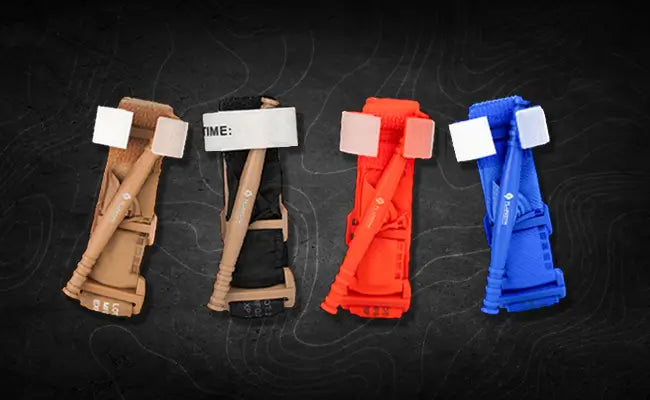
- Windlass tourniquet
- Compressed Z-fold gauze
- Chitosan hemostatic gauze
- Pressure dressing
- Additional sterile gauze
- Medical tape
- Nitrile gloves
- Trauma shears
A tourniquet is intended for suitable life-threatening bleeding from an arm or leg. Compressed gauze can be packed firmly into an appropriate deep wound to create pressure against the bleeding source. Hemostatic gauze adds a material such as chitosan or kaolin but still depends on correct placement and pressure.
The FDA describes topical hemostatic dressings as temporary products for controlling and covering external bleeding wounds. These products can combine a structural material such as gauze with a hemostatic component, including chitosan or kaolin. Product formulations and instructions differ, so evidence or pressure-time claims for one dressing should not automatically be applied to every hemostatic gauze.
A pressure dressing helps maintain compression once initial control has been achieved. It should not be treated as a substitute for locating the bleeding source or correctly packing a deep wound.
A — Airway
The airway section of a kit should reflect the user’s actual training. Basic responders may focus on airway positioning, recovery-position skills, CPR barriers, and monitoring normal breathing. These skills are more useful than carrying an advanced device that the owner has never practised with.
Basic airway-support equipment may include:
- CPR face shield
- Pocket mask
- Nitrile gloves
- Additional trained-user equipment may include:
- Nasopharyngeal airway
- Water-based lubricant
- Other airway adjuncts approved by the user’s organization or protocol
A nasopharyngeal airway is not a device for removing a choking object. Choking requires age-appropriate foreign-body airway-obstruction care. Deployed Medicine separates basic All Service Members airway maneuvers from NPA insertion taught at the Combat Lifesaver level, showing why airway equipment should be matched to training rather than added merely to increase the kit’s item count.
Surgical airway tools and other invasive products do not belong in a basic civilian kit. Carrying them without the training, authorization, and supporting equipment needed for their use can create dangerous confusion.
R — Respiration
The respiration category addresses trauma-related breathing problems, especially wounds that open the chest cavity. A tactical kit intended for a range, law-enforcement setting, or environment where penetrating injury is a realistic concern may include a pair of chest seals.
A chest-seal pair may be carried because some penetrating injuries can have both an entrance and an exit wound. The responder must still expose the injury, follow the product instructions, continue observing the casualty, and seek emergency medical care. The seal is a temporary field measure rather than definitive treatment.
Chest-trauma supplies may include:
- Vented or non-vented chest-seal pair
- Gauze for wiping the surrounding area
- Trauma shears
- Gloves
Needle-decompression devices and invasive chest procedures should remain with qualified providers trained to recognize the correct indication, perform the intervention, reassess the casualty, and respond to complications. NAEMT’s Tactical Emergency Casualty Care program is formal provider education for civilian tactical environments, reinforcing that advanced trauma procedures require more than possession of the equipment.
C — Circulation
The circulation stage includes reassessing the casualty after immediate bleeding-control actions. The responder checks whether earlier interventions remain effective, looks for additional bleeding, watches for signs of shock, and prepares for evacuation or professional handover.
This part of the kit may include:
- Additional gauze
- Elastic wrap
- Medical tape
- Permanent marker
- Casualty card
- Small notepad
Documentation matters because arriving responders need to know what happened, when a tourniquet was applied, which products were used, and whether the casualty’s condition changed. Current Joint Trauma System guidance stresses reassessment, treatment documentation, tourniquet times, and effective handoffs across levels of care. A compact tactical kit cannot replace blood products, IV treatment, surgery, or hospital trauma care. It may support temporary care while the casualty is moved to professional treatment.
H — Hypothermia and Head Injury
An injured person may lose body heat even when the air does not feel extremely cold. Blood loss, wet clothing, contact with the ground, wind, and limited movement can all contribute to cooling. Preventing further heat loss is therefore part of trauma care rather than a comfort measure.
Useful supplies may include:
- Emergency blanket
- Compact insulating sheet
- Ground barrier
- Dry covering
- Casualty card for recording mental-status changes
A small emergency blanket works best when combined with sensible actions such as moving the casualty away from cold ground, limiting wind exposure, and keeping them dry when possible. The responder should also monitor alertness and avoid unnecessary movement when a head, neck, or spinal injury may be present. A tactical kit cannot diagnose or treat a traumatic brain injury. Its role is to support observation, reduce avoidable heat loss, and help protect the casualty until medical professionals take over.
Choose a Tactical Medical Kit by Environment
The right tactical medical kit depends on where it will be used. A small belt-mounted IFAK may work well for one trained individual, while a shooting range or industrial workplace may need a fixed trauma station with several bleeding-control sets. A wilderness kit must also consider environmental exposure and delayed evacuation.
A home or workshop kit should sit in a visible, accessible location rather than inside a locked cabinet. It may combine severe-bleeding equipment with routine first aid supplies, but the urgent trauma items should remain clearly separated.
A vehicle trauma kit should be secured so it does not become loose cargo during a crash. It should remain reachable from the passenger area or a clearly known exterior location. The contents also need protection from heat, moisture, and direct sunlight.
A range medical kit may need several tourniquets, multiple wound-packing sets, pressure dressings, and chest seals where users have suitable instruction. Staff should know who calls 911, who meets responders, where the kit is located, and how the range is identified to dispatchers.
A hunting or hiking kit must balance weight with distance from help. Bleeding control remains important, but insulation, communication, and evacuation planning become more significant as response time increases.
A workplace trauma station should match the equipment hazards and number of workers. Clearly marked placement, trained staff, regular inspections, and a replacement process matter as much as the original purchase.
A duty IFAK should use a standardized location and layout so a teammate can find and use the equipment. Agency protocols, issued equipment, and medical direction should guide the contents.
How to Evaluate Tactical Medical Kit Quality
The quality of a tactical medical kit cannot be judged by the pouch color, item count, or words such as “combat” and “professional.” Buyers should examine the exact medical products, the construction of the pouch, the traceability of the components, and whether replacement supplies remain available.
Review the Actual Component List
A trustworthy product page should identify what is included rather than using vague phrases such as “medical essentials.” Look for:
- Manufacturer name
- Product model
- Quantity of each item
- Product size
- Intended use
- Expiration information
- Instructions for use
- Pouch dimensions
- Refill availability
A listing with 100 low-value pieces may provide less serious-trauma capability than a compact kit containing a tourniquet, packing gauze, pressure dressing, gloves, and shears.
Compare function rather than total quantity.
Be cautious with labels such as:
- Military style
- Combat grade
- Professional quality
- Tactical standard
- MARCH ready
These phrases do not confirm that the included equipment has been tested, properly stored, or selected for a specific training level.
Check Package and Product Traceability
Sterile and sealed medical products should arrive with readable labels and intact packaging. Buyers cannot test whether an item remains sterile at home, but they can inspect the protective barrier.
Look for:
- No tears or punctures
- No broken vacuum seal
- No water damage
- Readable manufacturer information
- Lot or batch identification
- Printed expiration date
- Product instructions
- Traceable seller or supply source
Do not use a sterile product if the protective package is open, torn, wet, or otherwise damaged.
Verify Medical Performance Claims
Medical claims should be specific to the actual product. Statements such as “stops every bleed,” “works instantly,” “zero failure,” or “treats internal bleeding” are warning signs because trauma outcomes depend on the injury, application, device, responder, and patient condition.
Hemostatic dressings vary in their carrier material, active component, design, and intended use. The FDA distinguishes different product types and describes them as temporary bleeding-control dressings rather than universal treatments. Look for product-specific documentation rather than a study involving another brand that happens to use a similar ingredient.
Assess the Pouch
A strong medical pouch keeps supplies secure while allowing fast access. The design should work with wet hands, gloves, limited light, and stress.
Useful pouch features include:
- Secure attachment
- Rip-away panel where appropriate
- MOLLE or belt compatibility
- Reinforced stitching
- Glove-friendly zipper pulls
- Clear opening direction
- Internal elastic retention
- Space for replacement items
- Visible pull handle
- Some protection from dirt and moisture
A pouch should open widely enough for the user to see or feel the contents. Deep, unorganized compartments can turn a simple equipment search into a delay.
Select the Right Capacity
Kit size should reflect the setting and expected casualty count. An individual IFAK may carry one basic set of trauma supplies. A vehicle, range, or workplace kit may need duplicate bleeding-control items because more than one injury is possible.
Consider:
- How many people may need help
- How long EMS may take
- Whether another kit is nearby
- Likely injury types
- Available carry space
- Whether the kit is worn or stored
- Whether trained users are present
Larger is not automatically better. A pouch that is too bulky to carry consistently may be less useful than a focused kit that remains with the owner.
Organize the Kit for Fast Access
The arrangement of a tactical medical kit affects how quickly the user can reach the correct product. Urgent bleeding-control items should remain easy to identify and remove, while later-stage supplies can sit behind them. A clean layout also helps another responder use your kit if you become the casualty.
Keep Immediate Bleeding-Control Supplies Accessible
A tourniquet should not be buried beneath adhesive bandages, medications, or minor-care products. Many users place the primary tourniquet in an external holder or at the top of the pouch so it can be reached quickly.
Consider:
- Access with either hand
- Protection from unnecessary exposure
- Clear identification
- Secure retention
- Consistent position
- No knots or straps blocking removal
An external tourniquet still needs regular inspection because sunlight, abrasion, moisture, and dirt can damage exposed equipment over time.
Arrange Supplies in Treatment Order
A logical internal sequence reduces unnecessary searching. One practical order is:
- Gloves and trauma shears
- Tourniquet and packing gauze
- Hemostatic gauze
- Pressure dressing
- Chest seals
- Airway items for trained users
- Emergency blanket
- Marker and documentation
This order follows the general priority of gaining access to the injury and treating severe bleeding before reaching lower-priority support items.
Standardize Team Kits
Workplaces, ranges, patrol teams, and response groups benefit from consistent kits. A responder should not need to learn a completely different opening direction and layout every time they use another pouch.
Standardize:
- Pouch location
- Opening direction
- Internal arrangement
- Tourniquet model
- Gauze type
- Labels
- Refill procedure
- Inspection schedule
Consistency also makes training simpler because practice reflects the equipment carried in real service.
Separate Training Equipment
Training equipment should never be confused with unused emergency supplies. Repeated tourniquet practice can wear the strap, buckle, windlass, and internal band. Opened gauze and demonstration chest seals are no longer sterile. Mark training items clearly and store them separately. Use them for drills, package-opening practice, wound-packing simulations, and pouch-access training, but do not return them to live emergency use.
Find the Right FlareSyn Tactical Medical Kit
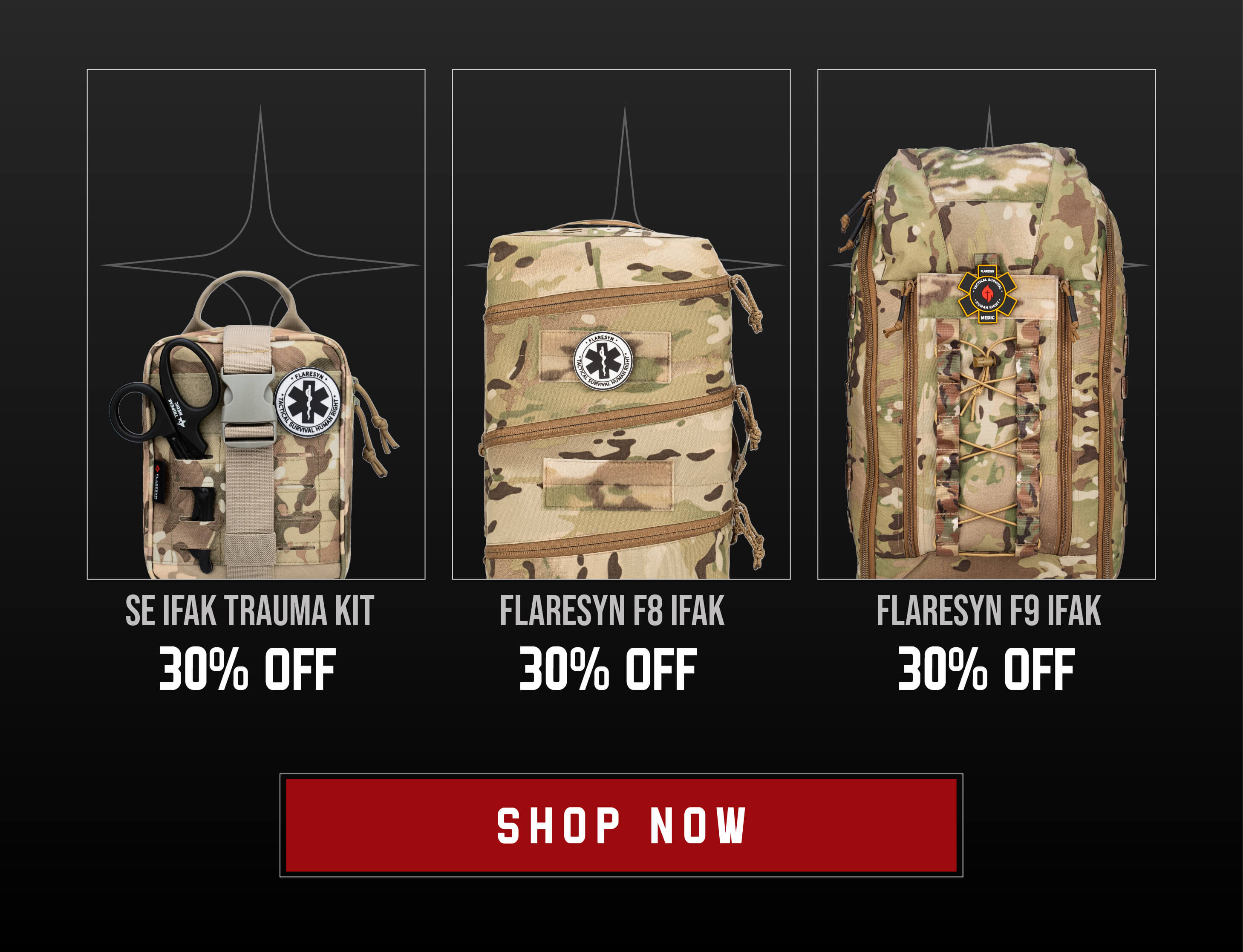
FlareSyn offers pre-filled tactical IFAKs, compact trauma kits, vehicle headrest kits, individual bleeding-control components, larger team medical packs, refill kits, and empty or modular carry options. Current collections include compact everyday-carry kits, vehicle and RV setups, patrol and range equipment, and larger F8/F9 medical kits intended for group support. The best starting point depends on where the kit will live and who will use it.
Shop by Carry Method
A kit should fit its mounting location without becoming difficult to reach. FlareSyn options include compact pouches for personal carry, MOLLE-compatible trauma kits, and headrest-mounted vehicle kits that keep equipment together inside a car, truck, or work vehicle.
Common carry options include:
- Compact pocket or backpack IFAK
- Belt-mounted trauma pouch
- MOLLE-mounted tactical IFAK
- Vehicle headrest kit
- Range or group trauma bag
- Refill bundle for an existing pouch
- Empty pouch for a custom loadout
Choose a mounting method that keeps the kit secure, visible, and reachable. A good pouch in an inaccessible trunk compartment may offer less value than a simpler kit mounted where occupants can reach it.
Final Takeaway
A tactical medical kit should be built around capability, access, and training rather than appearance or item count. Begin with dependable severe-bleeding supplies, understand the purpose of each component, and add chest, airway, or advanced equipment only when your instruction and environment justify it.
Use MARCH to understand treatment priorities and arrange the pouch, but do not treat the acronym as proof of product quality. Compare exact components, inspect package seals and expiration dates, keep urgent supplies easy to reach, and practise with separate training gear.
FlareSyn’s pre-filled IFAKs, vehicle kits, refill packs, and individual bleeding-control products can provide a clear starting point for personal, range, outdoor, workplace, vehicle, and duty setups. The final choice should still reflect who will use the kit, where it will be carried, and what that person has trained to do.