
The "Silent Failure": How Heat, UV, and Time Degrade Your Life-Saving Equipment
The Science of Reliability
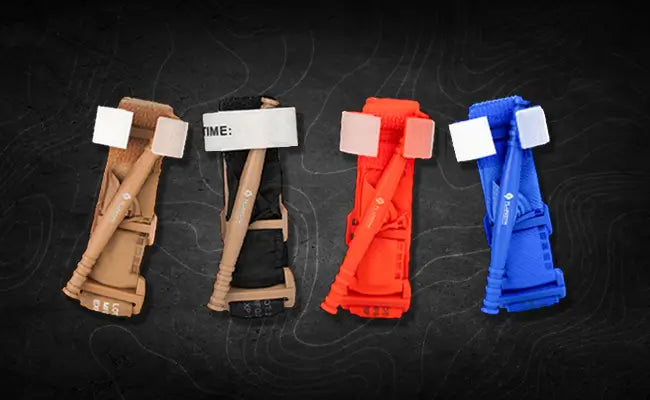
Imagine a scenario in 2026: you are the first on the scene of a high-speed highway collision. You remain calm, relying on the trauma training you invested in and the premium Individual First Aid Kit (IFAK) you purchased years ago. You reach into your trunk, pull out a tourniquet that has sat through three summers of scorching heat, and prepare to apply it to a victim’s femoral bleed. But as you crank the windlass to occlude the artery, you hear a sickening crack. The high-tensile polymer, weakened by years of thermal cycling, snaps like a dry twig. In that moment, your preparedness is revealed as an illusion.
This is the "Silent Failure." It is the most dangerous kind of equipment malfunction because it provides no outward warning. Unlike a flat tire or a dead battery, a degraded trauma kit looks perfectly functional until the exact millisecond it is required to save a life. Many people treat medical gear as a "buy once, forget forever" investment, tossing a kit into a glove box or a sun-drenched backpack and assuming it will remain in factory-new condition indefinitely. However, the laws of chemistry and physics dictate otherwise.
The thesis of this guide is simple: Environmental degradation is the invisible enemy of readiness. While we focus heavily on the mechanics of the M.A.R.C.H. protocol, we often neglect the biological and structural shelf-life of the tools themselves. Understanding how heat, UV radiation, and time break down the molecular bonds of polymers and the efficacy of $Chitosan$ agents is as critical as knowing how to apply them. True readiness is a perishable commodity; to ensure your gear performs when the world is at its worst, you must first understand the silent forces working to destroy it.


The Thermal Trap: How Heat Destroys Medical Integrity
In the preparedness community, the vehicle is the most common storage site for trauma kits. It is also the most hostile. In 2026, as urban heat islands intensify, the "Vehicle Oven" Effect has become a primary driver of equipment failure. Even on a moderate 25°C day, the interior of a closed car can skyrocket to over 60°C (140°F) within an hour. For medical equipment engineered in controlled laboratory settings, these temperatures represent an extreme environment that triggers rapid chemical and structural breakdown.
The Melting Point of Readiness: Adhesive Failure
The most immediate victim of extreme heat is the medical-grade adhesive. Critical items such as Chest Seals and Hydrogel Dressings rely on a specific viscosity to create an airtight, occlusive seal on a bloody or sweaty torso. When baked repeatedly at 60°C, the chemical structure of these hydrogels begins to liquefy or "outgas." Over time, the adhesive can either migrate away from the dressing or, conversely, bake into the plastic backing, making it impossible to peel the seal apart during a crisis. If you have ever tried to use a piece of tape that has been left in a hot car, you’ve seen a mild version of this failure. In a trauma scenario, a chest seal that won't stick is no longer a medical device—it’s just a piece of useless plastic.
Polymer Embrittlement: The Science of the Snap
Beyond adhesives, heat wreaks havoc on the structural polymers of hardware like tourniquet windlasses and buckles. This process is known as Thermal Embrittlement. Most high-end tourniquets use glass-reinforced nylon or similar high-tensile polymers. These materials are designed to be slightly flexible to absorb the immense torque required to occlude an artery.
However, constant "thermal cycling"—the repeated heating during the day and cooling at night—causes the plasticizers within the polymer to migrate to the surface and evaporate. This leaves the plastic brittle and "dry." On a molecular level, the long-chain polymers are breaking down into shorter, weaker segments. The gear may look identical to a new unit, but its Ultimate Tensile Strength has been compromised. When you apply the 300 mmHg of pressure necessary to stop a femoral bleed, the brittle windlass reaches its breaking point and snaps catastrophically.
Signs That Your Gear Has Suffered Heat Damage
Discoloration: Clear plastic packaging that has turned yellow or opaque.
Adhesive Migration: Visible "beading" or "sweating" inside the sterile packaging of chest seals or bandages.
Loss of Vacuum: If a vacuum-sealed $Chitosan$ dressing feels "soft" or contains air, the heat may have compromised the seal’s integrity.
Texture Changes: Tourniquet straps that feel stiff, "crusty," or show fine, spider-web-like cracks on the surface of the plastic components.
Odor: A strong chemical or "burnt plastic" smell when opening the kit, indicating outgassing of the materials.
UV Radiation and Chemical Breakdown
While heat cooks your gear from the inside out, ultraviolet (UV) radiation attacks it from the outside in. In the tactical and medical world, we often refer to the sun as a solvent. This is not a metaphor; UV photons possess enough energy to physically sever the molecular bonds of the synthetic materials that make up 90% of your IFAK. If your gear is mounted on a headrest, clipped to a sunny backpack, or stored in a transparent window-facing pouch, it is undergoing a process of permanent photodegradation.
Photodegradation: Breaking the Fiber
The primary victim of UV exposure is the high-denier nylon used in tourniquet straps and carrier pouches. When UV rays hit nylon fibers, they trigger a chemical reaction called chain scission. This breaks the long polymer chains that give the fabric its incredible tensile strength. You might notice your black gear turning a dull grey or "bleaching" out. This isn't just an aesthetic issue; it is a visual warning that the structural integrity of the material has been halved. A sun-bleached tourniquet strap may fail at a fraction of its rated load, tearing apart precisely when you need to apply maximum pressure.
The Integrity of Vacuum Seals: Micro-Leaks
The "Silent Failure" extends to the very packaging that is supposed to keep your gear sterile. Most hemostatic gauzes and pressure dressings are vacuum-sealed in multi-layered plastic films. UV radiation causes these films to lose their elasticity and become "micro-porous." This leads to micro-leaks—tiny, invisible breaches in the seal that allow atmospheric moisture and oxygen to seep in. Once a vacuum seal is lost, the item is no longer sterile. More importantly, for compressed gauze, the introduction of moisture causes the material to expand inside the package, making it difficult to extract and potentially encouraging the growth of mold or bacteria in the "sterile" environment.
Hemostatic Agent Stability: Chitosan under Fire
A frequent question in 2026 is whether the active chemical agents, such as Chitosan or Kaolin, are affected by the sun. While these minerals and bio-polymers are relatively stable, the delivery system is not. $Chitosan$ is often impregnated into a non-woven polyester or rayon carrier. If the carrier fabric is weakened by UV, the gauze may shred or crumble while you are trying to pack a deep wound. Furthermore, prolonged exposure to high-energy UV can cause minor changes in the surface chemistry of the active agents, potentially slowing the reaction time required to form a clot. This is why FlareSyn utilizes opaque, UV-resistant foil packaging—ensuring that not a single photon reaches the active medical components until the moment of deployment.
The Expiration Date Myth vs. Reality
One of the most frequent questions we receive at FlareSyn is: "Does a bandage really expire, or is this just a marketing ploy?" It is a fair question. After all, a piece of cotton gauze doesn't "spoil" like milk. However, in the context of life-saving medicine, the expiration date is a calculated boundary between guaranteed performance and unpredictable risk. Understanding the distinction between sterility and efficacy is the first step in debunking the myths surrounding gear longevity.
Sterility vs. Efficacy: The Hidden Countdown
When you see an expiration date on a pressure dressing or a chest seal, it usually refers to the integrity of the sterile barrier. Manufacturers conduct rigorous "accelerated aging" tests to determine how long the packaging can reliably keep out microbes. Once that date passes, the probability of "micro-breaches" increases. Applying a non-sterile bandage to a deep traumatic wound in 2026 is an invitation for secondary infections—sepsis can kill a survivor just as surely as the initial injury, only slower.
However, "efficacy" is the more pressing concern. The "glue" mentioned in the myth is actually a sophisticated polymer adhesive. Over time, the chemical bonds in the adhesive of a chest seal or the elastic fibers of a pressure bandage undergo natural cross-linking. This makes them lose their "tack" or their elasticity. An expired bandage may still look fine, but it might lack the compressive force needed to maintain $30mmHg$ of pressure on a wound, rendering it clinically ineffective.
The Degradation of Bioactive Agents
When it comes to hemostatic agents like $Chitosan$, the expiration date carries even more weight. $Chitosan$ is a bioactive polymer derived from chitin. While it is incredibly shelf-stable, it is not immortal. Over years of storage—especially if exposed to the "thermal cycling" discussed earlier—the deacetylation levels of the $Chitosan$ can shift, potentially slowing the electrostatic reaction that causes blood to clot on contact. In a situation where every second counts, you cannot afford a "slow" clot. The expiration date ensures that the bioactive response is at its peak performance.
The "Training vs. Duty" Rule
The silver lining of expired gear is that it should never be thrown away; it should be transitioned. At FlareSyn, we advocate for the "Training vs. Duty" Rule. Your "Duty Kit"—the one you carry in your car or on your person—must contain only in-date, factory-certified equipment. Once an item expires, it is immediately moved to your "Training Kit." Using expired $Chitosan$ gauze or aged tourniquets for practice allows you to build muscle memory with the exact gear you carry, without the financial sting of "wasting" expensive supplies. It turns a liability into a training asset.
5 Critical Components That MUST Be Replaced Post-Expiration
Chest Seals: The hydrogel adhesive is the first thing to fail; expired seals will almost certainly slide off a patient.
Hemostatic Gauze ($Chitosan$): To ensure the fastest possible clotting time during massive hemorrhage.
Pressure Bandages: The elastic threads lose their "memory" and cannot provide consistent compression.
Compressed Gauze: If the vacuum seal has even a microscopic failure, the gauze expands and loses its sterility.
Burn Dressings: The water-based gels in these dressings eventually evaporate or separate, losing their cooling and protective properties.
Storage Solutions: Protecting Your Investment
Now that we have identified the "Silent Failures" of heat, UV, and time, the question becomes: how do we mitigate these risks? Proper storage is not just about organization; it is about preservation. In 2026, where high-performance medical gear is an investment in your family's safety, protecting that investment requires a proactive approach to Climate-Controlled Readiness.
Best Practices: Home, Vehicle, and EDC
For Home Storage, the rule is simple: "Cool, Dark, and Dry." A dedicated medical cabinet should be located away from bathrooms (where humidity fluctuates) and kitchens (where heat rises). A climate-controlled closet is ideal.
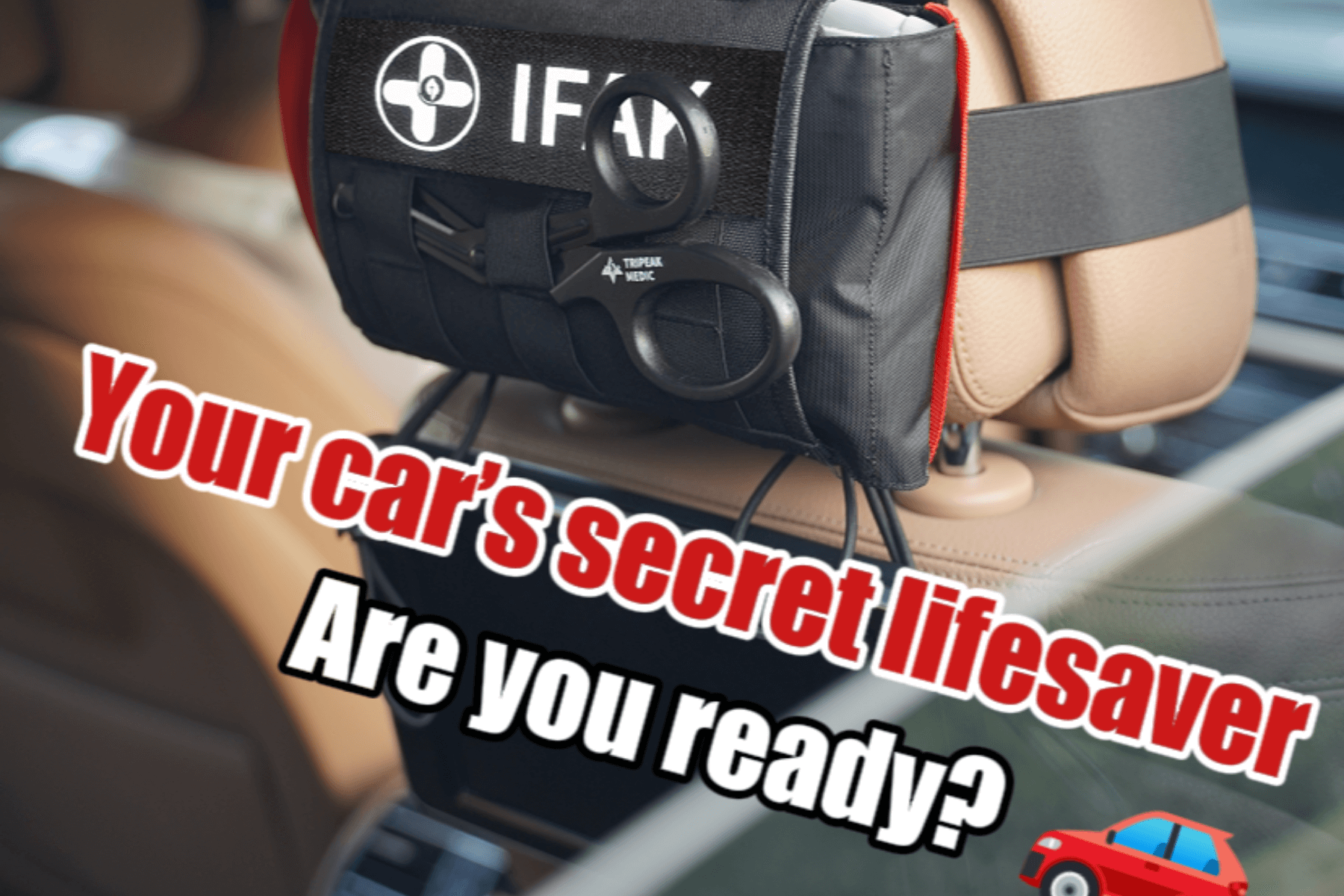
Vehicle Storage remains the biggest challenge. To combat the "Vehicle Oven" effect, avoid storing your IFAK on the dashboard or rear parcel shelf. Instead, utilize the trunk or the space under the front seats, which are the last areas to heat up. For those in extreme climates, we recommend using a small, insulated thermal bag to house your medical kit. This won't stop the heat entirely, but it acts as a thermal buffer, slowing the temperature spikes that occur during the peak of the day.
For Everyday Carry (EDC), the threat is body heat and sweat. Moisture can degrade paper-backed packaging over time. Use a waterproof, low-profile pouch to separate your gear from direct skin contact and environmental humidity.
FlareSyn’s Protective Engineering: The Shield-Grade Advantage
At FlareSyn, we don't just engineer the medical agents; we engineer the armor that protects them. Our "Shield-Grade" Packaging is a result of years of material science research. Unlike standard clear plastics, our packaging utilizes a multi-layered, metalized foil laminate that provides 100% UV opacity and a superior moisture-vapor transmission rate (MVTR). This ensures that even if your kit is accidentally exposed to sunlight or humidity, the $Chitosan$ gauze inside remains in a state of "stasis"—protected from the molecular degradation that plagues inferior brands.
The Confidence Loop: Reducing Cognitive Load
There is a profound psychological connection between confidence and cognitive load. When you look at your gear and think, "I'm not exactly sure how this opens," you are burning precious "mental RAM." This uncertainty feeds the panic loop. Conversely, when you know your gear is designed to be "fail-safe," your brain experiences a Confidence Loop. This reduced cognitive load frees up your prefrontal cortex to focus on the actual medical task—MARCH protocol—rather than struggling with the bag itself. Knowing your gear works with your biology, not against it, is the ultimate stabilizer for the combat mindset.
The "Annual Audit" Protocol
Preparedness is a process, not a destination. We recommend a formal Annual Audit of all your medical assets. Set a recurring date on your calendar—perhaps your birthday or New Year’s Day—to perform the following steps:
Visual Inspection: Look for yellowing, fading, or cracks in hardware and packaging.
Seal Check: Gently squeeze vacuum-sealed items. If they feel "spongy" or have air inside, the seal is compromised.
The "Crinkle" Test: Carefully flex tourniquet straps (without fully deploying them) to listen for the sound of brittle fibers breaking.
Date Verification: Check every expiration date. Anything within 3 months of expiring should be moved to the "Training Kit" and a replacement ordered.
The "Silent Failure" is perhaps the most sobering concept in modern preparedness. It reminds us that having gear is not the same as having a capability. In the critical moments following a traumatic injury, the high cost of a snapped windlass or a dried-out chest seal is measured in lives, not dollars. In 2026, the complexity of our urban environment and the intensity of our climate demand a more sophisticated approach to gear maintenance. We must move past the "set it and forget it" mentality and embrace a culture of active stewardship over our life-saving tools.
At FlareSyn, our mission goes beyond creating the most effective $Chitosan$ gauze on the market. We are committed to engineering durability. From our UV-opaque Shield-Grade packaging to our high-contrast, easy-to-read expiration labeling, every design choice is made to combat the invisible enemies of heat, light, and time. We don't just want you to own a medical kit; we want you to have absolute, unwavering confidence in its reliability.
Don't let your preparedness be an illusion. Today, take ten minutes to go to your car, open your kit, and perform an audit. Check the dates, feel the seals, and inspect the plastic. If your gear has been "cooking" in a trunk for years, it’s time to transition it to your training bag and invest in fresh, mission-ready replacements. Your future self—or the person whose life you save—will thank you for making the choice to be truly ready.
Q1: Can I use an expired tourniquet if it looks okay?
Only for training. Molecular embrittlement is invisible. A tourniquet that looks "fine" can snap under the $300mmHg$ of pressure required to stop a bleed.
Q2: How often should I check my car's medical kit?
We recommend a quick visual check every season and a deep "Annual Audit" once a year to ensure heat cycles haven't compromised the adhesives or seals.


Elias.H.Hwang
Elias H. Hwang is a tactical medicine expert and lead contributor at FlareSyn. He specializes in emergency trauma protocols and preparedness education, helping civilians and professionals alike master the tools and skills needed to save lives in critical moments.

Dejar un comentario
Este sitio está protegido por hCaptcha y se aplican la Política de privacidad de hCaptcha y los Términos del servicio.